


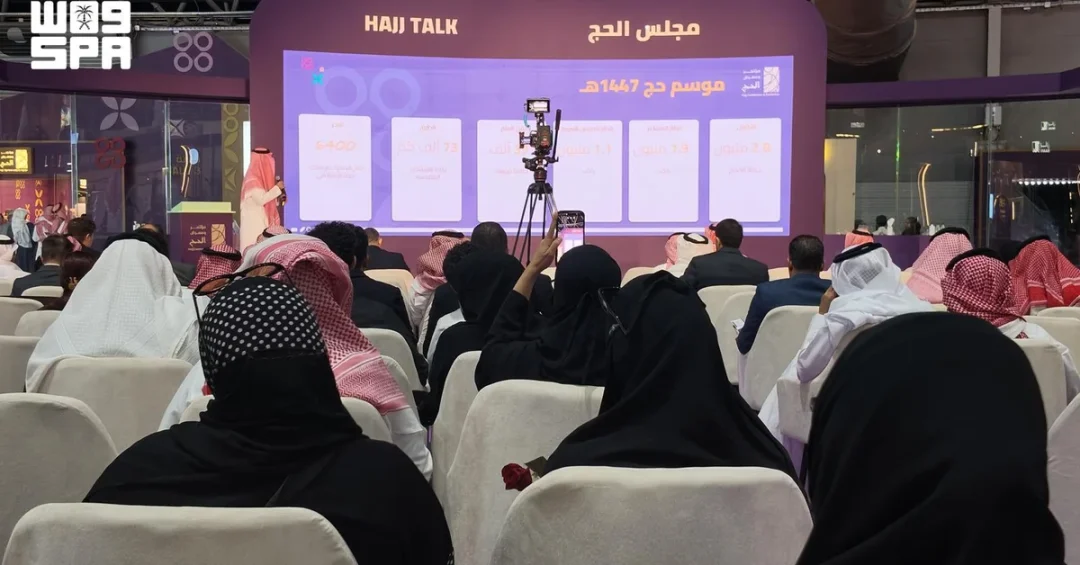
The sixth Hajj Conference and Exhibition in Jeddah hosted a series of Hajj Talk sessions on its third day, bringing together experts and officials to explore ways to develop and better integrate services provided to pilgrims, as well as harness modern technologies to facilitate their journey and enrich their knowledge and cultural experience. The sessions, held on the Hajj Talk Stage, addressed critical areas including health, safety, and medical preparedness for Hajj and Umrah; the experience of measuring the impact of the Pilgrim Awareness Index project; the role of social responsibility and volunteering in creating impact; and the operational integration of Hajj services in line with Saudi Vision 2030. Transport-related sessions covered modern technologies and key enablers of the transport system, fleet management through an intelligent system powered by the Internet of Things (IoT), and the role of King Abdulaziz International Airport in enriching the experience of pilgrims. The event underscores Saudi Arabia’s commitment to continuously improving the Hajj and Umrah experience for millions of pilgrims from around the world.
Have you ever wondered how the Kingdom of Saudi Arabia manages to host millions of pilgrims annually while ensuring their safety, comfort, and spiritual fulfillment? The Hajj Conference and Exhibition, now in its sixth edition, serves as a global platform for stakeholders to collaborate and innovate. This year’s event, held in Jeddah, highlighted the integration of services across various sectors, from healthcare to transportation, all aimed at enhancing the pilgrim experience. The sessions on the third day focused on practical solutions and technological advancements that are transforming the way Hajj and Umrah are conducted. As the world looks to Saudi Arabia for leadership in managing large-scale religious events, these discussions are pivotal in shaping the future of pilgrimage.
Context and Background
Why is the Hajj Conference and Exhibition considered a cornerstone event for pilgrimage management? The conference, organized under the auspices of the Saudi Ministry of Hajj and Umrah, brings together government agencies, private sector companies, and international experts to address the evolving needs of pilgrims. Since its inception, the event has grown in scope and influence, reflecting the Kingdom’s dedication to enhancing the Hajj and Umrah experience. The sixth edition, held in Jeddah, built on the successes of previous years, with a particular emphasis on digital transformation and operational efficiency. The Hajj Talk sessions, a key feature of the conference, provided a dynamic forum for dialogue and knowledge exchange, ensuring that best practices are shared and implemented.
The context of these discussions is rooted in the unprecedented scale of pilgrimage in Saudi Arabia. Before the COVID-19 pandemic, Hajj welcomed over 2.5 million pilgrims annually, while Umrah attracted millions more throughout the year. The pandemic necessitated significant adjustments, but it also accelerated the adoption of digital solutions and new health protocols. As the world recovers, Saudi Arabia is leveraging these innovations to not only return to pre-pandemic numbers but to exceed them in a safe and organized manner. The Hajj Conference and Exhibition plays a vital role in this endeavor by facilitating coordination among all stakeholders and ensuring that the latest technologies and methodologies are deployed effectively.
Key Details
What specific topics were addressed during the Hajj Talk sessions on the third day? The sessions covered a wide range of subjects, each critical to the seamless execution of Hajj and Umrah. Health, safety, and medical preparedness were at the forefront, with experts discussing strategies to handle medical emergencies and provide comprehensive care to pilgrims. The Pilgrim Awareness Index project, an innovative tool designed to measure the impact of awareness campaigns, was also reviewed. This project aims to assess how well pilgrims understand the rituals and safety guidelines, thereby improving their overall experience. Additionally, the role of social responsibility and volunteering was highlighted, emphasizing the importance of community involvement in supporting pilgrims.
On the transport front, the sessions delved into modern technologies and key enablers of the transport system, including fleet management through an intelligent system powered by the Internet of Things (IoT). This system allows for real-time monitoring of vehicles, optimizing routes and ensuring timely arrival at designated locations. The role of King Abdulaziz International Airport in enriching the pilgrim experience was also discussed, with a focus on streamlining arrival procedures and providing exceptional services. These discussions reflect a holistic approach to pilgrimage management, where every aspect of the journey is carefully planned and executed to meet the highest standards of quality and efficiency.
International and Regional Impact
How do these developments in Saudi Arabia influence pilgrimage management globally? The innovations and strategies discussed at the Hajj Conference and Exhibition have far-reaching implications beyond the Kingdom’s borders. As the host of the world’s largest annual gathering of Muslims, Saudi Arabia sets benchmarks for crowd management, health security, and technological integration. Countries with significant Muslim populations, as well as those that send pilgrims to Hajj, closely monitor these advancements and often seek to replicate them in their own contexts. The sharing of knowledge at the conference fosters international cooperation and enhances the collective ability to serve pilgrims better.
Regionally, the conference reinforces Saudi Arabia’s leadership role in the Islamic world. By bringing together representatives from various countries, it strengthens diplomatic ties and promotes a unified approach to pilgrimage affairs. The emphasis on cultural enrichment and knowledge exchange also contributes to a more profound understanding of Islamic heritage, benefiting pilgrims and fostering goodwill. Furthermore, the economic impact is substantial, as improved services attract more pilgrims, boosting local economies and creating business opportunities in sectors such as hospitality, retail, and transportation.
Economic and Strategic Significance
What economic benefits arise from enhancing the pilgrim experience? The Hajj and Umrah sectors are vital components of Saudi Arabia’s economy, contributing significantly to GDP and employment. By investing in infrastructure, technology, and services, the Kingdom not only improves the pilgrimage experience but also stimulates economic growth. The development of smart transport systems, for instance, creates jobs in technology and logistics, while the expansion of airport facilities generates opportunities in construction and hospitality. Moreover, satisfied pilgrims are more likely to return for Umrah or recommend the experience to others, leading to sustained demand.
Strategically, the integration of services aligns with Saudi Vision 2030, which seeks to diversify the economy and enhance the quality of life for citizens and visitors alike. The pilgrimage sector is a key pillar of this vision, with targets to increase the number of pilgrims and improve the overall experience. The use of advanced technologies, such as IoT and data analytics, positions Saudi Arabia as a leader in smart city solutions and digital transformation. These efforts not only serve pilgrims but also showcase the Kingdom’s capabilities on a global stage, attracting further investment and partnerships.
Vision 2030 Alignment
How does the Hajj Conference and Exhibition contribute to Saudi Vision 2030? The event is a direct manifestation of Vision 2030’s objectives to transform Saudi Arabia into a global hub for tourism and religious pilgrimage. By focusing on service integration, technological innovation, and sustainable practices, the conference supports the vision’s goals of economic diversification, social development, and international engagement. The Pilgrim Awareness Index, for example, reflects the vision’s emphasis on education and awareness, while the transport initiatives align with the aim to build a world-class infrastructure. Each session and discussion brings the Kingdom closer to realizing its ambitious targets.
In conclusion, the Hajj Talk sessions at the sixth Hajj Conference and Exhibition have illuminated the path forward for enriching the pilgrim experience. Through collaboration, innovation, and a steadfast commitment to excellence, Saudi Arabia continues to set new standards in pilgrimage management. As the Kingdom progresses towards Vision 2030, these efforts will not only benefit pilgrims but also reinforce Saudi Arabia’s role as a global leader in hospitality and religious tourism. The future of Hajj and Umrah is bright, driven by a vision that places the pilgrim at the heart of every decision.
20 Questions
Q1. What is the Hajj Conference and Exhibition?
A1. The Hajj Conference and Exhibition is an annual event organized by the Saudi Ministry of Hajj and Umrah, bringing together experts and stakeholders to discuss and enhance pilgrimage services.
Q2. Where was the sixth edition held?
A2. The sixth Hajj Conference and Exhibition was held in Jeddah, Saudi Arabia, featuring various sessions and exhibitions over several days.
Q3. What was the focus of the third day’s sessions?
A3. The third day focused on developing and integrating services for pilgrims, leveraging modern technologies, and enriching their knowledge and cultural experience.
Q4. What is the Pilgrim Awareness Index project?
A4. The Pilgrim Awareness Index is a project designed to measure the impact of awareness campaigns on pilgrims’ understanding of rituals and safety guidelines.
Q5. How does Saudi Vision 2030 relate to Hajj services?
A5. Vision 2030 aims to diversify the economy and improve quality of life, with Hajj and Umrah services being key components to enhance the pilgrim experience and boost tourism.
Q6. What role does technology play in Hajj management?
A6. Technology, such as IoT for fleet management and smart systems, enhances efficiency, safety, and the overall experience for pilgrims during Hajj and Umrah.
Q7. What is the significance of King Abdulaziz International Airport in Hajj?
A7. King Abdulaziz International Airport is a major gateway for pilgrims, and its services are continuously improved to streamline arrival and enrich the pilgrim experience.
Q8. How does volunteering contribute to Hajj?
A8. Volunteering plays a crucial role in supporting pilgrims, fostering social responsibility, and creating a positive impact on the community and the pilgrimage experience.
Q9. What are the health and safety measures discussed?
A9. The sessions covered medical preparedness, emergency response, and health protocols to ensure the well-being of pilgrims throughout their journey.
Q10. How does the conference promote international cooperation?
A10. By bringing together global experts and officials, the conference facilitates knowledge exchange and collaboration on best practices for pilgrimage management.
Q11. What economic benefits does the Hajj sector bring?
A11. The Hajj sector contributes significantly to Saudi Arabia’s GDP, creates jobs, and stimulates growth in hospitality, retail, and transportation industries.
Q12. How is the transport system being modernized?
A12. The transport system is being modernized through intelligent systems, IoT, and real-time monitoring to optimize routes and ensure timely services for pilgrims.
Q13. What is the role of the Ministry of Hajj and Umrah?
A13. The Ministry of Hajj and Umrah oversees pilgrimage affairs, organizes the conference, and implements strategies to enhance services in line with Vision 2030.
Q14. How does the conference address cultural enrichment?
A14. The conference includes sessions on enriching pilgrims’ knowledge and cultural experience, promoting a deeper understanding of Islamic heritage and traditions.
Q15. What are the key enablers of the transport system?
A15. Key enablers include advanced technologies, infrastructure development, and integrated planning to ensure seamless mobility for pilgrims during Hajj.
Q16. How does the Pilgrim Awareness Index benefit pilgrims?
A16. It helps identify gaps in awareness, allowing authorities to tailor educational campaigns that improve pilgrims’ compliance with guidelines and enhance their experience.
Q17. What is the expected impact of these sessions?
A17. The sessions aim to produce actionable strategies that lead to more efficient, safe, and spiritually fulfilling pilgrimages for millions of Muslims worldwide.
Q18. How does Saudi Arabia ensure sustainability in Hajj operations?
A18. Sustainability is addressed through green initiatives, waste management, and efficient resource use, aligning with Vision 2030’s environmental goals.
Q19. What are the future plans for Hajj and Umrah?
A19. Future plans include expanding capacity, further integrating technology, and continuously improving services to accommodate more pilgrims with enhanced quality.
Q20. How can the public stay informed about Hajj developments?
A20. Official announcements are made through the Saudi Press Agency and Ministry of Hajj and Umrah channels, ensuring accurate and timely information for all.
Reader Feedback
We value your thoughts. Please share your feedback on this article.
Your feedback helps us improve our coverage.
Related articles
 GASTAT President Joins 15th GCC Statistical Committee Meeting
 Saudi Transport Ecosystem Integrates 13 Entities for Hajj
 Al-Balad Al-Ameen Pavilion Showcases Makkah Investment
 Transport Minister Visits GFSA Early Warning Center
 Two Holy Mosques Authority CEO Highlights Shift to Proactive Facilities Management
 Saudi FM Joins Qatar, E4 in Paris for Regional Security Talks