


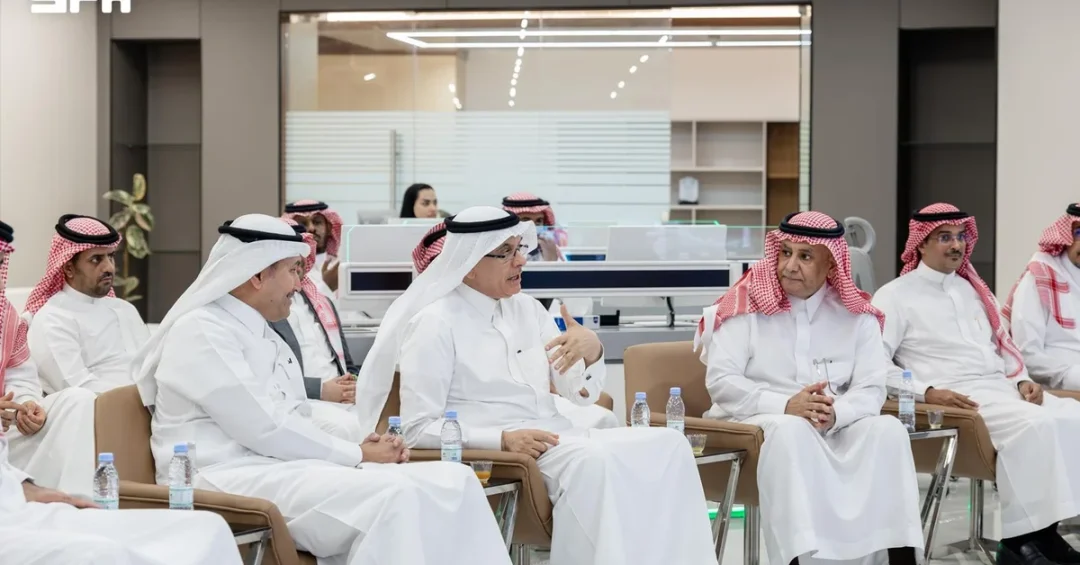
Saudi Arabia’s Minister of Transport and Logistic Services, Saleh Al-Jasser, visited the General Food Security Authority (GFSA) early warning center in Riyadh on Tuesday, November 10, 2026, where he was briefed on advanced systems monitoring food supply chains and enhancing the Kingdom’s preparedness for global disruptions. The visit underscores Saudi Arabia’s commitment to integrating cutting-edge technology with inter-agency cooperation to safeguard food security, a cornerstone of Vision 2030. Minister Al-Jasser was received by Abdulrahman Alfadley, Minister of Environment, Water and Agriculture and Chairman of the GFSA Board, at the authority’s headquarters. During the tour, Al-Jasser reviewed the center’s operations, which analyze indicators related to food supply chains and strengthen early response capabilities to local and global developments. The briefing also covered cooperation between the transport and logistics sector and the GFSA in monitoring commodity movement, improving supply efficiency, and ensuring continuous flow of goods to all regions of the Kingdom.
How does Saudi Arabia ensure that its food supply chains remain resilient amid global uncertainties? The answer lies in proactive measures like the GFSA’s early warning center, which leverages the latest technologies and advanced systems to support decision-making and enhance preparedness. This visit highlights the synergy between two vital ministries—Environment, Water and Agriculture, and Transport and Logistic Services—working together to uphold national food security. Minister Alfadley emphasized that developing the early warning system aligns with international best practices and supports Vision 2030 objectives, while Minister Al-Jasser praised the technological and operational progress, noting that the current crisis demonstrated the strength and resilience of Saudi supply chains. The Kingdom’s robust logistics infrastructure has enabled it to navigate challenges efficiently and continue aiding international supply corridors.
Context and Background
Why is food security a top priority for Saudi Arabia? With a growing population and a desert climate that limits domestic agricultural output, the Kingdom relies heavily on imports to meet its food needs. This dependence makes it vulnerable to global supply chain disruptions, whether from pandemics, geopolitical tensions, or climate events. In response, Saudi Arabia established the General Food Security Authority (GFSA) to monitor and mitigate risks, ensuring a stable supply of essential commodities. The early warning center is a key tool in this effort, providing real-time data and analysis to preempt shortages and coordinate swift responses. The center’s work is particularly crucial given that Saudi Arabia imports nearly 80% of its food, making supply chain resilience a matter of national security.
How does the early warning center operate? It continuously monitors indicators such as global commodity prices, shipping routes, port congestion, and weather patterns that could affect harvests. By integrating data from various sources, including international markets and logistics networks, the center can forecast potential disruptions and recommend corrective actions. This proactive approach allows Saudi authorities to adjust import strategies, reroute shipments, or release strategic reserves before a crisis escalates. The center also collaborates with the transport and logistics sector to track the movement of goods from ports to warehouses and retail outlets, ensuring that no region is left underserved. The visit by Minister Al-Jasser highlights the importance of this cross-sectoral collaboration in maintaining the uninterrupted flow of food across the Kingdom.
Key Details of the Visit
What specific aspects of the early warning center were showcased during the visit? Minister Al-Jasser was given a comprehensive briefing on the center’s operations, including its role in monitoring and analyzing food supply chain indicators. He reviewed the latest technologies and advanced systems used to support decision-making, which help enhance preparedness and strengthen the sustainability of food security. The briefing also covered areas of cooperation with the transport and logistics sector, such as monitoring the movement of food commodities, improving supply efficiency, and ensuring the continuous flow of goods to all regions of Saudi Arabia. These discussions are vital for identifying bottlenecks and streamlining processes, from customs clearance at ports to last-mile delivery.
What did the ministers say about the center’s impact? Minister Alfadley stated that developing the early warning system is part of GFSA’s efforts to adopt international best practices, support Vision 2030 objectives, and strengthen coordination among relevant entities to ensure the stability of food supplies. He underscored the importance of inter-agency coordination, noting that food security is a shared responsibility that requires seamless integration between agriculture, transport, and logistics. Minister Al-Jasser, in turn, praised the technological and operational progress he observed, stressing that such initiatives are critical for supporting the food security system and enhancing the ability to address future challenges efficiently. He added that the current crisis had demonstrated the strength and resilience of Saudi Arabia’s supply chains, attributing this to the Kingdom’s strong economy and advanced logistics infrastructure.
How does the transport sector contribute to food security? Minister Al-Jasser highlighted that Saudi Arabia has continued to help secure international supply chain corridors and ensure the provision of goods, commodities, and services to beneficiaries within the Kingdom and neighboring countries. This reflects the Kingdom’s role as a regional logistics hub, with its ports, airports, and road networks serving as vital arteries for trade. The transport and logistics sector’s flexibility has been instrumental in adapting to disruptions, such as rerouting shipments or increasing capacity on key routes. By working closely with the GFSA, the ministry can prioritize food shipments and ensure they reach their destinations without delay, even during peak demand or emergencies.
International and Regional Impact
How does Saudi Arabia’s food security strategy affect the wider region? As the largest economy in the Middle East and a key player in global energy markets, Saudi Arabia’s stability has ripple effects across the region. By ensuring a reliable food supply, the Kingdom not only safeguards its own population but also supports neighboring countries that depend on its logistics networks. Minister Al-Jasser’s remarks about securing international supply chain corridors underscore Saudi Arabia’s commitment to global trade and humanitarian efforts. During crises, the Kingdom has often facilitated the delivery of aid and essential goods to countries in need, leveraging its strategic location and advanced infrastructure. This role enhances Saudi Arabia’s standing as a responsible international actor and a pillar of regional stability.
What does this mean for global food supply chains? Saudi Arabia’s proactive approach to food security serves as a model for other nations facing similar challenges. The early warning center’s use of advanced technologies, such as artificial intelligence and big data analytics, demonstrates how innovation can mitigate risks in complex supply networks. By sharing best practices and cooperating with international partners, the Kingdom contributes to global efforts to build more resilient food systems. Moreover, Saudi Arabia’s investments in logistics infrastructure, including the expansion of ports and dry ports, create new opportunities for trade and investment, reinforcing its position as a global logistics hub. These efforts align with the UN Sustainable Development Goals, particularly Goal 2 on zero hunger, showcasing Saudi Arabia’s commitment to international development.
Economic and Strategic Significance
Why is food security a strategic imperative for Saudi Arabia’s economy? A stable food supply is essential for maintaining social stability and supporting economic growth. Any disruption could lead to price spikes, public discontent, and hindered economic activities. By investing in early warning systems and logistics resilience, Saudi Arabia protects its economy from external shocks and ensures that its Vision 2030 goals—such as economic diversification and improved quality of life—remain on track. The food security sector also presents opportunities for private sector involvement, from agritech startups to logistics companies, fostering innovation and job creation. The GFSA’s collaboration with the transport ministry exemplifies how public-private partnerships can drive efficiency and sustainability.
How does this visit reinforce Saudi Arabia’s strategic priorities? The visit highlights the integration of food security with broader national strategies, including the National Industrial Development and Logistics Program (NIDLP), which aims to make Saudi Arabia a leading industrial power and logistics hub. By aligning food security with transport and logistics, the Kingdom ensures that its supply chains are not only resilient but also efficient and cost-effective. This integration supports the goals of Vision 2030 by enhancing non-oil sectors, attracting foreign investment, and boosting local content. Furthermore, the emphasis on technology and innovation in the early warning center reflects the Kingdom’s commitment to digital transformation, a key pillar of Vision 2030. As Saudi Arabia continues to modernize, such initiatives will be critical in maintaining its competitive edge and ensuring long-term prosperity.
Vision 2030 Alignment
How does the early warning center contribute to Vision 2030? The center embodies several objectives of Saudi Arabia’s ambitious reform plan, including economic diversification, sustainability, and enhanced government efficiency. By leveraging technology to monitor and respond to food supply chain risks, the Kingdom reduces its reliance on oil and builds a knowledge-based economy. The center also supports the Vision’s aim to improve the quality of life for citizens by ensuring access to affordable, nutritious food. Moreover, the collaboration between the Ministry of Environment, Water and Agriculture and the Ministry of Transport and Logistic Services demonstrates the integrated approach needed to achieve Vision 2030’s goals. This visit underscores the Kingdom’s proactive stance in addressing global challenges and its determination to secure a prosperous future for all.
What does the future hold for Saudi Arabia’s food security? As global challenges evolve, Saudi Arabia will continue to invest in advanced technologies and strengthen partnerships to stay ahead of potential disruptions. The early warning center is expected to expand its capabilities, incorporating more data sources and predictive analytics to enhance its foresight. The Kingdom will also deepen its engagement with international organizations and trading partners to secure diverse food sources and promote sustainable agriculture. Through these efforts, Saudi Arabia not only protects its national interests but also contributes to global food security, reinforcing its role as a responsible and forward-looking leader. The visit by Minister Al-Jasser serves as a testament to the Kingdom’s unwavering commitment to this vital cause, ensuring that Saudi Arabia remains a beacon of stability and innovation in the region and beyond.
20 Questions
Q1. What was the purpose of Minister Al-Jasser’s visit to the GFSA early warning center?
A1. Minister Al-Jasser visited to review the center’s operations, which monitor food supply chains and enhance early response to disruptions, and to discuss cooperation between the transport and logistics sector and the GFSA.
Q2. Who received Minister Al-Jasser at the GFSA headquarters?
A2. He was received by Abdulrahman Alfadley, Minister of Environment, Water and Agriculture and Chairman of the GFSA Board.
Q3. What technologies were highlighted during the briefing?
A3. The briefing covered the latest technologies and advanced systems used to support decision-making, including tools for monitoring supply chain indicators and enhancing preparedness.
Q4. How does the early warning center help Saudi Arabia’s food security?
A4. It monitors and analyzes food supply chain indicators, strengthens early response capabilities, and ensures continuous flow of goods to all regions, thereby enhancing food security sustainability.
Q5. What did Minister Alfadley say about the early warning system?
A5. He stated it is part of GFSA’s efforts to adopt international best practices, support Vision 2030 objectives, and strengthen coordination among relevant entities to ensure stable food supplies.
Q6. What did Minister Al-Jasser praise about the center?
A6. He praised the technological and operational progress, stressing the importance of such initiatives in supporting food security and addressing future challenges efficiently.
Q7. How did the current crisis demonstrate Saudi supply chain resilience?
A7. Minister Al-Jasser noted that the crisis showed the strength and resilience of Saudi supply chains, supported by robust logistics infrastructure that enabled efficient handling of circumstances.
Q8. What role does the transport sector play in food security?
A8. The transport and logistics sector monitors food commodity movement, improves supply efficiency, and ensures goods reach all regions, while also securing international supply corridors.
Q9. How does the GFSA collaborate with the transport ministry?
A9. They cooperate on monitoring food supply chains, improving efficiency, and ensuring continuous flow of goods, with the transport sector providing logistics support and infrastructure.
Q10. What are the key objectives of the GFSA?
A10. The GFSA aims to monitor food supply chain risks, enhance early warning capabilities, coordinate with stakeholders, and ensure stable food supplies in line with Vision 2030.
Q11. How does this visit align with Vision 2030?
A11. It supports Vision 2030 by promoting technology adoption, inter-agency coordination, and economic diversification, while enhancing food security and quality of life.
Q12. What international best practices is the GFSA adopting?
A12. The GFSA is adopting advanced monitoring systems, predictive analytics, and collaborative frameworks used globally to manage food supply chain risks and ensure resilience.
Q13. How does Saudi Arabia help secure international supply corridors?
A13. The Kingdom leverages its strategic location and advanced logistics infrastructure to facilitate the flow of goods, commodities, and services to beneficiaries within Saudi Arabia and neighboring countries.
Q14. What advanced systems support the early warning center?
A14. The center uses cutting-edge technologies such as data analytics, real-time monitoring, and integrated communication systems to track supply chain indicators and support decision-making.
Q15. What is the significance of inter-agency coordination in food security?
A15. Coordination ensures seamless integration of efforts, efficient resource use, and timely responses to disruptions, thereby strengthening the overall food security system.
Q16. How does the early warning center enhance preparedness?
A16. By providing early detection of potential disruptions, it enables authorities to take preemptive actions, such as adjusting imports or rerouting shipments, to maintain supply stability.
Q17. What economic benefits arise from a resilient food supply chain?
A17. It prevents price spikes, supports social stability, attracts investment, and fosters innovation in agritech and logistics, contributing to economic diversification.
Q18. How does Saudi Arabia’s food security strategy impact the region?
A18. It promotes regional stability by ensuring reliable food supplies, supporting neighboring countries through logistics networks, and enhancing trade and humanitarian efforts.
Q19. What future developments are expected for the early warning center?
A19. The center is expected to expand its capabilities with more data sources and predictive analytics, deepen international partnerships, and further integrate with logistics networks.
Q20. How does the visit reflect Saudi Arabia’s commitment to food security?
A20. It demonstrates the Kingdom’s proactive approach, high-level attention, and continuous efforts to safeguard food supplies through technology, cooperation, and alignment with Vision 2030.
Reader Feedback
We value your thoughts. Please share your feedback on this article.
Your feedback helps us improve our coverage.
Related articles
 Two Holy Mosques Authority CEO Highlights Shift to Proactive Facilities Management
 Saudi FM Joins Qatar, E4 in Paris for Regional Security Talks
 Crown Prince, Greek PM Discuss Bilateral Cooperation
 Hajj Conference Advances Operational Excellence for Pilgrims
 Hajj Conference Workshop Discusses Supply Chain Security Under ISO 28000
 Saudi Arabia Unveils AI-Powered Smart Security for Hajj