


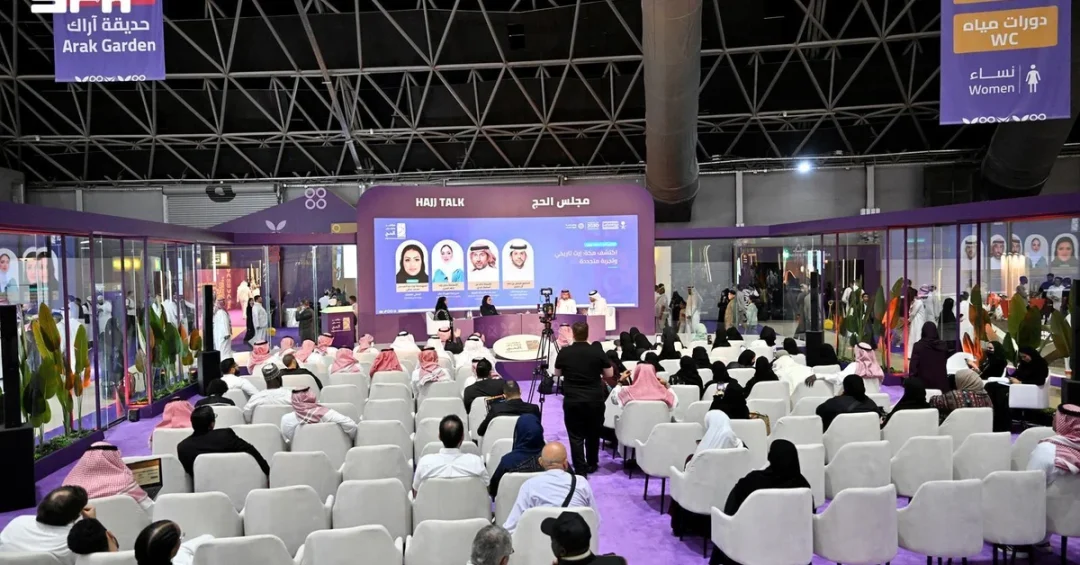
The Hajj Talk Stage at the Hajj Conference and Exhibition in Jeddah has become a central meeting point for officials, experts, and representatives of participating organizations dedicated to improving services for pilgrims, according to information released via official Saudi channels. The sessions, which run as part of the conference’s accompanying program, bring together specialists from government, the private sector, and nonprofit organizations to share practical experience and explore innovative solutions for the future of Hajj and Umrah.
Held under the auspices of the Kingdom’s leadership, the conference underscores Saudi Arabia’s unwavering commitment to serving the Guests of God. The Hajj Talk Stage offers a dynamic platform for dialogue, where participants exchange ideas on digital transformation, modern technologies, artificial intelligence, operational efficiency, and the overall pilgrim experience. As the world looks to Saudi Arabia for guidance on managing large-scale religious gatherings, these discussions highlight the Kingdom’s proactive approach to continuous improvement. Isn’t it remarkable how a single stage can bring together so many minds focused on a shared mission of service?
Context and Background
The Hajj Conference and Exhibition, held in Jeddah, is an annual international gathering that showcases the latest advancements in Hajj and Umrah services. It serves as a vital forum for government agencies, private companies, and nonprofit organizations to collaborate on enhancing the pilgrimage journey. The Hajj Talk Stage, a key feature of the event, is designed to facilitate knowledge exchange and practical problem-solving. Participants include officials from the Ministry of Hajj and Umrah, representatives of the General Authority for the Care of the Grand Mosque and the Prophet’s Mosque, and experts from various sectors.
Why is such a platform necessary? The sheer scale of Hajj and Umrah operations demands continuous innovation and coordination. Millions of pilgrims from around the world perform these rituals each year, and their experiences are shaped by the efficiency and quality of services provided. The conference addresses operational and regulatory challenges, ensuring that Saudi Arabia remains at the forefront of pilgrimage management. By bringing together diverse stakeholders, the Hajj Talk Stage fosters a collaborative environment where best practices are shared, and new ideas are born. This aligns with the Kingdom’s long-standing tradition of hospitality and its commitment to facilitating the rituals for all pilgrims.
The sessions also highlight the importance of international cooperation. As the host of the two holy mosques, Saudi Arabia takes its responsibility seriously, and the conference reflects its dedication to engaging with global partners. The exchange of expertise at the Hajj Talk Stage is not limited to Saudi entities; it includes representatives from other nations who bring their own perspectives and experiences. This cross-pollination of ideas is essential for addressing the complex logistical and cultural aspects of the pilgrimage.
Key Details and Session Highlights
The Hajj Talk Stage sessions cover a wide range of topics, all aimed at enriching the pilgrim experience. Digital transformation is a major focus, with discussions on how technology can streamline processes such as visa issuance, transportation, accommodation, and health services. Artificial intelligence is being explored for crowd management, real-time translation, and personalized assistance. Operational efficiency is another key theme, with experts sharing strategies to optimize resource allocation and reduce wait times at various stages of the pilgrimage.
Investment opportunities and partnerships that support the sector’s development are also on the agenda. The conference provides a platform for entrepreneurs and investors to learn about projects that enhance infrastructure and services. This not only benefits pilgrims but also contributes to the growth of the Saudi economy. Visitors to the Hajj Talk Stage can engage with speakers, ask questions, and participate in discussions, making the sessions interactive and dynamic. Have you ever considered how a simple conversation at such an event could lead to a breakthrough that benefits millions?
Moreover, the sessions emphasize the importance of the pilgrim experience from arrival to departure. This includes everything from the moment a pilgrim applies for a visa to their return home. By focusing on each touchpoint, experts can identify areas for improvement and implement solutions that make the journey smoother and more spiritually fulfilling. The Hajj Talk Stage thus serves as a catalyst for innovation, turning ideas into actionable plans.
International and Regional Impact
The Hajj Conference and Exhibition, and specifically the Hajj Talk Stage, have significant implications beyond Saudi Arabia’s borders. Pilgrims come from virtually every country, and the services they receive reflect on the Kingdom’s global standing. By continuously improving these services, Saudi Arabia reinforces its role as a responsible global leader and a trusted custodian of the holy sites. The exchange of knowledge at the conference also benefits other nations, as they can learn from Saudi Arabia’s best practices in managing large crowds, ensuring safety, and providing high-quality services.
Regional cooperation is another key aspect. Many countries in the Middle East and beyond look to Saudi Arabia for guidance on pilgrimage management. The Hajj Talk Stage facilitates dialogue that can lead to joint initiatives and shared solutions. For instance, countries may collaborate on health protocols, transportation logistics, or digital platforms that simplify the pilgrimage for their citizens. How does this benefit the wider region? By working together, nations can ensure that pilgrims from all backgrounds have a seamless and spiritually enriching experience, which in turn promotes goodwill and understanding.
The conference also showcases Saudi Arabia’s leadership in leveraging technology for social good. The use of AI and digital tools in Hajj and Umrah services is a model that other countries can emulate for large-scale events. This positions the Kingdom as a pioneer in smart city solutions and smart pilgrimage, further enhancing its reputation as a forward-thinking nation.
Economic and Strategic Significance
The Hajj and Umrah sector is a vital component of Saudi Arabia’s economy, contributing significantly to GDP and creating jobs. The Hajj Conference and Exhibition, by fostering innovation and investment, helps to expand this sector’s potential. The Hajj Talk Stage highlights opportunities for private-sector involvement, from hospitality and transportation to technology and healthcare. These investments not only improve services but also generate returns and stimulate economic growth.
Strategically, the conference supports Saudi Vision 2030 by diversifying the economy away from oil and promoting sustainable development. The Pilgrim Experience Program, a key initiative under Vision 2030, aims to enrich the Hajj and Umrah journeys, making it easier for pilgrims to perform their rituals and improving service quality. The Hajj Talk Stage directly contributes to these objectives by facilitating the exchange of ideas and best practices that lead to tangible improvements. Isn’t it inspiring to see how economic goals and spiritual services can align so harmoniously?
Furthermore, the emphasis on digital transformation and AI aligns with the National Strategy for Data and AI, positioning Saudi Arabia as a leader in the Fourth Industrial Revolution. The knowledge shared at the conference can be applied to other sectors, creating a ripple effect of innovation across the economy.
Vision 2030 Alignment
The Hajj Talk Stage and the broader Hajj Conference and Exhibition are exemplary embodiments of Saudi Vision 2030. They reflect the Kingdom’s commitment to enhancing the quality of life for citizens and visitors, promoting economic diversification, and leveraging technology for the common good. The Pilgrim Experience Program, which is a cornerstone of Vision 2030, seeks to increase the number of pilgrims and improve their experience, and the conference is a key enabler of these goals.
By bringing together experts from around the world, the conference also strengthens international partnerships, which are essential for achieving Vision 2030’s objectives. The exchange of knowledge and the showcasing of innovative solutions demonstrate Saudi Arabia’s openness to collaboration and its determination to lead by example. As the Kingdom continues its journey towards a brighter future, platforms like the Hajj Talk Stage will remain vital for driving progress and ensuring that the Guests of God receive the highest level of care and service. The forward-looking vision of the leadership ensures that Hajj and Umrah services will continue to evolve, setting new global standards for excellence and hospitality.
20 Questions
Q1. What is the Hajj Talk Stage?
A1. The Hajj Talk Stage is a dedicated platform at the Hajj Conference and Exhibition in Jeddah where officials, experts, and representatives share practical experience and explore ways to improve services for pilgrims.
Q2. Who participates in the Hajj Talk Stage sessions?
A2. Participants include government officials, private-sector representatives, nonprofit organizations, and Hajj and Umrah specialists from Saudi Arabia and abroad, all focused on enhancing pilgrim services.
Q3. What topics are discussed at the Hajj Talk Stage?
A3. Topics include digital transformation, modern technologies, artificial intelligence, operational efficiency, the pilgrim experience, investment opportunities, and partnerships that support the sector’s development.
Q4. How does the Hajj Talk Stage support Saudi Vision 2030?
A4. It supports Vision 2030 by fostering innovation and collaboration that enrich Hajj and Umrah journeys, aligning with the Pilgrim Experience Program’s objectives to improve service quality and facilitate rituals.
Q5. What is the Pilgrim Experience Program?
A5. The Pilgrim Experience Program is a Vision 2030 initiative that aims to enhance the quality of services for pilgrims, making it easier for them to perform Hajj and Umrah and enriching their spiritual journey.
Q6. How does digital transformation improve pilgrim services?
A6. Digital transformation streamlines processes such as visa issuance, transportation, accommodation, and health services, making the pilgrimage smoother and more efficient for millions of pilgrims.
Q7. What role does artificial intelligence play in Hajj and Umrah?
A7. AI is used for crowd management, real-time translation, personalized assistance, and other applications that enhance safety and the overall pilgrim experience.
Q8. Why is operational efficiency important for Hajj and Umrah?
A8. Operational efficiency ensures that resources are optimally allocated, wait times are reduced, and services are delivered effectively, which is crucial given the large number of pilgrims.
Q9. What investment opportunities are highlighted at the conference?
A9. Investment opportunities in infrastructure, hospitality, transportation, technology, and healthcare are showcased, offering private-sector entities a chance to contribute to and benefit from the sector’s growth.
Q10. How does the conference promote international cooperation?
A10. By bringing together representatives from various countries, the conference facilitates the exchange of best practices and joint initiatives that benefit pilgrims globally.
Q11. What is the significance of the Hajj Conference and Exhibition?
A11. It is an international gathering that showcases the latest advancements in Hajj and Umrah services, promotes collaboration, and reinforces Saudi Arabia’s leadership in pilgrimage management.
Q12. How does the Hajj Talk Stage enhance the pilgrim experience?
A12. By identifying areas for improvement and sharing innovative solutions, the stage helps create a seamless and spiritually fulfilling journey for pilgrims from arrival to departure.
Q13. What are the economic benefits of improving Hajj and Umrah services?
A13. Improved services attract more pilgrims, stimulate economic growth, create jobs, and support the diversification of the Saudi economy away from oil dependence.
Q14. How does Saudi Arabia ensure the safety of pilgrims?
A14. Through advanced technologies, effective crowd management strategies, health protocols, and continuous coordination among various government and private entities.
Q15. What is the role of the Ministry of Hajj and Umrah?
A15. The Ministry oversees the Hajj and Umrah sector, regulates services, and works to enhance the pilgrim experience in line with Vision 2030 objectives.
Q16. How can visitors participate in the Hajj Talk Stage?
A16. Visitors can attend sessions, listen to speakers, engage in discussions, and learn about initiatives to improve services for pilgrims.
Q17. What are the key objectives of the Pilgrim Experience Program?
A17. The program aims to enrich Hajj and Umrah journeys, make it easier for pilgrims to perform rituals, improve service quality, and increase the number of pilgrims.
Q18. How does the conference address regulatory challenges?
A18. Through dialogue and knowledge exchange, participants explore ways to streamline regulations, enhance coordination, and adopt best practices that facilitate pilgrimage services.
Q19. What innovative solutions are showcased at the conference?
A19. Solutions include AI-driven crowd management, digital platforms for visa and booking, smart transportation systems, and other technologies that improve efficiency and the pilgrim experience.
Q20. How does the Hajj Talk Stage contribute to Saudi Arabia’s global standing?
A20. By demonstrating the Kingdom’s commitment to excellence in serving pilgrims, the stage enhances Saudi Arabia’s reputation as a responsible global leader and custodian of the holy sites.
Reader Feedback
We value your thoughts. Please share your feedback on this article.
Your feedback helps us improve our coverage.
Related articles
 Makkah Launches ‘Tamat’ Certificate for Visitor Excellence
 Dhahran Al-Janoub Market: A Cultural Hub Thrives
 Al-Hababah Park: A Green Oasis in Najran’s Hubuna
 Ala Khutah Pavilion Showcases Prophet’s Hijra Route at Hajj Conference
 Mild Weather Draws Visitors to Valleys of Madinah
 Al-Bukayriyah: Heritage and Tourism in Qassim