


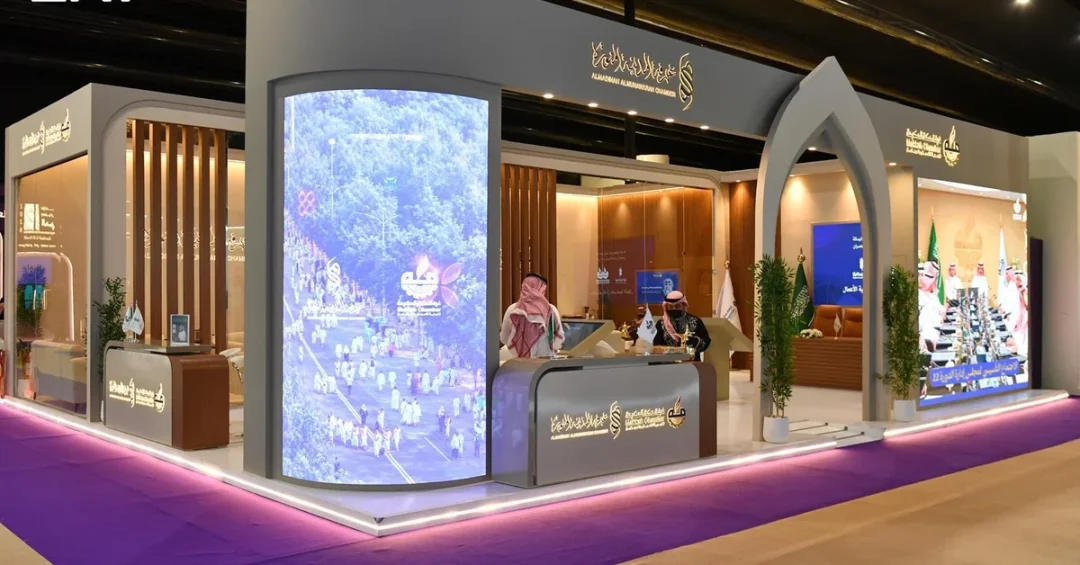
The Al-Madinah Al-Munawwarah Chamber has presented a detailed package of economic reports, growth indicators, and business services at the Hajj Conference and Exhibition, offering investors a comprehensive view of opportunities tied to the Hajj and Umrah sector and its supporting industries. The chamber’s pavilion, showcased during the conference, was designed to connect the business community with the economic realities and potential of the Madinah region, according to information released through official Saudi channels and reported by the Saudi Press Agency (SPA). The presentation reflects a deliberate effort to translate the annual pilgrimage economy into a transparent, investable landscape for both domestic and international stakeholders.
Why does a single chamber’s pavilion at a specialized exhibition matter for investors half a world away? Because the Hajj and Umrah sector is no longer viewed in the Kingdom as a seasonal logistical exercise, but as a year-round economic engine with supply chains stretching across hospitality, transport, logistics, food services, retail, healthcare, and technology. By placing concrete economic data in front of conference visitors, the Madinah Chamber is signaling that the region’s pilgrimage economy is open, measurable, and ready for structured partnership. The initiative aligns with a broader national push to make Saudi Arabia’s business environment more accessible and transparent for global capital.
Context and Background
What makes the timing of this presentation significant? The Hajj Conference and Exhibition serves as a central gathering point for government bodies, service providers, investors, and entrepreneurs engaged in the pilgrimage economy. The Al-Madinah Al-Munawwarah Chamber used this platform to present economic reports that detail the current state of business activity and growth indicators across various sectors in the region. These reports are not abstract statistics; they describe a living economic ecosystem that expands and contracts with the rhythms of the pilgrimage calendar while increasingly developing permanent, year-round capacity.
Madinah occupies a unique position in this ecosystem. As the second holiest city in Islam and a principal destination for millions of pilgrims each year, it hosts a dense network of hotels, transport operators, retail outlets, and service providers whose livelihoods are interwoven with the flow of visitors. Historically, much of this activity was informal or fragmented, making it difficult for outside investors to assess risk and opportunity. The chamber’s decision to compile and present structured economic reports represents a meaningful shift toward formalization and data-driven decision-making.
How does this fit into the Kingdom’s wider economic trajectory? Saudi Arabia has been steadily building the institutional infrastructure needed to support a diversified, investment-friendly economy. Chambers of commerce across the Kingdom are being repositioned as active facilitators of private-sector growth rather than passive registries. The Madinah Chamber’s presence at the Hajj Conference reflects this evolving role, placing the chamber at the intersection of policy, data, and entrepreneurship. For an international audience, this signals that Saudi Arabia’s regional institutions are increasingly capable of engaging global investors on their own terms, with clear information and defined support mechanisms.
Key Details
What exactly did the pavilion offer visitors? According to the Saudi Press Agency, the chamber showcased economic reports detailing the current state of business activity and growth indicators across various sectors in the region. These reports provided investors with insights into available opportunities and promising areas related to the Hajj and Umrah sector and its supporting industries. The emphasis on “supporting industries” is important: it directs attention beyond core pilgrimage services toward adjacent sectors such as construction, utilities, digital payments, cold-chain logistics, and vocational training, each of which requires sustained investment to meet rising demand.
The pavilion also introduced visitors to the services and initiatives the chamber offers to support the business community. These include efforts to enhance the investment environment, foster entrepreneurship, and empower small and medium-sized enterprises (SMEs). SMEs are a critical component of the Saudi economy and a central focus of national diversification efforts. By highlighting its SME support initiatives at a major international conference, the chamber is communicating that investment in Madinah is not limited to large-scale infrastructure projects; there is a deliberate strategy to cultivate smaller, agile businesses that can respond quickly to changing demand.
Which initiatives are most relevant for prospective partners? The chamber’s services are structured around reducing friction for businesses entering or expanding in the region. This includes guidance on regulatory pathways, identification of sector-specific opportunities, and facilitation of connections between investors and local operators. While the specific mechanics of each program are administered by the chamber, the overarching message is one of accessibility. For investors accustomed to navigating opaque local systems in emerging markets, the presence of a dedicated institutional partner offering structured support can materially lower the cost and risk of market entry.
International and Regional Impact
How does Madinah’s investment outreach resonate beyond the Kingdom’s borders? The Hajj and Umrah economy is inherently international, drawing participants from across the Muslim world and, increasingly, from global service providers and logistics firms. When the Madinah Chamber presents opportunities to an international audience, it is effectively inviting foreign capital and expertise into a sector that has historically been dominated by local and regional players. This opening can accelerate technology transfer, improve service standards, and introduce best practices in hospitality and crowd management that benefit pilgrims directly.
At the regional level, the initiative reinforces Saudi Arabia’s position as a hub for Islamic economy and finance. Gulf neighbors and broader Middle Eastern markets watch the Kingdom’s pilgrimage-sector developments closely, as they influence patterns of trade, travel, and investment across the region. A more transparent and investable Madinah economy strengthens the Kingdom’s ability to coordinate with partners on infrastructure, transportation links, and shared service delivery. For international investors, understanding these regional dynamics is essential for evaluating long-term opportunities in the sector.
Economic and Strategic Significance
Why should economic observers pay attention to a chamber pavilion at a specialized exhibition? The answer lies in the scale and trajectory of the pilgrimage economy. Hajj and Umrah represent a substantial and growing source of non-oil revenue for Saudi Arabia, and the Kingdom has invested heavily in expanding capacity, improving facilities, and enhancing the pilgrim experience. As capacity grows, so too does demand for supporting infrastructure: expanded accommodation, modernized transport fleets, upgraded medical facilities, and digital platforms for booking, payments, and crowd management. Each of these areas represents a distinct investment opportunity, and the chamber’s reports are designed to make those opportunities legible.
What is the strategic logic behind empowering SMEs alongside large investors? A resilient economy requires diversity in scale as well as in sector. Large infrastructure projects deliver headline capacity, but SMEs provide the flexibility, innovation, and local knowledge that sustain service quality over time. By explicitly promoting entrepreneurship and SME empowerment, the Madinah Chamber is pursuing a balanced growth model in which large-scale investment and grassroots enterprise reinforce one another. This approach reduces concentration risk and helps ensure that economic gains are distributed across the community, fostering stability and social cohesion.
How does data transparency change investor behavior? Reliable data is the foundation of confident decision-making. When investors can access clear reports on business activity and growth indicators, they are better positioned to assess market size, competitive dynamics, and potential returns. The chamber’s presentation of such reports is therefore more than a public-relations exercise; it is a substantive step toward building an investment-grade information environment. Over time, consistent data disclosure can attract institutional investors who require rigorous due diligence before committing capital to a region.
Vision 2030 Alignment
How does the Madinah Chamber’s initiative connect to Saudi Vision 2030? Vision 2030 is a comprehensive national transformation strategy aimed at diversifying the economy, empowering the private sector, and enhancing the quality of life and services for citizens and visitors. The chamber’s work at the Hajj Conference directly supports several pillars of this vision: it promotes private-sector growth, encourages entrepreneurship, fosters SME development, and enhances the investment environment in one of the Kingdom’s most strategically important regions. By making the pilgrimage economy more accessible to investors, the chamber is helping to unlock non-oil revenue streams that are central to the national diversification agenda.
What lies ahead for investors who engage with these opportunities? The trajectory is clear: Saudi Arabia is committed to expanding the capacity and quality of its pilgrimage infrastructure while simultaneously making the surrounding economy more open, data-rich, and welcoming to partnership. The Madinah Chamber’s presentation is a concrete manifestation of that commitment, offering a structured entry point for investors who wish to participate in the region’s growth. As the Kingdom continues to modernize its institutions and streamline processes, the role of regional chambers as facilitators of investment is likely to grow, positioning Madinah and other regions as dynamic contributors to a diversified, globally connected Saudi economy.
20 Questions
Q1. What event did the Al-Madinah Al-Munawwarah Chamber participate in?
A1. The chamber participated in the Hajj Conference and Exhibition, where it presented economic reports, growth indicators, and business services to conference visitors and prospective investors.
Q2. What did the chamber showcase at its pavilion?
A2. The pavilion showcased economic reports detailing current business activity and growth indicators across various sectors, along with the chamber’s key services and initiatives for the business sector.
Q3. Who was the intended audience for the chamber’s presentation?
A3. The presentation targeted investors and business community members interested in opportunities related to the Hajj and Umrah sector and its supporting industries in the Madinah region.
Q4. How did the chamber provide insights to investors?
A4. The chamber provided insights by presenting economic reports that detailed available opportunities and promising areas within the Hajj and Umrah sector and its supporting industries.
Q5. What kinds of services did the pavilion introduce to visitors?
A5. The pavilion introduced services and initiatives designed to support the business community, enhance the investment environment, foster entrepreneurship, and empower small and medium-sized enterprises.
Q6. Why is the concept of supporting industries important?
A6. Supporting industries such as hospitality, transport, logistics, and retail are essential for delivering quality pilgrimage services and represent distinct investment opportunities for business partners.
Q7. What role do small and medium-sized enterprises play in this context?
A7. SMEs provide flexibility, innovation, and local knowledge that sustain service quality, making them a key focus of the chamber’s empowerment initiatives within the region.
Q8. Why does Madinah occupy a unique economic position?
A8. As the second holiest city in Islam and a principal pilgrimage destination, Madinah hosts a dense network of businesses whose livelihoods are interwoven with the flow of millions of visitors.
Q9. How does the presentation reflect the evolving role of chambers of commerce?
A9. The presentation shows chambers are being repositioned as active facilitators of private-sector growth and investment rather than as passive administrative registries.
Q10. What does the emphasis on data transparency achieve?
A10. Data transparency builds investor confidence by enabling better assessment of market size, competitive dynamics, and potential returns before capital is committed.
Q11. Why is the pilgrimage economy considered a year-round engine?
A11. The sector now drives sustained demand across hospitality, transport, food services, healthcare, and technology, extending economic activity well beyond the traditional pilgrimage seasons.
Q12. How does the initiative support foreign investment?
A12. By offering structured information and dedicated institutional support, the chamber lowers the cost and risk for foreign investors seeking to enter or expand in the region.
Q13. What impact could the initiative have on service standards?
A13. The opening to international partners can accelerate technology transfer and introduce best practices in hospitality and crowd management that benefit pilgrims directly.
Q14. How does the initiative strengthen regional economic coordination?
A14. A more transparent and investable Madinah economy strengthens the Kingdom’s ability to coordinate with regional partners on infrastructure, transportation, and shared service delivery.
Q15. Why is the pilgrimage sector significant for non-oil revenue?
A15. Hajj and Umrah represent a substantial and growing source of non-oil revenue, supporting the Kingdom’s broader economic diversification efforts.
Q16. What does a balanced growth model mean in this context?
A16. It means combining large-scale infrastructure investment with SME empowerment so that economic gains are distributed across the community and concentration risk is reduced.
Q17. How does the chamber’s work align with Vision 2030?
A17. It promotes private-sector growth, entrepreneurship, SME development, and a better investment environment, all of which support Vision 2030’s diversification and empowerment pillars.
Q18. What is the long-term outlook for investors in the region?
A18. Saudi Arabia is committed to expanding pilgrimage capacity and quality while making the surrounding economy more open and data-rich, creating a clear pathway for structured partnership.
Q19. What message does the presentation send to global investors?
A19. It signals that the region’s pilgrimage economy is open, measurable, and ready for structured partnership, with institutional support available to guide market entry.
Q20. What broader change does the initiative illustrate?
A20. It illustrates the modernization of Saudi regional institutions and the growing role of chambers of commerce as dynamic contributors to a diversified, globally connected Saudi economy.
Reader Feedback
We value your thoughts. Please share your feedback on this article.
Your feedback helps us improve our coverage.
Related articles
 IsDB-WAIPA Investment Excellence Awards 2026 Winners Revealed
 ‘Saudi Made’ Expands Role in Hajj and Umrah Services
 Saudi Chambers, U.S. Chamber Sign MoU at B20 Summit
 SOCPA Celebrates Accounting Day, 300+ Reforms
 Oil Prices Fall as Global Supply Conditions Improve
 B20 Summit Opens in Washington: Saudi Arabia Engages