


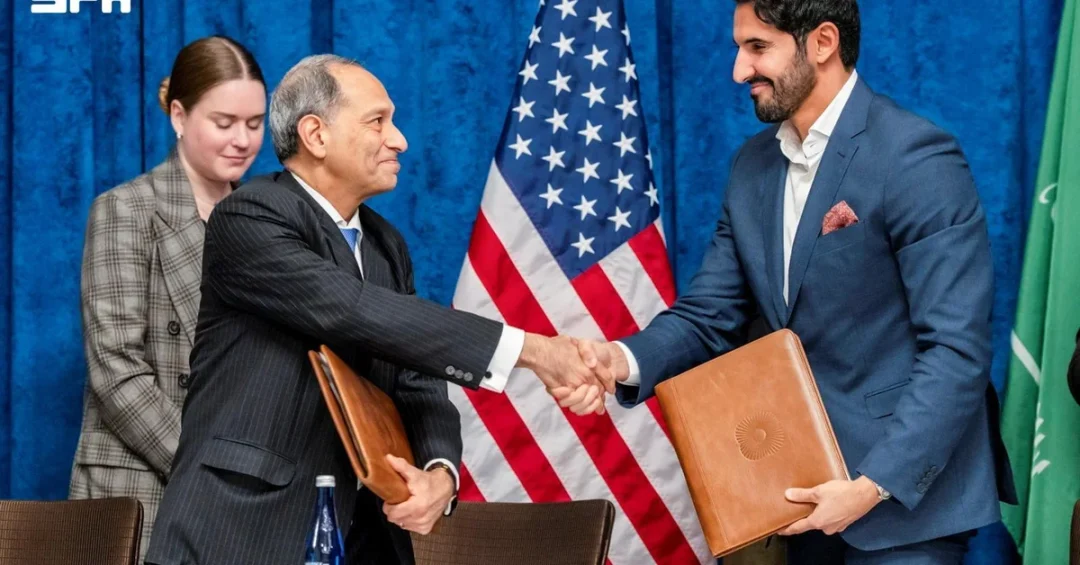
The Federation of Saudi Chambers of Commerce and the U.S. Chamber of Commerce signed a memorandum of understanding on November 10, 2026, in Washington, D.C., to strengthen trade and investment cooperation between Saudi Arabia and the United States. The agreement was signed on the sidelines of the B20 Summit, a premier gathering of global business leaders, and underscores the deepening economic ties between the two nations. The MoU aims to expand opportunities for collaboration between the business sectors of both countries, with a particular focus on innovation and emerging industries.
The signing took place during a session on Saudi-U.S. innovation and economic cooperation, organized by the U.S. Chamber of Commerce. The session featured remarks from Nawaf Alissa, Deputy Chief of Mission at the Saudi Embassy in the United States, and Sultan Al-Musallam, Secretary-General of the Federation of Saudi Chambers of Commerce, along with several U.S. Chamber officials and representatives from major companies. The event highlighted the growing partnership between the two countries, which has evolved beyond traditional sectors like oil and gas into new fields such as artificial intelligence, digital technologies, advanced manufacturing, and infrastructure. How does this agreement signal a new era of economic collaboration between Saudi Arabia and the United States?
Context and Background
The memorandum of understanding between the Federation of Saudi Chambers of Commerce and the U.S. Chamber of Commerce represents a significant milestone in the long-standing economic relationship between Saudi Arabia and the United States. The Federation of Saudi Chambers of Commerce is the apex body representing the Kingdom’s business community, while the U.S. Chamber of Commerce is the world’s largest business federation, advocating for pro-business policies and facilitating international trade. This agreement builds on decades of cooperation, but it also reflects the changing dynamics of the global economy, where innovation and technology play an increasingly central role. Why is this MoU particularly important at this moment in history?
The signing coincided with the B20 Summit, held in Washington from November 9 to 11, which brings together business leaders and international economic institutions to discuss priorities related to economic growth, trade, investment, and innovation. The B20 serves as the official business engagement group of the G20 and provides a platform for the private sector to contribute to global economic governance. Saudi Arabia’s active participation in the B20 underscores its commitment to shaping the global economic agenda and fostering international partnerships. The MoU is not just a bilateral agreement; it is a testament to Saudi Arabia’s growing role as a global economic player and a bridge between East and West.
Under Saudi Vision 2030, the Kingdom has embarked on an ambitious economic transformation aimed at diversifying its economy away from oil dependence and creating a vibrant private sector. This transformation has opened new avenues for international collaboration, particularly in sectors like renewable energy, technology, tourism, and entertainment. The United States, with its advanced technology and innovative companies, is a natural partner in this journey. The MoU is expected to facilitate greater exchange of expertise, joint ventures, and investment flows between the two countries. What does this mean for businesses in both nations looking to expand their horizons?
Key Details of the Agreement
The memorandum of understanding was signed during a dedicated session on Saudi-U.S. innovation and economic cooperation, organized by the U.S. Chamber of Commerce. The session brought together high-level officials, including Nawaf Alissa, Deputy Chief of Mission at the Saudi Embassy in the United States, and Sultan Al-Musallam, Secretary-General of the Federation of Saudi Chambers of Commerce. In his remarks, Alissa highlighted the depth of economic relations between the two countries, noting that the partnership has continued to evolve, expanding from traditional sectors into new fields such as artificial intelligence, digital technologies, advanced manufacturing, and infrastructure. He also pointed out that the total value of investment activities by the Public Investment Fund (PIF) in the United States has reached approximately $170 billion since 2017, underscoring the scale of Saudi investment in the U.S. economy.
The MoU aims to strengthen trade and investment cooperation and expand opportunities for collaboration between the business sectors of both countries. While the specific initiatives under the agreement are yet to be detailed, it is expected to focus on facilitating business exchanges, promoting joint ventures, and supporting innovation-driven projects. The agreement also aligns with Saudi Arabia’s efforts to attract foreign investment and expertise as part of Vision 2030. The presence of U.S. Chamber officials and representatives from various companies at the signing ceremony indicates strong private-sector interest in deepening ties. How will this MoU translate into tangible benefits for small and medium-sized enterprises in both countries?
The B20 Summit itself provided a fertile ground for such an agreement, as it convenes business leaders to discuss and recommend policies on trade, investment, and innovation. The summit’s agenda includes sessions on digital transformation, sustainable growth, and global supply chains, all of which are relevant to the Saudi-U.S. partnership. The MoU is a concrete outcome of these discussions, demonstrating the commitment of both sides to turn dialogue into action. The agreement also reflects the broader trend of increasing economic cooperation between the United States and the Gulf region, as countries in the region pursue diversification and modernization.
International and Regional Impact
The signing of the MoU between the Federation of Saudi Chambers of Commerce and the U.S. Chamber of Commerce is likely to have significant implications for international trade and investment flows. It reinforces the strategic economic partnership between Saudi Arabia and the United States, two of the world’s largest economies. For the United States, the agreement provides enhanced access to the Saudi market, which is undergoing rapid transformation and offers opportunities in sectors ranging from technology to tourism. For Saudi Arabia, it facilitates access to American expertise, technology, and capital, which are essential for achieving the goals of Vision 2030. The MoU also sends a positive signal to global investors about the attractiveness of the Saudi market and the reliability of its business environment. How might this agreement influence other countries’ approach to economic engagement with Saudi Arabia?
Regionally, the agreement could have a ripple effect, encouraging other Gulf Cooperation Council (GCC) countries to pursue similar partnerships with the United States. It also strengthens the economic dimension of the broader U.S.-Saudi relationship, which encompasses security, energy, and cultural ties. The B20 Summit, with its focus on global economic challenges, provided an ideal platform for this agreement, as it highlights the role of the private sector in driving growth and innovation. The MoU is expected to boost bilateral trade, which already stands at tens of billions of dollars annually, and to create new opportunities for collaboration in high-growth sectors. What role will the private sector play in realizing the full potential of this agreement?
Economic and Strategic Significance
Economically, the MoU is poised to deepen the integration of Saudi and American businesses, fostering innovation and efficiency. The Public Investment Fund’s $170 billion investment in the United States since 2017 is a clear indication of the scale of Saudi capital deployed in the U.S. market. This investment has supported job creation and economic growth in both countries. The new agreement is expected to build on this momentum, encouraging more Saudi investment in the U.S. and more American investment in Saudi Arabia. It also aligns with Saudi Arabia’s efforts to diversify its economy, as outlined in Vision 2030, by promoting sectors such as technology, manufacturing, and renewable energy. The strategic significance lies in the fact that both countries are committed to a long-term partnership that goes beyond transactional exchanges.
Furthermore, the agreement underscores Saudi Arabia’s growing role as a global hub for business and innovation. The Kingdom’s ambitious giga-projects, such as NEOM and the Red Sea Project, offer unprecedented opportunities for American companies in construction, technology, and tourism. By facilitating collaboration, the MoU can help American firms participate in these transformative projects, while Saudi businesses can benefit from American know-how and best practices. The agreement also complements other Saudi initiatives, such as the National Industrial Development and Logistics Program, which aims to make Saudi Arabia a leading industrial power. How will this MoU contribute to the broader goals of economic diversification and job creation in Saudi Arabia?
Vision 2030 Alignment
The memorandum of understanding is closely aligned with the objectives of Saudi Vision 2030, the Kingdom’s comprehensive plan to diversify its economy, empower its citizens, and enhance its global competitiveness. Vision 2030 seeks to increase foreign investment, develop non-oil sectors, and create a thriving private sector. By strengthening ties with the U.S. Chamber of Commerce, the Federation of Saudi Chambers of Commerce is directly contributing to these goals. The focus on innovation and technology, in particular, supports the Vision’s aim to build a knowledge-based economy and foster a culture of entrepreneurship. The MoU also reflects the Vision’s emphasis on international partnerships as a means to accelerate progress and share expertise.
In the long term, this agreement is expected to facilitate technology transfer, capacity building, and joint research and development, all of which are critical for Saudi Arabia’s economic transformation. It also enhances the Kingdom’s position as a bridge between the East and West, leveraging its strategic location and growing economic clout. As Saudi Arabia continues to implement Vision 2030, partnerships like this one will be instrumental in achieving its ambitious targets. The signing of the MoU is not just a diplomatic success; it is a practical step toward a more prosperous and diversified future for both nations. What does this mean for the next generation of Saudi entrepreneurs and innovators?
20 Questions
Q1. What is the purpose of the memorandum of understanding signed between the Federation of Saudi Chambers of Commerce and the U.S. Chamber of Commerce?
A1. The MoU aims to strengthen trade and investment cooperation between Saudi Arabia and the United States and expand opportunities for collaboration between the business sectors of both countries, focusing on innovation and emerging industries.
Q2. When and where was the MoU signed?
A2. The MoU was signed on November 10, 2026, in Washington, D.C., on the sidelines of the B20 Summit, during a session on Saudi-U.S. innovation and economic cooperation.
Q3. Who signed the MoU on behalf of Saudi Arabia and the United States?
A3. The agreement was signed by representatives of the Federation of Saudi Chambers of Commerce and the U.S. Chamber of Commerce, with the participation of Nawaf Alissa, Deputy Chief of Mission at the Saudi Embassy, and Sultan Al-Musallam, Secretary-General of the Federation.
Q4. What is the B20 Summit and why is it significant?
A4. The B20 Summit is the official business engagement group of the G20, bringing together business leaders and international economic institutions to discuss priorities related to economic growth, trade, investment, and innovation. It provides a platform for the private sector to contribute to global economic governance.
Q5. What did Nawaf Alissa highlight in his remarks?
A5. Alissa highlighted the depth of economic relations between Saudi Arabia and the United States, noting the partnership has expanded into new fields such as artificial intelligence, digital technologies, advanced manufacturing, and infrastructure, amid Saudi Vision 2030.
Q6. How much has the Public Investment Fund invested in the United States since 2017?
A6. The total value of investment activities by the Public Investment Fund in the United States has reached approximately $170 billion since 2017, underscoring the scale of Saudi investment in the U.S. economy.
Q7. What sectors are expected to benefit most from this MoU?
A7. Sectors such as artificial intelligence, digital technologies, advanced manufacturing, infrastructure, renewable energy, and tourism are expected to benefit, as they align with the areas of focus outlined in the agreement and Saudi Vision 2030.
Q8. How does this MoU align with Saudi Vision 2030?
A8. The MoU supports Vision 2030’s goals of economic diversification, increasing foreign investment, developing non-oil sectors, and fostering a knowledge-based economy through international partnerships and technology transfer.
Q9. What role did the U.S. Chamber of Commerce play in organizing the event?
A9. The U.S. Chamber of Commerce organized the session on Saudi-U.S. innovation and economic cooperation where the MoU was signed, bringing together officials and business representatives from both countries.
Q10. What are the expected benefits for Saudi businesses?
A10. Saudi businesses can benefit from increased access to American expertise, technology, and capital, as well as opportunities for joint ventures and collaboration in high-growth sectors, enhancing their competitiveness and innovation capabilities.
Q11. What are the expected benefits for U.S. businesses?
A11. U.S. businesses gain enhanced access to the Saudi market, which offers opportunities in sectors ranging from technology to tourism, and can participate in transformative giga-projects like NEOM and the Red Sea Project.
Q12. How does this agreement impact bilateral trade between Saudi Arabia and the United States?
A12. The MoU is expected to boost bilateral trade, which already stands at tens of billions of dollars annually, by facilitating business exchanges, promoting joint ventures, and supporting innovation-driven projects.
Q13. What is the significance of the timing of this agreement?
A13. The timing coincides with the B20 Summit, highlighting the private sector’s role in global economic governance and underscoring Saudi Arabia’s active participation in shaping the global economic agenda.
Q14. How does this MoU reflect the evolving nature of Saudi-U.S. relations?
A14. It reflects the evolution of the partnership from traditional sectors like oil into new fields such as technology and innovation, demonstrating the deepening and diversification of economic ties between the two countries.
Q15. What is the Federation of Saudi Chambers of Commerce?
A15. The Federation of Saudi Chambers of Commerce is the apex body representing the Kingdom’s business community, working to promote trade and investment and support the private sector in line with Saudi Vision 2030.
Q16. What is the U.S. Chamber of Commerce?
A16. The U.S. Chamber of Commerce is the world’s largest business federation, advocating for pro-business policies and facilitating international trade and investment opportunities for American companies.
Q17. How might this MoU affect other Gulf countries?
A17. It could encourage other Gulf Cooperation Council countries to pursue similar partnerships with the United States, strengthening economic cooperation across the region and highlighting the benefits of strategic international alliances.
Q18. What are the next steps after signing the MoU?
A18. Specific initiatives under the agreement are yet to be detailed, but it is expected to focus on facilitating business exchanges, promoting joint ventures, and supporting innovation-driven projects, with implementation to follow.
Q19. How does the MoU support innovation and technology transfer?
A19. The MoU facilitates collaboration in artificial intelligence, digital technologies, and advanced manufacturing, enabling technology transfer, capacity building, and joint research and development between Saudi and American businesses.
Q20. What does this agreement mean for the future of Saudi-U.S. economic relations?
A20. It signifies a long-term commitment to a strategic partnership that goes beyond transactional exchanges, paving the way for deeper integration, mutual growth, and collaboration in shaping the future global economy.
Reader Feedback
We value your thoughts. Please share your feedback on this article.
Your feedback helps us improve our coverage.
Related articles
 SOCPA Celebrates Accounting Day, 300+ Reforms
 B20 Summit Opens in Washington: Saudi Arabia Engages
 Al-Kharj Chamber, Ethiopian Envoy Discuss Investment Opportunities
 BOE Africa 2026: Partnerships to Boost Entrepreneurship
 Saudi Arabia Launches Anti-Dumping Probe into Steel Imports
 Saudi TGA: Electronic Car Rental Contracts Exceed 25 Million