


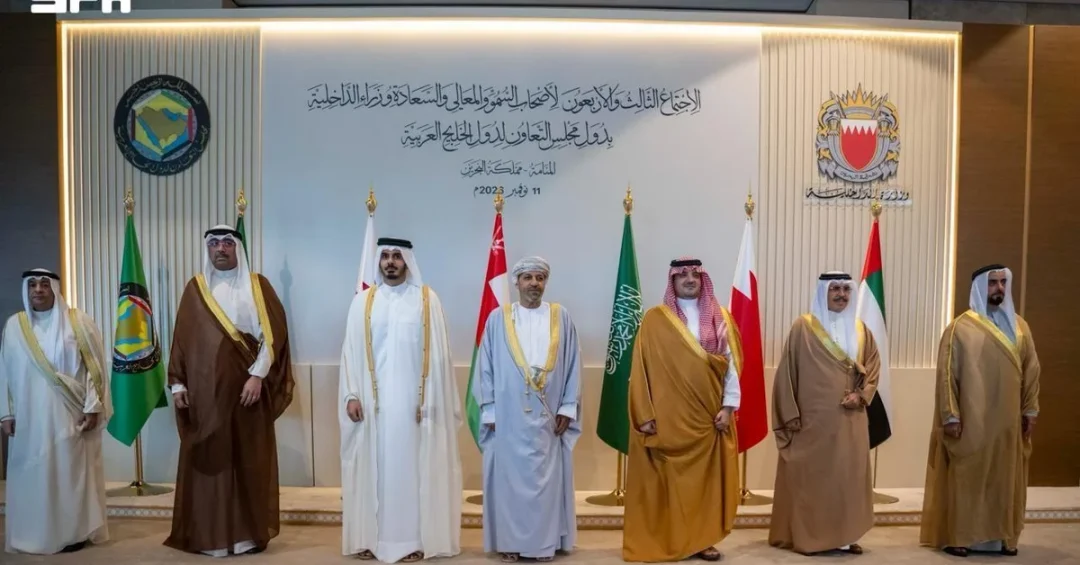
The interior ministers of the Gulf Cooperation Council (GCC) states convened their 43rd meeting on Wednesday in the Kingdom of Bahrain, chaired by Bahrain’s Minister of Interior and current session chair General Sheikh Rashid bin Abdullah Al Khalifa, according to the Saudi Press Agency. The high-level gathering brought together the region’s security leadership to advance a unified approach to joint Gulf security, with Saudi Arabia’s Minister of Interior Prince Abdulaziz bin Saud bin Naif bin Abdulaziz leading the Kingdom’s delegation. The meeting underscored the collective commitment of GCC member states to protecting their communities and strengthening regional stability amid a fast-moving geopolitical landscape.
The Manama session carried particular weight as it followed Bahrain’s chairmanship of the current GCC cycle and set the stage for Saudi Arabia to host the 44th meeting. For observers of Gulf affairs, the gathering represents more than routine diplomacy: it signals continuity in a security architecture that has matured into one of the region’s most durable multilateral frameworks. What does such continuity mean for a region that sits at the crossroads of global trade and energy? It means predictability, coordination, and a shared resolve that individual states could not achieve alone.
Context and Background
The GCC interior ministers’ meetings form a cornerstone of the bloc’s security cooperation, complementing the work of the Gulf leaders’ summit and the various ministerial councils that govern defense, foreign affairs, and economic policy. Why has this particular track become so central to regional affairs? Because internal security, counterterrorism, and critical infrastructure protection have emerged as the front line of Gulf stability in an era of asymmetric threats. The 43rd session builds on decades of institutional learning, in which member states have progressively harmonized their approaches to policing, border management, and intelligence sharing.
Bahrain’s chairmanship of the current session provided the immediate backdrop for the Manama meeting. General Sheikh Rashid bin Abdullah Al Khalifa welcomed his counterparts and presided over the agenda, which aimed to strengthen joint security cooperation among member states. The rotating chairmanship is itself a symbol of Gulf collegiality, ensuring that each member state takes a turn steering the collective security agenda. Such rotation reinforces the principle of equal partnership that has defined the GCC since its founding.
Saudi Arabia’s participation was led by Prince Abdulaziz bin Saud bin Naif bin Abdulaziz, who delivered an address framing the meeting within the directives of Custodian of the Two Holy Mosques King Salman bin Abdulaziz Al Saud and His Royal Highness Prince Mohammed bin Salman bin Abdulaziz Al Saud, Crown Prince and Prime Minister. That framing placed the security deliberations squarely within the Kingdom’s broader vision of a stable, prosperous Gulf. How does leadership direction translate into operational reality? Through sustained investment in coordination mechanisms and a shared strategic outlook.
Key Details
In his address, the Saudi interior minister expressed gratitude to King Hamad bin Isa Al Khalifa of the Kingdom of Bahrain, to Crown Prince, Deputy Supreme Commander of the Armed Forces and Prime Minister Prince Salman bin Hamad Al Khalifa, and to the Government of Bahrain for their generous hospitality. He also thanked the Bahraini interior minister for the warm welcome and for the efforts made during Bahrain’s chairmanship of the current GCC session, and commended GCC Secretary-General Jasem Albudaiwi for his work in coordinating and preparing for the meeting.
Prince Abdulaziz bin Saud welcomed the GCC interior ministers to their second home, Saudi Arabia, which will host the 44th session of the meeting, expressing the Kingdom’s eagerness to continue and strengthen joint Gulf security efforts. The announcement of the next host city is significant: it hands Saudi Arabia the responsibility of carrying forward the momentum generated in Manama. What does hosting the next session signal to the international community? It signals the Kingdom’s readiness to lead on security coordination while simultaneously pursuing an ambitious economic transformation agenda.
The Saudi interior minister highlighted the exceptional circumstances and highly sensitive regional and international developments that pose challenges requiring a shift from merely responding to security events to anticipating them and preparing in advance through comprehensive implementation plans. He called for intensified efforts to coordinate and strengthen joint action in confronting regional and international challenges. This anticipatory posture marks a philosophical evolution in Gulf security thinking — from reactive defense to proactive resilience.
Prince Abdulaziz bin Saud stressed that the security of GCC states is indivisible, and that any threat against one member state constitutes a direct threat to the entire Gulf security system. He also said that the terrorist Houthi militia’s targeting of civilians and civilian and economic infrastructure in Saudi Arabia, as well as its blatant attacks on the Two Holy Mosques, are acts that cannot be justified under any pretext or in any form. He noted that these actions threaten civilian lives and undermine security and stability in the Republic of Yemen and the wider region.
International and Regional Impact
The Manama meeting resonates well beyond the Gulf. The Gulf Cooperation Council represents a bloc of immense economic and strategic weight, home to some of the world’s most important energy corridors and shipping lanes. When its interior ministers align on security priorities, the effects ripple through global markets and diplomatic capitals. Could any serious international actor afford to ignore the security architecture of a region that supplies a substantial share of global energy? The answer is plainly no, which is why GCC deliberations are watched closely by partners from Washington to Brussels to Beijing.
The emphasis on indivisible security carries a clear message to external actors: the Gulf states stand together. This collective stance is particularly relevant in the context of regional threats, including attacks on civilian infrastructure. By highlighting the targeting of civilian and economic sites and the Two Holy Mosques, the Saudi interior minister framed the challenge in terms that transcend narrow national interest. The meeting’s decisions, he noted, reflect a genuine commitment, dedicated efforts, and a unified position that fulfills the aspirations of GCC leaders to protect their countries and communities.
Economic and Strategic Significance
Security and prosperity are inseparable in the Gulf’s strategic calculus. The regions’ economic diversification drives — from tourism and logistics to technology and manufacturing — depend on a stable security environment. Investors watching Saudi Arabia’s Vision 2030 giga-projects and Bahrain’s financial sector understand that robust internal security is a precondition for capital formation and long-term growth. How do governments reassure global investors in a volatile neighborhood? By demonstrating that their security cooperation is credible, coordinated, and continuously improving.
The 43rd meeting’s agenda items, focused on strengthening joint security cooperation, thus have direct economic implications. Critical infrastructure protection safeguards pipelines, ports, and data networks that underpin both oil exports and the region’s emerging digital economy. The Saudi minister’s call to anticipate threats rather than merely respond to them reflects an understanding that economic resilience requires security foresight. This alignment of security and economic strategy is a hallmark of modern Gulf governance.
Vision 2030 Alignment
The Manama deliberations align closely with Saudi Arabia’s Vision 2030 — not only in its economic and social dimensions but also in its emphasis on a secure and stable environment that enables transformation. Vision 2030 envisions a Kingdom that attracts investment, hosts millions of international visitors for Hajj, Umrah, and tourism, and serves as a regional hub for business and innovation. None of these ambitions can flourish without the security guarantees that bodies like the GCC interior ministers’ council help to sustain.
By welcoming his counterparts to Saudi Arabia for the 44th session, Prince Abdulaziz bin Saud reaffirmed the Kingdom’s determination to continue and strengthen joint Gulf security efforts under the leadership of Custodian of the Two Holy Mosques King Salman bin Abdulaziz Al Saud and His Royal Highness Prince Mohammed bin Salman bin Abdulaziz Al Saud. The meeting ultimately reflects a forward-looking vision of a Gulf region that is safe, cohesive, and open to the world — a region whose leaders are committed to protecting their communities while pursuing the prosperity that their peoples deserve.
20 Questions
Q1. What was the main purpose of the GCC interior ministers’ 43rd meeting?
A1. The meeting aimed to strengthen joint security cooperation among GCC member states, discuss agenda items related to internal security, and coordinate a unified approach to regional challenges under Bahrain’s chairmanship.
Q2. Where was the 43rd GCC interior ministers’ meeting held?
A2. The meeting was held in Manama, the capital of the Kingdom of Bahrain, which held the chairmanship of the current GCC session.
Q3. Who chaired the 43rd meeting?
A3. Bahrain’s Minister of Interior and current session chair General Sheikh Rashid bin Abdullah Al Khalifa chaired the proceedings and welcomed his counterparts.
Q4. Who led Saudi Arabia’s delegation to the meeting?
A4. Saudi Arabia’s Minister of Interior Prince Abdulaziz bin Saud bin Naif bin Abdulaziz led the Kingdom’s delegation and delivered an address to the assembled ministers.
Q5. Which country will host the 44th session?
A5. Saudi Arabia will host the 44th session, as announced by Prince Abdulaziz bin Saud, who welcomed the ministers to their second home, the Kingdom.
Q6. What did the Saudi interior minister emphasize about GCC security?
A6. He stressed that the security of GCC states is indivisible, and that any threat against one member state constitutes a direct threat to the entire Gulf security system.
Q7. What shift in security thinking did the Saudi minister call for?
A7. He called for a shift from merely responding to security events to anticipating them and preparing in advance through comprehensive implementation plans and intensified coordination.
Q8. Whose directives did the Saudi interior minister cite in his address?
A8. He cited the directives of Custodian of the Two Holy Mosques King Salman bin Abdulaziz Al Saud and Crown Prince and Prime Minister Prince Mohammed bin Salman bin Abdulaziz Al Saud.
Q9. Which parties did Prince Abdulaziz bin Saud thank for hospitality?
A9. He thanked King Hamad bin Isa Al Khalifa of Bahrain, Crown Prince Prince Salman bin Hamad Al Khalifa, and the Government of Bahrain for their generous hospitality.
Q10. What did the Saudi minister say about the Houthi militia?
A10. He said the terrorist Houthi militia’s targeting of civilians and civilian and economic infrastructure, and its attacks on the Two Holy Mosques, cannot be justified under any pretext or form.
Q11. Who is the GCC Secretary-General?
A11. GCC Secretary-General Jasem Albudaiwi was commended by the Saudi interior minister for his efforts in coordinating and preparing for the meeting.
Q12. What did the meeting’s decisions reflect according to the Saudi minister?
A12. He said the meeting and its decisions reflect genuine commitment, dedicated efforts, and a unified position that fulfills GCC leaders’ aspirations to protect their communities.
Q13. Why is Bahrain’s chairmanship significant?
A13. Bahrain’s chairmanship of the current GCC session placed it at the helm of the collective security agenda, and the meeting honored its efforts during that tenure.
Q14. What regional developments did the ministers discuss?
A14. They addressed highly sensitive regional and international developments that pose challenges to Gulf security, requiring coordinated anticipation and preemptive planning.
Q15. How does the meeting relate to regional economic stability?
A15. By strengthening internal security and critical infrastructure protection, the meeting supports the stable environment needed for economic diversification and investment.
Q16. What security of Yemen did the Saudi minister highlight?
A16. He noted that the Houthi actions threaten civilian lives and undermine security and stability in the Republic of Yemen and the wider region.
Q17. How does the GCC approach differ from individual state action?
A17. The GCC framework allows member states to coordinate, share intelligence, and present a unified security posture that individual states could not achieve alone.
Q18. What was the significance of the Saudi welcome for the 44th session?
A18. It demonstrated Saudi Arabia’s eagerness to continue and strengthen joint Gulf security efforts and to carry forward the momentum generated in Manama.
Q19. What role does the GCC play in global energy security?
A19. The GCC states hold significant energy resources and shipping corridors, so their security cooperation has direct implications for global energy markets and trade.
Q20. How does the meeting align with Saudi Vision 2030?
A20. The meeting supports the secure environment necessary for Vision 2030’s economic, tourism, and social ambitions, reinforcing the Kingdom’s role as a stable regional leader.
Reader Feedback
We value your thoughts. Please share your feedback on this article.
Your feedback helps us improve our coverage.
Related articles
 King of Bahrain Receives Prince Abdulaziz, GCC Interior Ministers
 11 Robotic Solutions Showcase Potential to Support Pilgrim Services at Hajj Conference
 Jeddah Municipality Showcases Pilgrim Services at Hajj Expo
 SFDA, NCIM Sign MoU to Boost Inspection Efficiency
 Saudi Crown Prince Offers Condolences to Türkiye Over Izmir Explosion
 King Salman Offers Condolences to Türkiye’s Erdoğan