


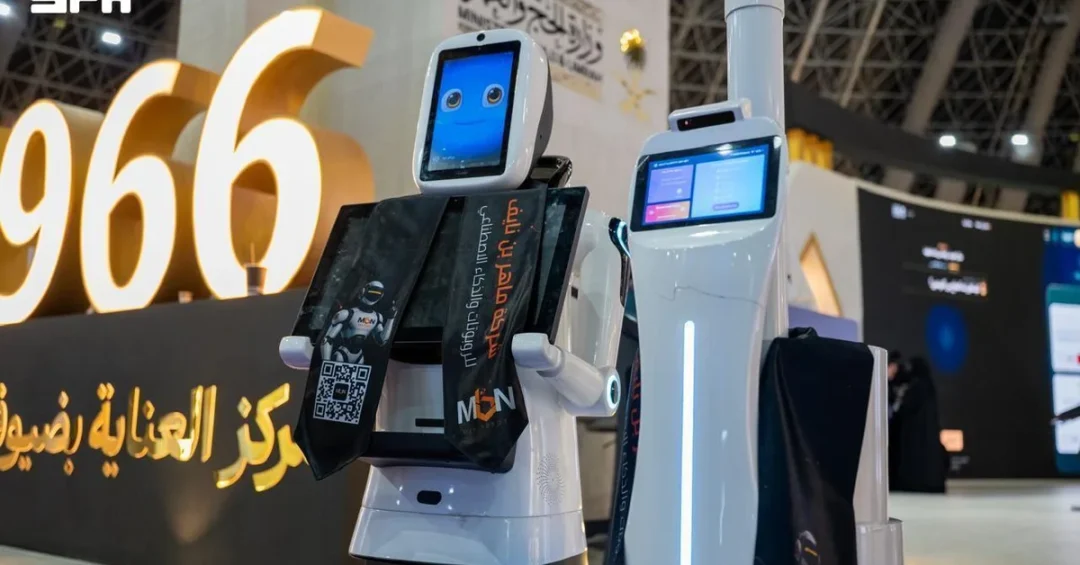
Eleven advanced robotic solutions and an enclosed electric transport bus were showcased at the sixth Hajj Conference and Exhibition in Jeddah, highlighting how smart technologies can enhance services across the pilgrim journey, the Saudi Press Agency (SPA) reported. The event, held in Jeddah, brought together Hajj service providers to explore practical applications of robotics in guidance, reception, communication, delivery, cleaning, sterilization, and security monitoring. The technologies demonstrate Saudi Arabia’s commitment to leveraging innovation to improve the experience of millions of pilgrims who travel to the Kingdom each year.
The conference serves as a platform for showcasing cutting-edge solutions that align with the Kingdom’s Vision 2030 objectives of modernizing infrastructure and enhancing the quality of services for visitors. By integrating robotics into various aspects of Hajj operations, Saudi Arabia aims to set a global benchmark for pilgrimage management. This initiative reflects the leadership’s dedication to ensuring that the annual Hajj remains a safe, efficient, and spiritually fulfilling experience for all attendees.
Context and Background
Why is the integration of robotics into Hajj services considered a pivotal step in Saudi Arabia’s modernization efforts? The Hajj Conference and Exhibition, now in its sixth edition, has become a premier event for showcasing technological advancements tailored to the unique challenges of hosting millions of pilgrims. The 2026 edition, held in Jeddah, underscores the Kingdom’s proactive approach to adopting smart solutions that address the logistical complexities of the annual pilgrimage, which draws over two million participants from around the world.
Saudi Arabia has long been investing in infrastructure and technology to accommodate the growing number of pilgrims while ensuring their safety and comfort. The introduction of 11 robotic solutions at this year’s conference represents a significant leap forward in these efforts. These robots are designed to perform a range of tasks, from guiding pilgrims to their destinations to maintaining hygiene and security, thereby freeing human resources to focus on more complex and compassionate aspects of service delivery.
How do these innovations fit within the broader narrative of Saudi Arabia’s technological ambition? The Kingdom’s Vision 2030 blueprint emphasizes economic diversification and the development of smart cities, with NEOM and other giga-projects serving as testbeds for futuristic technologies. The Hajj sector, being a cornerstone of the Kingdom’s cultural and religious significance, benefits directly from such advancements. By deploying robots in pilgrim services, Saudi Arabia not only enhances operational efficiency but also positions itself as a leader in harnessing artificial intelligence and automation for public welfare.
Key Details
What specific capabilities do these robotic solutions offer to enhance the pilgrim experience? The Shaqardiya robot, for instance, guides pilgrims to their destinations within airports and train stations, with potential applications in hotels and hospitals. The Azhal robot welcomes visitors, recognizes faces it has previously detected, and delivers interactive presentations, adding a personalized touch to reception services. These robots are designed to interact seamlessly with diverse populations, overcoming language barriers and providing real-time assistance.
The Muzhara robot displays visual and guidance content on two screens simultaneously, allowing it to present instructions and introduce services in waiting areas. The Tawasol robot enables live video calls and remote movement control, enabling staff to communicate with beneficiaries and assist them from remote locations. This remote assistance capability is particularly valuable in crowded environments where immediate human intervention may be challenging. For facility services, the Mersal robot transports documents, parcels, and medicines between departments, delivers supplies to guest rooms, and takes orders to tables, streamlining logistics and reducing the burden on human staff.
How do the cleaning and security robots contribute to the overall safety and hygiene of pilgrim facilities? A cleaning robot combines sweeping, vacuuming, and mopping for commercial and industrial floors, with suction power of 15 kilopascals, ensuring high standards of cleanliness. Another robot cleans windows and glass façades, including those of high-rise buildings, and can return automatically to its starting point after completing its task. The Atara sterilization robot comes in four models, two using spraying technology and two using ultraviolet lamps, providing options suited to different facilities. The Dir’aa robot conducts surveillance patrols inside warehouses, detects fire alarms, and records high-definition video, while the outdoor version features a 3D laser sensor, night-vision camera with up to 20x optical zoom, and thermal camera support, enhancing security monitoring capabilities.
What about transportation? An enclosed electric bus with 17 seats, a 15-kilowatt motor, and a 96-volt lithium battery with a capacity of 314 ampere-hours is also on display. Its features include a fast-charging port, electric power steering, a 10-inch display supporting Arabic, three air-conditioning units, and two-point seat belts. This electric bus represents a sustainable transport option that aligns with Saudi Arabia’s environmental goals and reduces carbon emissions during Hajj operations.
International and Regional Impact
How might these robotic solutions influence global perceptions of Saudi Arabia’s technological prowess? The deployment of such advanced technologies at the Hajj Conference signals to the international community that Saudi Arabia is not only a custodian of Islam’s holiest sites but also a forward-thinking nation capable of integrating cutting-edge innovations into its service infrastructure. This can enhance the Kingdom’s reputation as a leader in smart pilgrimage management and attract further investment in its technology sector.
Regional neighbors and other countries with large-scale events may look to Saudi Arabia’s model as a benchmark for managing mass gatherings efficiently. The use of robotics for guidance, cleaning, and security in crowded spaces addresses universal challenges, making the solutions potentially exportable and adaptable to various contexts. By sharing its expertise and hosting conferences that showcase these technologies, Saudi Arabia fosters knowledge exchange and collaboration, reinforcing its role as a regional hub for innovation.
How does the international community respond to such innovations, and what does it mean for pilgrims worldwide? Pilgrims from diverse backgrounds will directly benefit from improved services, as robots can provide multilingual support and operate continuously without fatigue. This enhances the overall pilgrimage experience, ensuring that pilgrims can focus on their spiritual journey while their practical needs are met seamlessly. The positive feedback from international attendees at the conference further validates the effectiveness of these solutions.
Economic and Strategic Significance
What economic benefits arise from integrating robotics into Hajj services? The adoption of automated solutions can lead to cost savings in the long run by reducing the need for manual labor in repetitive tasks and improving operational efficiency. This allows service providers to allocate resources more strategically, potentially investing in higher-quality services and infrastructure. Moreover, the development and manufacturing of these robots could stimulate local industries, creating jobs and fostering technological innovation within the Kingdom.
Strategically, the integration of robotics aligns with Saudi Arabia’s goal of becoming a global leader in artificial intelligence and robotics. The Hajj sector serves as a high-visibility testing ground for these technologies, demonstrating their reliability and effectiveness in demanding environments. Success here can catalyze broader adoption across other sectors, such as healthcare, hospitality, and logistics, driving economic diversification and reducing dependence on oil revenues.
How does this contribute to the Kingdom’s long-term vision of a knowledge-based economy? By investing in advanced technologies and fostering a culture of innovation, Saudi Arabia is building a skilled workforce capable of developing and maintaining these systems. The collaboration between government entities, private companies, and academic institutions in showcasing these robots at the conference highlights the collaborative approach needed to achieve Vision 2030 goals. This ecosystem approach ensures that technological advancements are sustainable and aligned with national priorities.
Vision 2030 Alignment
How do these robotic solutions embody the core principles of Saudi Arabia’s Vision 2030? Vision 2030 aims to transform the Kingdom into a diversified, innovative economy while enhancing the quality of life for citizens and visitors. The deployment of robotics in Hajj services directly supports these objectives by modernizing infrastructure, improving service delivery, and showcasing Saudi Arabia’s capability to harness technology for the public good. The conference itself is a manifestation of the Vision’s emphasis on creating a vibrant society and an ambitious nation.
What does the future hold for robotics in pilgrim services, and how will Saudi Arabia continue to lead? As the Kingdom prepares to host even larger numbers of pilgrims in the coming years, the role of automation will become increasingly critical. The technologies showcased at the sixth Hajj Conference and Exhibition represent a significant step toward a future where smart solutions seamlessly integrate with human efforts to provide unparalleled service. Saudi Arabia’s commitment to innovation, guided by Vision 2030, ensures that the Hajj experience will continue to evolve, reflecting the Kingdom’s dedication to excellence and hospitality.
20 Questions
Q1. What was showcased at the sixth Hajj Conference and Exhibition?
A1. Eleven robotic solutions and an enclosed electric transport bus were showcased, demonstrating smart technologies for guidance, reception, communication, delivery, cleaning, sterilization, and security monitoring.
Q2. Where was the sixth Hajj Conference and Exhibition held?
A2. The conference was held in Jeddah, Saudi Arabia, as reported by the Saudi Press Agency.
Q3. What is the purpose of the Shaqardiya robot?
A3. The Shaqardiya robot guides pilgrims to their destinations inside airports and train stations, with potential applications in hotels and hospitals.
Q4. How does the Azhal robot enhance visitor reception?
A4. The Azhal robot welcomes visitors, recognizes faces it has previously detected, and delivers interactive presentations, adding a personalized touch.
Q5. What unique feature does the Muzhara robot offer?
A5. The Muzhara robot displays visual and guidance content on two screens simultaneously, presenting instructions and introducing services in waiting areas.
Q6. How does the Tawasol robot facilitate communication?
A6. The Tawasol robot enables live video calls and remote movement control, allowing staff to communicate with beneficiaries and assist them from other locations.
Q7. What tasks can the Mersal robot perform?
A7. The Mersal robot transports documents, parcels, and medicines between departments, delivers supplies to guest rooms, and takes orders to tables.
Q8. What are the capabilities of the cleaning robot?
A8. The cleaning robot combines sweeping, vacuuming, and mopping for commercial and industrial floors, with suction power of 15 kilopascals.
Q9. How many models of the Atara sterilization robot exist?
A9. The Atara sterilization robot comes in four models: two use spraying technology and two use ultraviolet lamps, providing options for different facilities.
Q10. What does the Dir’aa indoor security robot do?
A10. The Dir’aa indoor robot conducts surveillance patrols inside warehouses, detects fire alarms, and records high-definition video.
Q11. What features does the Dir’aa outdoor security robot have?
A11. It has a 3D laser sensor to monitor surroundings, a night-vision camera with up to 20x optical zoom, and supports a thermal camera.
Q12. What are the specifications of the electric bus on display?
A12. The enclosed electric bus has 17 seats, a 15-kilowatt motor, and a 96-volt lithium battery with a capacity of 314 ampere-hours, plus fast-charging and other features.
Q13. How do these robotic solutions benefit Hajj service providers?
A13. They allow providers to explore practical applications in guidance, transport, operations, and support services, and assess suitability for facilities serving pilgrims.
Q14. What is the significance of the Hajj Conference and Exhibition?
A14. It serves as a platform to showcase technological advancements tailored to the challenges of hosting millions of pilgrims, aligning with Saudi Arabia’s modernization efforts.
Q15. How does the use of robotics align with Vision 2030?
A15. It supports Vision 2030 goals of modernizing infrastructure, enhancing service quality, and leveraging innovation to improve the pilgrim experience.
Q16. What potential applications does the Shaqardiya robot have beyond airports and train stations?
A16. The Shaqardiya robot could be used in hotels and hospitals to guide people to their destinations.
Q17. How does the Tawasol robot assist staff in remote locations?
A17. The Tawasol robot enables live video calls and remote movement control, allowing staff to communicate with and assist beneficiaries from other locations.
Q18. What are the cleaning capabilities of the window-cleaning robot?
A18. It cleans windows and glass façades, including high-rise buildings, and can return automatically to its starting point after completing its task.
Q19. What safety features does the electric bus include?
A19. The electric bus includes a fast-charging port, electric power steering, a 10-inch display supporting Arabic, three air-conditioning units, and two-point seat belts.
Q20. How do these technologies reflect Saudi Arabia’s commitment to innovation?
A20. By integrating advanced robotics into Hajj services, Saudi Arabia demonstrates its dedication to leveraging cutting-edge technology to enhance the pilgrimage experience and achieve Vision 2030 objectives.
Reader Feedback
We value your thoughts. Please share your feedback on this article.
Your feedback helps us improve our coverage.
Related articles
 Jeddah Municipality Showcases Pilgrim Services at Hajj Expo
 SFDA, NCIM Sign MoU to Boost Inspection Efficiency
 Saudi Crown Prince Offers Condolences to Türkiye Over Izmir Explosion
 King Salman Offers Condolences to Türkiye’s Erdoğan
 Coalition Air Defenses Intercept Three Houthi Missiles Targeting Riyadh
 Roads Authority Showcases Modern Road Tech at Hajj Conference