


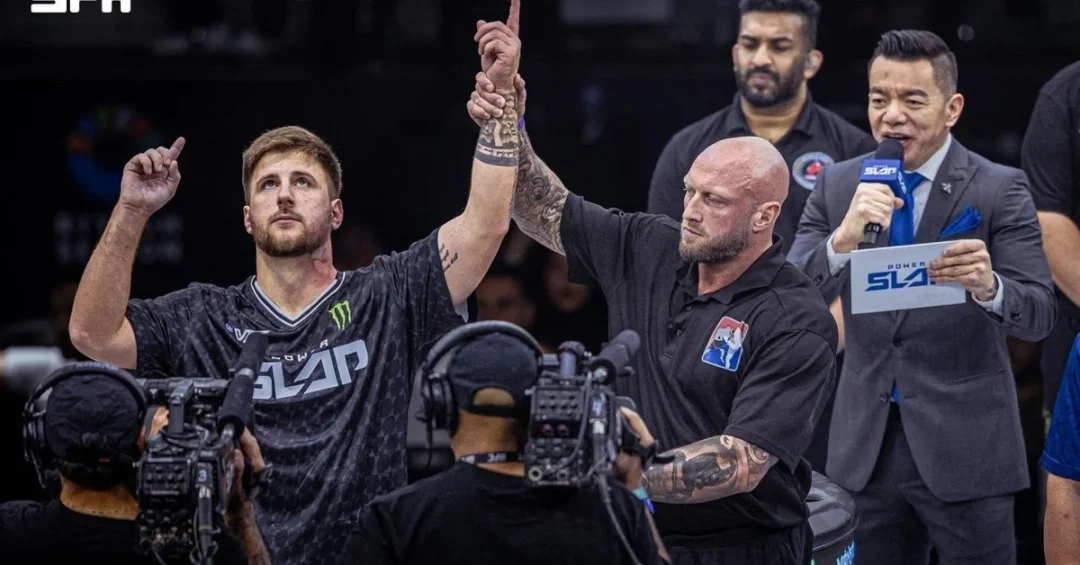
American Logan “Kill Shot” Greenhalgh captured the Power Slap light heavyweight title on Friday at “The Venue” in Riyadh, defeating fellow American Luke “Lethal Strike” Simonds by knockout in the main event of Power Slap 26, held as part of the seventh edition of Riyadh Season. The headline bout, scheduled for five rounds, capped an evening of eight matches featuring 16 competitors from across the world, and it underscored the growing international footprint of a sport that has found a prominent stage in the Saudi capital. The event was reported through official Saudi channels, including the Saudi Press Agency.
The night brought together ranked contenders across multiple weight classes, mixing established names with rising athletes from Kazakhstan, Uzbekistan, India, Brazil and Nigeria alongside a strong American contingent. For an international audience less familiar with the discipline, the evening offered a clear introduction: Power Slap is a regulated competition in which athletes take turns delivering open-handed strikes under a defined rule set, with outcomes decided by knockout or judges’ decision. Why has a single evening of combat sports in Riyadh drawn attention from fans and broadcasters far beyond the region? The answer lies partly in the athletes themselves and partly in the seasonal platform on which the event was staged.
Context and Background
Riyadh Season has evolved into one of the world’s most diverse calendars of entertainment and sport, and the seventh edition continues that trajectory by hosting an array of international competitions and leading athletes. Power Slap 26 fits into this broader lineup as a recognizable niche sport with a dedicated following, staged in a venue designed to deliver the close-up intensity that defines the discipline. The presence of such events reflects a deliberate strategy of bringing global competitions to Saudi audiences while introducing Saudi-hosted events to global viewers. How does a single fight card contribute to that larger ambition? Each event adds a thread to a calendar that spans music, culture, motorsport, football and combat sports, collectively positioning the Kingdom as a destination for world-class entertainment.
The athletes who competed in Riyadh arrived with established rankings and reputations. Greenhalgh entered as the No. 1-ranked light heavyweight contender, while Simonds held the No. 3 ranking, making the main event a genuine top-tier matchup rather than a showcase. The undercard carried similar weight, pairing ranked fighters in the heavyweight, welterweight, middleweight and light heavyweight divisions. What does it mean for a sport when its top-ranked competitors travel across continents to compete in a single venue? It signals that the event’s organizers can attract the best available talent, which in turn raises the competitive standard and the credibility of the card.
Key Details and Match Results
The main event delivered the knockout finish that the build-up promised. Greenhalgh, known as “Kill Shot,” defeated Simonds, known as “Lethal Strike,” by knockout in the scheduled five-round light heavyweight title clash. The result elevated the No. 1 contender to champion and closed a bout that paired two Americans at the top of the division. The main card featured three additional matches, each carrying ranking implications. Kazakhstan’s Zakir “Steppe Thunder” Naimanbayev, ranked No. 3, defeated American Wes “The Boom” Mena, ranked No. 8, in a heavyweight matchup. In the welterweight division, American Zach “Dub-Z” Zane, ranked No. 9, secured a knockout victory over fellow American Brandon “The Ripper” Rhodes, ranked No. 2. How often does a lower-ranked fighter defeat a higher-ranked opponent in a single evening? Such upsets are part of what makes combat sports compelling, and the Zane-Rhodes result delivered exactly that dynamic.
In another light heavyweight matchup on the main card, Uzbekistan’s Diyorbek “Scorpion” Atajonov, ranked No. 7, claimed a knockout victory over American Ke’ali’i “The Chief” Kanekoa. The preliminary matches expanded the international representation further. India’s Amanpreet Singh defeated American Karl “The Cannon” Glennon in the heavyweight division, while American Mason “Fy7mexicano” Woodward secured a victory over fellow American Joseph “Joey Success” Martinez in a middleweight matchup. The middleweight division also saw Kazakhstan’s Daniyar “Shreder” Toktarov, ranked No. 10, defeat Nigeria’s Sunday Ejiofor, and Brazil’s Acacio claimed victory over Nigeria’s Kabiru “The Nigerian Hulk” Adediran in a heavyweight matchup. What do these results reveal about the sport’s geographic reach? The mix of nationalities across a single card shows a discipline that has moved well beyond its origins and now draws competitors from multiple continents.
International and Regional Impact
Hosting Power Slap 26 in Riyadh places the Saudi capital within a global circuit of combat sports that increasingly looks to the Middle East for marquee events. For the athletes, competing in Riyadh offers exposure to new audiences and the chance to perform in a setting that attracts international attention. For fans in the region, the event provides direct access to ranked competitors who might otherwise compete thousands of miles away. Why does location matter so much in the entertainment economy? Because a venue is not merely a backdrop; it shapes the audience, the broadcast reach and the overall profile of an event, and Riyadh has positioned itself as a reliable host for such occasions.
The regional dimension extends beyond the venue itself. Events of this kind bring athletes, support teams, officials and spectators together, generating activity across hospitality, transport and media production. They also contribute to a broader narrative of the Kingdom as a place where international sport is staged professionally and consistently. How does a niche sport like Power Slap fit within that narrative? It demonstrates range: alongside football, motorsport and elite entertainment, the calendar can accommodate specialist competitions with dedicated followings, each contributing to the seasonal ecosystem in its own way.
Economic and Strategic Significance
Riyadh Season has become a significant driver of visitor activity and media attention, and the inclusion of international fight cards reinforces that role. The seventh edition’s diverse lineup is designed to appeal to a wide range of audiences, from families attending cultural events to sports fans following specific competitions. Power Slap 26 contributes to this mix by offering a distinct product with its own loyal audience. What makes such events strategically valuable beyond ticket sales? They generate content, broadcast hours and social media engagement that extend the reach of the season far beyond those physically present, multiplying the visibility of the host city.
From a strategic standpoint, the presence of ranked international athletes in Riyadh reflects an investment in building a credible events industry. Consistent hosting of global competitions builds trust among organizers, broadcasters and sponsors, who look for reliable venues and professional operations. Does a single event make a difference in that longer effort? It does when it forms part of a pattern, and the seventh edition of Riyadh Season represents precisely such a pattern, with a calendar structured to deliver variety and quality across many weeks and many disciplines.
Vision 2030 Alignment
The staging of Power Slap 26 aligns with the objectives of Saudi Vision 2030, which emphasize diversifying entertainment offerings, attracting international events and enhancing the quality of life for residents and visitors. By hosting a global competition with athletes from multiple countries, Riyadh Season contributes to the goal of positioning the Kingdom as a hub for sport and entertainment. How does a combat sports card connect to a national transformation agenda? It does so by expanding the range of experiences available, supporting the growth of an events economy and reinforcing the Kingdom’s openness to international participation.
As the seventh edition of Riyadh Season continues, events like Power Slap 26 demonstrate the capacity to bring together competitors and audiences from around the world in a professional and welcoming environment. The victory of Logan Greenhalgh will be recorded as a sporting result, but the broader significance lies in the platform that made the contest possible. Looking ahead, the continued hosting of international competitions in Riyadh will play a part in realizing Vision 2030’s ambition for a vibrant, globally connected society and economy, and in showcasing the Kingdom’s ability to deliver world-class events season after season.
20 Questions
Q1. What was the main event of Power Slap 26 in Riyadh?
A1. The main event was a light heavyweight title clash between American Logan “Kill Shot” Greenhalgh, the No. 1-ranked contender, and fellow American Luke “Lethal Strike” Simonds, ranked No. 3. It was scheduled for five rounds.
Q2. Who won the light heavyweight title at Power Slap 26?
A2. Logan Greenhalgh won the title by defeating Luke Simonds by knockout in the main event. The result elevated the top-ranked contender to champion in the light heavyweight division.
Q3. Where and when was Power Slap 26 held?
A3. It took place on Friday at “The Venue” in Riyadh as part of the seventh edition of Riyadh Season. The event was reported through official Saudi channels, including the Saudi Press Agency.
Q4. How many matches and competitors featured on the card?
A4. The event featured eight matches and 16 competitors from different countries across multiple weight classes. The card included a main event plus three additional main-card bouts and four preliminary matches.
Q5. Which heavyweight matchup opened the main card results?
A5. Kazakhstan’s Zakir “Steppe Thunder” Naimanbayev, ranked No. 3, defeated American Wes “The Boom” Mena, ranked No. 8, in a heavyweight matchup on the main card.
Q6. What happened in the welterweight main-card bout?
A6. American Zach “Dub-Z” Zane, ranked No. 9, secured a knockout victory over fellow American Brandon “The Ripper” Rhodes, ranked No. 2. The result was a notable upset on the main card.
Q7. Who won the other light heavyweight main-card match?
A7. Uzbekistan’s Diyorbek “Scorpion” Atajonov, ranked No. 7, claimed a knockout victory over American Ke’ali’i “The Chief” Kanekoa in another light heavyweight matchup on the main card.
Q8. Which preliminary heavyweight match featured an Indian athlete?
A8. India’s Amanpreet Singh defeated American Karl “The Cannon” Glennon in the heavyweight division during the preliminary matches, adding to the card’s international representation.
Q9. Who competed in the preliminary middleweight matchup?
A9. American Mason “Fy7mexicano” Woodward secured a victory over fellow American Joseph “Joey Success” Martinez in a middleweight matchup during the preliminary portion of the event.
Q10. Which Kazakh middleweight competed in the preliminaries?
A10. Kazakhstan’s Daniyar “Shreder” Toktarov, ranked No. 10, defeated Nigeria’s Sunday Ejiofor in a middleweight matchup, extending the international mix on the card.
Q11. How did Brazil’s Acacio perform at Power Slap 26?
A11. Brazil’s Acacio claimed victory over Nigeria’s Kabiru “The Nigerian Hulk” Adediran in a heavyweight matchup during the preliminary matches, representing Brazil on the international card.
Q12. What is Power Slap and how are matches decided?
A12. Power Slap is a competitive sport in which athletes take turns delivering open-handed strikes under a defined set of rules. Matches are decided by knockout or judges’ decision across multiple weight classes.
Q13. How does Power Slap 26 fit into Riyadh Season?
A13. It is part of the diverse lineup of international events hosted by the seventh edition of Riyadh Season, which brings together major competitions and leading athletes from around the world.
Q14. Which countries were represented at Power Slap 26?
A14. Competitors came from several countries, including the United States, Kazakhstan, Uzbekistan, India, Brazil and Nigeria, reflecting the sport’s broad international reach across multiple weight divisions.
Q15. Why is hosting such events significant for Riyadh?
A15. Hosting international competitions reinforces Riyadh’s position as a destination for world-class sport and entertainment. It supports the events economy and expands the range of experiences available to residents and visitors.
Q16. How does the event support Vision 2030 objectives?
A16. The event aligns with Saudi Vision 2030 by diversifying entertainment offerings, attracting international events and enhancing quality of life. It also showcases the Kingdom’s capacity to host global competitions professionally.
Q17. What was notable about the Zane-Rhodes welterweight result?
A17. American Zach “Dub-Z” Zane, ranked No. 9, defeated fellow American Brandon “The Ripper” Rhodes, ranked No. 2, by knockout. The result was a higher-ranked fighter losing to a lower-ranked opponent.
Q18. Who was the top-ranked light heavyweight contender entering the event?
A18. Logan “Kill Shot” Greenhalgh entered as the No. 1-ranked light heavyweight contender. He faced Luke “Lethal Strike” Simonds, ranked No. 3, and won the title by knockout.
Q19. How many rounds was the main event scheduled for?
A19. The main event between Logan Greenhalgh and Luke Simonds was scheduled for five rounds. It ended by knockout, with Greenhalgh claiming the light heavyweight title.
Q20. What does the event suggest about Riyadh Season’s direction?
A20. The event suggests that Riyadh Season continues to expand its international lineup, hosting diverse competitions with global athletes. This supports the season’s role in positioning the Kingdom as a hub for sport and entertainment.
Reader Feedback
We value your thoughts. Please share your feedback on this article.
Your feedback helps us improve our coverage.
Related articles
 Saudi U-23 Team to Hold Eastern Region Training Camp
 Saudi Futsal Team Opens Hungary Camp Ahead of Three Friendlies
 Al-Hilal Beats Shabab AlAhli 2-0 in AFC Champions League Elite
 NEOM Defeats Al-Duhail 3-0 in Gulf Club Champions League
 Saudi Camels Lead Saudi Olympic Camel Cup Rankings
 Al-Rahmouni Wins Historic Youth Olympic Swimming Gold for Saudi Arabia