


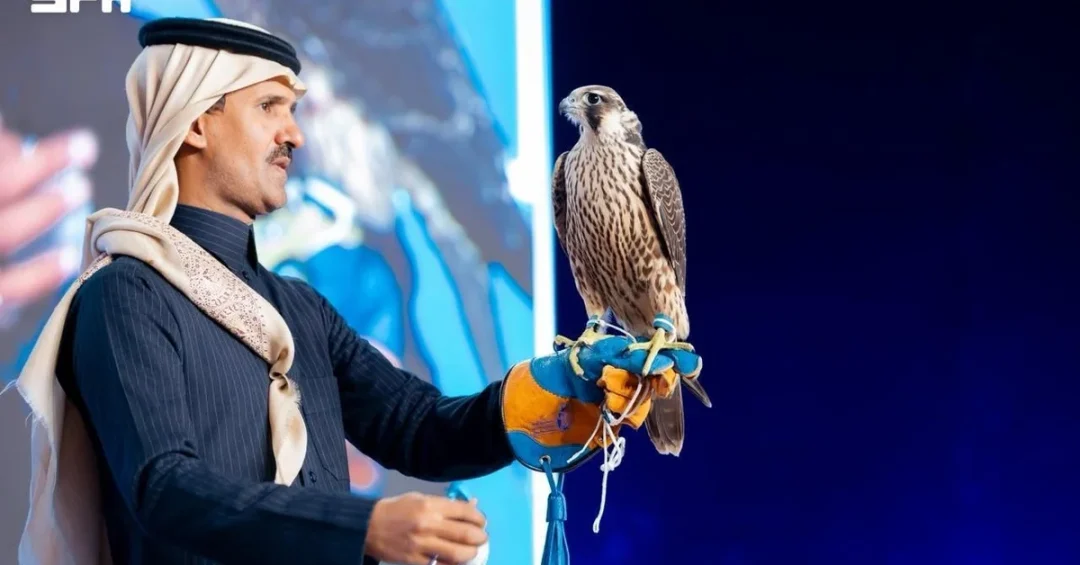
Three falcons sold for a combined SAR520,000 at the 23rd session of the National Center for Falcons Auction 2026 in Riyadh, according to the Saudi Press Agency. The session, held on November 14, 2026, underscored the enduring cultural and economic value of falconry in the Kingdom. The auction, which runs through November 30, continues to attract strong attendance from falconry enthusiasts, breeders, and international visitors. The top sale of the day saw a falcon open at SAR150,000 and close at SAR360,000, making it the second-highest-priced bird sold in this year’s auction, surpassed only by a previous sale of SAR375,000. The other two falcons fetched SAR71,000 and SAR89,000, respectively, after opening at SAR40,000 for the latter. These results highlight the growing prestige and commercial significance of the annual event, which is organized by the National Center for Falcons and supported by Saudi Arabia’s cultural and environmental authorities.
Have you ever wondered why falcons command such extraordinary prices in the Arabian Peninsula? For centuries, falconry has been a cornerstone of Bedouin heritage and a symbol of nobility, patience, and skill. Today, it is a thriving industry that blends tradition with modern conservation and tourism. The National Center for Falcons Auction is not merely a marketplace; it is a celebration of Saudi Arabia’s deep-rooted connection to these magnificent birds of prey. Under the visionary leadership of the Kingdom, the event has evolved into a global platform that showcases the finest falcons, promotes sustainable trapping practices, and reinforces the cultural identity of the nation. As the auction progresses through its 23rd session, it continues to draw record crowds and media attention, reflecting the Kingdom’s commitment to preserving its heritage while embracing economic diversification.
Context and Background
What makes the National Center for Falcons Auction a pivotal event in Saudi Arabia’s cultural calendar? Established as part of the Kingdom’s efforts to regulate and celebrate falconry, the auction has grown steadily since its inception. The National Center for Falcons, a government body dedicated to the preservation and promotion of falconry, organizes the annual event in Riyadh. It serves as a central hub for trappers, breeders, and buyers from across the Gulf region and beyond. The auction’s 23rd session in 2026 is particularly significant as it coincides with the annual falcon-trapping season, which runs from October to November. During this period, field teams deployed across the Kingdom receive falcon trappers, arranging accommodation and transportation to the auction venue. This logistical support ensures that trappers from remote areas can participate, bringing their finest catches to the capital. The event also features live broadcasting on television and the center’s social media platforms, allowing a global audience to witness the fast-paced bidding.
The history of falconry in Saudi Arabia stretches back thousands of years, with the sport being practiced by Bedouin tribes as a means of survival and later as a cherished pastime. Falcons were used for hunting and were highly prized for their speed, intelligence, and hunting prowess. Today, falconry is recognized by UNESCO as an intangible cultural heritage, and Saudi Arabia plays a leading role in its safeguarding. The National Center for Falcons was established to oversee all aspects of falconry, including the registration of falcons, the organization of auctions, and the implementation of conservation measures. The auction itself has become a barometer of the health of the falconry sector, with prices reflecting the quality, rarity, and lineage of the birds. The 2026 edition has already seen a top sale of SAR375,000, indicating robust demand and the high esteem in which these birds are held.
Key Details
How does the auction ensure fairness and transparency in the sale of such valuable birds? The session on November 14 featured three falcons, each with distinct characteristics and bidding trajectories. The first falcon, which opened at SAR150,000, quickly attracted intense bidding before closing at SAR360,000. This bird became the second-highest-priced falcon sold in the 2026 auction so far, a testament to its exceptional qualities. The second falcon sold for SAR71,000, while the third, opening at SAR40,000, fetched SAR89,000. These prices are determined by a combination of factors, including the falcon’s species, age, training, and physical condition. The auction is conducted in a live, fast-paced format that is broadcast on television and the center’s social media platforms, ensuring transparency and allowing remote bidders to participate. The National Center for Falcons provides a regulated environment where each bird is presented with detailed information, and buyers can inspect the falcons before bidding. This meticulous process upholds the integrity of the auction and protects both buyers and sellers.
The falcons sold at the auction are typically peregrine falcons, saker falcons, or gyrfalcons, which are renowned for their hunting abilities. The most expensive falcons often possess rare traits, such as specific plumage patterns or exceptional lineage. The center also enforces strict regulations to prevent the sale of endangered species and to promote ethical trapping. Throughout the trapping season, field teams ensure that trappers adhere to sustainable practices, and the auction serves as a model for responsible wildlife trade. The proceeds from the auction support the center’s conservation programs, including research, habitat protection, and public awareness campaigns. The 2026 auction has already demonstrated the strong market for high-quality falcons, with the top sale of SAR375,000 setting a high benchmark. As the auction continues until November 30, more falcons will be presented, and further record prices may be achieved.
International and Regional Impact
Why does an auction in Riyadh capture the attention of falconry enthusiasts from around the world? The National Center for Falcons Auction has become a major international event, attracting buyers from the Gulf Cooperation Council (GCC) countries, as well as from Europe, Asia, and North America. The global interest in Arabian falconry is fueled by the sport’s rich heritage and the prestige associated with owning a top-tier falcon. The auction also serves as a platform for cultural exchange, where international visitors can learn about Saudi traditions and hospitality. The presence of foreign buyers contributes to the Kingdom’s tourism sector, as many extend their stay to explore Riyadh and other regions. Furthermore, the auction strengthens regional ties, as falconers from neighboring countries participate and share knowledge. The event’s live broadcast on television and social media extends its reach, allowing enthusiasts worldwide to follow the action and appreciate the Kingdom’s commitment to preserving its heritage.
On a regional level, the auction reinforces Saudi Arabia’s leadership in falconry and conservation. The Kingdom has been instrumental in establishing international agreements to protect migratory birds and combat illegal wildlife trade. The National Center for Falcons collaborates with organizations such as the International Association for Falconry and Conservation of Birds of Prey, promoting sustainable practices. The auction’s success also has diplomatic implications, as it showcases the Kingdom’s soft power and its ability to host world-class events. In line with Vision 2030, the event contributes to the diversification of the economy by boosting tourism and creating business opportunities. The international media coverage of the auction further enhances Saudi Arabia’s image as a modern, culturally vibrant nation that honors its past while looking to the future.
Economic and Strategic Significance
What does the multi-million-riyal falconry market reveal about Saudi Arabia’s economic diversification? The falconry sector is a niche but lucrative component of the Kingdom’s economy. The auction alone generates significant revenue, with individual falcons selling for hundreds of thousands of riyals. Beyond the auction, the falconry industry supports a range of ancillary businesses, including veterinary services, specialized equipment, and tourism. The National Center for Falcons estimates that the sector contributes tens of millions of riyals annually to the national economy. The 2026 auction’s total sales are expected to surpass previous years, driven by increasing demand and the growing popularity of falconry among younger generations. The event also stimulates local economies by attracting visitors who spend on hotels, restaurants, and transportation. As part of Vision 2030, the government aims to expand the cultural and entertainment sectors, and falconry is a key pillar of this strategy.
Strategically, the auction reinforces Saudi Arabia’s position as a global hub for falconry. The Kingdom is home to some of the world’s most renowned falcon breeding centers and hospitals, such as the Saudi Falcons Club and the Falcon Hospital in Riyadh. These institutions provide advanced care and research, further elevating the standards of the sport. The auction also serves as a platform for innovation, with the introduction of digital bidding and live streaming enhancing accessibility. The economic impact extends to job creation, as the event requires a workforce for logistics, security, broadcasting, and hospitality. Moreover, the auction promotes the sustainable use of natural resources, aligning with the Kingdom’s environmental goals. By integrating falconry into its economic diversification plans, Saudi Arabia demonstrates how cultural heritage can be a driver of modern economic growth.
Vision 2030 Alignment
How does the National Center for Falcons Auction embody the goals of Saudi Vision 2030? Vision 2030, the Kingdom’s ambitious roadmap for social and economic transformation, emphasizes the preservation of cultural heritage as a means of strengthening national identity and diversifying the economy. The auction directly supports several Vision 2030 objectives, including the development of tourism, the promotion of cultural events, and the empowerment of local communities. By hosting a world-class auction, Saudi Arabia attracts international visitors and showcases its rich traditions, contributing to the target of welcoming 100 million tourists annually by 2030. The event also aligns with the Quality of Life Program, which aims to enhance recreational and cultural opportunities for citizens and residents. Furthermore, the auction’s emphasis on sustainable practices reflects the Vision’s commitment to environmental stewardship and the protection of biodiversity.
In conclusion, the 23rd session of the National Center for Falcons Auction is more than a sale of birds; it is a celebration of Saudi Arabia’s heritage and a clear demonstration of how tradition can fuel modern progress. As the auction continues through November 30, it will undoubtedly set new records and inspire future generations of falconers. Under the visionary leadership of the Kingdom, falconry remains a vibrant part of Saudi culture, contributing to the nation’s economic diversification and global standing. The success of this event is a testament to the enduring legacy of the Saudi people and their unwavering commitment to preserving their past while embracing a prosperous future. With each bid, the Kingdom reinforces its role as a guardian of cultural heritage and a pioneer in sustainable development, perfectly aligned with the aspirations of Vision 2030.
20 Questions
Q1. What is the National Center for Falcons Auction?
A1. The National Center for Falcons Auction is an annual event in Riyadh, Saudi Arabia, organized by the National Center for Falcons. It showcases and sells falcons, celebrating the Kingdom’s falconry heritage and supporting conservation efforts.
Q2. When did the 23rd session of the auction take place?
A2. The 23rd session took place on November 14, 2026, as part of the annual auction that runs through November 30. It attracted strong attendance from falconry enthusiasts and buyers.
Q3. How much did the three falcons sell for in total?
A3. The three falcons sold for a total of SAR520,000. The first falcon fetched SAR360,000, the second SAR71,000, and the third SAR89,000, according to the Saudi Press Agency.
Q4. What was the highest-priced falcon sold in this year’s auction?
A4. The highest-priced falcon sold in the 2026 auction so far fetched SAR375,000. The falcon sold for SAR360,000 in this session was the second-highest-priced bird of the year.
Q5. How does the auction support falcon trappers?
A5. Field teams deployed across the Kingdom receive falcon trappers, arranging accommodation and transportation to the auction venue. This ensures trappers from remote areas can participate and present their birds.
Q6. Where is the auction held?
A6. The auction is held in Riyadh, the capital of Saudi Arabia. It is organized by the National Center for Falcons and takes place at a designated venue that accommodates live bidding and broadcasting.
Q7. What types of falcons are typically sold at the auction?
A7. The auction features various falcon species, including peregrine falcons, saker falcons, and gyrfalcons. These birds are prized for their hunting abilities, lineage, and physical characteristics.
Q8. How is the auction broadcast to the public?
A8. The auction is broadcast live on television and the center’s social media platforms. This allows a global audience to follow the fast-paced bidding and participate remotely.
Q9. What is the significance of falconry in Saudi culture?
A9. Falconry is a centuries-old tradition in Saudi Arabia, symbolizing nobility, patience, and skill. It is recognized by UNESCO as intangible cultural heritage and remains a cherished sport and cultural practice.
Q10. How does the auction promote conservation?
A10. The auction enforces strict regulations to prevent the sale of endangered species and promotes ethical trapping. Proceeds support conservation programs, including research, habitat protection, and public awareness.
Q11. Who organizes the National Center for Falcons Auction?
A11. The auction is organized by the National Center for Falcons, a government body dedicated to preserving and promoting falconry in Saudi Arabia. It oversees registration, auctions, and conservation measures.
Q12. What factors determine the price of a falcon?
A12. Price is determined by species, age, training, physical condition, and lineage. Rare traits, such as specific plumage patterns, can significantly increase a falcon’s value at auction.
Q13. How long does the auction run?
A13. The 2026 auction runs through November 30. It coincides with the annual falcon-trapping season, which typically spans October to November, allowing a steady supply of birds.
Q14. Are international buyers allowed to participate?
A14. Yes, the auction attracts international buyers from the Gulf region and beyond. Their participation enhances cultural exchange and boosts Saudi Arabia’s tourism sector.
Q15. What is the economic impact of the auction?
A15. The auction generates significant revenue and supports ancillary businesses such as veterinary services, equipment, and tourism. It contributes to economic diversification under Vision 2030.
Q16. How does the auction align with Vision 2030?
A16. It aligns with Vision 2030 by preserving cultural heritage, promoting tourism, and creating economic opportunities. It supports the Quality of Life Program and environmental sustainability goals.
Q17. What happens to the falcons after they are sold?
A17. After purchase, falcons are typically used for hunting, breeding, or display. Owners are responsible for their care, and many participate in falconry competitions and exhibitions.
Q18. Is falconry regulated in Saudi Arabia?
A18. Yes, falconry is regulated by the National Center for Falcons. The center issues licenses, monitors trapping, and ensures compliance with conservation laws and international agreements.
Q19. How can enthusiasts follow the auction?
A19. Enthusiasts can follow the auction via live television broadcasts and the National Center for Falcons’ social media platforms. Updates are also provided by the Saudi Press Agency.
Q20. What is the future outlook for falconry in Saudi Arabia?
A20. Falconry is expected to continue thriving, supported by government initiatives and Vision 2030. The Kingdom aims to expand the sector, attract more international visitors, and promote sustainable practices.
Reader Feedback
We value your thoughts. Please share your feedback on this article.
Your feedback helps us improve our coverage.
Related articles
 TPAC Events Draw 1,200 Visitors on First Day in Riyadh
 17th Makkah Arabian Horse Festival Continues in Jeddah
 Saudi-Pakistani Visual Arts Exhibition “Wahid” Opens in Jeddah
 Traditional Wooden Cooling Tray: Icon of Saudi Generosity
 Hali Stone Circles in Al-Qunfudhah Offer a Window into History
 Saudi Arabia Unveils 125,000-Year-Old Human Activity at Mundafan Palaeolake