


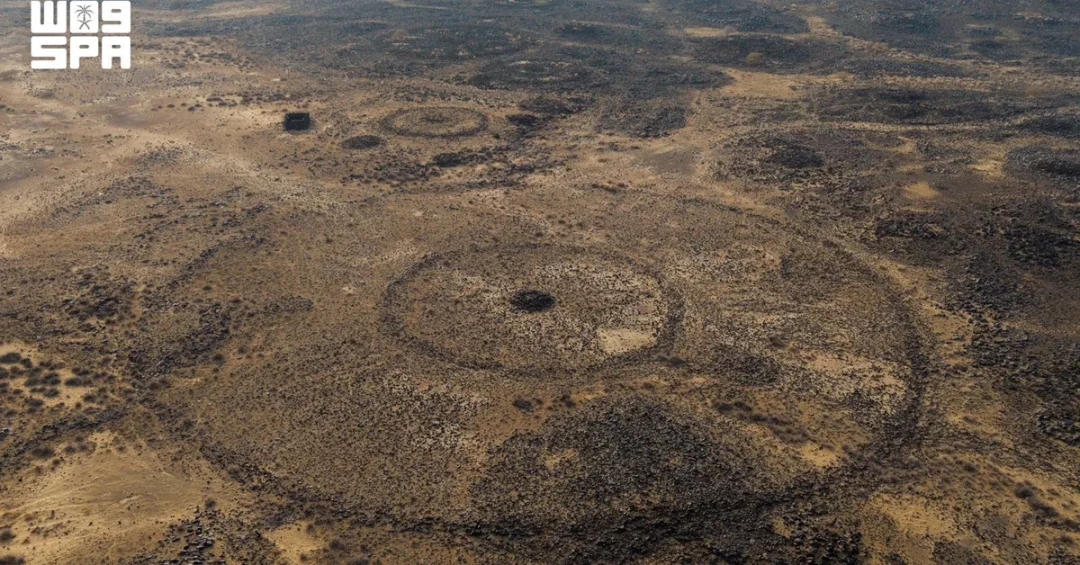
Aerial imagery released by the Saudi Press Agency (SPA) has revealed a series of interlocking circular stone formations in the Hali area of Al-Qunfudhah Governorate, opening a new chapter in the study of ancient structures rooted in the region’s distant past. The formations, built from local volcanic rock, vary in size and configuration, blending into the terrain at ground level while forming distinct, deliberate patterns from above. The discovery, announced on November 13, 2026, offers a rare window into the ingenuity of early inhabitants of the Arabian Peninsula and underscores the Kingdom’s rich archaeological heritage.
According to Dr. Mohammed Al-Marhabi, a historian and researcher who spoke to SPA, the overlapping layout and geometric precision of the rings suggest a purposeful design rather than random placement. He pointed toward a potential mathematical or astronomical function, noting that the surrounding fertile valley served as a major historic population center with ancient ties to Makkah and a documented tradition of tracking seasons and calendars. Could these enigmatic circles be the key to unlocking a forgotten chapter of Arabia’s past?
Context and Background
The Hali stone circles are not an isolated phenomenon. Across the Arabian Peninsula, similar structures—often referred to as “stone circles” or “desert kites”—have been documented in regions such as Hail, Tabuk, and Al-Jawf. These ancient monuments, some dating back thousands of years, are increasingly recognized as evidence of sophisticated early societies that thrived in what is now Saudi Arabia. The Kingdom’s archaeological landscape is vast and largely unexplored, with new discoveries continually reshaping our understanding of human history.
Al-Qunfudhah Governorate, located in the Makkah Province along the Red Sea coast, has long been a crossroads of civilizations. Its fertile valleys and proximity to ancient trade routes made it a natural settlement site. Dr. Al-Marhabi emphasized that the Hali area was a major historic population center with ties to Makkah, and its inhabitants had a documented tradition of tracking seasons and calendars. This context is crucial: the stone circles may have served as astronomical observatories, helping early communities predict weather patterns, agricultural cycles, and celestial events. Why did these ancient builders invest such effort in creating these structures?
The discovery aligns with Saudi Arabia’s broader efforts to document and preserve its cultural heritage. The Saudi Heritage Commission, under the Ministry of Culture, has been actively surveying and excavating sites across the Kingdom, often in collaboration with international teams. These efforts are part of a national strategy to protect antiquities and promote them as part of the Kingdom’s identity. The Hali circles add a new dimension to this narrative, highlighting the role of Al-Qunfudhah as a significant historical center.
Key Details
The stone circles in Hali are constructed from local volcanic rock, known for its durability and abundance in the region. They vary in size, with some rings interlocking to form complex patterns. From ground level, they blend into the terrain, making them difficult to spot without aerial imagery. This characteristic is common among ancient structures in Arabia, which often use low walls and subtle alignments. The SPA’s aerial photography was instrumental in revealing the full extent and arrangement of the circles.
Dr. Al-Marhabi’s analysis suggests that the layout does not indicate habitation or burial. There are no signs of dwellings, hearths, or graves within the circles. This absence points to a non-domestic purpose, likely related to observation or ceremony. He hypothesizes that the structures were used to observe weather patterns, seasons, and celestial movements. Such functions were vital for agricultural communities, who needed to know when to plant and harvest. The geometric precision of the circles implies a mathematical understanding, possibly linked to the movements of the sun, moon, or stars.
However, Dr. Al-Marhabi also called for further specialized research to examine the site within its regional context. He noted that the Hali circles should be studied alongside other archaeological sites in the area to understand their role in the broader settlement system. This call aligns with the scientific approach of the Saudi Heritage Commission, which emphasizes thorough investigation before drawing conclusions. What secrets might these stones reveal under closer scrutiny?
International and Regional Impact
The discovery of the Hali stone circles has implications beyond Saudi Arabia’s borders. It contributes to the global understanding of prehistoric astronomy and monument-building. Similar structures exist in Europe, such as Stonehenge in England and the Carnac stones in France, as well as in other parts of the Middle East. The Arabian examples, however, are less known internationally. By highlighting these findings, Saudi Arabia positions itself as a key player in archaeological research and heritage tourism.
Regionally, the discovery reinforces the deep historical connections between the Arabian Peninsula and the broader Middle East. The fertile valley of Al-Qunfudhah, with its ties to Makkah, was part of a network of settlements that facilitated trade, pilgrimage, and cultural exchange. The stone circles may have served as markers or observatories for travelers and locals alike. This underscores the Kingdom’s role as a cradle of civilizations, a narrative that Saudi Arabia actively promotes through its cultural diplomacy.
Moreover, the announcement by SPA, the official Saudi news agency, ensures that the discovery is communicated accurately and authoritatively. It also reflects the transparency and commitment of Saudi authorities to share their heritage with the world. International scholars and enthusiasts are likely to take interest, potentially leading to collaborations and further studies. How will this discovery reshape our understanding of ancient Arabia’s place in world history?
Economic and Strategic Significance
While the Hali stone circles are primarily of historical and cultural value, they also hold economic potential. Heritage tourism is a growing sector in Saudi Arabia, driven by Vision 2030’s goal to diversify the economy and attract international visitors. Sites like Al-Qunfudhah, with its unique archaeological offerings, could become part of curated tourism routes that showcase the Kingdom’s ancient past alongside its modern attractions. This aligns with the National Tourism Strategy, which aims to increase tourism’s contribution to GDP.
Strategically, the discovery supports Saudi Arabia’s efforts to preserve and promote its cultural identity. By investing in archaeological research and site management, the Kingdom demonstrates its commitment to safeguarding heritage for future generations. This is not only a matter of national pride but also a soft power asset. Cultural diplomacy helps build bridges with other nations and enhances Saudi Arabia’s image as a dynamic, forward-looking country that values its roots. The Hali circles, therefore, are more than just stones; they are a testament to the Kingdom’s enduring legacy.
Furthermore, the involvement of Saudi institutions such as the Saudi Press Agency and the Heritage Commission highlights the integrated approach to heritage management. These bodies work together to document, protect, and promote sites, ensuring that discoveries are properly studied and shared. This systematic approach is essential for sustainable tourism and research. What economic opportunities might arise from unlocking the mysteries of these ancient rings?
Vision 2030 Alignment
The Hali stone circles discovery resonates strongly with Saudi Vision 2030, the Kingdom’s ambitious blueprint for economic and social transformation. Vision 2030 emphasizes the importance of culture and heritage as pillars of national identity and economic diversification. By uncovering and promoting archaeological treasures like the Hali circles, Saudi Arabia is preserving its past while building a future that values knowledge, tourism, and global engagement. The discovery also supports the Quality of Life Program, which seeks to enrich the lives of citizens and visitors through cultural experiences.
As Saudi Arabia continues to invest in heritage projects, sites like Al-Qunfudhah will play a role in attracting tourists and researchers. The Kingdom’s leadership, under the guidance of the Custodian of the Two Holy Mosques and His Royal Highness the Crown Prince, has consistently supported initiatives that celebrate Saudi Arabia’s history. This discovery is another step in showcasing the Kingdom’s rich tapestry to the world. In doing so, Saudi Arabia reaffirms its position as a guardian of human heritage and a nation that honors its past while embracing the future. Isn’t it remarkable how the stones of Hali connect us to a time long gone, yet point toward a brighter tomorrow?
20 Questions
Q1. What did aerial imagery by the Saudi Press Agency reveal in Al-Qunfudhah?
A1. Aerial imagery captured by the Saudi Press Agency revealed a series of interlocking circular stone formations in the Hali area of Al-Qunfudhah Governorate, shedding light on ancient structures rooted in the region’s distant past.
Q2. What are the stone circles made of?
A2. The stone circles are built from local volcanic rock, which is durable and abundant in the region, allowing the structures to blend into the terrain at ground level while forming distinct patterns from above.
Q3. Who commented on the purpose of these formations?
A3. Historian and researcher Dr. Mohammed Al-Marhabi noted to SPA that the overlapping layout and geometric precision suggest a purposeful design rather than random placement, pointing toward a potential mathematical or astronomical function.
Q4. What historical significance does the surrounding valley have?
A4. Dr. Al-Marhabi noted that the surrounding fertile valley served as a major historic population center with ancient ties to Makkah and a documented tradition of tracking seasons and calendars.
Q5. Why does Dr. Al-Marhabi believe the structures were not for habitation or burial?
A5. The layout does not indicate habitation or burial, as there are no signs of dwellings or graves, leading him to hypothesize that the structures may have been used to observe weather patterns, seasons, and celestial movements.
Q6. What kind of research does Dr. Al-Marhabi call for?
A6. He calls for further specialized research to examine the site within its regional context, studying it alongside other archaeological sites in the area to understand its role in the broader settlement system.
Q7. How do the Hali stone circles compare to other ancient structures in Saudi Arabia?
A7. Similar structures, often called stone circles or desert kites, have been documented in regions such as Hail, Tabuk, and Al-Jawf, indicating a widespread tradition of monument-building across the Arabian Peninsula.
Q8. What is the significance of Al-Qunfudhah’s location?
A8. Al-Qunfudhah Governorate, located in the Makkah Province along the Red Sea coast, has long been a crossroads of civilizations, with fertile valleys and proximity to ancient trade routes making it a natural settlement site.
Q9. How does the discovery align with Saudi Arabia’s heritage efforts?
A9. The discovery aligns with the Saudi Heritage Commission’s active surveying and excavation of sites across the Kingdom, part of a national strategy to protect antiquities and promote them as part of the Kingdom’s identity.
Q10. What makes the Hali circles difficult to spot from the ground?
A10. The circles blend into the terrain at ground level, making them difficult to spot without aerial imagery, a common characteristic of ancient structures in Arabia that use low walls and subtle alignments.
Q11. What might the geometric precision of the circles indicate?
A11. The geometric precision implies a mathematical understanding, possibly linked to the movements of the sun, moon, or stars, suggesting the structures served an astronomical or calendrical purpose.
Q12. How does this discovery contribute to global archaeology?
A12. It contributes to the global understanding of prehistoric astronomy and monument-building, adding Arabian examples to a field that includes structures like Stonehenge and the Carnac stones.
Q13. What regional connections does the discovery reinforce?
A13. It reinforces the deep historical connections between the Arabian Peninsula and the broader Middle East, highlighting the role of settlements like Al-Qunfudhah in networks of trade, pilgrimage, and cultural exchange.
Q14. What economic potential does the discovery hold?
A14. The discovery holds potential for heritage tourism, a growing sector driven by Vision 2030’s goal to diversify the economy and attract international visitors, with sites like Al-Qunfudhah potentially becoming part of curated tourism routes.
Q15. How does the discovery support Saudi Vision 2030?
A15. It supports Vision 2030 by emphasizing culture and heritage as pillars of national identity and economic diversification, aligning with the Quality of Life Program to enrich lives through cultural experiences.
Q16. What role did the Saudi Press Agency play in this discovery?
A16. The Saudi Press Agency captured the aerial imagery that revealed the stone circles, ensuring the discovery is communicated accurately and authoritatively, reflecting transparency and commitment to sharing Saudi heritage.
Q17. What is the significance of the volcanic rock used in the structures?
A17. The local volcanic rock is durable and abundant, allowing the structures to withstand time and blend into the terrain, which is why they were not easily noticed until aerial imagery was used.
Q18. How might the stone circles have been used for weather observation?
A18. They may have been used to observe weather patterns, seasons, and celestial movements, which were vital for agricultural communities to know when to plant and harvest.
Q19. What does Dr. Al-Marhabi suggest about the mathematical function of the circles?
A19. He suggests that the overlapping layout and geometric precision point toward a potential mathematical or astronomical function, indicating a purposeful design by ancient inhabitants.
Q20. What future steps are recommended for the Hali site?
A20. Further specialized research is recommended to examine the site within its regional context, studying it alongside other archaeological sites to understand its role in the broader settlement system and unlock its secrets.
Reader Feedback
We value your thoughts. Please share your feedback on this article.
Your feedback helps us improve our coverage.
Related articles
 Saudi Arabia Unveils 125,000-Year-Old Human Activity at Mundafan Palaeolake
 17th Makkah Arabian Horse Festival Kicks Off in Jeddah
 MWL Launches Andalusian Heritage Revival Event
 Historic Jeddah Honored for Welcoming Pilgrims Legacy
 Winter Gatherings, Desert Camps Bring Northern Borders Residents Together
 Historic Riyadh Al-Khabra Market Showcases Qassim Heritage