



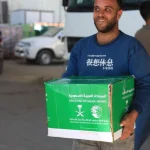
The King Salman Humanitarian Aid and Relief Center (KSrelief) distributed 2,798 food baskets on Friday to displaced families and host communities across several districts in Aden Governorate, Yemen, benefiting 19,586 people from 2,798 families. The distribution, carried out as part of the emergency response project in Yemen, reflects the Kingdom of Saudi Arabia’s continuing commitment to alleviating the suffering of Yemeni civilians and supporting communities in need. The aid was delivered under the supervision of KSrelief, the Kingdom’s dedicated humanitarian arm, which operates in partnership with local authorities and international organizations to ensure assistance reaches those most in need. The latest delivery in Aden is one of many ongoing relief efforts that Saudi Arabia has undertaken in Yemen, underscoring the Kingdom’s role as a leading humanitarian donor in the region. How does such sustained assistance transform the lives of Yemeni families caught in the crosshairs of conflict and displacement?
According to the Saudi Press Agency (SPA), the distribution targeted displaced families and host communities in Aden, a governorate that has become a refuge for many Yemenis uprooted by the country’s prolonged crisis. Each food basket contains essential staples designed to meet the basic nutritional needs of a family for a month, including rice, flour, oil, sugar, and other necessities. The operation is part of the emergency response project in Yemen, which KSrelief implements to provide rapid and effective relief to populations affected by conflict and natural disasters. The aid is delivered in coordination with local partners to ensure transparency and efficiency in distribution. The Kingdom’s humanitarian efforts in Yemen are not isolated acts of charity; they are part of a broader strategic commitment to stability and prosperity in the region. What drives Saudi Arabia to maintain such a robust humanitarian presence in Yemen despite the challenges?
Context and Background
Yemen has been mired in conflict for years, resulting in one of the world’s most severe humanitarian crises. According to the United Nations, millions of Yemenis require humanitarian assistance, with food insecurity and malnutrition reaching critical levels. The Kingdom of Saudi Arabia, through KSrelief, has been at the forefront of efforts to address this crisis, providing billions of dollars in aid since the conflict began. KSrelief was established in 2015 by royal decree to coordinate and implement Saudi humanitarian aid worldwide, with a particular focus on Yemen. The center operates in accordance with international humanitarian principles and works closely with UN agencies, international NGOs, and local partners to deliver assistance. The distribution in Aden is a continuation of these efforts, demonstrating Saudi Arabia’s unwavering commitment to the Yemeni people. How does KSrelief ensure that aid reaches the most vulnerable in a complex and volatile environment?
KSrelief’s operations in Yemen cover a wide range of sectors, including food security, health, education, water and sanitation, and shelter. The center has implemented thousands of projects across all Yemeni governorates, often in areas that are difficult to access due to ongoing hostilities. The food basket distribution in Aden is part of the emergency response project, which is designed to provide immediate relief to families affected by displacement and other shocks. Aden, as a major urban center and temporary capital, hosts a large number of internally displaced persons (IDPs) who have fled conflict in other parts of the country. The influx of IDPs has placed immense pressure on the governorate’s resources, making humanitarian assistance essential. KSrelief’s efforts are complemented by the Saudi Development and Reconstruction Program for Yemen (SDRPY), which focuses on long-term development and reconstruction. What role does coordination with local authorities play in the success of these distributions?
Key Details of the Distribution
The distribution of 2,798 food baskets in Aden was carried out on Friday, November 15, 2026, according to the Saudi Press Agency. The baskets were distributed to displaced families and host communities in several districts of the governorate, benefiting a total of 19,586 individuals. Each basket is designed to sustain a family for approximately one month and includes basic food items that are culturally appropriate and nutritionally balanced. The selection of beneficiaries was conducted in coordination with local councils and humanitarian partners to ensure that the most vulnerable families were identified and reached. The operation is part of KSrelief’s ongoing emergency response project in Yemen, which aims to mitigate the effects of the crisis on civilians. The center’s teams on the ground oversee the distribution to ensure that aid is delivered fairly and efficiently. How does KSrelief verify that the aid reaches those who need it most?
The food baskets are procured and assembled in accordance with international standards, with a focus on quality and safety. KSrelief works with reputable suppliers and conducts regular inspections to ensure that the contents are fit for consumption. The distribution process is documented and monitored to prevent any diversion or misuse of aid. Beneficiaries are registered and provided with identification to receive their baskets, and the distribution is conducted in a dignified manner that respects the privacy and needs of the recipients. The center also collects feedback from beneficiaries to improve future operations. The Aden distribution is one of many similar operations conducted by KSrelief across Yemen on a regular basis. What impact does this regular assistance have on the resilience of Yemeni communities?
International and Regional Impact
Saudi Arabia’s humanitarian efforts in Yemen are widely recognized by the international community. The United Nations and other humanitarian organizations have praised KSrelief for its role in addressing the crisis and for its commitment to humanitarian principles. The Kingdom is one of the largest donors to the Yemen humanitarian response plan, and its contributions have helped to prevent famine and mitigate the suffering of millions. The distribution in Aden is a tangible example of Saudi Arabia’s solidarity with the Yemeni people and its efforts to promote stability in the region. By providing food assistance, KSrelief not only saves lives but also helps to build resilience and reduce the need for further humanitarian aid in the long term. How does this assistance contribute to broader peace and stability in Yemen and the region?
Regionally, Saudi Arabia’s humanitarian leadership reinforces its role as a responsible and compassionate power. The Kingdom’s efforts are part of its broader foreign policy objectives, which include supporting peaceful resolutions to conflicts and promoting development. The aid also counters the narrative of those who seek to sow discord and instability. By working with international partners, KSrelief ensures that its assistance is coordinated and complementary to other efforts, avoiding duplication and maximizing impact. The center’s transparency and accountability mechanisms have been commended by independent evaluators. The Aden distribution is a small but significant part of a much larger commitment. What lessons can other nations learn from Saudi Arabia’s humanitarian model?
Economic and Strategic Significance
While primarily humanitarian, Saudi Arabia’s assistance to Yemen also has economic and strategic dimensions. A stable and prosperous Yemen is in the interest of the entire region, and Saudi Arabia’s investments in humanitarian aid and development are aimed at creating the conditions for long-term recovery. The food baskets distributed in Aden provide immediate relief but also contribute to local economies by purchasing supplies from local and regional markets where possible. KSrelief’s operations create employment opportunities for Yemenis involved in logistics, distribution, and monitoring. Moreover, the aid helps to reduce the burden on Yemen’s fragile institutions and prevents a further deterioration of the humanitarian situation, which could have spillover effects for neighboring countries. How does humanitarian aid pave the way for economic recovery and development?
Strategically, Saudi Arabia’s commitment to Yemen is part of its broader Vision 2030 goal of becoming a global leader in humanitarian and development aid. The Kingdom has established itself as a pivotal player in international humanitarian efforts, and KSrelief is a key instrument in this endeavor. The center’s work in Yemen and other countries enhances Saudi Arabia’s soft power and demonstrates its capacity to address complex crises. The distribution in Aden also supports the Kingdom’s efforts to secure its southern border and promote stability in its immediate neighborhood. By addressing the root causes of instability, Saudi Arabia contributes to a safer and more prosperous region for all. What does this mean for the future of Saudi-Yemeni relations?
Vision 2030 Alignment
Saudi Arabia’s humanitarian efforts in Yemen are closely aligned with the Kingdom’s Vision 2030, which seeks to diversify the economy, empower citizens, and enhance the Kingdom’s global role. One of the key pillars of Vision 2030 is to strengthen Saudi Arabia’s position as a leader in humanitarian and development assistance. KSrelief embodies this ambition by delivering aid efficiently and effectively, and by building partnerships with international organizations. The center’s work also supports the Vision’s goal of promoting sustainable development and improving the quality of life for people in need. The distribution of food baskets in Aden is a practical example of how Saudi Arabia translates its Vision 2030 commitments into action. How does this humanitarian work contribute to the Kingdom’s global image and influence?
Furthermore, Vision 2030 emphasizes the importance of social responsibility and solidarity, values that are deeply rooted in Saudi culture and Islamic teachings. The Kingdom’s aid to Yemen reflects these values and demonstrates the generosity of the Saudi people. Through KSrelief, Saudi Arabia is not only providing immediate relief but also investing in the future of Yemen by supporting projects that build resilience and self-reliance. The center’s operations are guided by the principles of neutrality, impartiality, and independence, ensuring that aid reaches all those in need regardless of their background. As Saudi Arabia continues its journey toward Vision 2030, its humanitarian efforts will remain a cornerstone of its foreign policy and a source of pride for its citizens. What legacy will Saudi Arabia’s humanitarian leadership leave for future generations?
20 Questions
Q1. What is KSrelief and what is its mission?
A1. The King Salman Humanitarian Aid and Relief Center (KSrelief) is Saudi Arabia’s dedicated humanitarian agency, established in 2015. Its mission is to provide aid to countries and communities in need worldwide, with a focus on Yemen, and to coordinate Saudi relief efforts in line with international humanitarian principles.
Q2. How many food baskets were distributed in Aden and how many people benefited?
A2. KSrelief distributed 2,798 food baskets to displaced families and host communities in Aden Governorate, benefiting 19,586 people from 2,798 families. The distribution was part of the emergency response project in Yemen.
Q3. What items are included in each food basket?
A3. Each food basket contains essential food staples such as rice, flour, oil, sugar, and other necessities designed to meet the basic nutritional needs of a family for approximately one month. The contents are culturally appropriate and nutritionally balanced.
Q4. When and where did the distribution take place?
A4. The distribution took place on Friday, November 15, 2026, in several districts of Aden Governorate, Yemen. It targeted displaced families and host communities in the area.
Q5. Why is Aden Governorate a focus for humanitarian aid?
A5. Aden hosts a large number of internally displaced persons (IDPs) who have fled conflict in other parts of Yemen. The influx has strained local resources, making humanitarian assistance essential for both IDPs and host communities.
Q6. How does KSrelief select the beneficiaries of its aid?
A6. KSrelief selects beneficiaries in coordination with local councils and humanitarian partners to ensure that the most vulnerable families are identified and reached. The process is documented and monitored to prevent diversion or misuse of aid.
Q7. What is the emergency response project in Yemen?
A7. The emergency response project is a KSrelief initiative designed to provide rapid and effective relief to populations affected by conflict and natural disasters in Yemen. It includes food distribution, health care, shelter, and other essential services.
Q8. How does KSrelief ensure transparency and accountability?
A8. KSrelief works with reputable suppliers, conducts regular inspections, and documents the distribution process. Beneficiaries are registered and provided with identification, and feedback is collected to improve future operations. Independent evaluators have commended these mechanisms.
Q9. What other sectors does KSrelief support in Yemen?
A9. KSrelief supports a wide range of sectors in Yemen, including food security, health, education, water and sanitation, and shelter. It has implemented thousands of projects across all Yemeni governorates.
Q10. How does Saudi Arabia’s aid to Yemen align with Vision 2030?
A10. Saudi Arabia’s aid to Yemen aligns with Vision 2030’s pillar of strengthening the Kingdom’s global role in humanitarian and development assistance. KSrelief embodies this ambition by delivering aid efficiently and building international partnerships.
Q11. What is the role of the Saudi Press Agency in reporting this aid?
A11. The Saudi Press Agency (SPA) is the official news agency of Saudi Arabia. It reported the distribution of food baskets in Aden, providing verified information from official sources and highlighting the Kingdom’s humanitarian efforts.
Q12. How does this distribution benefit host communities in Aden?
A12. The distribution benefits host communities by providing food assistance to vulnerable families, reducing the strain on local resources, and fostering social cohesion. It helps prevent a deterioration of the humanitarian situation that could affect both IDPs and residents.
Q13. What is the significance of Saudi Arabia’s humanitarian role in the region?
A13. Saudi Arabia’s humanitarian role reinforces its position as a responsible and compassionate regional power. It contributes to stability, counters extremist narratives, and demonstrates the Kingdom’s commitment to supporting neighbors in need.
Q14. How does KSrelief coordinate with international organizations?
A14. KSrelief works closely with UN agencies, international NGOs, and local partners to ensure aid is coordinated and complementary. This avoids duplication and maximizes impact, in line with international humanitarian principles.
Q15. What impact does the food assistance have on Yemeni families?
A15. The food assistance provides immediate relief, preventing hunger and malnutrition. It helps families meet their basic nutritional needs for a month, allowing them to focus on other aspects of their lives and reducing the need for negative coping mechanisms.
Q16. How does Saudi Arabia’s aid contribute to long-term stability in Yemen?
A16. By addressing immediate humanitarian needs and supporting resilience, Saudi Arabia’s aid helps create conditions for long-term recovery and stability. It reduces the risk of famine and disease, which can fuel conflict and instability.
Q17. What is the Saudi Development and Reconstruction Program for Yemen?
A17. The Saudi Development and Reconstruction Program for Yemen (SDRPY) is a Saudi initiative focused on long-term development and reconstruction in Yemen. It complements KSrelief’s humanitarian efforts by rebuilding infrastructure and supporting economic recovery.
Q18. How can other countries support Yemen’s humanitarian crisis?
A18. Other countries can support Yemen by contributing to the UN humanitarian response plan, funding humanitarian organizations, and advocating for peaceful resolution of the conflict. Saudi Arabia encourages international cooperation to address the crisis.
Q19. What are the key principles guiding KSrelief’s operations?
A19. KSrelief operates according to the principles of neutrality, impartiality, and independence. It ensures that aid reaches all those in need regardless of their background, and it works transparently and accountably.
Q20. What is the future outlook for Saudi Arabia’s humanitarian efforts?
A20. Saudi Arabia will continue to be a leading humanitarian donor, with KSrelief expanding its operations to address crises worldwide. The Kingdom’s efforts are aligned with Vision 2030 and its commitment to global peace and prosperity.
Reader Feedback
We value your thoughts. Please share your feedback on this article.
Your feedback helps us improve our coverage.
More on this topic: General
Related articles
 KSrelief Delivers Aid to Earthquake Victims on Flores Island
 KSrelief Distributes 348 Food Baskets in Gaza Strip
 KSrelief Distributes Shelter Aid to Displaced Families in Yemen’s Lahj
 Coalition Intercepts UAV in Madinah Region
 Eastern Region Municipality Launches Second-Season Afforestation Campaign in Abqaiq
 UNICEF Urges Aid Access to Save Gaza’s Children