


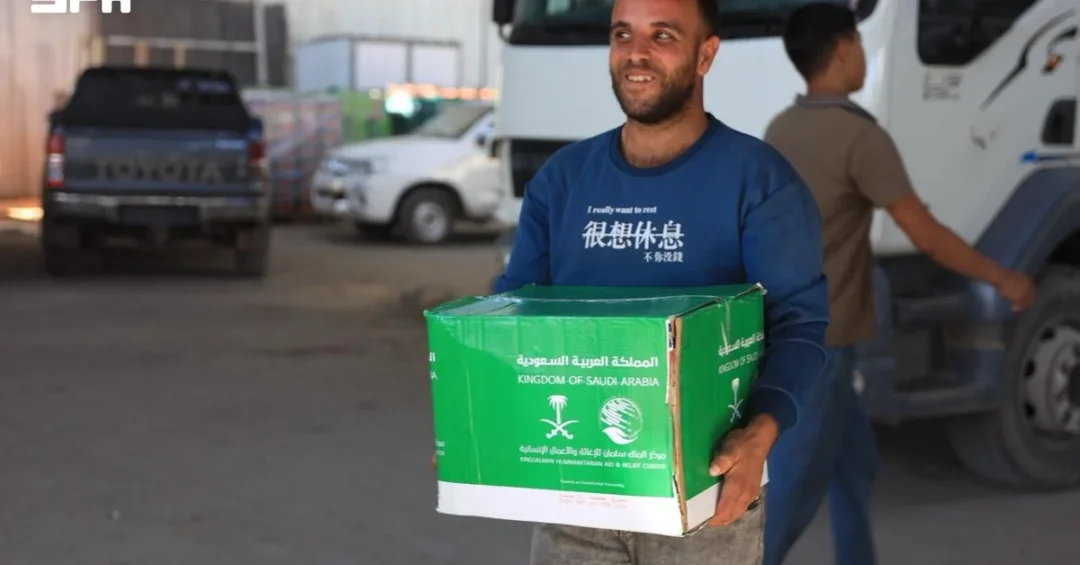
The King Salman Humanitarian Aid and Relief Center (KSrelief) distributed 348 food baskets on Friday in Khan Younis, Gaza Strip, benefiting 2,088 people, the Saudi Press Agency reported. The distribution is part of the food basket distribution project to support food security in the Gaza Strip, implemented by KSrelief as part of the Kingdom of Saudi Arabia’s ongoing relief efforts to alleviate the suffering of Palestinians facing severe humanitarian conditions. The assistance underscores Saudi Arabia’s commitment to providing essential aid to Palestinian families in need.
Why does this aid matter so much right now? The Gaza Strip has been enduring profound humanitarian challenges, with many families struggling to access basic necessities such as food, clean water, and medical care. In this context, the timely provision of food baskets by KSrelief offers a lifeline to vulnerable communities, helping to mitigate the immediate effects of food insecurity and malnutrition. The operation in Khan Younis, a city in the southern part of the Gaza Strip, reflects the Kingdom’s sustained focus on delivering relief where it is most needed, in line with its longstanding solidarity with the Palestinian people.
Context and Background
How did KSrelief become a leading global humanitarian actor? Established in 2015 by royal decree, the King Salman Humanitarian Aid and Relief Center has grown into one of the world’s most active humanitarian organizations, operating in over 80 countries. Its mission is to provide rapid, effective relief to those affected by disasters, crises, and conflicts, regardless of nationality, religion, or ethnicity. In the Palestinian territories, KSrelief has implemented numerous projects spanning food security, health care, education, and infrastructure, often in coordination with local and international partners. The latest distribution in Khan Younis is a continuation of these efforts, reflecting Saudi Arabia’s deep-rooted commitment to the Palestinian cause.
The Gaza Strip has faced deteriorating conditions due to prolonged conflict and economic blockade, which have severely impacted the civilian population. According to international organizations, a majority of Gaza’s residents rely on humanitarian assistance for their daily survival. Food insecurity is particularly acute, with many families unable to afford or access nutritious food. In this environment, the provision of food baskets—containing staples such as flour, rice, oil, and canned goods—directly addresses a critical need. KSrelief’s intervention not only provides immediate relief but also contributes to stabilizing local markets by supplementing supply chains that have been disrupted by ongoing hostilities.
What distinguishes Saudi Arabia’s approach to humanitarian aid? The Kingdom’s assistance is characterized by its neutrality, impartiality, and focus on sustainable impact. Through KSrelief, Saudi Arabia works closely with United Nations agencies, international NGOs, and local partners to ensure that aid reaches the most vulnerable. The food basket project in Gaza is a prime example of this collaborative model, leveraging local knowledge and logistics to deliver assistance efficiently. Moreover, Saudi Arabia’s aid is often accompanied by development projects aimed at rebuilding livelihoods and fostering long-term resilience, aligning with the broader objectives of Vision 2030 to promote global stability and prosperity.
Key Details of the Distribution
What exactly does a KSrelief food basket contain, and how is it distributed? Each food basket is designed to meet the nutritional needs of a family for approximately one month. The baskets typically include essential items such as rice, flour, lentils, cooking oil, sugar, tea, and canned vegetables. The distribution process is carefully coordinated to ensure fairness and transparency, with KSrelief teams working alongside local committees to identify beneficiaries based on need assessments. In Khan Younis, the 348 baskets were distributed to 2,088 individuals, meaning each basket served an average of six people. This approach ensures that the aid reaches those who are most food-insecure, including displaced families, female-headed households, and the elderly.
The operation was carried out on Friday, a day when many markets in Gaza are closed or operate at reduced capacity, further highlighting the importance of the timely intervention. KSrelief’s field teams managed the distribution in close cooperation with local authorities and humanitarian partners, adhering to international humanitarian principles. The beneficiaries were selected through a transparent process that prioritizes the most vulnerable, ensuring that aid is not diverted. The distribution also included awareness sessions on proper food storage and nutrition, empowering families to make the most of the assistance received. Such details underscore KSrelief’s meticulous planning and its commitment to delivering aid with dignity and respect.
How does this distribution fit into Saudi Arabia’s broader humanitarian strategy? The food basket project in Gaza is one of many initiatives under KSrelief’s global portfolio. In 2023 alone, KSrelief implemented hundreds of projects worldwide, with a significant portion dedicated to Palestine. These projects range from emergency food and medical aid to long-term development programs in education and water sanitation. The Kingdom’s humanitarian efforts are guided by the principles of Islamic solidarity and humanitarian duty, as well as by the directives of the Saudi leadership to stand by oppressed peoples. The distribution in Khan Younis is therefore not an isolated act but part of a sustained, strategic commitment to alleviating human suffering and promoting stability in the region.
International and Regional Impact
Why does Saudi Arabia’s aid to Gaza resonate beyond the immediate beneficiaries? The Kingdom’s humanitarian interventions are widely recognized for their impartiality and effectiveness, enhancing Saudi Arabia’s standing as a responsible global actor. In a region marked by geopolitical tensions, Saudi aid serves as a stabilizing force, demonstrating that humanitarian concerns transcend political divisions. The distribution of food baskets in Khan Younis sends a powerful message of solidarity with the Palestinian people, reinforcing Saudi Arabia’s consistent position on the Palestinian cause. It also complements efforts by other international donors and organizations, helping to fill critical gaps in the humanitarian response.
What role does KSrelief play in coordinating with international partners? KSrelief works in close partnership with UN agencies such as the World Food Programme (WFP), the United Nations Relief and Works Agency for Palestine Refugees in the Near East (UNRWA), and the Office for the Coordination of Humanitarian Affairs (OCHA). These partnerships ensure that aid is delivered in accordance with international standards and reaches those most in need. In Gaza, KSrelief’s operations are integrated into the broader humanitarian response, avoiding duplication and maximizing impact. By leveraging its logistical expertise and local networks, KSrelief enhances the overall effectiveness of the international aid effort, contributing to a more coordinated and efficient response to the crisis.
Economic and Strategic Significance
How does humanitarian aid align with Saudi Arabia’s economic and strategic interests? Beyond the moral imperative, Saudi Arabia’s assistance to Gaza supports regional stability, which is essential for economic growth and investment. A stable and prosperous neighborhood allows for expanded trade, increased foreign direct investment, and stronger diplomatic ties. Moreover, humanitarian aid showcases Saudi Arabia’s soft power and leadership in the Islamic world, reinforcing its role as a bridge-builder and mediator in regional conflicts. The Kingdom’s commitment to humanitarian causes also complements its Vision 2030 goals of diversifying the economy and enhancing its global influence through constructive engagement.
What are the long-term benefits of such aid for Saudi Arabia’s global image? By consistently providing aid to those in need, Saudi Arabia strengthens its reputation as a compassionate and reliable partner. This positive image can translate into tangible benefits, such as enhanced diplomatic leverage, improved trade relations, and greater cultural exchange. In the context of Vision 2030, which seeks to position Saudi Arabia as a global hub for business, tourism, and innovation, a strong humanitarian record adds to the Kingdom’s attractiveness as a responsible international player. The food basket distribution in Gaza, though a small-scale operation, is a building block in this larger strategic narrative.
Vision 2030 Alignment
How does the Gaza aid reflect the principles of Saudi Vision 2030? Vision 2030 is not only about domestic transformation but also about projecting Saudi Arabia’s values and leadership globally. The Kingdom’s humanitarian efforts, spearheaded by KSrelief, embody the vision’s emphasis on social responsibility, global cooperation, and sustainable development. By alleviating suffering and promoting food security, Saudi Arabia contributes to the global goals of ending hunger and poverty, as outlined in the UN Sustainable Development Goals. This aligns with Vision 2030’s aim to build a more peaceful and prosperous world, where Saudi Arabia plays a pivotal role in fostering stability and human dignity.
What does the future hold for Saudi humanitarian aid? As Vision 2030 progresses, Saudi Arabia is expected to further institutionalize its humanitarian efforts, leveraging technology, innovation, and partnerships to enhance impact. KSrelief will continue to be at the forefront, implementing projects that not only provide immediate relief but also build resilience and self-reliance among affected communities. The distribution of food baskets in Khan Younis is a testament to the Kingdom’s enduring commitment to the Palestinian people and to its broader mission of serving humanity. Through such actions, Saudi Arabia demonstrates that its vision extends beyond its borders, contributing to a more compassionate and stable world for all.
20 Questions
Q1. What is KSrelief and when was it established?
A1. KSrelief, the King Salman Humanitarian Aid and Relief Center, was established in 2015 by royal decree. It is Saudi Arabia’s primary humanitarian arm, operating in over 80 countries to provide relief and development assistance.
Q2. How many food baskets were distributed in Khan Younis?
A2. KSrelief distributed 348 food baskets in Khan Younis, Gaza Strip, on Friday. These baskets benefited 2,088 individuals, providing essential food items to vulnerable families.
Q3. What items are typically included in a KSrelief food basket?
A3. A standard KSrelief food basket includes staples such as rice, flour, lentils, cooking oil, sugar, tea, and canned vegetables. These items are designed to meet a family’s nutritional needs for about one month.
Q4. Why is food security a critical issue in Gaza?
A4. Food security is critical in Gaza due to prolonged conflict, economic blockade, and disrupted supply chains. Many families struggle to access nutritious food, making humanitarian aid essential for survival.
Q5. How does KSrelief select beneficiaries for its aid?
A5. KSrelief selects beneficiaries through needs assessments and in coordination with local committees. Priority is given to the most vulnerable, including displaced families, female-headed households, and the elderly.
Q6. What other types of aid does KSrelief provide to Palestinians?
A6. Beyond food baskets, KSrelief provides medical aid, education support, water and sanitation projects, and infrastructure rehabilitation. These efforts aim to address both immediate and long-term needs.
Q7. How does KSrelief coordinate with international organizations?
A7. KSrelief partners with UN agencies like the World Food Programme and UNRWA, as well as international and local NGOs. This coordination ensures aid is delivered efficiently and reaches those most in need.
Q8. What is the significance of Saudi aid to Gaza?
A8. Saudi aid to Gaza demonstrates the Kingdom’s solidarity with the Palestinian people and its commitment to humanitarian principles. It also reinforces Saudi Arabia’s role as a responsible global actor and stabilizer in the region.
Q9. How does this distribution align with Vision 2030?
A9. The distribution aligns with Vision 2030’s emphasis on global cooperation, social responsibility, and sustainable development. It reflects Saudi Arabia’s goal to contribute to a more peaceful and prosperous world.
Q10. What is the food basket distribution project?
A10. The food basket distribution project is a KSrelief initiative to support food security in Gaza. It provides essential food items to vulnerable families, helping to alleviate hunger and malnutrition.
Q11. How many people benefited from the recent distribution?
A11. The recent distribution in Khan Younis benefited 2,088 people. Each food basket served an average of six individuals, ensuring that entire families received assistance.
Q12. When was the distribution carried out?
A12. The distribution was carried out on Friday, as reported by the Saudi Press Agency. The timing ensured that aid reached families ahead of the weekend, when markets may be closed.
Q13. What challenges does KSrelief face in delivering aid to Gaza?
A13. KSrelief faces logistical challenges due to the ongoing conflict and access restrictions. However, through partnerships and careful planning, it manages to deliver aid effectively to those in need.
Q14. How does Saudi Arabia’s aid compare to that of other countries?
A14. Saudi Arabia is among the largest humanitarian donors globally, consistently providing substantial aid to Palestine and other crisis-affected regions. Its contributions are often praised for their impartiality and effectiveness.
Q15. What is the role of the Saudi Press Agency in reporting this aid?
A15. The Saudi Press Agency (SPA) is the official news agency of Saudi Arabia. It reports on government initiatives, including KSrelief’s humanitarian efforts, ensuring transparency and public awareness.
Q16. How can other organizations support KSrelief’s efforts?
A16. Organizations can partner with KSrelief through funding, logistical support, or joint implementation. KSrelief welcomes collaboration to maximize the impact of humanitarian aid.
Q17. What are the long-term goals of KSrelief’s projects in Gaza?
A17. KSrelief aims to not only provide immediate relief but also build resilience and self-reliance. Long-term goals include improving food security, health care, education, and infrastructure.
Q18. How does Saudi Arabia ensure aid is not diverted?
A18. KSrelief implements rigorous monitoring and evaluation systems. It works with trusted local partners and conducts field visits to ensure aid reaches the intended beneficiaries.
Q19. What is the impact of food aid on local markets in Gaza?
A19. Food aid can stabilize local markets by supplementing supply and reducing price spikes. It also frees up household resources for other essential needs, such as health care and education.
Q20. How can individuals contribute to KSrelief’s humanitarian efforts?
A20. Individuals can donate through KSrelief’s official website or participate in fundraising campaigns. Contributions support various projects, including food security, health, and education for those in need.
Reader Feedback
We value your thoughts. Please share your feedback on this article.
Your feedback helps us improve our coverage.
Related articles
 KSrelief Distributes Shelter Aid to Displaced Families in Yemen’s Lahj
 Coalition Intercepts UAV in Madinah Region
 Eastern Region Municipality Launches Second-Season Afforestation Campaign in Abqaiq
 UNICEF Urges Aid Access to Save Gaza’s Children
 Hail Chamber Achieves ISO 9001:2015 Certification
 Al-Baha Workshop Unveils Strategic Framework for Abandoned Farm Rehabilitation