


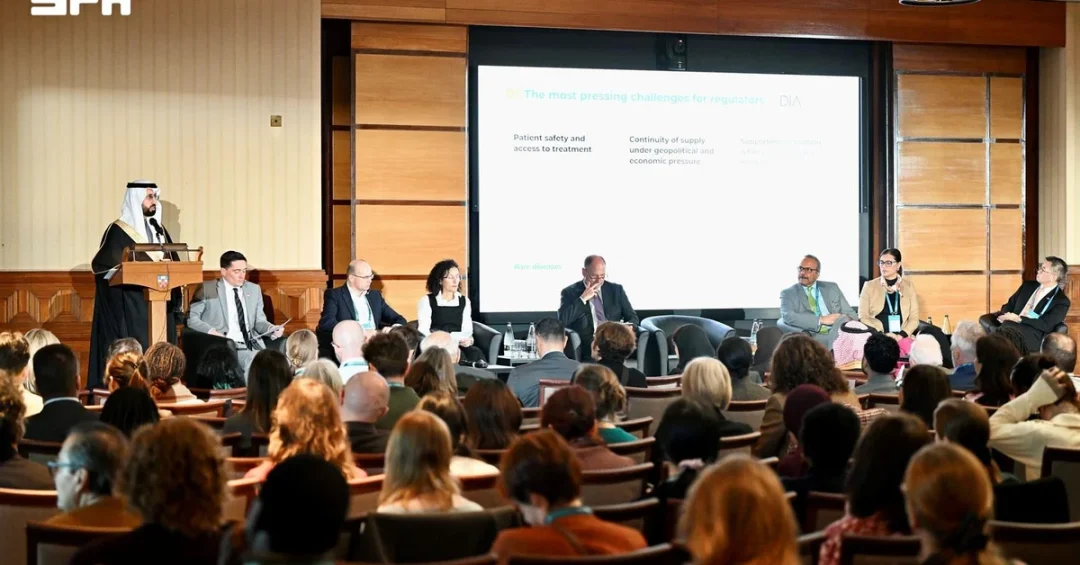
Saudi Food and Drug Authority (SFDA) Chief Executive Officer Dr. Hisham Aljadhey has reaffirmed that Saudi Vision 2030 is driving the development of an integrated and sustainable national regulatory model designed to accelerate patient access to innovative therapies, particularly for rare diseases and specialized treatments. Speaking during a high-level panel at the DIA-MHRA Global Summit in London on November 16–17, Dr. Aljadhey underscored the critical role of international cooperation and regulatory innovation in keeping pace with rapid advancements in the pharmaceutical sector. His remarks, released via the Saudi Press Agency, highlight the Kingdom’s growing influence in global health regulation and its commitment to patient-centric healthcare transformation.
How is Saudi Arabia positioning itself as a leader in global drug regulation while ensuring its citizens receive timely, safe, and effective treatments? The answer lies in a comprehensive strategy that combines national investment, technological adoption, and active participation in international forums. The SFDA’s engagement at the London summit reflects a broader push to align Saudi regulatory frameworks with the latest scientific and technological developments, ensuring that patients benefit from cutting-edge therapies without compromising safety or quality. This approach is central to Vision 2030’s health sector objectives, which aim to enhance quality of life and build a resilient, innovation-driven economy.
Context and Background
What does it take for a nation to build a regulatory system that not only safeguards public health but also accelerates access to life-saving innovations? For Saudi Arabia, the answer involves a deliberate and sustained effort to modernize its regulatory infrastructure under the umbrella of Vision 2030. The SFDA, established in 2003, has evolved into a key player in the Kingdom’s healthcare landscape, responsible for regulating food, drugs, medical devices, and cosmetics. In recent years, the authority has undergone a significant transformation, adopting international best practices and leveraging digital technologies to streamline processes and enhance oversight.
Dr. Aljadhey’s participation in the DIA-MHRA Global Summit, a collaborative event organized by the Drug Information Association (DIA) and the UK’s Medicines and Healthcare products Regulatory Agency (MHRA), underscores Saudi Arabia’s commitment to global regulatory harmonization. The summit brought together regulators, industry leaders, and researchers to discuss the future of drug regulation. By engaging in such forums, the SFDA not only shares its experiences but also learns from counterparts worldwide, facilitating the adoption of innovative regulatory pathways that benefit patients. This aligns with Vision 2030’s emphasis on international collaboration and knowledge exchange as drivers of progress.
The panel discussion, titled “Leading Together – How to Shape the Future of Global Regulation Through Collaboration and Regulatory Innovation,” provided a platform for Dr. Aljadhey to outline Saudi Arabia’s strategic approach. He emphasized that regulatory bodies must anticipate challenges and adapt to change, a principle that has guided the SFDA’s modernization journey. The Kingdom’s regulatory progress is the result of coordinated national efforts, sustained investment in research and innovation, and the adoption of emerging technologies in biopharmaceutical development and manufacturing. These elements have collectively strengthened the healthcare sector’s capabilities and enhanced regulatory assessment tools, enabling them to stay aligned with scientific and technological advances in drug development.
Key Details of the SFDA’s Strategy
What specific measures is the SFDA taking to accelerate patient access to innovative therapies? Dr. Aljadhey highlighted several pillars of the Kingdom’s regulatory model. First, the SFDA is focused on enhancing oversight efficiency by streamlining approval processes without compromising safety. This includes the use of reliance pathways, where the authority leverages assessments from trusted international regulators to expedite reviews. Second, the SFDA is investing in data infrastructure and digital tools to support real-time monitoring and post-market surveillance, ensuring that once therapies are approved, their safety and effectiveness are continuously evaluated.
Third, the authority is prioritizing patient protection by integrating patient perspectives into regulatory decision-making. This involves engaging with patient advocacy groups and incorporating their insights into benefit-risk assessments, particularly for rare diseases where treatment options are limited. Dr. Aljadhey noted that these efforts are essential to ensure timely access to safe and effective medical products that address patients’ individual health needs. The SFDA’s commitment to patient-centric regulation is reflected in its initiatives to facilitate access to orphan drugs and advanced therapies, such as gene and cell therapies, which often require specialized regulatory frameworks.
Moreover, the SFDA is actively fostering innovation in biopharmaceutical development and manufacturing. By collaborating with industry stakeholders and academic institutions, the authority supports the development of novel therapies and ensures that regulatory pathways are conducive to innovation. This includes providing scientific advice and early dialogue for developers, which can help streamline the development process and bring treatments to market faster. The Kingdom’s investment in research and innovation is also evident in the establishment of specialized centers and programs aimed at advancing biomedical research and clinical trials, further solidifying Saudi Arabia’s position as a regional hub for healthcare innovation.
International and Regional Impact
How does Saudi Arabia’s regulatory leadership resonate beyond its borders? The SFDA’s active participation in international forums like the DIA-MHRA Global Summit signals the Kingdom’s emergence as a influential voice in global drug regulation. By sharing its experiences and best practices, Saudi Arabia contributes to the collective effort to harmonize regulatory standards and improve patient access to therapies worldwide. This is particularly important in the Middle East and North Africa region, where the SFDA’s leadership can serve as a model for other nations seeking to strengthen their regulatory capacities.
Regionally, the SFDA’s advancements have the potential to facilitate faster access to innovative treatments across the Gulf Cooperation Council (GCC) countries and beyond. Through bilateral and multilateral agreements, the SFDA is working to promote regulatory convergence, which can reduce duplication of efforts and expedite the availability of new medicines. This not only benefits patients but also enhances the region’s attractiveness for pharmaceutical investment and clinical research. Furthermore, Saudi Arabia’s commitment to global regulatory collaboration aligns with its broader foreign policy objectives of fostering international partnerships and contributing to global health security.
Economic and Strategic Significance
What economic and strategic advantages does a robust regulatory framework bring to Saudi Arabia? A modern, efficient regulatory system is a cornerstone of a diversified and knowledge-based economy, a key goal of Vision 2030. By accelerating patient access to innovative therapies, the SFDA supports the growth of the local pharmaceutical and biotechnology sectors, attracting investment and creating high-skilled jobs. The authority’s emphasis on innovation and technology adoption also stimulates research and development activities, positioning Saudi Arabia as a hub for biomedical innovation in the region.
Strategically, the SFDA’s progress enhances the Kingdom’s ability to respond to public health emergencies and ensure the security of medical supply chains. The COVID-19 pandemic highlighted the importance of agile regulatory systems that can quickly evaluate and authorize vaccines and treatments. The SFDA’s investments in digital infrastructure and its collaborative approach to regulation have strengthened its preparedness for future health threats. Additionally, by aligning with international standards, the SFDA facilitates the export of Saudi-made medical products, contributing to economic diversification and global trade. These efforts are integral to Vision 2030’s vision of a thriving economy and a healthy society.
Vision 2030 Alignment
How does the SFDA’s work directly support Saudi Vision 2030? The Vision’s Health Sector Transformation Program aims to restructure the healthcare sector to be more comprehensive, effective, and integrated, with a focus on improving quality and efficiency. The SFDA’s regulatory modernization is a critical enabler of this transformation, ensuring that patients have access to the latest safe and effective treatments. By fostering innovation and international collaboration, the authority contributes to the Vision’s objectives of enhancing quality of life, building a resilient economy, and positioning Saudi Arabia as a global leader in healthcare.
Looking ahead, the SFDA is expected to continue advancing its regulatory framework, embracing emerging technologies such as artificial intelligence and big data analytics to further streamline processes and improve decision-making. The Kingdom’s sustained investment in research, innovation, and human capital will be essential to maintain this momentum. As Dr. Aljadhey’s remarks at the London summit illustrate, Saudi Arabia is not only keeping pace with global developments but is also helping to shape the future of drug regulation. Through its commitment to collaboration, innovation, and patient-centricity, the SFDA is paving the way for a healthier future for the Kingdom and the world, embodying the transformative promise of Vision 2030.
20 Questions
Q1. What event did the SFDA CEO participate in?
A1. Dr. Hisham Aljadhey participated in a panel discussion at the DIA-MHRA Global Summit in London on November 16–17, 2026.
Q2. What was the title of the panel discussion?
A2. The panel was titled “Leading Together – How to Shape the Future of Global Regulation Through Collaboration and Regulatory Innovation.”
Q3. What is the SFDA’s role in Saudi Arabia?
A3. The SFDA regulates food, drugs, medical devices, and cosmetics to ensure safety, quality, and efficacy, protecting public health.
Q4. How does Vision 2030 influence the SFDA’s strategy?
A4. Vision 2030 drives the development of an integrated, sustainable regulatory model that enhances oversight efficiency and prioritizes patient protection.
Q5. What are the key pillars of the SFDA’s regulatory model?
A5. Key pillars include enhancing oversight efficiency, investing in data infrastructure, prioritizing patient protection, and fostering innovation in biopharmaceutical development.
Q6. How does the SFDA accelerate patient access to innovative therapies?
A6. By streamlining approval processes, using reliance pathways, and engaging in early dialogue with developers to expedite reviews without compromising safety.
Q7. What is the significance of international cooperation for the SFDA?
A7. International cooperation allows the SFDA to share best practices, harmonize standards, and contribute to global regulatory innovation, benefiting patients worldwide.
Q8. How does the SFDA address rare diseases?
A8. The SFDA prioritizes patient protection and facilitates access to orphan drugs and advanced therapies through specialized regulatory frameworks.
Q9. What technologies is the SFDA adopting?
A9. The SFDA is adopting emerging technologies such as artificial intelligence and big data analytics to enhance regulatory assessment and post-market surveillance.
Q10. What is the impact of the SFDA’s work on the Saudi economy?
A10. It supports the growth of local pharmaceutical and biotechnology sectors, attracts investment, and creates high-skilled jobs, aiding economic diversification.
Q11. How does the SFDA contribute to global health security?
A11. By strengthening regulatory preparedness and collaborating internationally, the SFDA helps ensure timely responses to public health emergencies.
Q12. What is the DIA-MHRA Global Summit?
A12. It is a collaborative event organized by the Drug Information Association and the UK’s Medicines and Healthcare products Regulatory Agency to discuss the future of drug regulation.
Q13. How does the SFDA engage with patients?
A13. The SFDA incorporates patient perspectives into regulatory decision-making, particularly for benefit-risk assessments of treatments for rare diseases.
Q14. What investments has Saudi Arabia made in healthcare innovation?
A14. The Kingdom has invested in research, innovation, and data infrastructure, and established specialized centers to advance biomedical research and clinical trials.
Q15. What is the SFDA’s approach to regulatory harmonization?
A15. The SFDA promotes regulatory convergence through bilateral and multilateral agreements, reducing duplication and expediting access to new medicines.
Q16. How does the SFDA support local pharmaceutical manufacturing?
A16. By aligning with international standards, the SFDA facilitates the export of Saudi-made medical products and supports local industry growth.
Q17. What is the role of data infrastructure in the SFDA’s strategy?
A17. Data infrastructure enables real-time monitoring, post-market surveillance, and evidence-based regulatory decisions, enhancing oversight efficiency.
Q18. How does the SFDA anticipate future challenges?
A18. The SFDA continuously adapts to scientific and technological advances, using foresight and collaboration to stay ahead of emerging regulatory challenges.
Q19. What benefits does the SFDA’s work bring to patients in the region?
A19. It facilitates faster access to innovative treatments across the GCC and beyond, improving health outcomes and quality of life.
Q20. What is the long-term vision for the SFDA?
A20. To be a global leader in regulatory innovation, ensuring timely access to safe and effective therapies while supporting Saudi Arabia’s Vision 2030 goals.
Reader Feedback
We value your thoughts. Please share your feedback on this article.
Your feedback helps us improve our coverage.
Related articles
 Saudi Health Minister Begins Two-Day Visit to Italy to Boost Healthcare Ties
 SFDA, MHRA Sign MoU to Accelerate Patient Access to Treatments
 Taibah University to Host Madinah International Dental Conference
 Saudi KSrelief Inaugurates Kidney Center in Tunisia
 King Abdullah Medical City Performs Precision Lung Cancer Surgery
 KFSH Reports 95.2% Survival Rate in Childhood Wilms Tumor