


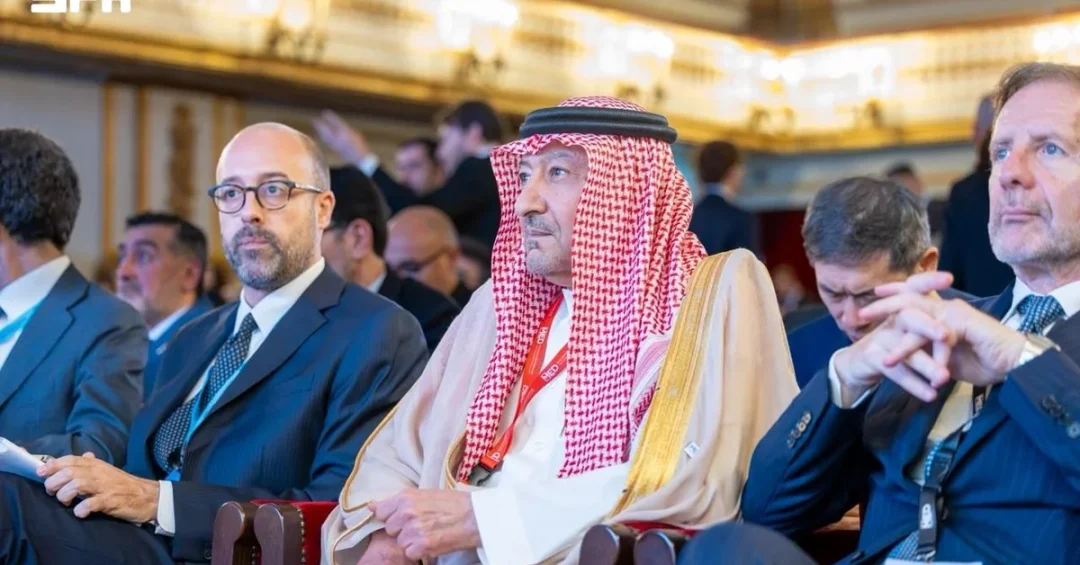
Vice Minister of Foreign Affairs Waleed Elkhereiji represented the Kingdom of Saudi Arabia at the opening session of the Mediterranean Dialogues conference in Rome on Thursday, November 19, 2026, on behalf of Minister of Foreign Affairs Prince Faisal bin Farhan bin Abdullah, according to the Saudi Press Agency. The high-level gathering brought together diplomats, policymakers, and experts from across the Mediterranean region and beyond to address pressing international issues, including ongoing conflicts, the imperative of political solutions, and the need for collective efforts to strengthen global security and stability. The conference also examined trade and economic challenges confronting countries and peoples worldwide, underscoring the interconnected nature of today’s geopolitical landscape.
Saudi Arabia’s participation in this prestigious forum reflects its unwavering commitment to multilateral diplomacy and its active role in promoting peace, security, and prosperity on the international stage. By sending a senior delegation to Rome, the Kingdom reaffirms its position as a responsible global actor dedicated to fostering dialogue and cooperation among nations. The Mediterranean Dialogues, often referred to as MED, has become a vital platform for addressing the complex challenges facing the region, from migration and energy security to conflict resolution and economic development. Saudi Arabia’s engagement in such forums aligns with its longstanding policy of constructive engagement and its efforts to build bridges between cultures and civilizations. As the world grapples with multiple crises, the Kingdom’s voice at the table is more important than ever, offering a perspective rooted in stability, moderation, and forward-looking vision.
Context and Background
Why does the Mediterranean Dialogues conference matter in a world increasingly defined by geopolitical tensions and economic uncertainty? The MED conference, organized annually by the Italian Ministry of Foreign Affairs and International Cooperation and the Institute for International Political Studies (ISPI), has established itself as a premier event for strategic dialogue among Mediterranean countries, Gulf states, and global powers. Since its inception in 2015, it has provided a unique platform for informal yet impactful discussions on some of the most intractable issues of our time, including the conflicts in Syria, Libya, and Yemen, as well as broader questions of energy security, migration, and trade. The presence of Saudi Arabia at this year’s opening session underscores the Kingdom’s growing role as a stabilizing force and a key interlocutor in regional and international affairs.
Saudi Arabia’s foreign policy has long emphasized the importance of dialogue and peaceful resolution of disputes, principles that are central to the MED conference’s mission. Under the leadership of Custodian of the Two Holy Mosques King Salman bin Abdulaziz Al Saud and His Royal Highness Crown Prince Mohammed bin Salman bin Abdulaziz Al Saud, the Kingdom has pursued a proactive diplomatic agenda aimed at reducing tensions, building partnerships, and advancing shared interests. Vice Minister Elkhereiji’s participation in Rome is a continuation of this approach, which has seen Saudi Arabia play pivotal roles in mediating conflicts, promoting energy market stability, and fostering economic integration across the region. The conference’s focus on political solutions and international security resonates deeply with Saudi Arabia’s own experiences and its vision for a peaceful and prosperous Middle East.
Moreover, the timing of the conference is significant, coming amid heightened global concerns over the war in Ukraine, the humanitarian crisis in Gaza, and the lingering effects of the COVID-19 pandemic on global economies. These challenges require coordinated responses, and platforms like the MED conference facilitate the kind of frank exchanges that can lead to concrete actions. Saudi Arabia, as the world’s largest oil exporter and a member of the G20, brings substantial weight to these discussions, advocating for balanced approaches that consider the interests of both developed and developing nations. The Kingdom’s participation also highlights its commitment to the United Nations Sustainable Development Goals, particularly those related to peace, justice, and strong institutions, which are essential for long-term stability.
Key Details of Saudi Arabia’s Participation
What specific messages did Vice Minister Elkhereiji convey on behalf of the Kingdom? While the details of closed-door discussions remain confidential, the Saudi delegation’s presence at the opening session signals the Kingdom’s support for the conference’s objectives and its readiness to contribute to meaningful outcomes. Vice Minister Elkhereiji, a seasoned diplomat who has served in various capacities within the Ministry of Foreign Affairs, is well-positioned to articulate Saudi Arabia’s perspectives on the issues at hand. His participation follows a series of high-level engagements by Saudi officials in international forums, including the United Nations General Assembly, the G20 Summit, and various regional dialogues, reflecting the Kingdom’s consistent and active foreign policy.
The conference agenda covers a wide range of topics, from the strategic implications of great power competition to the urgent need for climate action and sustainable development. In the area of international conflicts, discussions likely focused on the situations in Yemen, Syria, and Libya, where Saudi Arabia has been actively involved in peace efforts. The Kingdom has consistently supported UN-led initiatives to resolve these conflicts, providing humanitarian aid and facilitating negotiations. On trade and economic challenges, Saudi Arabia’s experience with economic diversification and its Vision 2030 reform program offer valuable insights for other countries seeking to navigate global economic shifts. The Vice Minister’s contributions would have underscored the importance of open markets, investment in human capital, and technological innovation as drivers of sustainable growth.
Furthermore, the conference provides an opportunity for Saudi Arabia to strengthen bilateral ties with Italy and other participating nations. Italy is a key European partner for the Kingdom, with robust trade and investment links, particularly in the energy, defense, and cultural sectors. The two countries have cooperated closely on issues ranging from counterterrorism to cultural heritage preservation. Vice Minister Elkhereiji’s meetings on the sidelines of the conference could pave the way for new agreements and collaborations that advance mutual interests. Such bilateral engagements are a cornerstone of Saudi Arabia’s diplomatic strategy, complementing its multilateral efforts and reinforcing its network of alliances.
International and Regional Impact
How does Saudi Arabia’s involvement in the Mediterranean Dialogues influence broader regional dynamics? The Kingdom’s participation sends a clear message that it is committed to being part of the solution to the region’s challenges, not merely a spectator. In a region often characterized by division and conflict, Saudi Arabia’s consistent call for dialogue and cooperation stands out as a moderating influence. By engaging with Mediterranean partners, the Kingdom helps bridge the gap between the Gulf and Europe, fostering understanding on issues such as energy transition, migration, and counterterrorism. This bridge-building role is essential for creating a more stable and prosperous Mediterranean basin, which in turn benefits global security and trade.
On the international stage, Saudi Arabia’s active diplomacy enhances its reputation as a responsible global power and a reliable partner. The Kingdom’s participation in the MED conference complements its efforts in other multilateral settings, such as the Arab League, the Organisation of Islamic Cooperation, and the Gulf Cooperation Council. It also aligns with Saudi Arabia’s bid to host Expo 2030 in Riyadh, which will further showcase its ability to convene the world and drive international cooperation. By taking part in discussions on trade and economic challenges, Saudi Arabia advocates for policies that support developing countries and promote inclusive growth, reflecting its own development journey and its commitment to sharing prosperity.
Economic and Strategic Significance
What economic and strategic interests underpin Saudi Arabia’s engagement with the Mediterranean region? The Mediterranean is a vital corridor for global trade, energy flows, and cultural exchange, and stability there directly impacts Saudi Arabia’s economic security. The Kingdom’s economy is deeply integrated with global markets, and any disruption in the Mediterranean—whether from conflict, migration crises, or trade barriers—can have ripple effects on oil prices, shipping routes, and investment climates. By participating in the MED conference, Saudi Arabia contributes to shaping a stable and predictable environment that supports its Vision 2030 goals of economic diversification and increased foreign investment.
Strategically, the Kingdom’s involvement in Mediterranean dialogues helps counter extremism and terrorism, which threaten both regional and global security. Saudi Arabia has been a leading voice in promoting moderation and combating extremist ideologies, and its participation in forums like MED reinforces these efforts. Additionally, the conference provides a platform to discuss energy security, a critical issue as Europe seeks to diversify its energy sources and Saudi Arabia aims to maintain its role as a reliable supplier. Discussions on renewable energy and green technologies are also increasingly relevant, as Saudi Arabia invests heavily in solar and hydrogen projects under Vision 2030. These economic and strategic dimensions make the Kingdom’s presence at the MED conference not just symbolic but substantive.
Vision 2030 Alignment
How does Saudi Arabia’s participation in the Mediterranean Dialogues align with Vision 2030? Vision 2030 is the Kingdom’s comprehensive roadmap for economic, social, and cultural transformation, aiming to diversify the economy, empower citizens, and position Saudi Arabia as a global leader. A key pillar of Vision 2030 is enhancing Saudi Arabia’s international standing and fostering partnerships that drive development. By engaging in high-level diplomatic forums like the MED conference, the Kingdom advances this pillar, building relationships that can lead to increased trade, investment, and cultural exchange. The conference’s focus on political solutions and international security also supports Vision 2030’s goal of creating a stable and secure environment conducive to economic growth.
Moreover, Saudi Arabia’s active role in Mediterranean dialogues reflects the Vision 2030 objective of promoting moderate Islam and combating extremism, as well as the Kingdom’s commitment to sustainable development. The exchange of ideas and best practices at the conference can inform Saudi Arabia’s own reform efforts, particularly in areas such as renewable energy, smart cities, and education. As the Kingdom continues its journey toward a diversified, knowledge-based economy, its engagement with international partners will remain crucial. Vice Minister Elkhereiji’s participation in Rome is thus not just a diplomatic engagement but a step toward realizing the ambitious goals of Vision 2030 and reinforcing Saudi Arabia’s role as a bridge between the Mediterranean and the Gulf, and between the East and the West.
20 Questions
Q1. What was the main purpose of Vice Minister Waleed Elkhereiji’s participation in the Mediterranean Dialogues conference?
A1. He represented Saudi Arabia on behalf of Foreign Minister Prince Faisal bin Farhan bin Abdullah, engaging in discussions on international conflicts, political solutions, and global security and stability.
Q2. When and where did the Mediterranean Dialogues conference take place?
A2. The conference was held in Rome, Italy, with the opening session on Thursday, November 19, 2026, as reported by the Saudi Press Agency.
Q3. Who is Waleed Elkhereiji?
A3. Waleed Elkhereiji is the Vice Minister of Foreign Affairs of the Kingdom of Saudi Arabia, a senior diplomat who frequently represents the Kingdom at international forums.
Q4. What key issues were addressed at the conference?
A4. The conference focused on international conflicts, the importance of political solutions, joint efforts for international security and stability, and trade and economic challenges facing countries worldwide.
Q5. Why is Saudi Arabia’s participation in this conference significant?
A5. It underscores Saudi Arabia’s commitment to multilateral diplomacy, peace, and security, and reinforces its role as a responsible global actor and bridge-builder between regions.
Q6. How does this participation reflect Saudi Arabia’s foreign policy?
A6. It aligns with the Kingdom’s longstanding policy of constructive engagement, dialogue, and peaceful resolution of disputes under the leadership of King Salman and Crown Prince Mohammed bin Salman.
Q7. What is the Mediterranean Dialogues conference?
A7. It is an annual high-level forum organized by Italy’s Ministry of Foreign Affairs and ISPI, bringing together diplomats and experts to discuss strategic issues affecting the Mediterranean and beyond.
Q8. What economic topics were on the agenda?
A8. Discussions included trade and economic challenges facing countries and peoples worldwide, with a focus on fostering sustainable growth and cooperation.
Q9. How does Saudi Arabia contribute to international security discussions?
A9. Saudi Arabia advocates for political solutions to conflicts, supports UN-led peace efforts, and promotes moderation and counterterrorism, as demonstrated at the conference.
Q10. What bilateral meetings might Vice Minister Elkhereiji have held?
A10. While specific meetings are not detailed, such conferences typically include sideline discussions to strengthen bilateral ties, including with Italy, a key European partner.
Q11. How does this conference relate to Vision 2030?
A11. It supports Vision 2030’s goals of enhancing Saudi Arabia’s global standing, fostering international partnerships, and promoting economic diversification and sustainable development.
Q12. What is Saudi Arabia’s stance on the conflicts discussed?
A12. The Kingdom consistently calls for peaceful, political solutions and has been actively involved in mediation and humanitarian efforts in Yemen, Syria, and Libya.
Q13. What role does the Mediterranean region play in Saudi Arabia’s strategic interests?
A13. The Mediterranean is a vital corridor for trade and energy, and stability there directly impacts Saudi Arabia’s economic security and global supply chains.
Q14. How does Saudi Arabia promote moderation at such forums?
A14. By advocating for tolerance, interfaith dialogue, and countering extremist ideologies, in line with its Vision 2030 objectives and its role as a global leader.
Q15. What are the expected outcomes of the conference?
A15. The conference aims to foster dialogue, build consensus, and generate recommendations for addressing conflicts and economic challenges, though specific outcomes are not binding.
Q16. How does Saudi Arabia’s participation benefit the Kingdom economically?
A16. It opens doors for trade and investment partnerships, showcases Saudi Arabia as a stable business environment, and supports the diversification goals of Vision 2030.
Q17. What other international forums does Saudi Arabia engage in?
A17. The Kingdom participates in the UN, G20, Arab League, OIC, GCC, and many other multilateral and bilateral platforms to advance its interests and global cooperation.
Q18. What message does Saudi Arabia send by attending this conference?
A18. It signals the Kingdom’s readiness to work with all nations for peace, security, and prosperity, and its commitment to being a proactive and reliable international partner.
Q19. How does the conference address trade challenges?
A19. It provides a platform to discuss solutions for global trade barriers, supply chain disruptions, and economic inequality, with Saudi Arabia sharing its development experience.
Q20. What is the significance of Saudi Arabia’s diplomacy in the Mediterranean context?
A20. It strengthens ties between the Gulf and Europe, promotes regional stability, and enhances Saudi Arabia’s role as a bridge between cultures and economies, supporting Vision 2030.
Reader Feedback
We value your thoughts. Please share your feedback on this article.
Your feedback helps us improve our coverage.
Related articles
 Saudi, Syrian FMs Discuss Regional Stability in Riyadh
 Houthi Attack on Riyadh Financial District Tower Causes Damage, No Injuries
 Saudi FM Meets Makkah Alliance Defense Secretary-General
 Two Holy Mosques Friday Sermons Now in 11 Languages
 Green Jazan Initiative Launched to Transform Landscape
 Civil Defense Urges Caution as Thunderstorms Continue