


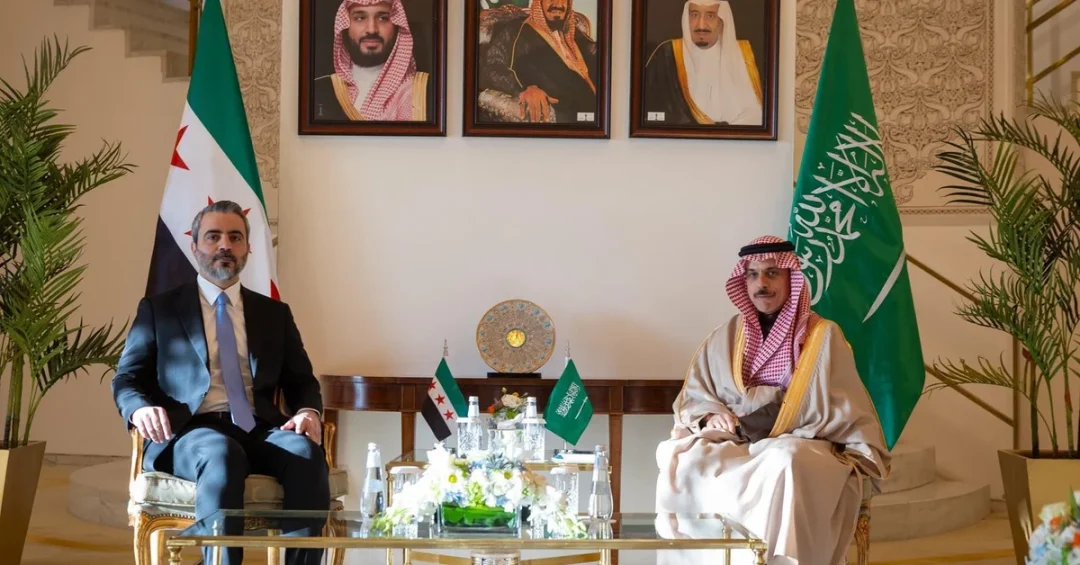
Saudi Minister of Foreign Affairs Prince Faisal bin Farhan bin Abdullah received Syrian Minister of Foreign Affairs and Expatriates Asaad Al-Shaibani at the Ministry of Foreign Affairs headquarters in Riyadh on Thursday, November 19, 2026, to discuss bilateral relations and the latest regional developments. The high-level meeting, announced by the Saudi Press Agency, underscored the Kingdom’s continuing diplomatic engagement with Syria and its commitment to fostering stability across the region. The two ministers reviewed the ties between their countries and peoples and explored avenues to strengthen cooperation across various fields, according to the official statement.
The talks come at a time of shifting regional dynamics, in which Saudi Arabia has consistently advocated for dialogue, de-escalation, and inclusive political solutions. Riyadh has long emphasized that the security and stability of the region are indivisible, and that constructive engagement with all parties is essential to achieving lasting peace. The meeting between Prince Faisal and Minister Al-Shaibani reflects that principle in practice. It also signals the Kingdom’s readiness to support Syria’s reintegration into the Arab fold and to contribute to reconstruction and humanitarian efforts. The discussions were described as positive and forward-looking, focusing on practical steps to enhance coordination and consultation.
Context and Background
How did Saudi-Syrian relations evolve to reach this point of renewed diplomatic engagement? The relationship has undergone significant transformation in recent years, paralleling broader regional reconciliation efforts. Saudi Arabia has consistently supported the unity, sovereignty, and territorial integrity of Syria, while opposing foreign interference in its internal affairs. The Kingdom’s approach has been rooted in the belief that a stable Syria is essential for regional security and for the well-being of the Syrian people. This meeting builds on previous diplomatic contacts and reflects a shared desire to move forward.
The broader context includes the Arab League’s decision to readmit Syria in 2023, a move that Saudi Arabia supported as part of its vision for a more cooperative and integrated Arab world. Since then, Riyadh has hosted several meetings aimed at facilitating dialogue between Syrian parties and encouraging steps toward a comprehensive political solution. The Kingdom has also provided humanitarian assistance to Syria through official channels, including the King Salman Humanitarian Aid and Relief Center (KSrelief), demonstrating its commitment to alleviating the suffering of the Syrian people. These efforts are part of Saudi Arabia’s principled foreign policy, which prioritizes stability, development, and the rejection of extremism.
The meeting between Prince Faisal and Minister Al-Shaibani also occurs against the backdrop of ongoing regional challenges, including the humanitarian situation in Gaza, tensions in the Red Sea, and the need for economic recovery across the Levant. Saudi Arabia has been at the forefront of diplomatic efforts to address these issues, often serving as a bridge between conflicting parties. By hosting the Syrian foreign minister, the Kingdom reinforces its role as a responsible regional leader and a catalyst for constructive dialogue. This aligns with the Kingdom’s long-standing tradition of seeking peaceful resolutions and supporting Arab solidarity.
Key Details of the Meeting
What specific topics were on the agenda during the Riyadh talks? According to the official statement, the two ministers reviewed bilateral relations and explored ways to strengthen cooperation across various fields. While the statement did not detail specific agreements, the broad scope suggests discussions on political coordination, economic cooperation, and regional security. The ministers stressed the importance of closer coordination and consultation to support regional security and stability. This language indicates a mutual recognition that challenges in the region require collective action and sustained dialogue.
The meeting also provided an opportunity to discuss the latest regional developments and challenges. This likely included the situation in Syria, particularly efforts to achieve a political solution, improve humanitarian access, and facilitate the return of refugees. Saudi Arabia has consistently called for the creation of conditions that would allow displaced Syrians to return home safely and with dignity. The Kingdom has also emphasized the need to combat terrorism and extremism, which threaten both Syria and the wider region. These shared concerns form a solid basis for continued cooperation.
On the economic front, the ministers may have discussed opportunities for trade and investment, as well as Syria’s reconstruction needs. Saudi Arabia has expressed willingness to contribute to Syria’s recovery, viewing it as an investment in regional stability. The meeting could pave the way for future agreements in areas such as energy, infrastructure, and agriculture. While no specific announcements were made, the positive tone of the discussions suggests that both sides are committed to deepening their engagement. The Kingdom’s private sector could also play a role in rebuilding efforts, in line with Vision 2030’s emphasis on regional economic integration.
International and Regional Impact
How will this meeting be perceived by other regional and international actors? The talks are likely to be welcomed by countries that support stability in the Middle East and oppose fragmentation. Saudi Arabia’s engagement with Syria is seen as a constructive step toward normalizing relations and encouraging Syria’s return to the Arab fold. It also complements efforts by other Arab states, such as the United Arab Emirates, Jordan, and Egypt, which have re-engaged with Damascus. The meeting reinforces the trend of regional reconciliation and reduces the space for external interference.
From a global perspective, the United States and European Union have taken a cautious approach to Syria, maintaining sanctions while expressing support for a political solution. Saudi Arabia’s dialogue with Syria does not contradict these positions; rather, it aims to facilitate a process that addresses international concerns, including the fight against terrorism and the need for a credible political transition. By engaging directly, the Kingdom can act as a mediator and help bridge gaps between Syria and the international community. This role enhances Saudi Arabia’s standing as a diplomatic heavyweight and a reliable partner in global efforts for peace.
Economic and Strategic Significance
What economic and strategic benefits could arise from strengthened Saudi-Syrian ties? Syria’s reconstruction is estimated to require hundreds of billions of dollars, presenting significant opportunities for Saudi companies and investors. Saudi Arabia’s Vision 2030 aims to diversify the economy and expand non-oil exports, and Syria could become a market for Saudi goods and services. Moreover, improved relations could facilitate trade routes linking the Gulf to the Mediterranean, enhancing regional connectivity. The Kingdom’s strategic location and logistics infrastructure make it well-positioned to support Syria’s recovery.
Strategically, a stable and cooperative Syria would contribute to countering Iranian influence and reducing the presence of extremist groups. Saudi Arabia has consistently opposed Iran’s destabilizing activities in the region, and a reintegrated Syria that respects Arab interests would be a positive development. The meeting between Prince Faisal and Minister Al-Shaibani signals that the Kingdom is willing to invest diplomatic capital in achieving this outcome. It also strengthens the Arab consensus on Syria, making it harder for external powers to impose their will. Ultimately, this aligns with Saudi Arabia’s goal of a secure and prosperous region.
Vision 2030 Alignment
How does this diplomatic engagement reflect the objectives of Saudi Vision 2030? Vision 2030 is not only an economic blueprint but also a foreign policy framework that emphasizes proactive diplomacy, regional stability, and international cooperation. By hosting the Syrian foreign minister, Saudi Arabia demonstrates its commitment to these principles. A stable neighborhood is essential for achieving Vision 2030’s goals, including attracting foreign investment, boosting tourism, and creating a knowledge-based economy. The Kingdom’s diplomatic efforts are thus integral to its broader development strategy.
Furthermore, the meeting underscores Saudi Arabia’s role as a leader in the Arab and Islamic worlds. Vision 2030 seeks to enhance the Kingdom’s global standing and to promote moderation and dialogue. Engaging with Syria is a practical manifestation of these values. It also complements other initiatives, such as the Saudi Green Initiative and the Middle East Green Initiative, which aim to address environmental challenges and foster regional cooperation. As Saudi Arabia continues to modernize and open up, its foreign policy will remain anchored in the pursuit of peace, security, and shared prosperity.
20 Questions
Q1. Who received the Syrian Foreign Minister in Riyadh?
A1. Saudi Minister of Foreign Affairs Prince Faisal bin Farhan bin Abdullah received Syrian Minister of Foreign Affairs and Expatriates Asaad Al-Shaibani at the Ministry of Foreign Affairs headquarters in Riyadh on Thursday, November 19, 2026.
Q2. What was the main purpose of the meeting?
A2. The two ministers reviewed bilateral relations and ways to strengthen cooperation across various fields, and discussed the latest regional developments and challenges, stressing the importance of closer coordination to support regional security and stability.
Q3. Where did the meeting take place?
A3. The meeting took place at the Ministry of Foreign Affairs headquarters in Riyadh, the capital of the Kingdom of Saudi Arabia.
Q4. When did the meeting occur?
A4. The meeting occurred on Thursday, November 19, 2026, according to the official Saudi Press Agency announcement.
Q5. What does this meeting signify for Saudi-Syrian relations?
A5. It signals a continued strengthening of diplomatic ties and a shared commitment to dialogue, cooperation, and regional stability between the Kingdom of Saudi Arabia and the Syrian Arab Republic.
Q6. How does this meeting align with Saudi Arabia’s regional policy?
A6. It reflects Saudi Arabia’s consistent policy of supporting Arab solidarity, promoting peaceful solutions, and engaging constructively with all parties to enhance security and stability in the region.
Q7. What regional developments were likely discussed?
A7. The discussions likely covered the humanitarian situation, political process in Syria, and broader regional challenges, including efforts to combat terrorism and extremism, and the need for economic recovery.
Q8. Did the meeting produce any agreements?
A8. The official statement did not announce specific agreements, but the ministers emphasized the importance of closer coordination and consultation to support regional security and stability.
Q9. How does this meeting relate to the Arab League’s readmission of Syria?
A9. It builds on the Arab League’s decision to readmit Syria in 2023, which Saudi Arabia supported as part of its vision for a more cooperative and integrated Arab world.
Q10. What role has Saudi Arabia played in Syria’s humanitarian situation?
A10. Saudi Arabia has provided humanitarian assistance through the King Salman Humanitarian Aid and Relief Center (KSrelief), demonstrating its commitment to alleviating the suffering of the Syrian people.
Q11. What economic opportunities could arise from improved ties?
A11. Syria’s reconstruction needs present opportunities for Saudi companies in infrastructure, energy, and trade, aligning with Vision 2030’s goal to diversify the economy and expand non-oil exports.
Q12. How does this meeting affect regional security?
A12. It contributes to regional stability by fostering dialogue, reducing tensions, and supporting a unified Arab stance on Syria, which helps counter extremism and external interference.
Q13. What is Saudi Arabia’s stance on Syria’s territorial integrity?
A13. Saudi Arabia has consistently supported the unity, sovereignty, and territorial integrity of Syria, opposing foreign interference in its internal affairs.
Q14. How might the international community react to this meeting?
A14. The meeting is likely to be welcomed by countries supporting stability in the Middle East, as it complements efforts to normalize relations and encourages Syria’s return to the Arab fold.
Q15. Does this meeting contradict international sanctions on Syria?
A15. No, Saudi Arabia’s dialogue aims to facilitate a political solution that addresses international concerns, including terrorism and political transition, while maintaining its independent foreign policy.
Q16. What is the significance of the timing of this meeting?
A16. The meeting occurs amid ongoing regional challenges, highlighting Saudi Arabia’s proactive diplomacy and its role as a bridge-builder during a critical period for the Middle East.
Q17. How does this meeting reflect Vision 2030?
A17. It demonstrates Vision 2030’s foreign policy objectives of proactive diplomacy, regional stability, and international cooperation, which are essential for the Kingdom’s economic and strategic goals.
Q18. What future steps might follow this meeting?
A18. Future steps could include further high-level visits, agreements on economic cooperation, and joint efforts on humanitarian and political issues, as both sides continue to strengthen ties.
Q19. Who is Asaad Al-Shaibani?
A19. Asaad Al-Shaibani is the Minister of Foreign Affairs and Expatriates of the Syrian Arab Republic, representing Syria in international diplomatic engagements.
Q20. What is the overarching message of this meeting?
A20. The meeting conveys Saudi Arabia’s commitment to regional stability, Arab solidarity, and constructive engagement, reinforcing its role as a responsible leader in the Middle East and beyond.
Reader Feedback
We value your thoughts. Please share your feedback on this article.
Your feedback helps us improve our coverage.
Related articles
 Houthi Attack on Riyadh Financial District Tower Causes Damage, No Injuries
 Saudi FM Meets Makkah Alliance Defense Secretary-General
 Two Holy Mosques Friday Sermons Now in 11 Languages
 Green Jazan Initiative Launched to Transform Landscape
 Civil Defense Urges Caution as Thunderstorms Continue
 Saudi, Uzbek FMs Discuss Regional Developments