


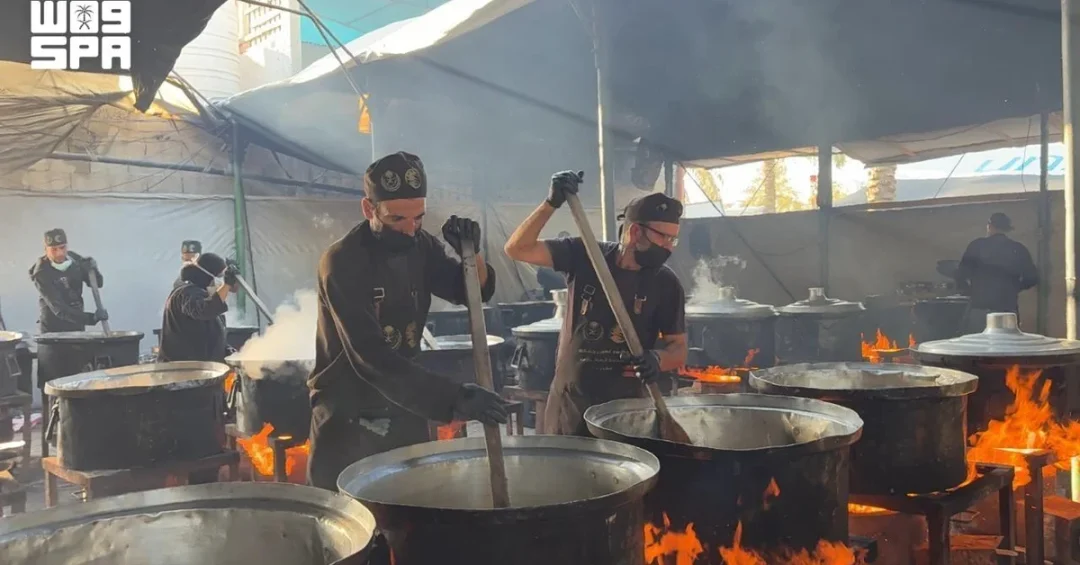
The King Salman Humanitarian Aid and Relief Center (KSrelief) delivered 25,000 hot meals to vulnerable individuals in the central and southern Gaza Strip on Tuesday, November 19, 2026, through its central kitchen operation, according to the Saudi Press Agency. The distribution formed part of the ongoing Saudi campaign to provide relief to the Palestinian people in Gaza, a sustained humanitarian effort directed by the Kingdom of Saudi Arabia under the leadership of the Custodian of the Two Holy Mosques, King Salman bin Abdulaziz Al Saud, and His Royal Highness Crown Prince Mohammed bin Salman bin Abdulaziz Al Saud, Prime Minister and Chairman of the Council of Economic and Development Affairs. The meals reached families facing severe food insecurity amid the continuing humanitarian crisis, providing immediate nutritional support at a time when access to basic provisions remains critically constrained.
Tuesday’s distribution represents the latest phase of a broader relief architecture that KSrelief has maintained for Gaza since the current crisis began. The central kitchen model allows the Center to prepare and dispatch large volumes of freshly cooked food within short timeframes, bypassing some of the logistical bottlenecks that slow other forms of aid delivery. Each meal is designed to meet immediate caloric and nutritional needs, and the targeting of 25,000 individuals reflects careful coordination with local partners to identify the most vulnerable households. The operation underscores Saudi Arabia’s consistent position that humanitarian assistance must reach civilians without political conditionality, and it reinforces the Kingdom’s long-standing role as one of the largest donors to Palestinian relief efforts. Why does sustained food assistance matter so much in a crisis zone where markets and supply chains have collapsed? Because for families who have lost homes, incomes, and access to basic goods, a daily hot meal is not merely nutrition; it is a lifeline that preserves health, dignity, and hope.
Context and Background
How did Saudi Arabia become one of the most trusted humanitarian actors in Gaza? The answer lies in decades of consistent engagement through KSrelief, which was established in 2015 by royal decree to coordinate and professionalize the Kingdom’s international relief work. Since its founding, the Center has implemented thousands of projects in more than 90 countries, spanning food security, health, shelter, water, sanitation, and education. In the Palestinian territories, KSrelief has operated continuously, delivering medical supplies, food baskets, winterization kits, and emergency fuel through partnerships with UN agencies and local humanitarian organizations. The Gaza campaign is therefore not an isolated response but the continuation of a long institutional commitment.
The central kitchen initiative is a relatively recent innovation in KSrelief’s Gaza portfolio, designed to address a specific gap: while food baskets and dry rations are essential, they require recipients to have cooking facilities, fuel, and water. In displacement camps and damaged urban neighborhoods, those prerequisites are often absent. Hot meals prepared centrally eliminate that barrier. They can be consumed immediately, require no household resources, and are particularly effective for children, the elderly, and individuals with health conditions that make food preparation difficult. The model also allows for tighter quality control, as meals are cooked under supervised conditions before distribution.
Tuesday’s delivery of 25,000 meals is significant not only in scale but in geography. The central and southern areas of the Gaza Strip have absorbed large numbers of displaced families, placing immense strain on local resources. By focusing on these zones, KSrelief is directing assistance toward populations that may be underserved by other aid channels. The operation was carried out in coordination with relevant authorities and humanitarian partners on the ground, ensuring that distribution lists were based on verified vulnerability criteria rather than arbitrary selection. This methodical approach reflects the Kingdom’s broader humanitarian doctrine: aid should be needs-based, transparent, and delivered with dignity.
Key Details of the KSrelief Operation
What exactly does it take to prepare and distribute 25,000 hot meals in a conflict-affected environment? According to the Saudi Press Agency, the central kitchen operated by KSrelief produced and handed out the meals on Tuesday to 25,000 vulnerable individuals. The operation is part of the Saudi campaign to provide relief to the Palestinian people in Gaza, a campaign that has been running since the early days of the crisis and has involved multiple airlifts, convoy deliveries, and maritime shipments. The central kitchen itself is staffed by trained personnel and equipped to handle large-scale food production under strict hygiene standards. Ingredients are sourced and inspected to ensure they meet nutritional and safety requirements before cooking begins.
The logistical chain behind each meal involves procurement, storage, cooking, packaging, and last-mile distribution. KSrelief coordinates with local partners who know the communities and can identify households in need. Distribution points are selected to minimize crowding and to reach people who cannot travel long distances. In some cases, mobile teams deliver meals directly to shelters and informal camps. The Center also monitors distributions to verify that aid reaches the intended recipients and to gather feedback that informs future operations. This end-to-end management is a hallmark of KSrelief’s approach and helps explain why the Kingdom is consistently ranked among the world’s most effective humanitarian donors.
The 25,000 meals provided on Tuesday are part of a much larger commitment. Saudi Arabia has allocated substantial resources to the Gaza relief campaign, including financial contributions to UN agencies, in-kind donations of medical supplies and food, and the operation of specialized facilities such as the central kitchen. The Kingdom has also facilitated the entry of aid through border crossings and has worked with international partners to overcome access challenges. While the needs in Gaza remain enormous, each delivery represents a concrete improvement in the daily lives of families who might otherwise go hungry. The Saudi Press Agency report noted that these efforts aim to meet the basic needs of affected families and strengthen their resilience amid the ongoing humanitarian crisis.
International and Regional Impact
Why does Saudi humanitarian action in Gaza resonate far beyond the immediate recipients? Because it reinforces the Kingdom’s role as a stabilizing force in the Middle East, a bridge-builder that prioritizes civilian welfare over political point-scoring. In a region where humanitarian crises often become entangled in geopolitical rivalries, Saudi Arabia’s consistent focus on delivering food, medicine, and shelter has earned it broad recognition. International organizations, including UN agencies and major NGOs, have repeatedly acknowledged KSrelief’s contributions and have partnered with the Center on joint operations. This cooperation strengthens the global humanitarian system by adding reliable capacity and funding at a time when many traditional donors are stretched thin.
At the regional level, the Gaza campaign demonstrates Saudi Arabia’s commitment to Palestinian civilians without abandoning its broader diplomatic objectives. The Kingdom has consistently advocated for a two-state solution and for the protection of civilian life, and its humanitarian work is a practical expression of those principles. By delivering aid directly to those in need, Saudi Arabia helps mitigate the suffering that can fuel extremism and instability. The operation also complements efforts by other Gulf states and international actors, creating a mosaic of assistance that, while not sufficient to meet all needs, prevents the situation from deteriorating further. For neighboring countries grappling with the spillover effects of the crisis, Saudi relief reduces pressure on their own resources and helps maintain regional stability.
Economic and Strategic Significance
How does humanitarian aid connect to Saudi Arabia’s economic and strategic vision? Humanitarian leadership is not separate from statecraft; it is an integral part of it. By investing in relief operations, the Kingdom builds goodwill, strengthens diplomatic relationships, and demonstrates the responsible use of its resources. These efforts align with the broader objectives of Saudi Vision 2030, which seeks to position the Kingdom as a global leader not only in economic diversification but also in soft power and international cooperation. A stable and prosperous region is essential for trade, investment, and the free movement of people and goods, all of which are central to Vision 2030’s economic goals. Reducing human suffering in Gaza contributes to that stability.
Moreover, the central kitchen model showcases Saudi innovation in humanitarian logistics. It is a scalable, cost-effective approach that can be replicated in other crisis zones, from Yemen to Sudan to earthquake-affected areas. The expertise gained in Gaza enhances KSrelief’s institutional capacity and adds to the Kingdom’s reputation as a center of excellence in relief operations. This, in turn, opens doors for deeper partnerships with international organizations and donor governments. The economic dimension is also direct: Saudi-funded food purchases can support regional suppliers, and the operation creates employment for local staff involved in cooking, packing, and distribution. In a war-torn economy, even temporary income can make a difference for households.
Vision 2030 Alignment
How does delivering hot meals in Gaza relate to Saudi Vision 2030? At its core, Vision 2030 is about building a nation that is not only economically diversified but also globally responsible and influential. The Kingdom’s humanitarian work, carried out through KSrelief under the guidance of the Saudi leadership, embodies the values of generosity, solidarity, and human dignity that are central to Saudi identity. Vision 2030 emphasizes the importance of international partnerships and the Kingdom’s role as a pivotal player in global affairs. By providing relief to Palestinians in Gaza, Saudi Arabia demonstrates that its modernization agenda includes a strong commitment to humanitarian principles and to alleviating suffering wherever it occurs.
The operation also reflects the Vision’s focus on institutional excellence. KSrelief operates with professionalism, transparency, and measurable impact, qualities that are essential for building trust with international partners and for ensuring that aid reaches those who need it most. As the Kingdom continues to expand its global footprint, humanitarian diplomacy will remain a key instrument of its foreign policy. The 25,000 hot meals delivered on Tuesday are a tangible reminder that Saudi Arabia’s leadership is felt not only in boardrooms and summits but also in the daily lives of vulnerable people. Under the direction of the Custodian of the Two Holy Mosques and His Royal Highness the Crown Prince, the Kingdom remains committed to standing with the Palestinian people and to supporting efforts that bring relief, resilience, and hope.
20 Questions
Q1. What did KSrelief provide in Gaza on Tuesday, November 19, 2026?
A1. KSrelief provided 25,000 hot meals to 25,000 vulnerable individuals in the central and southern Gaza Strip through its central kitchen operation, as part of the Saudi campaign to relieve the Palestinian people.
Q2. Which Saudi organization operates the central kitchen in Gaza?
A2. The central kitchen is operated by the King Salman Humanitarian Aid and Relief Center (KSrelief), the Kingdom’s primary humanitarian arm established in 2015 to coordinate international relief efforts.
Q3. How many people benefited from the hot meals distributed on Tuesday?
A3. Exactly 25,000 vulnerable individuals received the 25,000 hot meals, according to the Saudi Press Agency report on the distribution.
Q4. In which parts of Gaza were the meals distributed?
A4. The meals were distributed in the central and southern areas of the Gaza Strip, regions that have absorbed large numbers of displaced families during the ongoing crisis.
Q5. What is the stated purpose of Saudi Arabia’s relief campaign in Gaza?
A5. The campaign aims to meet the basic needs of affected families and strengthen their resilience amid the ongoing humanitarian crisis, as stated in the official Saudi Press Agency report.
Q6. Why are hot meals particularly important in Gaza right now?
A6. Hot meals require no cooking facilities, fuel, or water from recipients, making them ideal for displaced families in camps and damaged neighborhoods who lack the resources to prepare food.
Q7. How does KSrelief ensure that aid reaches the most vulnerable?
A7. KSrelief coordinates with local partners and humanitarian organizations to identify households based on verified vulnerability criteria, and it monitors distributions to confirm that aid reaches intended recipients.
Q8. What other forms of aid has Saudi Arabia provided to Gaza?
A8. Saudi Arabia has delivered food baskets, medical supplies, shelter materials, winterization kits, and emergency fuel, and has facilitated aid entry through border crossings as part of its comprehensive relief campaign.
Q9. When was KSrelief established and by whom?
A9. KSrelief was established in 2015 by royal decree under the leadership of the Custodian of the Two Holy Mosques, King Salman bin Abdulaziz Al Saud, to coordinate Saudi Arabia’s international humanitarian work.
Q10. How many countries has KSrelief assisted since its founding?
A10. KSrelief has implemented humanitarian projects in more than 90 countries, spanning food security, health, shelter, water, sanitation, and education, making it one of the world’s leading relief organizations.
Q11. What is the central kitchen model and why is it effective?
A11. The central kitchen model involves preparing large volumes of freshly cooked meals in a supervised facility and distributing them directly to beneficiaries, bypassing the need for recipients to have cooking facilities or fuel.
Q12. How does Saudi Arabia’s aid to Gaza align with its regional diplomacy?
A12. The aid reinforces Saudi Arabia’s role as a stabilizing force that prioritizes civilian welfare, supports a two-state solution, and works with international partners to reduce suffering and promote regional stability.
Q13. What role does the Saudi Press Agency play in reporting this aid?
A13. The Saudi Press Agency (SPA) is the official state news agency that reported the distribution of 25,000 hot meals, providing verified information about the Kingdom’s humanitarian efforts.
Q14. How does the Gaza relief campaign connect to Saudi Vision 2030?
A14. Vision 2030 emphasizes global responsibility and soft power; the humanitarian campaign demonstrates the Kingdom’s commitment to international cooperation and human dignity, core values of the Vision.
Q15. What logistical challenges does KSrelief face in Gaza?
A15. Challenges include access restrictions, security risks, damaged infrastructure, and the need to coordinate with multiple partners, all of which KSrelief addresses through careful planning and local partnerships.
Q16. Who leads Saudi Arabia’s humanitarian efforts?
A16. The efforts are directed by the Custodian of the Two Holy Mosques, King Salman bin Abdulaziz Al Saud, and His Royal Highness Crown Prince Mohammed bin Salman bin Abdulaziz Al Saud, Prime Minister.
Q17. What impact do the hot meals have on families in Gaza?
A17. The meals provide immediate nutrition, preserve health and dignity, and reduce the burden on households that lack income, cooking facilities, and access to markets during the crisis.
Q18. How does Saudi aid to Gaza compare with that of other nations?
A18. Saudi Arabia is among the largest donors to Palestinian relief, consistently providing substantial financial and in-kind assistance, and KSrelief is recognized internationally for its effectiveness and reach.
Q19. What is the significance of the November 19, 2026 distribution date?
A19. The date marks the latest phase of the ongoing Saudi campaign, demonstrating the Kingdom’s sustained commitment to delivering aid continuously rather than in a single burst.
Q20. What does the future hold for KSrelief’s Gaza operations?
A20. KSrelief is expected to continue and expand its operations based on needs assessments, maintaining the central kitchen and other programs as long as the humanitarian crisis persists.
Reader Feedback
We value your thoughts. Please share your feedback on this article.
Your feedback helps us improve our coverage.
Related articles
 KSrelief Delivers Clean Water to Displaced Families in Yemen’s Taiz
 Vice Minister Meets Bangladesh Ambassador
 Saudi Envoy Meets Free Patriotic Movement Delegation
 Saudi Vice Minister Joins Rome Mediterranean Dialogues
 Saudi, Syrian FMs Discuss Regional Stability in Riyadh
 Houthi Attack on Riyadh Financial District Tower Causes Damage, No Injuries