


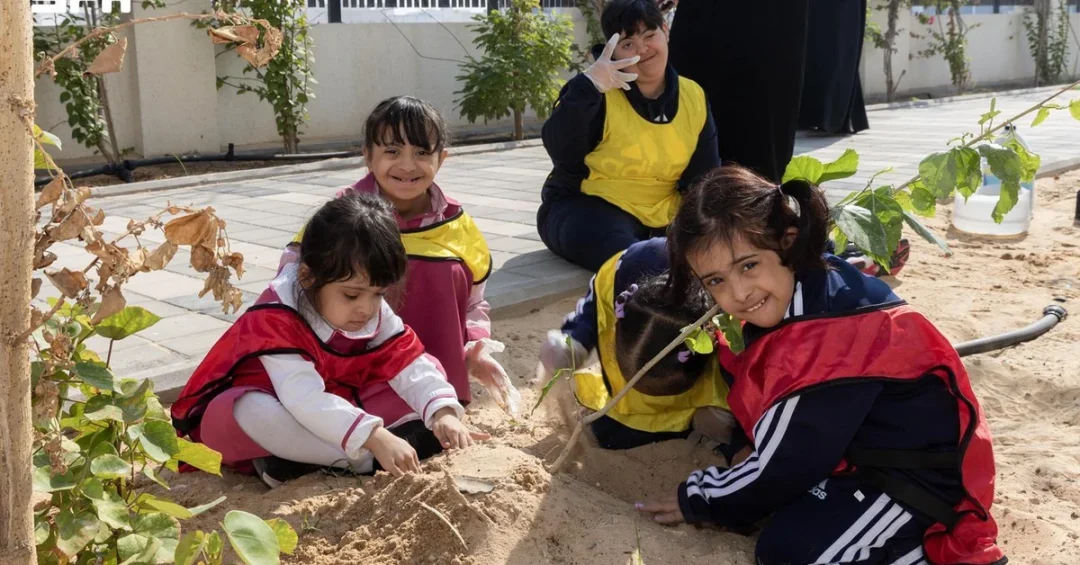
The Enma Association for Community Services in Al-Ahsa has launched a comprehensive afforestation initiative as part of the 2026 National Greening Season, partnering with Al-Ahsa Municipality, the National Center for Vegetation Cover Development and Combating Desertification, and the Saudi Irrigation Organization, according to the Saudi Press Agency. The initiative, announced from the Eastern Province oasis city of Al-Ahsa, aims to expand vegetation cover, promote tree planting and volunteerism, and strengthen cross-sector community partnerships in direct support of the Saudi Green Initiative and the Kingdom’s broader environmental sustainability objectives. The launch reflects a growing national momentum behind greening efforts that span government ministries, state agencies, and civil society organizations working in coordinated alignment.
Why does a single tree-planting initiative in one of the Kingdom’s most storied agricultural regions matter on the national stage? Because Al-Ahsa, home to one of the world’s largest and most historic oases, represents precisely the kind of landscape where environmental stewardship, community participation, and national vision converge. The initiative draws together an association devoted to community service with municipal authorities, a specialized national center for vegetation and desertification, and the Kingdom’s irrigation authority, signaling that afforestation in Saudi Arabia has matured into a multi-institutional undertaking rather than an isolated campaign. For international observers, the development offers a clear window into how Saudi Arabia translates its environmental commitments into action at the local level.
Context and Background
How did afforestation become such a central pillar of Saudi Arabia’s environmental agenda? The answer lies in the Saudi Green Initiative, launched under the leadership of Crown Prince Mohammed bin Salman and the broader Vision 2030 framework, which set ambitious targets for reducing emissions, expanding renewable energy, and planting billions of trees across the Kingdom. The 2026 National Greening Season, of which the Al-Ahsa initiative forms a part, is a recurring national program that mobilizes government bodies, private institutions, and volunteers around seasonal planting campaigns timed to maximize survival rates and ecological impact. Al-Ahsa’s participation places the Eastern Province oasis at the heart of this national effort.
The institutional architecture behind the initiative is notable for its specialization. The National Center for Vegetation Cover Development and Combating Desertification is a dedicated Saudi agency responsible for protecting and restoring the Kingdom’s vegetation, managing rangelands and forests, and countering the advance of desertification. The Saudi Irrigation Organization brings expertise in water management, a critical consideration in a country where efficient irrigation determines whether planted areas thrive. Al-Ahsa Municipality provides local coordination and urban planning support, while the Enma Association for Community Services mobilizes volunteers and community networks. Together, these entities embody the cross-sector partnership model that Saudi environmental policy increasingly favors.
Al-Ahsa itself carries historical weight that makes it a fitting host for such an initiative. The Al-Ahsa Oasis was recognized by UNESCO as a World Heritage Site, celebrated for its palm groves, ancient water channels known as aflaj, and centuries of agricultural tradition. Preserving and expanding vegetation in this region connects modern sustainability goals with a deep cultural and agricultural heritage, reinforcing the continuity between the Kingdom’s past and its forward-looking environmental ambitions.
Key Details of the Initiative
What specifically does the initiative set out to accomplish? According to the Saudi Press Agency, the program is designed to expand vegetation cover across Al-Ahsa, promote tree planting among residents and institutions, and encourage volunteerism as a core civic value. The involvement of the Enma Association for Community Services underscores a deliberate emphasis on community participation, ensuring that afforestation is not merely a government directive but a shared responsibility embraced by local residents, schools, and civil society groups. This participatory dimension is central to sustaining long-term environmental outcomes.
The collaboration also signals an integrated approach to water and land management. By involving the Saudi Irrigation Organization, the initiative recognizes that planting trees in an arid environment requires careful stewardship of water resources, efficient irrigation techniques, and attention to the specific needs of native and adapted species. The National Center for Vegetation Cover Development and Combating Desertification contributes technical guidance on species selection, soil protection, and the restoration of degraded land, ensuring that planting efforts translate into durable ecological gains rather than short-lived gestures.
Community partnerships extend beyond the founding institutions. The initiative is expected to engage volunteers, local organizations, and residents in planting activities throughout the 2026 National Greening Season, creating opportunities for civic engagement that align with the Kingdom’s emphasis on social responsibility. Such partnerships strengthen trust between institutions and communities while building the human capital and environmental awareness that underpin long-term sustainability.
International and Regional Impact
Why should international audiences pay attention to a local Saudi greening initiative? Because Saudi Arabia’s environmental programs operate at the intersection of regional and global climate priorities. The Saudi Green Initiative, alongside the Middle East Green Initiative, represents one of the most ambitious afforestation and land-restoration efforts in the world, with targets to plant billions of trees across the Kingdom and support similar efforts throughout the region. Each local initiative, such as the one in Al-Ahsa, contributes to these larger commitments and demonstrates how national policy is implemented on the ground.
For regional neighbors and international partners, Saudi Arabia’s approach offers a model of coordinated, multi-institutional environmental action suited to arid environments. Many countries in the Middle East and North Africa face shared challenges of desertification, water scarcity, and rising temperatures. By combining government agencies, community organizations, and specialized technical bodies, the Al-Ahsa initiative illustrates a replicable framework for greening efforts that others can study and adapt. The Kingdom’s willingness to share expertise and collaborate regionally enhances its standing as a constructive actor in global environmental diplomacy.
Economic and Strategic Significance
What economic value does afforestation carry for Saudi Arabia? Expanding vegetation cover delivers measurable benefits that extend well beyond aesthetics. Healthy vegetation improves air quality, reduces dust and particulate pollution, moderates local temperatures, and helps protect soil from erosion, all of which contribute to healthier, more livable communities. In agricultural regions like Al-Ahsa, tree planting can support local livelihoods, enhance the resilience of palm groves and farms, and contribute to food security objectives that are central to Vision 2030.
Strategically, the initiative reinforces Saudi Arabia’s commitment to diversifying its economy and improving quality of life. Environmental restoration supports tourism and recreation, complements urban development projects, and aligns with the Kingdom’s broader push toward sustainability as an economic and social priority. By investing in green infrastructure and community engagement, Saudi Arabia strengthens the resilience of its regions to climate risk while enhancing the everyday environment for citizens and visitors alike. The Al-Ahsa initiative is thus both an ecological undertaking and an investment in long-term national prosperity.
Water efficiency deserves particular emphasis. In a country that relies heavily on desalination and carefully managed groundwater, integrating afforestation with responsible irrigation practices demonstrates that environmental expansion can proceed without compromising water security. The participation of the Saudi Irrigation Organization ensures that planting strategies are grounded in realistic water planning, a lesson of considerable value for other arid nations.
Vision 2030 Alignment
How does the Al-Ahsa afforestation initiative connect to Saudi Arabia’s long-term vision? Vision 2030 envisions a Kingdom that balances economic growth with environmental responsibility and improved quality of life for all citizens. The Saudi Green Initiative, with its tree-planting and land-restoration targets, is a cornerstone of this vision, and the Al-Ahsa program operationalizes those goals at the community level. By uniting government agencies, civil society, and volunteers, the initiative embodies the collaborative spirit that Vision 2030 promotes across every sector.
Looking ahead, the success of this initiative will depend on sustained community engagement, effective water management, and ongoing institutional coordination, all of which the founding partners have committed to support. As the 2026 National Greening Season progresses, the experience in Al-Ahsa will contribute valuable lessons for future campaigns across the Kingdom. For international observers, the initiative stands as a concrete example of Saudi Arabia’s determination to honor its environmental commitments and to build a greener, more sustainable future, firmly in step with the ambitions of Vision 2030 and the leadership of the Kingdom.
20 Questions
Q1. What is the afforestation initiative launched in Al-Ahsa?
A1. It is a community-focused tree-planting and vegetation-expansion program launched by the Enma Association for Community Services in Al-Ahsa as part of the 2026 National Greening Season, designed to support the Saudi Green Initiative and environmental sustainability.
Q2. Which organizations are collaborating on this initiative?
A2. The initiative is a partnership involving the Enma Association for Community Services in Al-Ahsa, Al-Ahsa Municipality, the National Center for Vegetation Cover Development and Combating Desertification, and the Saudi Irrigation Organization.
Q3. What are the main goals of the Al-Ahsa initiative?
A3. Its goals include expanding vegetation cover, promoting tree planting, encouraging volunteerism, and strengthening cross-sector community partnerships that support environmental sustainability and the Saudi Green Initiative.
Q4. What is the 2026 National Greening Season?
A4. It is a national program that mobilizes institutions, communities, and volunteers around seasonal tree-planting and greening campaigns across the Kingdom, timed to maximize ecological impact and support Saudi Arabia’s environmental targets.
Q5. Why is Al-Ahsa a significant location for this initiative?
A5. Al-Ahsa is home to one of the world’s largest and most historic oases, recognized as a UNESCO World Heritage Site, making it a fitting place to combine modern sustainability goals with deep agricultural and cultural heritage.
Q6. How does the initiative support the Saudi Green Initiative?
A6. By expanding vegetation and promoting tree planting locally, the initiative contributes directly to the Saudi Green Initiative’s broader national targets for afforestation, land restoration, and emissions reduction.
Q7. What role does the National Center for Vegetation Cover Development play?
A7. This specialized Saudi agency provides technical guidance on vegetation protection, species selection, soil protection, and combating desertification, ensuring planting efforts produce durable ecological results.
Q8. Why is the Saudi Irrigation Organization involved?
A8. It contributes expertise in water management and efficient irrigation, which is essential in an arid environment where responsible water use determines the long-term success of planted areas.
Q9. How does Al-Ahsa Municipality contribute?
A9. The municipality provides local coordination and urban planning support, helping integrate the afforestation efforts into the city’s development and ensuring effective implementation on the ground.
Q10. What is the role of the Enma Association for Community Services?
A10. The association mobilizes volunteers and community networks, emphasizing that afforestation is a shared civic responsibility embraced by residents, schools, and local organizations.
Q11. Does the initiative involve volunteers?
A11. Yes, the initiative places strong emphasis on volunteerism, engaging residents and community groups in planting activities throughout the 2026 National Greening Season to build environmental awareness and civic engagement.
Q12. What environmental benefits does afforestation provide?
A12. Afforestation improves air quality, reduces dust and pollution, moderates local temperatures, protects soil from erosion, and enhances the resilience of agricultural areas like Al-Ahsa’s historic palm groves.
Q13. How does this initiative connect to Vision 2030?
A13. Vision 2030 emphasizes balancing economic growth with environmental responsibility and improved quality of life, and this initiative operationalizes those goals by uniting institutions and communities around sustainability.
Q14. What is the Saudi Green Initiative?
A14. It is a national environmental program launched under the leadership of Crown Prince Mohammed bin Salman, setting ambitious targets for reducing emissions, expanding renewable energy, and planting billions of trees.
Q15. What is the Middle East Green Initiative?
A15. It is a regional effort led by Saudi Arabia to support afforestation and land restoration across the Middle East, complementing the Saudi Green Initiative and addressing shared challenges like desertification.
Q16. Why is water management important for this initiative?
A16. In an arid environment, planting trees requires careful stewardship of limited water resources, and efficient irrigation techniques ensure that greening efforts succeed without compromising water security.
Q17. Can other regions learn from the Al-Ahsa model?
A17. Yes, the collaborative model combining government agencies, civil society, and technical bodies offers a replicable framework for greening efforts suited to arid environments across the region and beyond.
Q18. What economic benefits can afforestation bring?
A18. Afforestation can support local livelihoods, enhance agricultural resilience, improve public health through cleaner air, and complement tourism and urban development, contributing to economic diversification under Vision 2030.
Q19. How will the initiative engage local communities?
A19. Through volunteer planting activities, partnerships with local organizations, and awareness programs that encourage residents to take an active role in greening their communities during the National Greening Season.
Q20. What does the future hold for Saudi afforestation efforts?
A20. As the 2026 National Greening Season progresses, initiatives like the one in Al-Ahsa will generate valuable lessons and momentum for future campaigns, supporting the Kingdom’s long-term environmental commitments and Vision 2030 ambitions.
Reader Feedback
We value your thoughts. Please share your feedback on this article.
Your feedback helps us improve our coverage.
Related articles
 Intensive Quran Review Program Set for Prophet’s Mosque Nov 21-28
 Quran and Sunnah Competition Concludes in Nouakchott
 Dammam Urban Initiative Engages 1,000 Students
 Saudi Arabia, Japan Expand Energy Partnership
 Crown Prince Congratulates Sultan of Oman on National Day
 King Salman Congratulates Oman on National Day