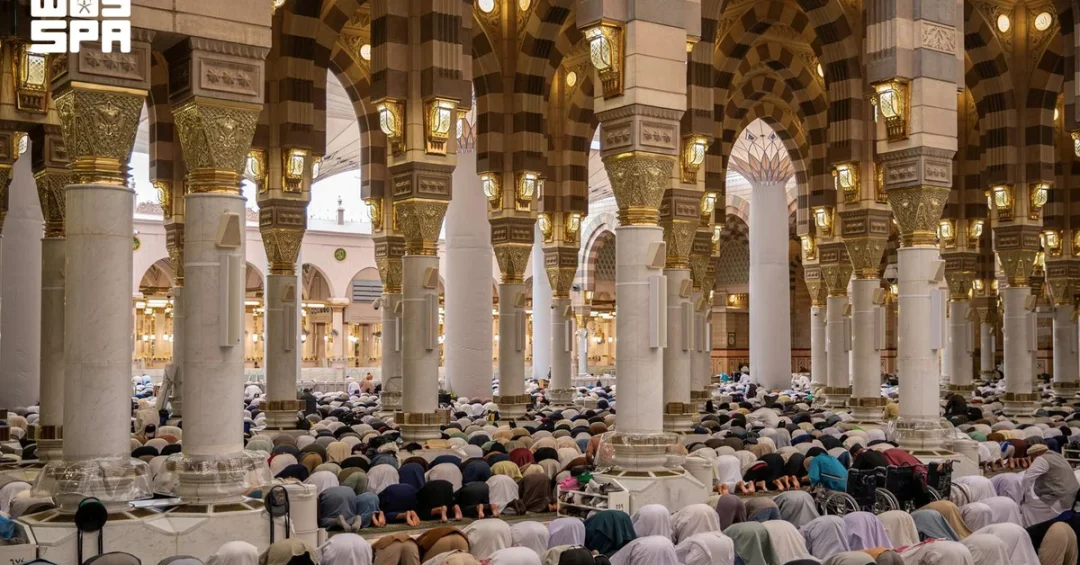
The Presidency of Religious Affairs has announced an intensive review program for Holy Quran memorizers at the Prophet’s Mosque in Madinah, scheduled to run from November 21 to 28 during the school fall break, the Saudi Press Agency reported. The initiative is designed to help participants consolidate and strengthen their memorization of the Holy Quran while encouraging a productive and spiritually enriching use of the holiday period. The program reflects the Kingdom’s enduring commitment to serving the Two Holy Mosques and to nurturing a generation deeply connected to the Quran.
The announcement, released through official Saudi channels, frames the program as part of a broader mission to support Quran memorizers at every level of achievement. By offering structured review sessions inside the Prophet’s Mosque, one of the most revered sites in the Islamic world, the Presidency of Religious Affairs is extending its educational outreach beyond formal religious instruction and into the rhythms of daily worship and community life. For international observers, the initiative offers a clear window into how Saudi Arabia approaches religious education and the stewardship of its most sacred spaces.
Context and Background
Why does the school break present such an important opportunity for religious learning? The fall break is a time when students step away from regular academic schedules, and Saudi authorities have long sought to ensure that this free time is directed toward constructive and spiritually meaningful activity. The intensive review program answers that objective directly, transforming a pause in the school calendar into a period of focused Quranic study inside the Prophet’s Mosque.
The Presidency of Religious Affairs is the official body responsible for religious affairs at the Prophet’s Mosque and the Grand Mosque in Makkah, and it regularly organizes programs that serve worshippers and visitors throughout the year. These initiatives range from daily lessons and lectures to seasonal programs tailored to pilgrims and residents. The intensive review format builds on this established tradition of offering flexible, high-quality religious programming that meets people where they are.
Quran memorization holds a central place in Islamic education, and programs that help memorizers retain and refine what they have learned are considered especially valuable. Memorizers, known in Arabic as huffaz, often devote years to committing the entire text to memory, and periodic review is essential to maintaining accuracy and fluency. By hosting such a program at the Prophet’s Mosque, the Presidency reinforces the mosque’s role not only as a place of prayer but as a living center of learning.
Program Details and Structure
What do prospective participants need to know before joining? The program features three distinct tracks covering the entire Quran, 20 parts, and 10 parts, allowing participants to select the level that matches their memorization and review needs. This tiered structure ensures that the initiative serves a wide range of memorizers, from those who have completed the full Quran to those who have committed substantial portions and wish to strengthen their recall.
Sessions will take place daily from after the Fajr prayer until 11:15 a.m. at the Prophet’s Mosque, near Gate 22. The early morning schedule is significant, as the hours following dawn prayer are traditionally regarded as among the most focused and blessed times for study and reflection. Holding the sessions in this window allows participants to begin their day with Quranic review in the serene environment of the mosque.
The choice of Gate 22 as the meeting point reflects the careful logistical planning that accompanies such programs, ensuring that participants can find their sessions easily within the expansive mosque complex. The daily timetable, running from after Fajr until mid-morning, provides several hours of guided review each day across the eight-day program, offering a concentrated and structured approach to consolidation.
Educational Significance for Memorizers
Why is consistent review so critical for those who have memorized the Quran? Memorization is a skill that requires ongoing reinforcement, and without regular revision even accomplished huffaz can experience lapses in recall. The intensive review format addresses this directly by providing sustained, daily practice under the guidance of qualified instructors within a supportive communal setting. Participants benefit not only from individual review but from the accountability and encouragement that come with studying alongside fellow memorizers.
The three-track structure also allows the Presidency to accommodate different levels of commitment and achievement. Those reviewing the entire Quran undertake a comprehensive revision, while participants in the 20-part and 10-part tracks focus on substantial portions with room for deeper attention to detail. This flexibility is a hallmark of well-designed religious education, recognizing that learners progress at different paces and have different goals.
Beyond the mechanics of review, the program carries a spiritual dimension that is difficult to quantify but widely recognized. Studying the Quran in the Prophet’s Mosque places participants in an environment of profound historical and religious significance, and many memorizers regard such settings as uniquely conducive to reflection and devotion. The combination of rigorous review and sacred space gives the program a character distinct from ordinary classroom instruction.
International and Regional Impact
How does a program in Madinah resonate with Muslim communities around the world? The Prophet’s Mosque is a destination for worshippers and visitors from across the globe, and programs held there carry symbolic weight far beyond the Kingdom’s borders. The announcement of an intensive Quran review initiative signals Saudi Arabia’s continued investment in religious education and in the care of the holy sites, themes that are closely followed by international observers and Muslim communities alike.
For the wider region, the program underscores the Kingdom’s role as a custodian of Islamic heritage and learning. The Presidency of Religious Affairs operates within a framework that emphasizes service to the Two Holy Mosques, and initiatives like this one reinforce the Kingdom’s standing as a center of religious scholarship and practice. Regional institutions and educators often look to programs at the holy mosques as models for their own religious education efforts.
In practical terms, the program also supports the steady flow of worshippers and students who visit the Prophet’s Mosque during holiday periods, providing organized activities that complement the spiritual experience of being in Madinah. Visitors who participate or observe the sessions gain a firsthand sense of the mosque’s educational mission, which extends well beyond the five daily prayers.
Economic and Strategic Significance
What does this initiative reveal about Saudi Arabia’s broader priorities? The program is a clear expression of the Kingdom’s commitment to religious education as a core component of its national identity and public service. By investing in programs that support Quran memorizers, the Presidency of Religious Affairs strengthens the institutional foundations of religious life in the Kingdom, ensuring that the holy mosques remain centers of learning as well as worship.
The initiative also aligns with the Kingdom’s emphasis on quality of life and community engagement, priorities that run through many of Saudi Arabia’s modernization efforts. Structured, purposeful activities during school breaks contribute to a well-rounded educational environment for young people and reinforce the values of discipline, reflection, and community that are central to Saudi society. Such programs complement the many cultural, educational, and social initiatives that form part of the Kingdom’s long-term development strategy.
Strategically, the program demonstrates the continuity and stability of the Kingdom’s religious institutions. The Presidency of Religious Affairs operates year-round, delivering programs that serve residents and visitors and maintaining the high standards of service associated with the Two Holy Mosques. Announcements of this kind are part of a regular calendar of religious programming that international audiences can follow through official Saudi channels.
Vision 2030 Alignment
How does an intensive Quran review program connect to the Kingdom’s long-term vision? Saudi Vision 2030 emphasizes the importance of a vibrant society rooted in Islamic values, and initiatives that nurture religious learning and community engagement sit at the heart of that objective. By supporting Quran memorizers and encouraging productive use of the school break, the Presidency of Religious Affairs contributes to a society that values knowledge, discipline, and spiritual growth alongside economic and social progress.
The program also reflects the Vision’s emphasis on strengthening the Kingdom’s role as a global center for Islamic learning and on delivering world-class services to the millions who visit the Two Holy Mosques. As Saudi Arabia continues to expand its religious, cultural, and educational offerings, programs like this one demonstrate how the country’s heritage and its modernization agenda reinforce one another. The intensive review sessions at the Prophet’s Mosque are a reminder that Vision 2030 is not only about economic transformation but also about preserving and elevating the spiritual foundations of Saudi society for generations to come.
20 Questions
Q1. What is the intensive Quran memorization review program?
A1. It is a program announced by the Presidency of Religious Affairs for Holy Quran memorizers at the Prophet’s Mosque, designed to strengthen participants’ mastery of their memorization during the school fall break.
Q2. When will the program take place?
A2. The program will run from November 21 to 28 during the school fall break, according to the announcement released through official Saudi channels.
Q3. Where will the sessions be held?
A3. Sessions will take place at the Prophet’s Mosque in Madinah, near Gate 22, one of the most revered sites in the Islamic world.
Q4. What are the three tracks offered by the program?
A4. The program features three tracks covering the entire Quran, 20 parts, and 10 parts, allowing participants to choose the level that matches their memorization and review needs.
Q5. What time do the daily sessions run?
A5. Sessions take place daily from after the Fajr prayer until 11:15 a.m., a window traditionally regarded as among the most focused times for study and reflection.
Q6. Which authority announced the program?
A6. The Presidency of Religious Affairs announced the program, reflecting its role in organizing religious programming at the Prophet’s Mosque and the Grand Mosque.
Q7. Why is the school fall break chosen for this program?
A7. The break offers free time that the Presidency seeks to direct toward constructive and spiritually meaningful activity, encouraging productive engagement with the Holy Quran.
Q8. Who can benefit from the program?
A8. Quran memorizers at different levels can benefit, from those who have memorized the entire Quran to those who have committed substantial portions and wish to strengthen recall.
Q9. Why is periodic review important for Quran memorizers?
A9. Consistent review helps memorizers retain accuracy and fluency, as memorization requires ongoing reinforcement to prevent lapses in recall over time.
Q10. What is the significance of holding sessions after Fajr?
A10. The hours following dawn prayer are traditionally considered among the most focused and blessed times for study, allowing participants to begin the day with Quranic review.
Q11. How long does the program last overall?
A11. The program runs for eight days, from November 21 to 28, providing several hours of guided review each day in a concentrated format.
Q12. Why is the Prophet’s Mosque a meaningful setting for the program?
A12. The mosque is one of the most revered sites in the Islamic world, and studying there places participants in an environment many regard as uniquely conducive to reflection and devotion.
Q13. What does the term huffaz refer to?
A13. Huffaz refers to those who have memorized the Holy Quran, often after devoting years to committing the text to memory and maintaining it through regular review.
Q14. How does the program support different achievement levels?
A14. The three-track structure accommodates varying levels of commitment and achievement, recognizing that learners progress at different paces and have different review goals.
Q15. What role does the Presidency of Religious Affairs play generally?
A15. The Presidency is the official body responsible for religious affairs at the Prophet’s Mosque and the Grand Mosque in Makkah, organizing programs for worshippers and visitors year-round.
Q16. How does the program relate to Saudi Arabia’s stewardship of holy sites?
A16. The initiative reflects the Kingdom’s enduring commitment to serving the Two Holy Mosques and nurturing a generation deeply connected to the Holy Quran and Islamic learning.
Q17. How might international Muslim communities view this program?
A17. Programs at the Prophet’s Mosque carry symbolic weight globally, signaling Saudi Arabia’s continued investment in religious education and the care of the holy sites.
Q18. Does the program complement the spiritual experience of visitors?
A18. Yes, it provides organized activities that complement the spiritual experience of being in Madinah, showing that the mosque’s educational mission extends beyond daily prayers.
Q19. How does the program align with Saudi Vision 2030?
A19. Vision 2030 emphasizes a vibrant society rooted in Islamic values, and programs nurturing religious learning and community engagement sit at the heart of that objective.
Q20. Where was the announcement of the program released?
A20. The announcement was released through official Saudi channels, including the Saudi Press Agency, which reported the program’s dates, tracks, and daily schedule.
Reader Feedback
We value your thoughts. Please share your feedback on this article.
Your feedback helps us improve our coverage.