


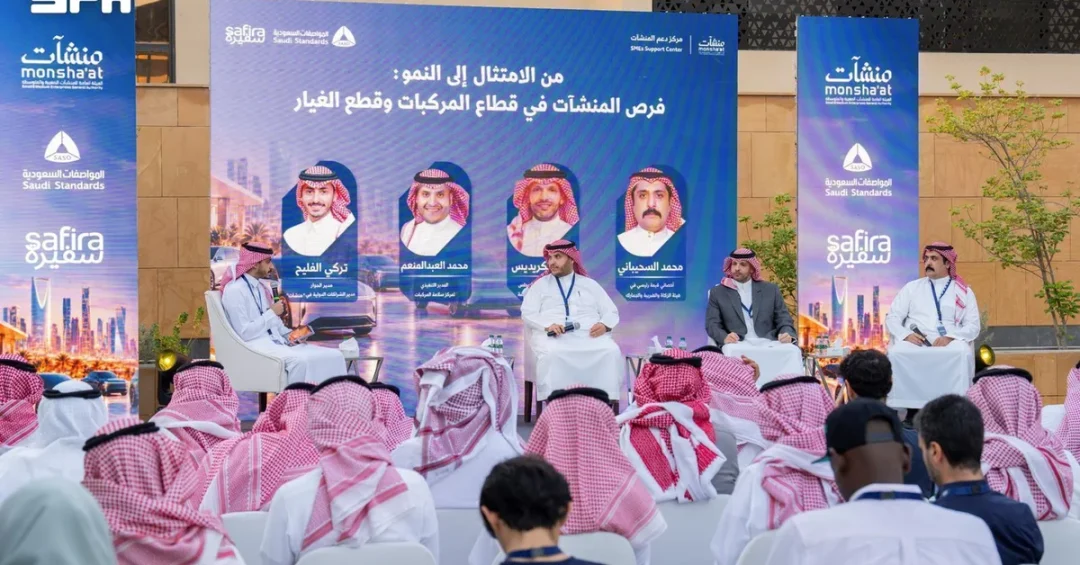
The Small and Medium Enterprises General Authority (Monsha’at) concluded the “Automotive Community” event in Riyadh on November 21, 2026, in partnership with the Saudi Standards, Metrology and Quality Organization (SASO), as part of the “Business Support Communities” initiative. The event connected entrepreneurs and small and medium-sized enterprises (SMEs) with supporting entities to enhance growth opportunities in the automotive sector. It brought together the Zakat, Tax and Customs Authority, the Saudi Automobile and Motorcycle Federation, the Vehicle Safety Center, and several private-sector companies. The program featured panel discussions on automotive and spare parts market regulations, conformity and safety standards, and the role of local manufacturing in supply chains.
How does a single industry gathering in Riyadh signal the broader transformation of Saudi Arabia’s private sector? The “Automotive Community” event, organized by Monsha’at, reflects the Kingdom’s commitment to empowering SMEs through targeted support and knowledge exchange. By focusing on the automotive sector—a key pillar of Saudi Arabia’s industrial diversification—the initiative underscores the government’s efforts to build a resilient, innovation-driven economy. The event targeted entrepreneurs and SME owners operating in the automotive sector, offering them a platform to engage with regulators, financiers, and industry experts. This collaborative approach aligns with Vision 2030’s goal of increasing SME contributions to GDP from 20% to 35% by 2030. The gathering also highlighted the importance of regulatory compliance and safety standards, ensuring that Saudi SMEs can compete both domestically and internationally.
Context and Background
What led to the creation of the “Business Support Communities” initiative, and why is the automotive sector a priority? The initiative, launched by Monsha’at, aims to foster sector-specific communities that bring together entrepreneurs, government agencies, and private companies to address challenges and unlock opportunities. The automotive sector was selected due to its rapid growth and strategic importance within Saudi Arabia’s economic diversification plans. According to official Saudi sources, the sector is expected to contribute significantly to non-oil GDP, driven by increasing demand for vehicles, spare parts, and maintenance services. The “Automotive Community” event is part of a series of similar gatherings that have covered sectors such as retail, tourism, and technology. These events are designed to provide SMEs with direct access to support services, including financing, regulatory guidance, and market intelligence.
How does Monsha’at’s partnership with SASO enhance the event’s impact? The collaboration with SASO ensures that discussions on conformity and safety standards are grounded in technical expertise. SASO, as the national standards body, plays a critical role in setting quality benchmarks for automotive products and services. By involving SASO, the event helped SMEs understand the regulatory landscape and adopt best practices. This is particularly important as Saudi Arabia seeks to boost local manufacturing and reduce reliance on imports. The presence of the Zakat, Tax and Customs Authority further streamlined tax and customs procedures for automotive SMEs, addressing a common pain point. The Saudi Automobile and Motorcycle Federation and the Vehicle Safety Center contributed insights on vehicle safety and technical inspections, ensuring that SMEs are well-equipped to meet consumer expectations and legal requirements.
Why is the automotive sector considered a cornerstone of Saudi Arabia’s industrial strategy? The Kingdom has been investing heavily in automotive manufacturing, including the establishment of Ceer, the first Saudi electric vehicle brand, and partnerships with global automakers like Lucid Motors. These projects are part of a broader effort to localize the automotive value chain, from assembly to component production. SMEs are vital to this ecosystem, providing specialized services, spare parts, and innovative solutions. The “Automotive Community” event therefore serves as a bridge between large-scale industrial projects and the agile, entrepreneurial businesses that support them. By empowering SMEs, Saudi Arabia aims to create a self-sustaining automotive industry that can compete regionally and globally.
Key Details
What specific topics were covered during the panel discussions, and how do they benefit SMEs? The event featured sessions on automotive and spare parts market regulations, conformity and safety standards, and the role of local manufacturing in supply chains. These discussions provided SMEs with a clear understanding of the legal and technical requirements for operating in the sector. For instance, compliance with SASO standards is mandatory for automotive products sold in Saudi Arabia, and non-compliance can lead to fines or business closures. By clarifying these regulations, Monsha’at helps SMEs avoid costly mistakes and build consumer trust. Other sessions covered purchasing used vehicles, assessing their technical condition, financing options, and circular economy opportunities, including reusing vehicle components and recycling vehicles. These topics are particularly relevant as the used car market in Saudi Arabia continues to grow, offering SMEs a lucrative niche.
How does the circular economy concept apply to the automotive sector, and what opportunities does it create? The circular economy—which emphasizes reusing, repairing, and recycling materials—is gaining traction in Saudi Arabia as part of the Kingdom’s sustainability goals. In the automotive context, this includes refurbishing spare parts, recycling end-of-life vehicles, and reducing waste. SMEs can capitalize on these trends by establishing specialized recycling facilities, offering remanufactured parts, or providing eco-friendly maintenance services. The event highlighted how such practices not only benefit the environment but also reduce costs for consumers and businesses. According to Saudi officials, the circular economy is expected to generate new jobs and attract investment, aligning with Vision 2030’s focus on sustainable development. By educating SMEs on these opportunities, Monsha’at is fostering a more resilient and innovative automotive ecosystem.
What role do financing options play in helping automotive SMEs scale? Access to finance is often a major hurdle for SMEs, especially in capital-intensive sectors like automotive. The event addressed this by presenting various financing options, including bank loans, Islamic finance, and government-backed programs. The Zakat, Tax and Customs Authority also explained tax incentives and customs exemptions available to SMEs. These financial tools are designed to help entrepreneurs purchase equipment, expand operations, and invest in research and development. By connecting SMEs with financiers and clarifying eligibility criteria, Monsha’at reduces barriers to entry and growth. This is crucial for achieving the Vision 2030 target of increasing SME lending to 20% of total bank credit. The event thus served as a one-stop shop for SMEs seeking financial and regulatory support.
International and Regional Impact
How does Saudi Arabia’s focus on automotive SMEs resonate with regional and global trends? Across the Middle East and North Africa, governments are recognizing the potential of SMEs to drive economic diversification and job creation. Saudi Arabia’s proactive approach—exemplified by the “Automotive Community” event—positions the Kingdom as a leader in SME empowerment. By sharing best practices and fostering cross-border collaborations, Saudi initiatives can inspire similar programs in neighboring countries. Moreover, the event attracted international attention, with global automotive companies and investors monitoring Saudi Arabia’s progress. The Kingdom’s efforts to localize the automotive supply chain create opportunities for foreign SMEs to partner with Saudi firms, facilitating technology transfer and knowledge exchange. This aligns with Saudi Arabia’s broader strategy to become a hub for trade and investment.
What implications does this event have for Saudi Arabia’s position in the global automotive market? As the largest economy in the Arab world, Saudi Arabia’s automotive policies have far-reaching effects. The “Automotive Community” event signals that the Kingdom is serious about building a competitive automotive sector, not just for domestic consumption but for export. By supporting SMEs, Saudi Arabia can develop a robust network of suppliers that feed into larger manufacturers like Ceer and Lucid. This integration into global value chains enhances the Kingdom’s attractiveness as a manufacturing destination. Furthermore, the emphasis on safety and quality standards aligns with international norms, making Saudi-made automotive products more acceptable in foreign markets. The event also reinforced Saudi Arabia’s commitment to the circular economy, a growing global priority. These factors collectively strengthen the Kingdom’s reputation as a forward-looking, business-friendly nation.
Economic and Strategic Significance
Why is SME development critical to Saudi Arabia’s economic resilience? SMEs account for over 90% of all businesses in Saudi Arabia and employ a significant portion of the workforce. However, their contribution to GDP remains below potential, prompting the government to set ambitious targets. The “Automotive Community” event directly supports these goals by equipping SMEs with the knowledge and connections needed to grow. A thriving SME sector in automotive can reduce reliance on imports, create jobs, and stimulate innovation. It also enhances supply chain resilience, a lesson learned from global disruptions. By fostering a supportive ecosystem, Monsha’at is helping to build a diversified economy that can withstand oil price fluctuations. The event’s focus on regulatory compliance and financing further addresses systemic challenges that have historically hindered SME growth.
How does the automotive sector contribute to Saudi Arabia’s non-oil GDP and Vision 2030? The automotive sector is a key component of Saudi Arabia’s industrial strategy, with the potential to contribute billions of riyals to non-oil GDP. The Kingdom aims to manufacture over 500,000 vehicles annually by 2030, creating tens of thousands of jobs. SMEs are integral to this vision, providing components, services, and aftermarket support. The “Automotive Community” event helped SMEs position themselves within this expanding value chain. Additionally, the event promoted the circular economy, which can reduce waste and lower production costs. By aligning SME growth with national industrial goals, Monsha’at ensures that the benefits of automotive expansion are widely shared. This inclusive approach is a hallmark of Vision 2030, which seeks to leave no segment of society behind.
Vision 2030 Alignment
How does the “Automotive Community” event embody the core objectives of Vision 2030? Vision 2030 aims to transform Saudi Arabia into a diversified, innovation-driven economy, with a vibrant private sector led by SMEs. The event directly supports this by empowering entrepreneurs in a strategic industry. It also aligns with the Vision’s focus on enhancing government efficiency and fostering partnerships between public and private entities. Monsha’at’s role as a facilitator reflects the Kingdom’s commitment to creating an enabling business environment. Furthermore, the event’s emphasis on sustainability and the circular economy supports the Vision’s environmental goals. By investing in SMEs, Saudi Arabia is building a resilient economy that can adapt to future challenges and seize new opportunities.
What does the future hold for Saudi Arabia’s automotive SME ecosystem? The success of the “Automotive Community” event is a stepping stone toward a more integrated and dynamic automotive sector. Monsha’at is expected to continue its “Business Support Communities” initiative, covering more sectors and reaching more entrepreneurs. As Saudi Arabia accelerates its industrial transformation, SMEs will play an increasingly vital role in driving innovation, creating jobs, and boosting exports. The Kingdom’s leadership, under Vision 2030, remains steadfast in its commitment to nurturing this ecosystem. By providing targeted support, Saudi Arabia is not only building a world-class automotive industry but also setting an example for the region. The road ahead is promising, and events like this demonstrate the tangible progress being made.
20 Questions
Q1. What was the “Automotive Community” event?
A1. The “Automotive Community” event was a gathering organized by Monsha’at in Riyadh, in partnership with SASO, to connect SMEs with supporting entities and enhance growth opportunities in the automotive sector.
Q2. When and where did the event take place?
A2. The event concluded on November 21, 2026, in Riyadh, Saudi Arabia. It was held as part of the “Business Support Communities” initiative.
Q3. Who organized the “Automotive Community” event?
A3. The event was organized by the Small and Medium Enterprises General Authority (Monsha’at), in partnership with the Saudi Standards, Metrology and Quality Organization (SASO).
Q4. What was the main objective of the event?
A4. The main objective was to connect entrepreneurs and SME owners in the automotive sector with supporting entities, enhance growth opportunities, and promote knowledge exchange.
Q5. Which government entities participated in the event?
A5. Participants included the Zakat, Tax and Customs Authority, the Saudi Automobile and Motorcycle Federation, the Vehicle Safety Center, and several private-sector companies.
Q6. What topics were discussed in the panel sessions?
A6. Panel discussions covered automotive and spare parts market regulations, conformity and safety standards, local manufacturing in supply chains, purchasing used vehicles, financing options, and circular economy opportunities.
Q7. How does the event support SMEs in the automotive sector?
A7. The event provides SMEs with direct access to regulators, financiers, and industry experts, helping them understand regulations, access financing, and adopt best practices for growth.
Q8. What is the “Business Support Communities” initiative?
A8. It is a Monsha’at initiative that creates sector-specific communities to bring together entrepreneurs, government agencies, and private companies to address challenges and unlock opportunities.
Q9. Why is the automotive sector important to Saudi Arabia’s economy?
A9. The automotive sector is a key pillar of Saudi Arabia’s industrial diversification, contributing to non-oil GDP, job creation, and the localization of manufacturing under Vision 2030.
Q10. How does the event align with Vision 2030?
A10. It aligns with Vision 2030 by empowering SMEs, promoting private sector growth, enhancing government efficiency, and supporting sustainable development and economic diversification.
Q11. What financing options were presented to SMEs?
A11. Financing options included bank loans, Islamic finance, and government-backed programs. Tax incentives and customs exemptions were also explained by the Zakat, Tax and Customs Authority.
Q12. What is the circular economy’s role in the automotive sector?
A12. The circular economy promotes reusing vehicle components and recycling vehicles, reducing waste and costs. It creates opportunities for SMEs in remanufacturing and eco-friendly services.
Q13. How does SASO contribute to the automotive sector?
A13. SASO sets and enforces standards for automotive products, ensuring safety, quality, and conformity. Its participation helps SMEs understand and comply with regulatory requirements.
Q14. What are the benefits of local manufacturing for SMEs?
A14. Local manufacturing reduces reliance on imports, shortens supply chains, creates jobs, and allows SMEs to integrate into larger industrial ecosystems, boosting competitiveness.
Q15. How can SMEs assess the technical condition of used vehicles?
A15. The event covered methods for assessing used vehicles, including inspections by the Vehicle Safety Center, to help SMEs make informed purchasing decisions and ensure quality.
Q16. What role does the Saudi Automobile and Motorcycle Federation play?
A16. The Federation supports the automotive industry through advocacy, networking, and knowledge sharing, helping SMEs stay informed about market trends and regulations.
Q17. How does the event promote knowledge exchange?
A17. By bringing together diverse stakeholders, the event facilitates the sharing of expertise, best practices, and market insights, enabling SMEs to learn from each other and from experts.
Q18. What are the expected outcomes of the event?
A18. Expected outcomes include increased SME awareness of regulations and financing, stronger partnerships, and accelerated growth in the automotive sector, contributing to Vision 2030 goals.
Q19. How does Monsha’at support SMEs beyond this event?
A19. Monsha’at offers various programs, including financing, training, and regulatory guidance, to support SMEs across sectors, fostering a vibrant entrepreneurial ecosystem.
Q20. What future events are planned under the “Business Support Communities” initiative?
A20. Monsha’at plans to expand the initiative to other sectors, organizing similar events to empower SMEs and drive economic diversification across Saudi Arabia.
Reader Feedback
We value your thoughts. Please share your feedback on this article.
Your feedback helps us improve our coverage.
Related articles
 SGS and EgyptAir Sign Ground Handling Deal for Saudi Airports
 The Garage Concludes Investor Meetup to Connect Tech Innovators with Investment Opportunities
 THC Signs MoU for First Residential Helipad at The Curves Tower
 CEER Secures SAR2.6 Billion Financing from anb and Riyad Bank
 NWC National Day Campaign Wins Platinum at MUSE Awards
 National Auto Award 2026: Ceer Triumphs in Jeddah