


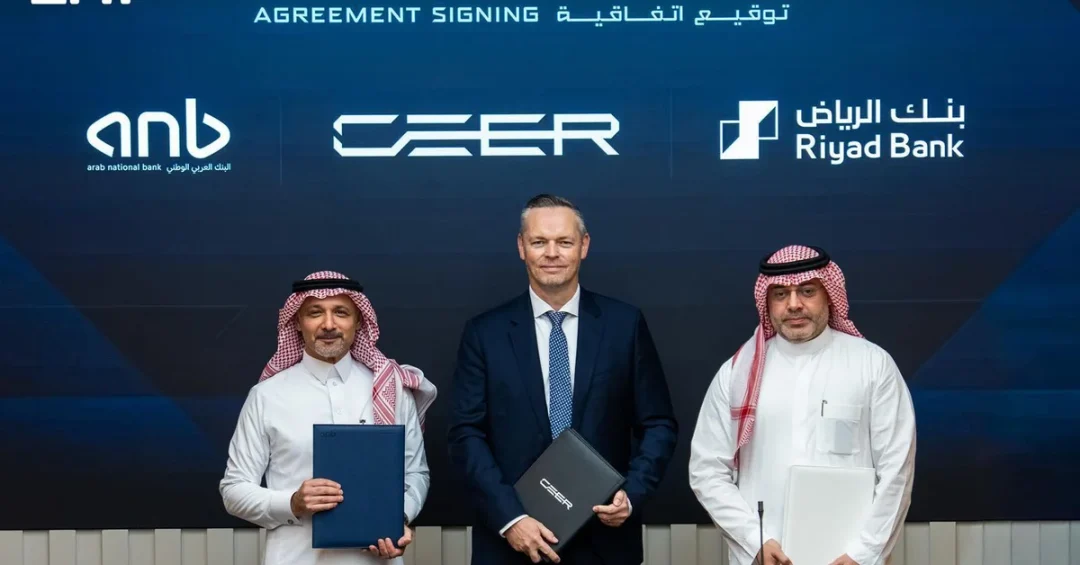
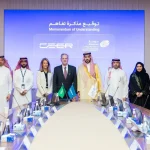
CEER, Saudi Arabia’s first homegrown automotive brand, signed a financial agreement worth approximately SAR2.6 billion with Arab National Bank (anb) and Riyad Bank on November 18, 2026, at its headquarters in Riyadh. The agreement, announced via the Saudi Press Agency, marks a significant step in advancing CEER’s strategic objectives and its contribution to the growth of the Saudi automotive manufacturing industry. The signing ceremony was attended by Chief Financial Officer of CEER Joerg Schuessler, Chief Wholesale Bank Officer at Arab National Bank Louai Alzaher, and Chief Corporate Banking Officer at Riyad Bank Mohammed Abu Al-Naja.
This financing package represents a robust vote of confidence from two of the Kingdom’s premier financial institutions in CEER’s strategic direction, operational readiness, and long-term commercial viability. It directly aligns with the industrial diversification objectives of Saudi Vision 2030, which seeks to reduce dependence on oil revenues and build a diversified, sustainable economy. The partnership underscores the growing maturity of Saudi Arabia’s automotive sector and the financial ecosystem’s readiness to support large-scale industrial projects. As the Kingdom accelerates its industrial transformation, how will this landmark deal reshape the domestic automotive landscape and inspire further private-sector investment?
Context and Background
CEER was established in 2022 as a joint venture between the Public Investment Fund (PIF) and Taiwan’s Foxconn, with the aim of designing, manufacturing, and selling electric vehicles in Saudi Arabia. The brand is poised to become a cornerstone of the Kingdom’s automotive industry, contributing to economic diversification and technological advancement. The agreement with anb and Riyad Bank comes at a critical juncture as CEER prepares to launch its first electric vehicle models and ramp up production at its manufacturing facility in King Abdullah Economic City (KAEC). This financial backing ensures that CEER can maintain its timeline and meet the ambitious targets set by its leadership.
The Saudi automotive market has traditionally been dominated by imports, but under Vision 2030, the government has prioritized local manufacturing to create jobs, transfer technology, and reduce the trade deficit. CEER’s emergence is a direct response to these priorities. The SAR2.6 billion financing will be used to further advance CEER’s strategic objectives, including research and development, supply chain development, and the expansion of production capacity. The involvement of anb and Riyad Bank, both leading Saudi financial institutions, signals strong private-sector confidence in CEER’s business model and the broader industrial strategy. Isn’t it remarkable how quickly Saudi Arabia is building a comprehensive automotive ecosystem from the ground up?
Furthermore, this agreement reflects the deepening collaboration between the automotive and banking sectors in Saudi Arabia. As the Kingdom seeks to attract foreign investment and foster innovation, such partnerships are essential. The financing will not only support CEER’s capital expenditures but also enhance its credibility with international suppliers and customers. The deal also highlights the role of Saudi banks in financing mega-projects and strategic industries, a key pillar of Vision 2030’s Financial Sector Development Program. With this agreement, CEER is better positioned to compete in the rapidly evolving electric vehicle market, both domestically and regionally.
Key Details of the Agreement
The financial agreement, valued at approximately SAR2.6 billion, was signed by Joerg Schuessler, Chief Financial Officer of CEER; Louai Alzaher, Chief Wholesale Bank Officer at Arab National Bank; and Mohammed Abu Al-Naja, Chief Corporate Banking Officer at Riyad Bank. The signing took place at CEER’s headquarters in Riyadh, symbolizing the close partnership between the automotive brand and the financial institutions. The funds will be utilized to advance CEER’s strategic objectives, including the development of electric vehicle models, the expansion of manufacturing capabilities, and the enhancement of its supply chain. This investment is a clear indication of the banks’ commitment to supporting national projects that drive economic growth and diversification.
In his remarks at the ceremony, Schuessler said: “This agreement reflects anb and Riyad Bank’s confidence in CEER’s business model and long-term outlook. Together, we are investing in the future of a Saudi automotive brand built for the Kingdom and its future economic ambitions.” Alzaher added: “We are proud at anb to have led and arranged this agreement for CEER, reflecting the Bank’s commitment to supporting strategic national projects and enabling businesses to execute their strategic plans. This agreement also underscores anb’s role as an active banking partner in supporting promising economic sectors, particularly the automotive manufacturing industry, contributing to strengthening the Kingdom’s industrial sector and advancing the objectives of Saudi Vision 2030.” Abu Al-Naja stated: “The signing of this financing agreement with CEER reaffirms Riyad Bank’s commitment to supporting national industries and advancing sustainable transport in line with Saudi Vision 2030 and the Saudi Green Initiative.”
The agreement is structured as a comprehensive financing package that includes both conventional and Islamic financing instruments, reflecting the banks’ tailored approach to meet CEER’s needs. The terms of the financing were not disclosed, but industry analysts view the deal as a strong endorsement of CEER’s creditworthiness and future prospects. The involvement of anb as the lead arranger demonstrates its expertise in structuring complex financing for large-scale industrial projects. Riyad Bank’s participation further solidifies its role as a key financier of Vision 2030 initiatives. How often do we see such collaborative financing efforts among Saudi banks for a single automotive venture?
International and Regional Impact
The agreement between CEER and the two Saudi banks has significant implications beyond the Kingdom’s borders. It signals to international investors and automotive companies that Saudi Arabia is serious about becoming a hub for electric vehicle manufacturing. The partnership with Foxconn, a global leader in electronics manufacturing, already positions CEER as a potential exporter to the Middle East and North Africa (MENA) region. The financial backing from anb and Riyad Bank enhances CEER’s ability to scale production and meet regional demand for electric vehicles, which is expected to grow rapidly in the coming years. This could attract further foreign direct investment and technology transfers, bolstering the Kingdom’s position in the global automotive supply chain.
Regionally, the deal reinforces Saudi Arabia’s leadership in sustainable transport and green initiatives. The MENA region is increasingly focusing on reducing carbon emissions, and electric vehicles are a key part of that transition. By supporting CEER, the banks are contributing to the broader goal of the Saudi Green Initiative, which aims to plant 10 billion trees and reduce carbon emissions by 278 million tonnes annually by 2030. CEER’s electric vehicles will help lower the Kingdom’s carbon footprint and promote environmentally friendly transportation. Moreover, the success of CEER could inspire similar ventures in other Gulf Cooperation Council (GCC) countries, fostering healthy competition and collaboration in the region’s automotive sector. Could this be the catalyst that accelerates the adoption of electric vehicles across the Middle East?
Economic and Strategic Significance
From an economic perspective, the SAR2.6 billion financing is a major boost for Saudi Arabia’s industrial diversification efforts. The automotive industry is a key pillar of Vision 2030, with the goal of manufacturing 500,000 vehicles annually by 2030. CEER is expected to contribute significantly to this target, creating thousands of direct and indirect jobs and enhancing the Kingdom’s non-oil exports. The agreement also demonstrates the banking sector’s capacity to fund large-scale projects, which is essential for the growth of strategic industries. By supporting CEER, anb and Riyad Bank are not only investing in a single company but also in the development of a robust automotive ecosystem that includes suppliers, logistics, and research institutions.
Strategically, the deal strengthens Saudi Arabia’s economic resilience by reducing reliance on oil revenues and fostering a knowledge-based economy. The transfer of technology and expertise from Foxconn and other partners will upskill the local workforce and promote innovation. CEER’s focus on electric vehicles aligns with global trends towards sustainable mobility, positioning Saudi Arabia as a forward-thinking player in the automotive sector. The financing also enhances the Kingdom’s attractiveness as a destination for foreign investment, as it showcases the availability of sophisticated financial products and the willingness of local banks to support high-potential ventures. What does this mean for the future of Saudi Arabia’s manufacturing sector and its global competitiveness?
Vision 2030 Alignment
The agreement between CEER, Arab National Bank, and Riyad Bank is a clear embodiment of the objectives of Saudi Vision 2030. Vision 2030 aims to diversify the economy, create jobs, and promote sustainable development. By financing CEER, the banks are directly contributing to the growth of the automotive manufacturing industry, which is a priority sector under the National Industrial Development and Logistics Program (NIDLP). This program seeks to transform Saudi Arabia into a leading industrial power and logistics hub. The partnership also supports the Financial Sector Development Program, which aims to increase the banking sector’s contribution to economic growth and enhance its role in financing private-sector projects.
Moreover, the deal aligns with the Saudi Green Initiative by promoting electric vehicles and reducing carbon emissions. CEER’s mission to produce environmentally friendly vehicles supports the Kingdom’s commitment to sustainability and the transition to a green economy. As CEER progresses towards launching its first models and expanding production, the support from anb and Riyad Bank will be instrumental in achieving these goals. This collaboration sets a precedent for future public-private partnerships and demonstrates the power of collective effort in realizing Vision 2030. With such strong backing, CEER is well-positioned to become a symbol of Saudi innovation and industrial prowess on the global stage.
20 Questions
Q1. What is CEER?
A1. CEER is Saudi Arabia’s first homegrown automotive brand, established in 2022 as a joint venture between the Public Investment Fund and Taiwan’s Foxconn to design, manufacture, and sell electric vehicles.
Q2. What was the value of the financial agreement signed by CEER?
A2. CEER signed a financial agreement worth approximately SAR2.6 billion with Arab National Bank and Riyad Bank on November 18, 2026.
Q3. Which banks are involved in the agreement?
A3. The agreement was signed with Arab National Bank (anb) and Riyad Bank, two of Saudi Arabia’s premier financial institutions.
Q4. Where was the agreement signed?
A4. The agreement was signed at CEER’s headquarters in Riyadh, Saudi Arabia.
Q5. Who signed the agreement on behalf of CEER?
A5. Joerg Schuessler, Chief Financial Officer of CEER, signed the agreement on behalf of the company.
Q6. Who signed for Arab National Bank?
A6. Louai Alzaher, Chief Wholesale Bank Officer at Arab National Bank, signed the agreement.
Q7. Who signed for Riyad Bank?
A7. Mohammed Abu Al-Naja, Chief Corporate Banking Officer at Riyad Bank, signed the agreement.
Q8. What is the purpose of this financing?
A8. The financing will advance CEER’s strategic objectives, including developing electric vehicle models, expanding manufacturing capabilities, and enhancing its supply chain.
Q9. How does this agreement align with Saudi Vision 2030?
A9. It supports industrial diversification, sustainable transport, and the growth of the automotive manufacturing industry, all key objectives of Saudi Vision 2030.
Q10. What did Joerg Schuessler say about the agreement?
A10. Schuessler stated that the agreement reflects the banks’ confidence in CEER’s business model and long-term outlook, and that they are investing in the future of a Saudi automotive brand.
Q11. What did Louai Alzaher say about the agreement?
A11. Alzaher expressed pride in leading and arranging the agreement, highlighting anb’s commitment to supporting strategic national projects and the automotive manufacturing industry.
Q12. What did Mohammed Abu Al-Naja say about the agreement?
A12. Abu Al-Naja reaffirmed Riyad Bank’s commitment to supporting national industries and advancing sustainable transport in line with Saudi Vision 2030 and the Saudi Green Initiative.
Q13. What is the significance of this agreement for the Saudi automotive industry?
A13. It demonstrates strong private-sector confidence in CEER and supports the growth of a domestic automotive manufacturing sector, reducing reliance on imports and creating jobs.
Q14. How does this agreement support the Saudi Green Initiative?
A14. By financing electric vehicles, the agreement promotes sustainable transport and helps reduce carbon emissions, aligning with the Saudi Green Initiative’s environmental goals.
Q15. What is CEER’s role in the Saudi economy?
A15. CEER is a key player in Saudi Arabia’s industrial diversification, contributing to economic growth, job creation, and technological advancement through local electric vehicle manufacturing.
Q16. What are the expected benefits of this financing for CEER?
A16. The financing provides capital for research and development, production expansion, and supply chain development, enhancing CEER’s operational readiness and commercial viability.
Q17. How does this agreement reflect private-sector confidence in Saudi Arabia?
A17. The participation of two major Saudi banks indicates strong confidence in CEER’s strategic direction and the broader economic reforms under Vision 2030.
Q18. What is the target for vehicle manufacturing under Vision 2030?
A18. Saudi Arabia aims to manufacture 500,000 vehicles annually by 2030, with CEER expected to contribute significantly to this target.
Q19. What is the significance of the partnership with Foxconn for CEER?
A19. Foxconn’s expertise in electronics manufacturing supports CEER’s development of advanced electric vehicles, enhancing technology transfer and innovation in Saudi Arabia.
Q20. What does this agreement mean for the future of Saudi Arabia’s automotive sector?
A20. It marks a major step towards establishing a robust automotive ecosystem, attracting investment, and positioning Saudi Arabia as a leader in electric vehicle manufacturing in the region.
Reader Feedback
We value your thoughts. Please share your feedback on this article.
Your feedback helps us improve our coverage.
Related articles
 NWC National Day Campaign Wins Platinum at MUSE Awards
 National Auto Award 2026: Ceer Triumphs in Jeddah
 Riyadh Air’s First A321neo Completes Manufacturing in Pearl Livery
 Saudi-US Business Council, Federation of Saudi Chambers Sign MoU
 Mawhiba, CEER Sign MoU to Develop Gifted Students’ Abilities
 Saudi Energy Reports 11.5% Revenue Growth, SAR12.1B Profit