


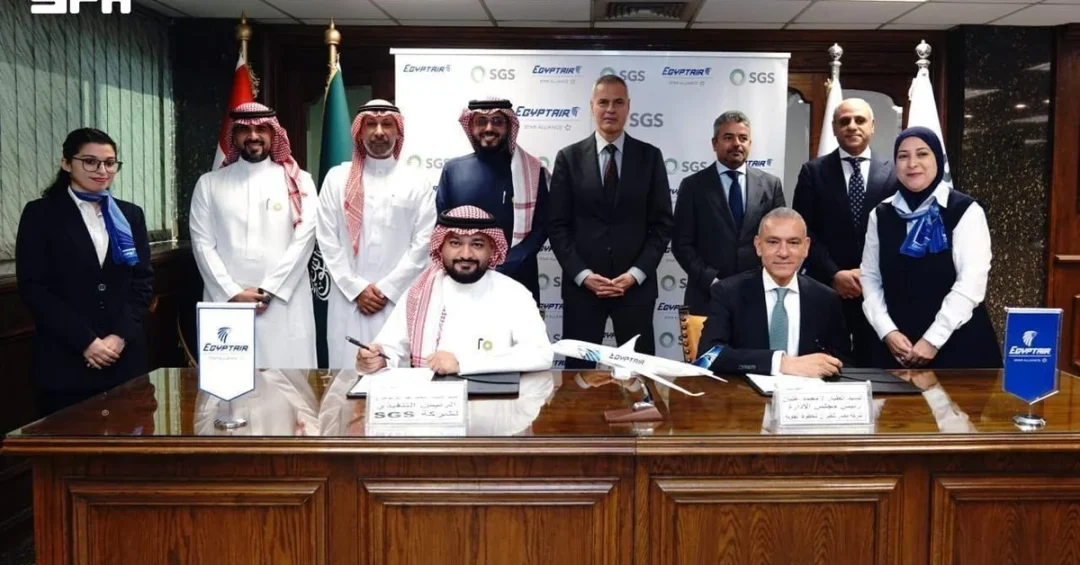
Saudi Ground Services (SGS) has signed a strategic contract with EgyptAir, the national carrier of the Arab Republic of Egypt, to provide comprehensive ground handling services for EgyptAir flights at all airports across the Kingdom of Saudi Arabia. The agreement, announced on November 21, 2026, in Jeddah via the Saudi Press Agency (SPA), marks a significant expansion of the longstanding partnership between the two entities and underscores Saudi Arabia’s commitment to enhancing its aviation sector in line with Vision 2030. The contract was signed by SGS Chief Executive Officer Mohammed Mazi and EgyptAir Chairman and CEO Captain Mohamed Alyan, reflecting a shared dedication to operational excellence and passenger satisfaction.
This development comes at a time when Saudi Arabia is experiencing unprecedented growth in air travel, driven by strategic investments in airport infrastructure and a surge in religious tourism, business travel, and leisure visits. The agreement not only reinforces bilateral ties between Saudi Arabia and Egypt but also positions both companies to capitalize on the expanding aviation market. As the Kingdom continues to position itself as a global logistics and tourism hub, partnerships like this are essential to meeting the rising demand for seamless, high-quality ground services. How will this collaboration shape the future of air travel in the region?
Context and Background
Saudi Ground Services, a leading provider of ground handling solutions, has long been a key player in the Kingdom’s aviation ecosystem. Established to support the rapid expansion of Saudi airports, SGS offers a wide range of services including passenger handling, ramp services, cargo operations, and aircraft maintenance support. Its partnership with EgyptAir, one of the oldest and most recognized airlines in the Middle East and North Africa, dates back several years, with the two companies collaborating on various operational fronts. The new contract formalizes and expands this relationship, covering all airports in Saudi Arabia where EgyptAir operates.
EgyptAir, the flag carrier of Egypt, operates an extensive network across the Middle East, Africa, Europe, Asia, and North America. Its presence in Saudi Arabia is significant, serving millions of passengers annually, particularly those traveling for Umrah, Hajj, and business purposes. The airline has been modernizing its fleet and enhancing its service offerings, making reliable ground handling partners critical to its success. This agreement ensures that EgyptAir passengers receive consistent, high-quality service across all Saudi airports, from major hubs like King Abdulaziz International Airport in Jeddah and King Khalid International Airport in Riyadh to regional airports. What does this mean for the thousands of travelers who rely on EgyptAir for their journeys to and from the Kingdom?
The timing of this agreement aligns with Saudi Arabia’s ambitious National Aviation Strategy, which aims to triple passenger traffic to 330 million by 2030, expand connectivity to 250 destinations, and increase air cargo capacity to 4.5 million tons. The strategy, a cornerstone of Vision 2030, seeks to transform the Kingdom into a global aviation hub. By strengthening partnerships with international carriers like EgyptAir, SGS is contributing directly to these goals, ensuring that ground operations can keep pace with the projected growth. Moreover, the agreement reflects the broader economic and diplomatic ties between Saudi Arabia and Egypt, two nations with deep historical, cultural, and strategic connections.
Key Details of the Agreement
The contract encompasses a comprehensive range of ground handling services, divided into two primary areas: passenger services and ramp services. Under passenger services, SGS will manage check-in procedures, boarding gate operations, lounge services, baggage handling, and comprehensive passenger support. This includes assisting passengers with special needs, providing information, and ensuring a smooth flow from terminal entry to boarding. These services are designed to enhance the overall travel experience, reducing wait times and improving satisfaction. For EgyptAir, outsourcing these functions to SGS allows the airline to focus on its core competencies while benefiting from SGS’s local expertise and infrastructure.
Ramp services, the second key area, cover the essential ground operations required for aircraft on the apron. This includes loading and unloading of baggage and cargo, aircraft marshalling, pushback, and the provision of various support services such as ground power and air conditioning. These operations are critical for maintaining quick turnaround times and ensuring flight punctuality. SGS’s ramp teams are trained to handle a diverse fleet, including EgyptAir’s Boeing 737s, Airbus A320s, and wide-body aircraft used on longer routes. The agreement also includes provisions for exploring additional services at several airports across the Kingdom, such as de-icing, cabin cleaning, and catering coordination, which could further expand the scope of cooperation. How will these enhanced services translate into tangible benefits for passengers and airlines alike?
SGS Chief Executive Officer Mohammed Mazi emphasized that the agreement represents a step toward expanding the partnership and capitalizing on opportunities to develop new areas of cooperation that generate sustainable value for both parties. He noted that the partnership extends beyond the provision of existing services to creating new opportunities for growth and development. Captain Mohamed Alyan, EgyptAir Chairman and CEO, echoed this sentiment, highlighting the importance of leveraging combined expertise to meet operational requirements and passenger needs. Both leaders expressed confidence that the agreement would strengthen a partnership model based on integration, knowledge exchange, and long-term value creation.
International and Regional Impact
The strengthened partnership between SGS and EgyptAir carries significant implications for regional aviation and international connectivity. EgyptAir is a key carrier linking Africa, the Middle East, and Europe, and its operations in Saudi Arabia facilitate not only bilateral travel but also transit traffic. By ensuring reliable ground handling, the agreement supports EgyptAir’s ability to maintain schedules, reduce delays, and offer competitive services. This, in turn, enhances Saudi Arabia’s reputation as a reliable and efficient aviation hub, attracting more international carriers to expand their operations in the Kingdom.
From a regional perspective, the agreement reinforces the strong ties between Saudi Arabia and Egypt, two pivotal players in the Arab world. Both countries have been deepening cooperation across various sectors, including trade, investment, and tourism. In aviation, this partnership exemplifies how shared goals can lead to mutually beneficial outcomes. As Saudi Arabia continues to invest in its aviation infrastructure, including the development of new airports and the expansion of existing ones, partnerships with established carriers like EgyptAir will be instrumental in driving traffic and fostering economic growth. What message does this send to other international airlines considering similar collaborations in the Kingdom?
Economic and Strategic Significance
Economically, the agreement is poised to generate substantial value for both SGS and EgyptAir. For SGS, the contract expands its client base and revenue streams, allowing for further investment in technology, training, and infrastructure. The company has been investing in digital solutions to streamline operations, such as automated check-in kiosks, baggage tracking systems, and real-time communication tools. These innovations not only improve efficiency but also enhance the passenger experience, which is a key differentiator in the competitive ground handling market. For EgyptAir, outsourcing ground handling to a trusted partner reduces operational costs and allows the airline to allocate resources to fleet expansion and route development.
Strategically, the agreement supports Saudi Arabia’s broader economic diversification goals under Vision 2030. By enhancing the aviation sector’s capacity and efficiency, it contributes to the growth of tourism, trade, and logistics—all priority areas for the Kingdom. The National Aviation Strategy aims to increase the sector’s contribution to GDP and create thousands of jobs. SGS, as a Saudi company, plays a vital role in this by employing and training local talent, thereby supporting the development of a skilled workforce. The partnership with EgyptAir also facilitates the exchange of best practices and knowledge, which can further elevate service standards across the industry. How will these economic benefits ripple through the Saudi economy and beyond?
Vision 2030 Alignment
The SGS-EgyptAir agreement is a clear embodiment of Vision 2030’s objectives to transform Saudi Arabia into a global hub for aviation, tourism, and logistics. By ensuring that ground handling services meet the highest international standards, the partnership enhances the Kingdom’s attractiveness as a destination for business and leisure travelers. It also supports the goals of the Pilgrim Experience Program, which seeks to improve the journey for millions of Umrah and Hajj pilgrims who travel through Saudi airports each year. EgyptAir’s significant role in transporting pilgrims makes this agreement particularly relevant, as it ensures a smooth and dignified experience for these travelers.
Looking ahead, the collaboration between SGS and EgyptAir is expected to deepen, with both parties committed to exploring new avenues for cooperation. This could include joint training programs, technology sharing, and the development of tailored services for specific routes or passenger segments. As Saudi Arabia continues to expand its airport infrastructure—including the upcoming Red Sea International Airport and the expansion of King Abdulaziz International Airport—partnerships like this will be essential to managing increased traffic and maintaining service quality. Ultimately, the agreement exemplifies how strategic partnerships can drive progress toward Vision 2030, reinforcing Saudi Arabia’s position as a leader in global aviation and a bridge between continents.
20 Questions
Q1. What is the main purpose of the agreement between Saudi Ground Services and EgyptAir?
A1. The agreement aims to provide comprehensive ground handling services for EgyptAir flights at all airports across Saudi Arabia, enhancing operational efficiency and passenger experience.
Q2. Who signed the contract on behalf of SGS and EgyptAir?
A2. The contract was signed by SGS Chief Executive Officer Mohammed Mazi and EgyptAir Chairman and CEO Captain Mohamed Alyan.
Q3. What types of services are covered under the agreement?
A3. The agreement covers passenger services such as check-in, boarding, lounge access, and baggage handling, as well as ramp services including loading, unloading, and aircraft support.
Q4. At which airports will SGS provide these services to EgyptAir?
A4. SGS will provide ground handling services at all airports across the Kingdom of Saudi Arabia where EgyptAir operates.
Q5. How does this agreement benefit EgyptAir passengers?
A5. Passengers will experience smoother check-in, efficient baggage handling, and improved overall service quality, leading to a more pleasant travel experience.
Q6. What did SGS CEO Mohammed Mazi say about the partnership?
A6. He stated that the agreement expands the partnership and creates opportunities for sustainable value, emphasizing integration and knowledge exchange.
Q7. How does this agreement align with Saudi Vision 2030?
A7. It supports Vision 2030 by enhancing aviation infrastructure, boosting tourism, and positioning Saudi Arabia as a global logistics and tourism hub.
Q8. What is the significance of EgyptAir as a partner for SGS?
A8. EgyptAir is a major regional carrier with extensive networks, and its partnership helps SGS expand its client base and enhance service standards.
Q9. Will the agreement create new job opportunities in Saudi Arabia?
A9. Yes, the expanded operations may lead to new employment opportunities for Saudi nationals in ground handling and related fields.
Q10. How does this partnership impact Saudi-Egypt relations?
A10. It strengthens bilateral ties by fostering cooperation in aviation, a key sector for economic and cultural exchange between the two nations.
Q11. What are the two main areas of ground handling covered?
A11. The two main areas are passenger services (check-in, boarding, etc.) and ramp services (loading, unloading, aircraft support).
Q12. How will the agreement improve operational efficiency at Saudi airports?
A12. By streamlining ground handling processes, it reduces turnaround times, minimizes delays, and ensures consistent service quality across all airports.
Q13. Does the agreement include provisions for future expansion?
A13. Yes, it includes exploring additional services at several airports, indicating potential for further cooperation and service development.
Q14. What role does SGS play in Saudi Arabia’s aviation sector?
A14. SGS is a leading ground handling provider, supporting the growth of Saudi airports and contributing to the National Aviation Strategy.
Q15. How does this agreement benefit the Saudi economy?
A15. It boosts economic diversification by enhancing aviation and tourism, creating jobs, and increasing the sector’s contribution to GDP.
Q16. What is the expected impact on Umrah and Hajj pilgrims?
A16. Pilgrims traveling with EgyptAir will benefit from improved ground services, ensuring a smoother and more comfortable journey.
Q17. Will SGS use new technologies to deliver these services?
A17. SGS has been investing in digital solutions like automated check-in and baggage tracking to enhance efficiency and passenger experience.
Q18. How does the agreement reflect Saudi Arabia’s National Aviation Strategy?
A18. It supports the strategy’s goals of tripling passenger traffic and expanding connectivity by ensuring high-quality ground handling services.
Q19. What did EgyptAir Chairman Captain Mohamed Alyan say about the deal?
A19. He emphasized the commitment to developing ground handling services and leveraging combined expertise to meet operational and passenger needs.
Q20. What are the long-term prospects for this partnership?
A20. The partnership is expected to deepen, with potential for joint training, technology sharing, and tailored services, supporting both companies’ growth plans.
Reader Feedback
We value your thoughts. Please share your feedback on this article.
Your feedback helps us improve our coverage.
Related articles
 The Garage Concludes Investor Meetup to Connect Tech Innovators with Investment Opportunities
 THC Signs MoU for First Residential Helipad at The Curves Tower
 CEER Secures SAR2.6 Billion Financing from anb and Riyad Bank
 NWC National Day Campaign Wins Platinum at MUSE Awards
 National Auto Award 2026: Ceer Triumphs in Jeddah
 Riyadh Air’s First A321neo Completes Manufacturing in Pearl Livery