


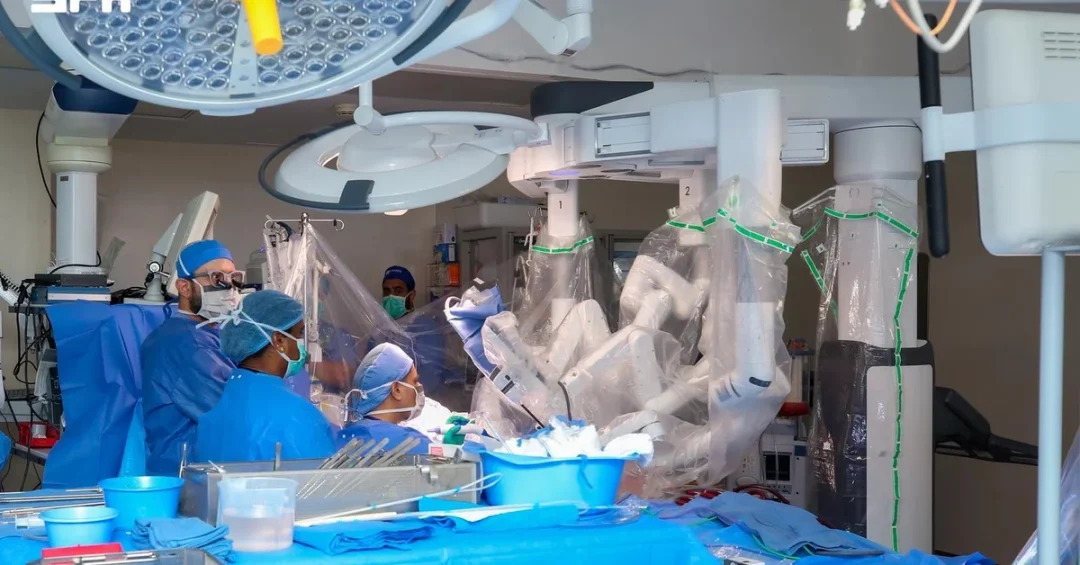
King Faisal Specialist Hospital and Research Centre (KFSH) has recorded a 118% increase in robotic surgeries over three years, rising from 771 procedures in 2022 to 1,685 in 2025, according to official data released by the Saudi Press Agency (SPA). The milestone underscores the Kingdom’s accelerating adoption of advanced medical technology and its ambition to lead the region in specialized healthcare. The 2025 total alone represents a 23% jump from the 1,370 procedures performed in 2024, reflecting both growing institutional expertise and rising patient demand for minimally invasive options. Since introducing robotic surgery in 2003, KFSH has steadily expanded the technology’s role from assisting with delicate tasks to enabling highly complex operations that once required large incisions. How did a single hospital in Riyadh become a global pioneer in robotic surgery? The answer lies in sustained investment, visionary leadership, and a culture of innovation aligned with Saudi Vision 2030.
The growth is not merely numerical. It signals a profound shift in how complex medical conditions are treated in Saudi Arabia, with robotic systems now routinely used for organ transplants, cardiac surgery, and brain tumor removal. These procedures demand extraordinary precision, and the robotic platform offers surgeons enhanced dexterity, magnified 3D visualization, and tremor-free control. For patients, the benefits include smaller incisions, reduced blood loss, shorter hospital stays, and faster recovery. KFSH’s achievements have positioned the hospital as a beacon of medical excellence, attracting patients from across the region and beyond. As the Kingdom continues to transform its healthcare sector under Vision 2030, KFSH’s robotic surgery program stands as a testament to what is possible when technology and talent converge.
Context and Background
When King Faisal Specialist Hospital and Research Centre performed its first robotic-assisted surgery in 2003, few could have predicted the scale of transformation that would follow. At the time, robotic systems were primarily used for simple tasks, such as holding instruments or providing steady camera views. Over two decades, KFSH has systematically expanded its applications, investing in training, infrastructure, and research. The hospital’s journey mirrors Saudi Arabia’s broader healthcare evolution, from a system reliant on referrals abroad to one that now exports expertise. Isn’t it remarkable how far the Kingdom has come in building self-sufficiency in advanced medicine? The 118% growth in procedures between 2022 and 2025 is a direct result of this long-term vision, supported by the Ministry of Health and the Health Sector Transformation Program, a key initiative under Vision 2030.
The hospital’s robotic surgery program has achieved several world firsts, each marking a new frontier in minimally invasive care. In 2018, KFSH performed the world’s first fully robotic liver transplant, demonstrating that even the most complex abdominal surgeries could be done without large incisions. This was followed by the world’s first fully robotic heart transplant without opening the chest, a procedure that would have been considered impossible just a decade earlier. Most recently, the hospital completed the robotic removal of a tumor inside the skull, further pushing the boundaries of neurosurgery. These milestones are not simply technical triumphs; they represent real hope for patients with conditions that were once deemed inoperable or requiring highly invasive approaches. How many lives have been changed by these breakthroughs? The answer is immeasurable, but the growing number of procedures tells a compelling story.
Beyond the headline figures, KFSH’s robotic cardiac surgery program has recorded a 98% patient survival rate across 400 procedures from its launch in 2019 through mid-2024. This statistic is particularly significant given the complexity of the cases handled. The program has become a reference point for cardiac centers worldwide, with surgeons from other countries visiting Riyadh to observe and learn. In living donor transplantation, KFSH has performed more than 1,600 robotic procedures to remove part of a donor’s liver for transplant, the highest number worldwide. This expertise not only saves lives but also reduces the burden on donors, who experience less pain and return to normal activities sooner. The hospital’s commitment to living donation reflects the altruistic spirit of Saudi society and the Kingdom’s emphasis on self-sufficiency in organ transplantation.
Key Details
In 2026, KFSH expanded its use of the single-port robot, a advanced system that allows surgeons to perform certain procedures through a single incision instead of multiple ports. During the first nine months of the year, the hospital performed 109 such procedures, spanning liver transplants and living donor surgeries. Notably, this included the world’s first series of single-port robotic living donor liver resections, a feat that underscores KFSH’s pioneering role. The single-port approach offers even less trauma than traditional multi-port robotics, with the potential for reduced scarring and faster recovery. Is this the future of surgery? For an increasing number of patients at KFSH, it already is. The hospital’s ability to adopt and refine such technology quickly is a testament to its skilled surgeons, nurses, and technical staff, who undergo rigorous training to master each new platform.
Recovery outcomes further illustrate the benefits of robotic surgery. In 2026, 96% of kidney donors at KFSH went home within 24 hours of their procedure, a clear measure of what less invasive surgery means for patients. This rapid discharge not only improves patient experience but also frees up hospital beds for other cases, enhancing overall efficiency. The hospital’s robotic program has also contributed to shorter waiting times for transplants, as more procedures can be performed with fewer complications. These operational gains are critical as Saudi Arabia’s population grows and demand for specialized care increases. How does KFSH maintain such high standards? Through continuous quality improvement, data-driven protocols, and a patient-first philosophy that permeates every level of the organization.
KFSH’s reputation has been recognized globally. For 2026, the hospital was ranked first in the Middle East and Africa and 12th globally among the world’s top 250 academic medical centers. It was also named the most valuable healthcare brand in Saudi Arabia and the Middle East for 2026 by Brand Finance. Additionally, KFSH is listed in Newsweek’s World’s Best Hospitals 2026, World’s Best Smart Hospitals 2027, and World’s Best Specialized Hospitals 2027. These accolades reflect not only clinical excellence but also the hospital’s investment in digital health, research, and education. They also enhance Saudi Arabia’s standing as a destination for medical tourism, a growing sector under Vision 2030. What do these rankings mean for patients? They offer assurance that they are receiving care at one of the world’s finest institutions, without having to travel far from home.
International and Regional Impact
The implications of KFSH’s robotic surgery expansion extend well beyond Saudi Arabia’s borders. As the leading academic medical center in the Middle East and Africa, KFSH serves as a hub for training and knowledge exchange. Surgeons from neighboring countries and beyond come to Riyadh to learn robotic techniques, and the hospital frequently hosts international conferences and workshops. This role enhances Saudi Arabia’s soft power and positions the Kingdom as a leader in global health diplomacy. Moreover, the hospital’s world-first procedures set new standards that other institutions strive to meet, elevating the entire region’s healthcare quality. Isn’t it inspiring to see a Saudi institution leading the world in such a critical field? The ripple effects are felt in improved patient outcomes, expanded access to advanced care, and stronger international partnerships.
Regionally, KFSH’s expertise supports Saudi Arabia’s efforts to become a medical tourism destination. Patients from the Gulf, wider Middle East, and even Europe and Asia are increasingly seeking treatment at KFSH, drawn by its reputation for complex robotic surgeries. This influx not only generates revenue but also fosters cultural exchange and strengthens diplomatic ties. The hospital’s success also aligns with the Kingdom’s goal of diversifying its economy away from oil, as healthcare services become a valuable export. In addition, KFSH collaborates with international medical device companies to develop and test new robotic systems, contributing to innovation in the medtech sector. How does this benefit the average Saudi citizen? By ensuring that world-class care is available locally, reducing the need for costly and stressful medical travel abroad.
Economic and Strategic Significance
The economic significance of KFSH’s robotic surgery program is multifaceted. First, it reduces the outflow of patients seeking treatment overseas, which saves the Saudi healthcare system substantial funds. Second, it attracts medical tourists, generating revenue and creating jobs for Saudi professionals. Third, it stimulates the local medtech industry by creating demand for robotic systems, maintenance, and training. As part of Vision 2030’s Health Sector Transformation Program, the government aims to increase private sector participation and improve efficiency. KFSH’s model of advanced care delivery supports these objectives by demonstrating that high-quality, technology-driven healthcare can be both effective and sustainable. Could this become a blueprint for other hospitals in the Kingdom? Many are already following suit, investing in robotic systems and sending staff for training at KFSH.
Strategically, robotic surgery enhances Saudi Arabia’s national resilience. By building domestic capacity for complex procedures, the Kingdom reduces its dependence on foreign hospitals and strengthens its healthcare sovereignty. This is particularly important in times of global health crises, when international travel may be restricted. Furthermore, the data and expertise generated by KFSH’s program contribute to medical research, helping to improve techniques and outcomes worldwide. The hospital’s partnerships with academic institutions and industry leaders ensure that Saudi Arabia remains at the forefront of surgical innovation. Isn’t it clear that investing in healthcare is investing in the nation’s future? The Kingdom’s leadership has recognized this, and KFSH’s achievements are a direct result of that foresight.
Vision 2030 Alignment
King Faisal Specialist Hospital and Research Centre’s robotic surgery milestones are a shining example of Saudi Vision 2030 in action. The Vision, launched by Crown Prince Mohammed bin Salman in 2016, aims to transform the Kingdom into a diversified economy with world-class public services. Healthcare is a cornerstone of this transformation, with the Health Sector Transformation Program targeting improved quality, accessibility, and innovation. KFSH’s 118% growth in robotic surgeries, its world-first procedures, and its top global rankings all contribute to the Vision’s objectives. By pushing the boundaries of medical technology, KFSH not only saves lives but also enhances Saudi Arabia’s reputation as a modern, forward-looking nation. How does this benefit the younger generation? It creates opportunities for Saudi doctors, engineers, and entrepreneurs to participate in a cutting-edge field, fostering a knowledge-based economy.
Looking ahead, KFSH plans to further expand its robotic surgery program, incorporating artificial intelligence, remote surgery, and other emerging technologies. These advancements will require continued investment in training and infrastructure, but the hospital’s track record suggests it is more than capable. As Saudi Arabia continues its journey toward Vision 2030, KFSH will remain a beacon of excellence, demonstrating that the Kingdom is not only keeping pace with global innovation but often leading it. The hospital’s success is a source of national pride and a testament to the dedication of its staff and the support of the Saudi government. In a world where healthcare is increasingly technology-driven, KFSH is showing what the future holds—and it is a future of precision, compassion, and Saudi-led innovation.
20 Questions
Q1. What is the percentage growth in robotic surgeries at KFSH over three years?
A1. KFSH recorded a 118% growth in robotic surgeries from 2022 to 2025, increasing from 771 procedures to 1,685, according to official SPA data.
Q2. How many robotic surgeries were performed in 2025 compared to 2024?
A2. In 2025, KFSH performed 1,685 robotic surgeries, up 23% from 1,370 procedures in 2024, reflecting accelerating adoption of the technology.
Q3. When did KFSH first introduce robotic surgery?
A3. KFSH introduced robotic surgery in 2003, initially using it for delicate tasks, and has since expanded its applications to highly complex operations.
Q4. What are some of the world-first procedures achieved by KFSH?
A4. KFSH performed the world’s first fully robotic liver transplant, the first fully robotic heart transplant without opening the chest, and the robotic removal of a tumor inside the skull.
Q5. What is the survival rate for KFSH’s robotic cardiac surgery program?
A5. The robotic cardiac surgery program recorded a 98% patient survival rate across 400 procedures from its launch in 2019 through mid-2024.
Q6. How many robotic living donor liver procedures has KFSH performed?
A6. KFSH has performed more than 1,600 robotic procedures to remove part of a donor’s liver for transplant, the highest number worldwide.
Q7. What is the single-port robot, and how has KFSH used it?
A7. The single-port robot allows surgery through one incision. In 2026, KFSH performed 109 such procedures, including the world’s first series of single-port robotic living donor liver resections.
Q8. What percentage of kidney donors went home within 24 hours in 2026?
A8. In 2026, 96% of kidney donors at KFSH went home within 24 hours of their procedure, demonstrating the rapid recovery benefits of robotic surgery.
Q9. What rankings has KFSH achieved for 2026?
A9. KFSH was ranked first in the Middle East and Africa and 12th globally among the world’s top 250 academic medical centers for 2026.
Q10. Which organization named KFSH the most valuable healthcare brand in Saudi Arabia?
A10. Brand Finance named KFSH the most valuable healthcare brand in Saudi Arabia and the Middle East for 2026.
Q11. In which Newsweek lists does KFSH appear?
A11. KFSH is listed in Newsweek’s World’s Best Hospitals 2026, World’s Best Smart Hospitals 2027, and World’s Best Specialized Hospitals 2027.
Q12. How does robotic surgery benefit patients?
A12. Robotic surgery offers smaller incisions, less blood loss, reduced pain, shorter hospital stays, and faster recovery compared to traditional open surgery.
Q13. What types of complex procedures are performed with robotic assistance at KFSH?
A13. KFSH uses robotic surgery for organ transplants, cardiac surgery, brain tumor removal, and living donor liver resections, among other complex procedures.
Q14. How does KFSH contribute to Saudi Arabia’s medical tourism goals?
A14. KFSH attracts patients from across the region and beyond, enhancing Saudi Arabia’s reputation as a destination for advanced medical care and supporting economic diversification.
Q15. What is the Health Sector Transformation Program?
A15. The Health Sector Transformation Program is a Vision 2030 initiative aimed at improving healthcare quality, accessibility, and innovation in Saudi Arabia.
Q16. How does KFSH’s robotic surgery program support Vision 2030?
A16. It advances healthcare excellence, reduces overseas treatment costs, attracts medical tourism, and fosters a knowledge-based economy, aligning with Vision 2030’s goals.
Q17. What future plans does KFSH have for robotic surgery?
A17. KFSH plans to expand its program with artificial intelligence, remote surgery, and other emerging technologies, continuing to lead in surgical innovation.
Q18. How does KFSH train surgeons in robotic techniques?
A18. KFSH provides rigorous training and hosts international workshops, attracting surgeons from other countries to learn advanced robotic procedures.
Q19. What economic benefits does KFSH’s robotic surgery program bring to Saudi Arabia?
A19. It reduces outflows for overseas treatment, generates revenue from medical tourism, creates jobs, and stimulates the local medtech industry.
Q20. Why is KFSH’s achievement significant for the Middle East?
A20. KFSH’s leadership in robotic surgery elevates healthcare standards across the region, enhances Saudi soft power, and serves as a model for other institutions.
Reader Feedback
We value your thoughts. Please share your feedback on this article.
Your feedback helps us improve our coverage.
Related articles
 Riyadh Season Hosts Zahra Walk 2026 at Boulevard City
 PNU and Mass General Brigham Launch Women’s Health Program
 Saudi Heart Association, AstraZeneca Sign Cardiac Care MoU
 KSrelief Distributes 500,000 Mosquito Nets to Protect 1 Million in Yemen
 Makkah Initiative Raises Diabetes Awareness and Promotes Active Living
 SFDA CEO Visits Guy’s Hospital to Explore Advanced Therapies