


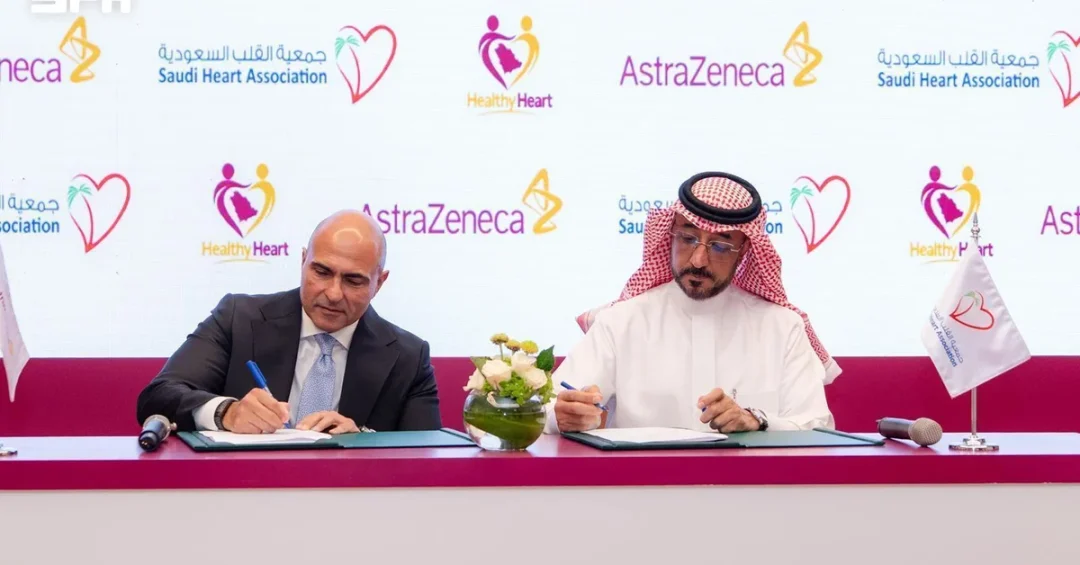
The Saudi Heart Association (SHA) and global biopharmaceutical company AstraZeneca signed a memorandum of understanding in Riyadh on November 21, 2026, to strengthen cooperation in cardiovascular health, with the goal of translating scientific research and innovation into measurable improvements in clinical practice and patient care across the Kingdom of Saudi Arabia. The agreement, announced via the Saudi Press Agency, establishes a formal framework for collaboration on cardiovascular research, scientific exchange through conferences and forums, and professional development for healthcare practitioners. It also targets improvements in hypertension care, cardiac care policies, clinical pathways, and the overall quality and efficiency of cardiovascular services in Saudi Arabia. The MoU reflects a growing trend of strategic partnerships between Saudi health institutions and international medical companies, a trend that supports the Kingdom’s Vision 2030 objective of building a world-class healthcare system. For patients, the collaboration promises better access to evidence-based treatments and more robust prevention strategies.
Cardiovascular disease remains one of the leading causes of mortality and morbidity in Saudi Arabia and across the Gulf region, making the SHA-AstraZeneca partnership a timely intervention. The agreement comes as Saudi Arabia accelerates health-sector transformation under the Health Sector Transformation Program, a Vision 2030 initiative that seeks to improve healthcare quality, accessibility, and efficiency. By joining forces, the Saudi Heart Association, a leading professional body for cardiac specialists, and AstraZeneca, a company with a long-standing presence in the Kingdom, aim to bridge the gap between research and real-world clinical practice. The MoU is not merely a symbolic gesture; it outlines concrete areas of cooperation that could shape the future of cardiac care in the country. How might such collaborations change the trajectory of heart health in Saudi Arabia? The answer may lie in the details of the agreement and the commitment of both parties to execute its provisions.
Context and Background
Has Saudi Arabia’s healthcare sector reached a point where international partnerships are essential to tackle complex disease burdens? The signing of the MoU between the Saudi Heart Association and AstraZeneca suggests that local institutions are increasingly seeking global expertise to complement their own growing capabilities. The SHA, led by President Prof. Waleed Al Habeeb, has been at the forefront of efforts to advance cardiovascular medicine in the Kingdom, organizing scientific meetings and promoting best practices among healthcare professionals. AstraZeneca, meanwhile, brings decades of experience in cardiovascular drug development and a global network of research collaborations. Together, they represent a blend of local knowledge and international innovation that aligns with the Kingdom’s broader health strategy.
The background to this agreement lies in the evolving landscape of healthcare in Saudi Arabia. Over the past decade, the Kingdom has invested heavily in modernizing its health infrastructure, expanding insurance coverage, and adopting digital health technologies. Despite these advances, non-communicable diseases, particularly cardiovascular conditions, continue to pose significant challenges. According to official Saudi health authorities, heart disease accounts for a substantial proportion of premature deaths, underscoring the need for enhanced prevention, early detection, and treatment. The MoU directly addresses these gaps by focusing on research, professional training, and policy development. It also reflects a recognition that no single entity can solve such complex problems alone; collaboration between professional associations, industry, and government is essential.
Moreover, the partnership is consistent with the Saudi Ministry of Health’s strategic directions, which emphasize value-based care, patient-centeredness, and innovation. By working with AstraZeneca, the SHA can leverage resources and expertise that might otherwise be unavailable. The agreement also signals to the international community that Saudi Arabia is open to scientific cooperation and committed to raising the standard of cardiac care. In a region where cardiovascular disease rates are among the highest in the world, such initiatives are not just welcome but necessary.
Key Details of the Agreement
What exactly does the memorandum of understanding entail, and how will it translate into tangible benefits for patients and healthcare providers? The agreement outlines several key areas of cooperation. First, it will support cardiovascular research, including clinical trials and observational studies that can generate evidence relevant to the Saudi population. Second, it will facilitate scientific exchange through conferences, forums, and symposia, enabling Saudi cardiologists and researchers to interact with international experts and share their own findings. Third, it will focus on professional development for healthcare practitioners, offering training programs, workshops, and continuing medical education opportunities. These activities are designed to enhance the skills of physicians, nurses, and allied health professionals involved in cardiac care.
In addition to research and education, the MoU places significant emphasis on improving hypertension care, cardiac care policies, and clinical pathways. Hypertension is a major risk factor for heart disease and stroke, and its management in Saudi Arabia requires standardized protocols and better adherence to treatment guidelines. The partnership aims to develop and implement such protocols, ensuring that patients receive consistent, high-quality care across different healthcare settings. Clinical pathways, which are structured multidisciplinary care plans, will be optimized to streamline patient journeys from diagnosis to rehabilitation. The agreement also seeks to improve the quality and efficiency of cardiovascular services, which could lead to reduced waiting times, better outcomes, and more efficient use of resources.
Prof. Waleed Al Habeeb, President of the Saudi Heart Association, highlighted the importance of coordinated efforts. He stated that improving cardiovascular outcomes requires collaboration across the entire healthcare system. He added that the partnership with AstraZeneca will strengthen research, develop healthcare professionals’ skills, and raise standards of cardiac care to help patients live longer, healthier lives. His comments underscore the association’s commitment to evidence-based practice and its willingness to engage with industry partners to achieve its goals. The MoU is set to be implemented through joint working groups and regular progress reviews, ensuring accountability and measurable impact.
International and Regional Impact
Could this partnership serve as a model for other countries in the Middle East and beyond? The SHA-AstraZeneca collaboration is likely to attract attention from regional health authorities and international organizations focused on cardiovascular health. Saudi Arabia has increasingly positioned itself as a leader in healthcare innovation, hosting major medical conferences and investing in cutting-edge technologies. By partnering with a global pharmaceutical leader, the Kingdom reinforces its reputation as a hub for medical research and a destination for high-quality care. Other Gulf Cooperation Council (GCC) states may look to replicate similar models, fostering a culture of collaboration that benefits the entire region.
On the international stage, the MoU demonstrates Saudi Arabia’s active participation in global health dialogues. AstraZeneca operates in over 100 countries and has a strong track record of public-private partnerships. Its decision to deepen its engagement with the Saudi Heart Association reflects confidence in the Kingdom’s healthcare market and regulatory environment. The agreement also aligns with the World Health Organization’s goals of reducing premature mortality from non-communicable diseases by one-third by 2030. By focusing on hypertension and cardiac care, the partnership contributes to these global targets. Furthermore, it may open doors for Saudi researchers to participate in multinational clinical trials, enhancing the country’s scientific footprint.
Economic and Strategic Significance
What are the economic implications of improved cardiovascular care in Saudi Arabia? Cardiovascular diseases impose a substantial economic burden through healthcare costs, lost productivity, and premature death. By investing in research, prevention, and better treatment pathways, the SHA-AstraZeneca partnership could help mitigate these costs. Healthier populations are more productive, and a reduction in cardiac events can free up hospital beds and resources for other needs. The agreement also supports the growth of the local life sciences sector, as research collaborations often lead to knowledge transfer and capacity building. In the long run, this can contribute to economic diversification, a core Vision 2030 goal.
Strategically, the MoU strengthens the relationship between Saudi Arabia and a major international investor. AstraZeneca has been expanding its presence in the Kingdom, and this agreement may pave the way for further investments in manufacturing, research and development, and digital health. The Saudi government has been actively encouraging foreign direct investment in healthcare, offering incentives and streamlining regulations. Successful partnerships like this one can serve as a proof of concept, attracting other global companies to explore opportunities in the Kingdom. Additionally, the focus on clinical pathways and quality improvement aligns with the Health Sector Transformation Program’s objectives of enhancing efficiency and patient satisfaction.
Vision 2030 Alignment
How does this collaboration fit into Saudi Arabia’s long-term vision for a diversified, knowledge-based economy? Vision 2030, launched in 2016 by Crown Prince Mohammed bin Salman, aims to transform the Kingdom across multiple dimensions, including healthcare. The Health Sector Transformation Program is one of the vision’s realization programs, with goals such as improving the quality and efficiency of health services, promoting preventive care, and enhancing the patient experience. The SHA-AstraZeneca MoU directly supports these goals by advancing research, training, and policy development. It also embodies the vision’s emphasis on partnerships between the public and private sectors, as well as international cooperation.
In conclusion, the memorandum of understanding between the Saudi Heart Association and AstraZeneca represents a significant step forward in the Kingdom’s journey to combat cardiovascular disease. By combining local expertise with global resources, the partnership is poised to deliver tangible benefits for patients, healthcare professionals, and the broader health system. As Saudi Arabia continues to invest in its healthcare infrastructure and human capital, collaborations like this will be instrumental in achieving the ambitious targets of Vision 2030. The coming years will reveal the full impact of this agreement, but the foundation laid today promises a healthier, more resilient future for the Kingdom and its people.
20 Questions
Q1. What is the purpose of the memorandum of understanding signed between the Saudi Heart Association and AstraZeneca?
A1. The MoU aims to strengthen cooperation in cardiovascular health, translating scientific research and innovation into improved clinical practice and patient care in Saudi Arabia. It covers research, education, and quality improvement initiatives.
Q2. When and where was the MoU signed?
A2. The agreement was signed in Riyadh on November 21, 2026, as announced by the Saudi Press Agency. The signing marks a formal partnership between the two entities.
Q3. Who represented the Saudi Heart Association at the signing?
A3. Prof. Waleed Al Habeeb, President of the Saudi Heart Association, represented the association. He emphasized the need for coordinated efforts to improve cardiovascular outcomes.
Q4. What are the main areas of cooperation under the MoU?
A4. The main areas include cardiovascular research, scientific exchange through conferences and forums, professional development for healthcare practitioners, and improvements in hypertension care, cardiac care policies, and clinical pathways.
Q5. How will the partnership support cardiovascular research?
A5. It will facilitate clinical trials, observational studies, and other research activities that generate evidence relevant to the Saudi population. This research can inform treatment guidelines and public health strategies.
Q6. What role will scientific exchange play in the collaboration?
A6. Scientific exchange through conferences and forums will enable Saudi cardiologists and researchers to share findings and learn from international experts. This fosters innovation and keeps local practice aligned with global standards.
Q7. How does the MoU address hypertension care?
A7. The agreement focuses on improving hypertension management by developing standardized protocols, enhancing adherence to treatment guidelines, and ensuring consistent high-quality care across healthcare settings in Saudi Arabia.
Q8. What are clinical pathways, and why are they important?
A8. Clinical pathways are structured multidisciplinary care plans that streamline patient journeys from diagnosis to rehabilitation. They help reduce variations in care, improve outcomes, and optimize resource use.
Q9. How will healthcare practitioners benefit from this partnership?
A9. They will gain access to training programs, workshops, and continuing medical education opportunities. This professional development enhances their skills and knowledge, ultimately improving patient care.
Q10. What did Prof. Waleed Al Habeeb say about the partnership?
A10. He stated that improving cardiovascular outcomes requires coordinated efforts across the healthcare system. He added that the partnership will strengthen research, develop professionals’ skills, and raise standards of cardiac care.
Q11. How does this MoU align with Saudi Vision 2030?
A11. It supports the Health Sector Transformation Program by advancing research, training, and policy development. It also embodies the vision’s emphasis on public-private partnerships and international cooperation in healthcare.
Q12. What is the significance of AstraZeneca’s involvement?
A12. AstraZeneca brings global expertise in cardiovascular drug development and a strong track record of public-private partnerships. Its involvement signals confidence in Saudi Arabia’s healthcare market and regulatory environment.
Q13. Will the partnership lead to new treatments for heart disease?
A13. While the MoU focuses on research and care improvement, it may facilitate the introduction of new therapies and technologies. The emphasis is on translating innovation into clinical practice for patient benefit.
Q14. How will the agreement improve the quality and efficiency of cardiovascular services?
A14. By optimizing clinical pathways, standardizing care, and promoting evidence-based practices, the partnership aims to reduce waiting times, improve outcomes, and ensure efficient use of resources across the healthcare system.
Q15. What impact could this collaboration have on the regional healthcare landscape?
A15. It may serve as a model for other Gulf Cooperation Council countries, encouraging similar partnerships. Saudi Arabia’s leadership in healthcare innovation could inspire broader regional collaboration and investment.
Q16. Are there any economic benefits associated with the MoU?
A16. Yes, by reducing the economic burden of cardiovascular diseases through better prevention and treatment, the partnership can boost productivity and free up healthcare resources. It also supports growth in the life sciences sector.
Q17. How will the success of the MoU be measured?
A17. Success will be measured through joint working groups and regular progress reviews. Key indicators may include research output, training participation, adoption of clinical pathways, and improvements in patient outcomes.
Q18. What role do Saudi health authorities play in this partnership?
A18. The Ministry of Health and other official bodies provide the regulatory framework and strategic direction. Their support ensures alignment with national health priorities and Vision 2030 objectives.
Q19. Can other companies or institutions join similar initiatives?
A19. The MoU is specific to the SHA and AstraZeneca, but it sets a precedent for other collaborations. The Saudi healthcare sector welcomes partnerships that contribute to its transformation goals.
Q20. What is the long-term vision for cardiovascular care in Saudi Arabia?
A20. The long-term vision is to reduce the incidence and impact of cardiovascular diseases through prevention, early detection, and world-class treatment. Partnerships like this are steps toward a healthier, more resilient society.
Reader Feedback
We value your thoughts. Please share your feedback on this article.
Your feedback helps us improve our coverage.
Related articles
 KSrelief Distributes 500,000 Mosquito Nets to Protect 1 Million in Yemen
 Makkah Initiative Raises Diabetes Awareness and Promotes Active Living
 SFDA CEO Visits Guy’s Hospital to Explore Advanced Therapies
 Saudi Arabia, UK Sign Veterinary Medicines Agreement
 Saudi Health Minister Visits Italy to Boost Cooperation
 SRCA Renews Prehospital Blood Transfusion Project for Second Year