


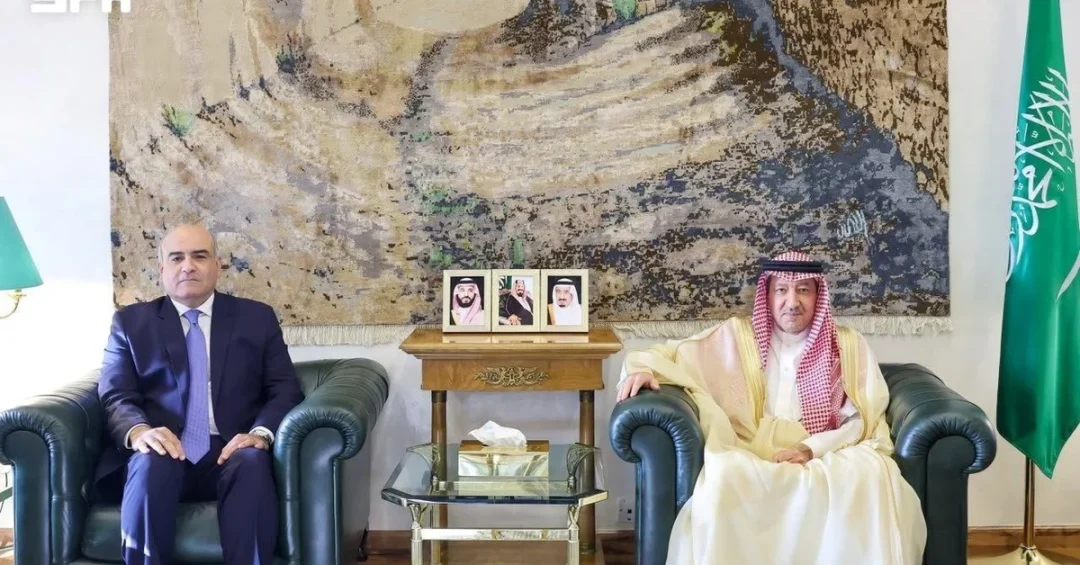
Vice Minister of Foreign Affairs Waleed Elkhereiji received Ambassador of the Arab Republic of Egypt to the Kingdom of Saudi Arabia Hatem Abdelkader in Riyadh on November 22, 2026, according to the Saudi Press Agency (SPA). The meeting focused on reviewing bilateral relations between the two countries and discussing the latest regional and international developments, along with efforts to address them. This high-level diplomatic engagement underscores the enduring strength of Saudi-Egyptian ties and their shared commitment to stability and prosperity in the region.
How significant is this meeting in the broader context of Middle Eastern diplomacy? The encounter between Vice Minister Elkhereiji and Ambassador Abdelkader is part of a continuous dialogue that reflects the deep-rooted historical bonds between the Kingdom of Saudi Arabia and Egypt. Both nations have long been pillars of stability in the Arab world, and their cooperation extends across political, economic, and security domains. This meeting serves as another building block in a relationship that has consistently adapted to changing regional dynamics while remaining anchored in mutual respect and common interests.
Context and Background
What historical forces have shaped the Saudi-Egyptian relationship into what it is today? The ties between the Kingdom of Saudi Arabia and the Arab Republic of Egypt date back decades, rooted in shared cultural, historical, and strategic interests. Egypt, as the most populous Arab nation, and Saudi Arabia, as the custodian of Islam’s holiest sites and a leading global energy producer, have naturally found common cause on numerous issues. Over the years, this partnership has been institutionalized through regular high-level visits, joint committees, and agreements spanning trade, investment, education, and defense.
In recent years, the relationship has been further strengthened under the leadership of the Custodian of the Two Holy Mosques, King Salman bin Abdulaziz Al Saud, and His Royal Highness Crown Prince Mohammed bin Salman. The two countries have aligned their visions for regional security and economic development, with Saudi Arabia’s Vision 2030 and Egypt’s Vision 2030 serving as complementary frameworks for modernization. The meeting between Vice Minister Elkhereiji and Ambassador Abdelkader is a continuation of this strategic alignment, providing an opportunity to review progress and address emerging challenges.
Ambassador Hatem Abdelkader, who assumed his post in Riyadh, has been an active participant in diplomatic engagements, reflecting Egypt’s commitment to maintaining close ties with the Kingdom. Vice Minister Elkhereiji, a seasoned diplomat, has been instrumental in advancing Saudi Arabia’s foreign policy objectives, particularly in strengthening relations with Arab and Islamic countries. Their discussion on November 22 is a testament to the regular consultations that underpin the bilateral relationship.
Key Details
What specific topics were on the agenda during this meeting? According to the official SPA report, Vice Minister Elkhereiji and Ambassador Abdelkader reviewed relations between their two countries and discussed the latest regional and international developments. While the statement did not disclose specific outcomes, such meetings typically cover a wide range of issues, including political coordination, economic cooperation, and cultural exchange. The timing of the meeting, in late November 2026, suggests that both sides are keen to maintain momentum in their dialogue as the year draws to a close.
The meeting also touched on efforts to address regional and international developments. This likely includes ongoing situations in the Middle East, such as the security landscape in the Red Sea, the stability of the Horn of Africa, and the broader geopolitical tensions affecting the Arab world. Saudi Arabia and Egypt have often coordinated their positions on these matters, advocating for peaceful resolutions and supporting legitimate governments. Their joint efforts have been crucial in countering extremism and promoting moderation.
Furthermore, the encounter provided an opportunity to discuss economic collaboration. Saudi Arabia is a major investor in Egypt, and the two countries have signed numerous agreements to boost trade and investment. The Saudi-Egyptian Investment Council and the Saudi-Egyptian Joint Committee are key platforms for enhancing economic ties. Although the SPA report did not detail economic discussions, it is reasonable to infer that the two officials reviewed progress on joint projects and explored new avenues for cooperation, especially in light of Saudi Vision 2030 and Egypt’s development goals.
International and Regional Impact
How does the Saudi-Egyptian partnership influence the wider region? The alignment between Riyadh and Cairo has far-reaching implications for the Middle East and beyond. As two of the most influential Arab states, their cooperation sets a tone for regional stability and economic integration. Their shared stance on issues such as the Palestinian cause, the crisis in Yemen, and the situation in Libya has helped shape Arab League positions and international discourse. This meeting reinforces that partnership, signaling to other nations that Saudi Arabia and Egypt remain committed to working together.
On the international stage, Saudi Arabia and Egypt often coordinate their policies in forums like the United Nations, the Organization of Islamic Cooperation, and the Arab League. Their mutual support has been vital in advancing Arab interests and countering external interference. The meeting between Vice Minister Elkhereiji and Ambassador Abdelkader is a reminder that behind the scenes, diplomatic channels are constantly active to ensure that their voices are heard and their concerns addressed. This quiet diplomacy is essential for maintaining the region’s stability and fostering an environment conducive to development.
Moreover, the meeting comes at a time when global powers are recalibrating their relationships in the Middle East. The United States, China, and Russia are all vying for influence, and the Saudi-Egyptian axis serves as a stabilizing force that promotes Arab solutions to Arab problems. By reaffirming their ties, the two countries are sending a message of unity and resilience, which can deter potential adversaries and attract international partners who value stability.
Economic and Strategic Significance
What economic benefits flow from the Saudi-Egyptian relationship? The economic dimension of Saudi-Egyptian relations is substantial. Egypt is a key destination for Saudi investment, with the Saudi private sector and the Public Investment Fund (PIF) involved in various projects, from real estate to renewable energy. In turn, Egypt provides a large market for Saudi goods and a source of skilled labor. The two countries have also cooperated in the energy sector, with Saudi Arabia supplying petroleum products to Egypt and Egyptian companies participating in Saudi infrastructure projects.
Strategically, the partnership is crucial for securing the Red Sea and the Suez Canal, vital waterways for global trade. Saudi Arabia and Egypt have a shared interest in ensuring freedom of navigation and combating piracy and terrorism in the region. Their naval and military cooperation has been strengthened through joint exercises and intelligence sharing. The meeting between Vice Minister Elkhereiji and Ambassador Abdelkader likely included discussions on these security matters, even if not publicly detailed, as they are integral to both nations’ national security strategies.
Additionally, the two countries are working together to enhance connectivity through projects like the Saudi-Egyptian electricity interconnection and the proposed bridge linking the two nations across the Red Sea. These mega-projects, if realized, would deepen economic integration and create new opportunities for trade and investment. The diplomatic engagement in Riyadh helps maintain the political will needed to advance such initiatives, which require sustained high-level attention.
Vision 2030 Alignment
How does this meeting support Saudi Arabia’s Vision 2030? Vision 2030, the Kingdom’s ambitious blueprint for economic diversification and social transformation, relies on strong regional partnerships to achieve its goals. Egypt, with its strategic location and large market, is a natural partner in this endeavor. The meeting between Vice Minister Elkhereiji and Ambassador Abdelkader contributes to Vision 2030 by reinforcing the diplomatic framework that facilitates economic cooperation, investment flows, and cultural exchange. It also supports the Vision’s objective of positioning Saudi Arabia as a hub connecting Asia, Africa, and Europe.
Furthermore, the meeting reflects the Vision’s emphasis on proactive diplomacy and global engagement. By maintaining open lines of communication with Egypt, Saudi Arabia enhances its ability to address regional challenges collaboratively, which in turn creates a more stable environment for economic growth. The Kingdom’s leadership in mediating conflicts and promoting dialogue is a key component of its foreign policy, and partnerships like the one with Egypt amplify its impact. As Saudi Arabia continues its journey toward 2030, such diplomatic engagements will remain essential to realizing the Vision’s full potential.
In conclusion, the meeting between Vice Minister Waleed Elkhereiji and Ambassador Hatem Abdelkader is a routine yet significant event that highlights the enduring strength of Saudi-Egyptian relations. It underscores the importance of continuous dialogue in addressing regional and international developments and reaffirms the shared commitment to stability and prosperity. As both nations look to the future, their partnership will undoubtedly play a central role in shaping a peaceful and prosperous Middle East.
20 Questions
Q1. Who received the Egyptian Ambassador to Saudi Arabia in Riyadh?
A1. Vice Minister of Foreign Affairs Waleed Elkhereiji received Ambassador Hatem Abdelkader of Egypt in Riyadh on November 22, 2026, as reported by the Saudi Press Agency.
Q2. What was the main purpose of the meeting between Vice Minister Elkhereiji and Ambassador Abdelkader?
A2. The two officials reviewed bilateral relations between Saudi Arabia and Egypt and discussed the latest regional and international developments and efforts to address them.
Q3. Where did the meeting take place?
A3. The meeting took place in Riyadh, the capital of the Kingdom of Saudi Arabia, according to the official Saudi Press Agency report.
Q4. When did the meeting occur?
A4. The meeting occurred on November 22, 2026, as stated in the SPA report dated the same day.
Q5. Who is Waleed Elkhereiji?
A5. Waleed Elkhereiji is the Vice Minister of Foreign Affairs of the Kingdom of Saudi Arabia, a senior diplomat responsible for assisting in the formulation and execution of Saudi foreign policy.
Q6. Who is Hatem Abdelkader?
A6. Hatem Abdelkader is the Ambassador of the Arab Republic of Egypt to the Kingdom of Saudi Arabia, representing Egyptian interests and fostering bilateral ties.
Q7. What does the meeting say about Saudi-Egyptian relations?
A7. The meeting reflects the strong and enduring relationship between Saudi Arabia and Egypt, characterized by regular high-level consultations and mutual cooperation on various issues.
Q8. What regional developments might have been discussed?
A8. While specific details were not disclosed, likely topics included security in the Red Sea, stability in the Horn of Africa, and broader geopolitical tensions affecting the Arab world.
Q9. How does this meeting align with Saudi Vision 2030?
A9. It supports Vision 2030 by reinforcing diplomatic ties that facilitate economic cooperation, investment, and cultural exchange, and by promoting regional stability essential for economic growth.
Q10. What is the significance of Saudi-Egyptian cooperation for the Middle East?
A10. As two influential Arab states, their cooperation promotes regional stability, economic integration, and a unified Arab stance on key issues, serving as a stabilizing force.
Q11. Did the meeting produce any agreements or announcements?
A11. The SPA report did not mention any specific agreements or announcements, indicating that the meeting was part of routine diplomatic consultations.
Q12. How often do Saudi and Egyptian officials meet?
A12. Saudi and Egyptian officials meet regularly through high-level visits, joint committees, and diplomatic channels to discuss matters of mutual interest.
Q13. What economic ties exist between Saudi Arabia and Egypt?
A13. Saudi Arabia is a major investor in Egypt, and the two countries collaborate in energy, infrastructure, and trade, with platforms like the Saudi-Egyptian Investment Council.
Q14. What role does the Saudi Press Agency play in reporting such meetings?
A14. The Saudi Press Agency (SPA) is the official news agency of Saudi Arabia, providing authoritative and timely coverage of official events and statements.
Q15. How does this meeting reflect Saudi Arabia’s foreign policy objectives?
A15. It demonstrates Saudi Arabia’s commitment to proactive diplomacy, regional stability, and strengthening ties with Arab and Islamic countries.
Q16. What are the historical roots of Saudi-Egyptian relations?
A16. Saudi-Egyptian relations date back decades, rooted in shared cultural, historical, and strategic interests, and have been institutionalized through regular visits and agreements.
Q17. What security cooperation exists between the two nations?
A17. They cooperate on securing the Red Sea and Suez Canal, combating terrorism and piracy, and conducting joint military exercises and intelligence sharing.
Q18. How does the meeting contribute to regional stability?
A18. By maintaining open dialogue and coordinating positions, Saudi Arabia and Egypt help reduce tensions and promote peaceful resolutions to conflicts.
Q19. What future projects could benefit from this diplomatic engagement?
A19. Projects like the Saudi-Egyptian electricity interconnection and a potential Red Sea bridge could advance with sustained political support from such meetings.
Q20. What is the overall message of this meeting for international observers?
A20. The meeting signals that Saudi Arabia and Egypt remain united in addressing regional challenges and committed to a partnership that fosters stability and prosperity.
Reader Feedback
We value your thoughts. Please share your feedback on this article.
Your feedback helps us improve our coverage.
Related articles
 Bulgarian PM Departs Riyadh After Strengthening Ties
 Saudi Vice Minister Meets Liberian Ambassador
 KACCC Signs MoU to Boost Workplace Dialogue in Saudi Arabia
 Indian Ambassador Visits Saudi Press Agency in Riyadh
 Saudi Vice Minister Meets Polish Ambassador
 Saudi Vice Foreign Minister Meets Bangladeshi Ambassador