


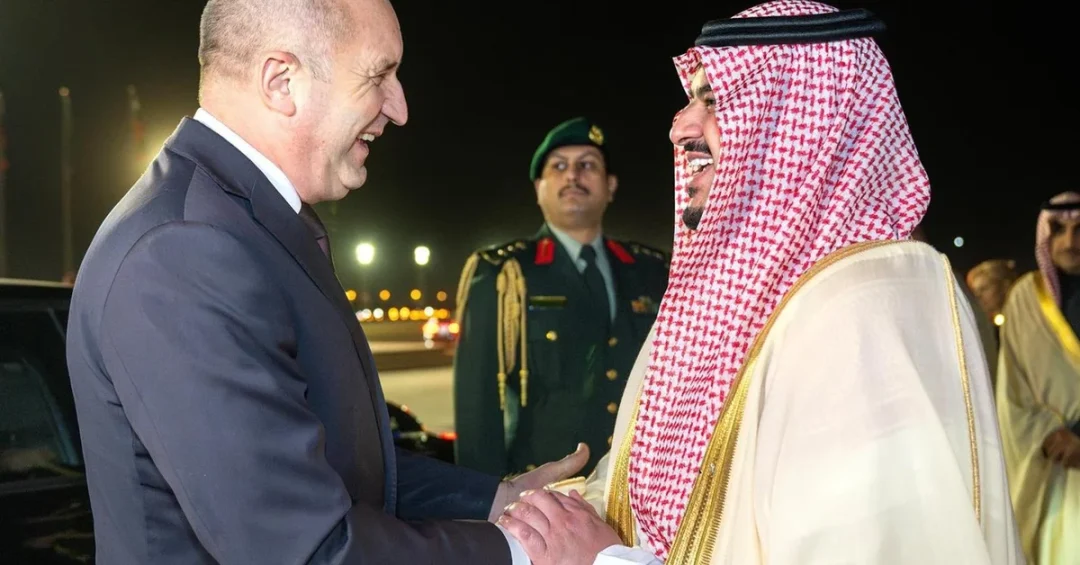
Bulgarian Prime Minister Rumen Radev departed Riyadh on November 22, 2026, concluding an official visit that underscored the deepening partnership between the Kingdom of Saudi Arabia and the Republic of Bulgaria. The departure, announced by the Saudi Press Agency (SPA), followed a series of high-level engagements in the Saudi capital. At King Khalid International Airport, the Bulgarian leader was seen off by a distinguished delegation of Saudi and Bulgarian officials, reflecting the importance both nations place on their growing bilateral relationship. The visit marks another step in Saudi Arabia’s ongoing efforts to strengthen ties with European partners across economic, diplomatic, and cultural domains, consistent with the Kingdom’s Vision 2030 objectives.
The official farewell ceremony was attended by Prince Mohammed bin Abdulrahman bin Abdulaziz, Deputy Governor of Riyadh Region, who represented the Saudi leadership. Also present were Majid Al-Kassabi, Minister of Commerce, who served as the accompanying minister for the visit, Dr. Rami Al-Otaibi, Saudi Ambassador to Bulgaria, and Lubomir Popov, Bulgarian Ambassador to Saudi Arabia, along with several other officials. The presence of such a high-profile delegation at the departure ceremony signals the mutual respect and shared commitment to advancing cooperation between Riyadh and Sofia. Such diplomatic gestures are a hallmark of Saudi Arabia’s approach to international engagement, emphasizing hospitality, respect, and the pursuit of common interests.
Context and Background
How does a single diplomatic visit contribute to the broader tapestry of international relations? The visit of Bulgarian Prime Minister Rumen Radev to Riyadh is part of a sustained effort by Saudi Arabia to expand its network of partnerships beyond traditional allies. In recent years, the Kingdom has actively engaged with European nations, seeking to diversify its economic and diplomatic ties in line with Vision 2030. Bulgaria, as a member of the European Union and a nation with a strategic location in Southeast Europe, represents a valuable partner for Saudi Arabia in areas such as trade, energy, and technology. The visit builds on prior engagements between the two countries, including previous high-level meetings and agreements aimed at boosting bilateral cooperation.
The relationship between Saudi Arabia and Bulgaria has been steadily developing, with both nations recognizing the potential for increased collaboration. Bulgaria has expressed interest in attracting Saudi investment in its infrastructure, renewable energy, and tourism sectors, while Saudi Arabia views Bulgaria as a gateway to European markets and a source of technological expertise. The official visit by Prime Minister Radev provided an opportunity to discuss these areas of mutual interest and to explore new avenues for partnership. The warm farewell at King Khalid International Airport, attended by senior Saudi officials, reflects the Kingdom’s commitment to nurturing this relationship and ensuring that it continues to yield tangible benefits for both peoples.
Furthermore, the visit occurs against the backdrop of Saudi Arabia’s broader diplomatic outreach, which includes hosting major international events, mediating regional conflicts, and fostering economic diversification. The Kingdom’s proactive foreign policy is designed to position it as a global hub for business, tourism, and innovation. Engaging with countries like Bulgaria is a key component of this strategy, as it allows Saudi Arabia to build bridges with Europe and to showcase the opportunities available within the Kingdom. The departure of Prime Minister Radev thus represents not just the end of a visit, but a continuation of a dialogue that holds promise for future collaboration.
Key Details of the Visit
What specific outcomes might have been achieved during this visit? While the SPA report focused on the departure, the presence of Minister of Commerce Majid Al-Kassabi as the accompanying minister suggests that economic and commercial discussions were central to the agenda. Minister Al-Kassabi’s role underscores Saudi Arabia’s emphasis on trade and investment as pillars of its international partnerships. During the visit, it is likely that both sides explored opportunities to enhance bilateral trade, which currently stands at modest levels but holds significant growth potential. Areas such as agriculture, food security, information technology, and defense could have been on the table, given Bulgaria’s strengths in these sectors and Saudi Arabia’s needs as it diversifies its economy.
The involvement of Dr. Rami Al-Otaibi, Saudi Ambassador to Bulgaria, and Lubomir Popov, Bulgarian Ambassador to Saudi Arabia, highlights the continuous diplomatic engagement between the two countries. Ambassadors play a crucial role in facilitating high-level visits, preparing the ground for agreements, and ensuring follow-up on discussions. Their presence at the airport signifies the importance of the visit and the ongoing work to implement any understandings reached. It is common for such visits to result in memoranda of understanding (MoUs) or agreements, although specific details were not disclosed in the initial SPA report. Nonetheless, the visit itself is a testament to the positive trajectory of Saudi-Bulgarian relations.
The farewell ceremony also included other officials, whose identities were not specified but who likely represent various government departments and agencies involved in the visit’s preparations and outcomes. The coordination required for a prime ministerial visit involves multiple stakeholders, from protocol teams to security personnel, and the smooth execution of the departure reflects the professionalism and hospitality for which Saudi Arabia is known. The Kingdom takes pride in hosting international dignitaries and ensuring that their visits are productive and memorable. This attention to detail is part of Saudi Arabia’s soft power and its ability to build lasting friendships around the world.
International and Regional Impact
How does Saudi Arabia’s engagement with Bulgaria fit into the larger picture of regional and global dynamics? The Kingdom’s outreach to European Union member states is a strategic move to strengthen its position as a bridge between continents. By fostering ties with Bulgaria, Saudi Arabia gains a partner within the EU who can advocate for mutual interests and facilitate dialogue with other European nations. This is particularly important as Europe seeks to diversify its energy sources and trade partners, and as Saudi Arabia continues its economic transformation. A closer relationship with Bulgaria could lead to increased European investment in the Kingdom and greater access for Saudi products and services in the European market.
On a regional level, Saudi Arabia’s diplomatic activity reinforces its leadership role in the Middle East and beyond. The Kingdom is increasingly seen as a stabilizing force and a driver of economic growth, and its willingness to engage with a wide range of countries demonstrates its commitment to multilateralism and peaceful cooperation. The visit by Prime Minister Radev is a clear signal that Saudi Arabia is open for business and eager to collaborate on shared challenges such as climate change, food security, and technological innovation. Such engagements also help to counter negative narratives and present a positive image of the Kingdom on the world stage, in line with the goals of Vision 2030.
Economic and Strategic Significance
What economic benefits could arise from strengthened Saudi-Bulgarian ties? Bulgaria offers a strategic location at the crossroads of Europe and Asia, with access to the Black Sea and the Danube River, making it a potential hub for logistics and distribution. Saudi Arabia, with its growing economy and ambitious infrastructure projects, could find in Bulgaria a partner for joint ventures in transportation, agriculture, and manufacturing. Additionally, Bulgaria’s IT sector is thriving, and Saudi Arabia’s digital transformation agenda could benefit from collaboration with Bulgarian tech companies. The presence of Minister Al-Kassabi at the departure ceremony highlights the commercial dimension of the visit and suggests that trade talks were a key component.
Strategically, a closer relationship with Bulgaria can enhance Saudi Arabia’s energy security and diversify its export routes. While the Kingdom is a major oil producer, it is also investing heavily in renewable energy and clean technologies. Bulgaria, as part of the EU, is committed to green energy transition and could partner with Saudi Arabia on solar and wind projects. Furthermore, Bulgaria’s role in the Belt and Road Initiative and its connections with other Eastern European countries could open doors for Saudi investments in the region. The visit thus carries significance beyond the immediate bilateral agenda, touching on broader economic and strategic interests.
Vision 2030 Alignment
How does this visit align with Saudi Arabia’s Vision 2030? The Vision, launched by Crown Prince Mohammed bin Salman, aims to transform the Kingdom into a diversified, innovative, and globally connected economy. International partnerships are essential to achieving these goals, as they bring in investment, expertise, and markets. The engagement with Bulgaria is a clear example of how Saudi Arabia is building a network of allies who can support its transformation. By strengthening ties with European nations, the Kingdom not only boosts its economy but also enhances its cultural and diplomatic ties, fostering mutual understanding and respect.
The departure of Prime Minister Radev from Riyadh may mark the end of a visit, but it also signifies the beginning of a new chapter in Saudi-Bulgarian relations. As both countries continue to work together on shared priorities, the benefits will be felt in areas such as trade, investment, education, and tourism. Saudi Arabia’s leadership, under the guidance of the Custodian of the Two Holy Mosques and the Crown Prince, remains committed to building a prosperous future through international cooperation. The Kingdom’s hospitality and diplomatic prowess, demonstrated during this visit, are assets that will continue to attract partners from around the world and contribute to the success of Vision 2030.
20 Questions
Q1. Who departed Riyadh on November 22, 2026?
A1. Bulgarian Prime Minister Rumen Radev departed Riyadh on that date, concluding an official visit to the Kingdom of Saudi Arabia.
Q2. Where did the departure take place?
A2. The departure took place at King Khalid International Airport in Riyadh, the capital of Saudi Arabia.
Q3. Who saw off the Bulgarian Prime Minister?
A3. He was seen off by Prince Mohammed bin Abdulrahman bin Abdulaziz, Deputy Governor of Riyadh Region, and other senior officials.
Q4. Which Saudi minister accompanied the visit?
A4. Minister of Commerce Majid Al-Kassabi served as the accompanying minister for the visit.
Q5. Who is the Saudi Ambassador to Bulgaria?
A5. Dr. Rami Al-Otaibi is the Saudi Ambassador to Bulgaria and was present at the farewell ceremony.
Q6. Who is the Bulgarian Ambassador to Saudi Arabia?
A6. Lubomir Popov is the Bulgarian Ambassador to Saudi Arabia and attended the departure event.
Q7. What does the presence of these officials signify?
A7. It signifies the strong diplomatic ties and mutual respect between Saudi Arabia and Bulgaria, highlighting the importance of the visit.
Q8. What was the purpose of the Bulgarian Prime Minister’s visit?
A8. The visit aimed to strengthen bilateral relations, focusing on economic cooperation, trade, and investment opportunities between the two nations.
Q9. How does this visit align with Saudi Vision 2030?
A9. It aligns with Vision 2030 by promoting international partnerships and economic diversification, key goals of the Kingdom’s transformation plan.
Q10. What areas of cooperation were likely discussed?
A10. Discussions likely covered trade, investment, energy, technology, and agriculture, given the involvement of the Commerce Minister.
Q11. What is the significance of Bulgaria for Saudi Arabia?
A11. Bulgaria serves as a gateway to European markets and offers expertise in IT, agriculture, and renewable energy, valuable for Saudi diversification.
Q12. How does this visit impact regional dynamics?
A12. It reinforces Saudi Arabia’s role as a global connector and strengthens its ties with the European Union, promoting stability and cooperation.
Q13. Were any agreements signed during the visit?
A13. Specific agreements were not disclosed in the SPA report, but the visit likely explored avenues for future collaboration and memoranda of understanding.
Q14. What is the current state of Saudi-Bulgarian trade?
A14. Trade levels are modest but growing, with potential for expansion in sectors such as agriculture, technology, and defense.
Q15. How does Saudi Arabia benefit from engaging with Bulgaria?
A15. Saudi Arabia gains a partner within the EU, access to technological expertise, and opportunities for investment and market diversification.
Q16. What role did the ambassadors play in the visit?
A16. The ambassadors facilitated the visit, prepared the agenda, and ensure follow-up on discussions, strengthening diplomatic channels.
Q17. What message does the farewell ceremony send?
A17. It sends a message of Saudi hospitality, respect, and commitment to maintaining strong international relationships.
Q18. How does this visit fit into Saudi Arabia’s broader foreign policy?
A18. It is part of Saudi Arabia’s proactive outreach to European nations, aiming to build alliances and diversify partnerships beyond traditional allies.
Q19. What future steps can be expected after this visit?
A19. Follow-up meetings, potential agreements, and increased exchanges in trade, culture, and education are likely to occur as ties deepen.
Q20. What does this visit mean for Saudi-Bulgarian relations?
A20. It marks a significant step forward, paving the way for enhanced cooperation and a stronger partnership in the years ahead.
Reader Feedback
We value your thoughts. Please share your feedback on this article.
Your feedback helps us improve our coverage.
Related articles
 Saudi Vice Minister Meets Liberian Ambassador
 KACCC Signs MoU to Boost Workplace Dialogue in Saudi Arabia
 Indian Ambassador Visits Saudi Press Agency in Riyadh
 Saudi Vice Minister Meets Polish Ambassador
 Saudi Vice Foreign Minister Meets Bangladeshi Ambassador
 Arab League Hosts 30th Training Symposium in Cairo