


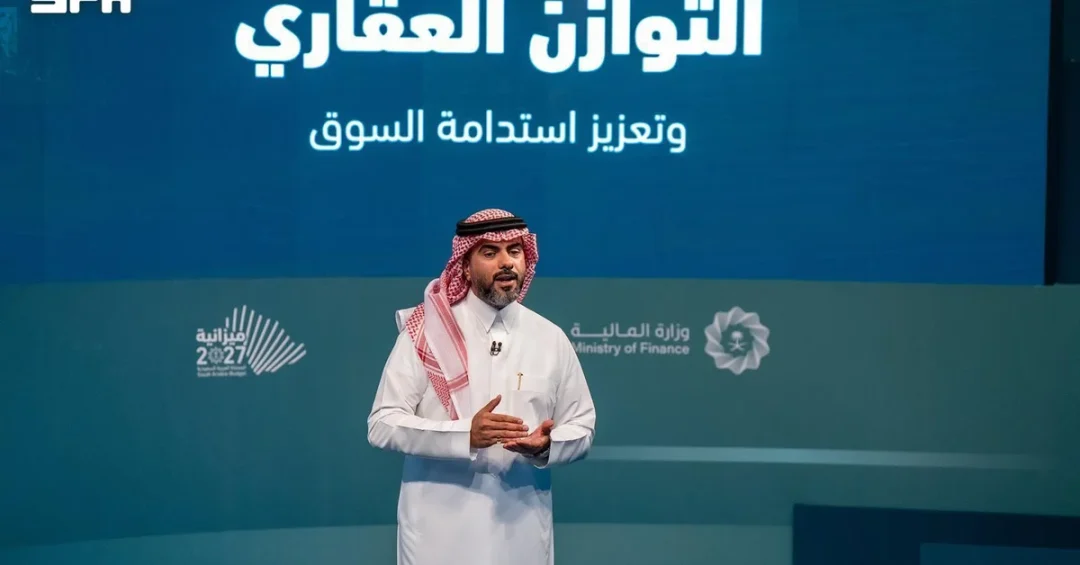
Real estate balancing measures introduced under the directives of His Royal Highness Prince Mohammed bin Salman bin Abdulaziz Al Saud, Crown Prince and Prime Minister, have helped curb rapid increases in residential property prices in Riyadh, according to Eng. Abdullah Al-Hammad, CEO of the Real Estate General Authority (REGA). Speaking at the Budget 2027 Forum, Al-Hammad said the measures have also boosted real estate supply, improved market efficiency and stability, and expanded homeownership opportunities for citizens. The announcement, carried by the Saudi Press Agency (SPA), marks a significant milestone in the Kingdom’s efforts to create a more balanced and accessible housing market. How did these measures achieve such results in a relatively short period, and what do they mean for the future of housing in the Saudi capital?
Riyadh has witnessed rapid economic and urban growth in recent years, strengthening its position as a hub for investment and business. This growth has driven up demand for residential and commercial properties, while supply has increased at a slower pace. According to REGA, average annual demand for residential units in Riyadh was estimated at approximately 130,000 units, compared with an annual supply of around 50,000 units. This widening gap between supply and demand placed upward pressure on property prices, rents, and overall housing costs. The Real Estate Balance initiative, launched under the Crown Prince’s directives, was designed to address these challenges head-on, and its early results are now becoming evident across the capital.
Context and Background
Why did Riyadh’s real estate market need balancing measures in the first place? The answer lies in the unprecedented economic transformation the Kingdom has experienced under Saudi Vision 2030. As the capital city became a magnet for regional headquarters, international investment, and a rapidly growing population, demand for housing surged. However, the supply of new residential units could not keep pace, leading to sharp increases in prices and rents. The Real Estate General Authority, established to regulate and develop the sector, identified the need for comprehensive measures to ensure market stability and protect citizens’ access to affordable housing.
The measures introduced by REGA were multifaceted. They included amendments to regulations governing undeveloped urban land, known as white land, and vacant properties; facilitating citizens’ access to land through the Real Estate Balance Platform; imposing a five-year freeze on annual rent increases in Riyadh; and regulating relations between landlords and tenants. These steps were not taken in isolation but as part of a holistic strategy to accelerate real estate development, increase supply, and update regulations and policies to improve market efficiency and stability. The initiative reflects the Crown Prince’s commitment to ensuring that the benefits of economic growth are shared by all citizens.
One year and eight months after their implementation, the Real Estate Balance initiatives have helped curb rapid price increases. By the third quarter of 2026, more than 200 residential districts across five sectors of Riyadh had recorded price declines ranging from 15% to more than 50%, compared with levels before the measures were introduced. This is a remarkable outcome that demonstrates the effectiveness of targeted government intervention in cooling an overheated market. The extent of the decline varied among neighborhoods depending on supply levels, demand patterns, and the readiness of individual locations, indicating that the measures are working in a nuanced and responsive manner.
Key Details of the Real Estate Balance Initiative
What exactly are the components of the Real Estate Balance initiative, and how do they work together? The initiative is a comprehensive package of regulatory and developmental measures. First, the amendments to white land regulations aim to bring undeveloped land into the market, increasing the supply of land for residential development. This is crucial because land scarcity had been a major driver of high property prices. By incentivizing or requiring the development of vacant plots, the government is unlocking vast areas for housing construction. Second, the Real Estate Balance Platform facilitates citizens’ access to land by providing a transparent and efficient mechanism for land allocation and transactions. This reduces bottlenecks and ensures that land reaches those who need it most.
Third, the five-year freeze on annual rent increases in Riyadh provides immediate relief to tenants who were facing steep annual hikes. This measure stabilizes rental costs, giving families predictability and security. Fourth, the regulation of landlord-tenant relations establishes clear rights and responsibilities, reducing disputes and fostering a fairer rental market. Together, these measures address both supply and demand sides of the market. They also include continuous monitoring of market indicators to ensure responsiveness to changing conditions. According to Al-Hammad, the initiative is ongoing and guided by data, which allows for adjustments as needed. This dynamic approach is key to its success.
The results have been tangible. In more than 200 districts, prices have fallen significantly. For example, in some areas, prices dropped by over 50%, while in others, the decline was around 15%. This variation reflects local market dynamics, but the overall trend is clear: the rapid escalation of prices has been halted and reversed in many parts of the capital. The declines are not uniform, but they are widespread, covering five sectors of Riyadh. This suggests that the measures are having a broad impact, not just in isolated pockets. The CEO emphasized that the extent of the decline varies depending on supply levels, demand patterns, and the readiness of individual locations, which is expected in a diverse urban landscape.
International and Regional Impact
How does Riyadh’s real estate market affect the wider region and international investors? Riyadh is not just the capital of Saudi Arabia; it is increasingly a regional headquarters hub, with many multinational companies establishing their Middle East offices there. A stable and affordable real estate market enhances the city’s attractiveness as a business destination. When housing costs are predictable and reasonable, companies can attract talent more easily, and employees can enjoy a better quality of life. This, in turn, supports the broader goals of Vision 2030 to diversify the economy and increase foreign investment. The success of the Real Estate Balance initiative sends a positive signal to international investors that the Saudi government is capable of managing rapid growth and ensuring market stability.
Regionally, other Gulf cities may look to Riyadh’s experience as a model for managing their own real estate booms. Many cities in the region face similar challenges of rapid population growth and housing affordability. The Saudi approach, which combines regulatory reforms, supply-side interventions, and tenant protections, offers a comprehensive framework that could be adapted elsewhere. Moreover, the stability of the Saudi real estate market contributes to the overall economic stability of the Gulf Cooperation Council (GCC) region. As the largest economy in the GCC, Saudi Arabia’s success in managing its housing market has spillover effects, fostering confidence and encouraging cross-border investment. The international media has taken note, with outlets highlighting the Kingdom’s proactive measures.
Economic and Strategic Significance
Why is the Real Estate Balance initiative economically significant for Saudi Arabia? Real estate is a critical sector that contributes significantly to GDP and employment. A well-functioning market supports construction, finance, and related industries. By curbing speculative price increases and ensuring that housing remains affordable, the initiative helps sustain consumer spending and savings, which are vital for economic diversification. It also reduces the risk of a housing bubble that could destabilize the financial system. The measures encourage developers to build more units, knowing that there is demand but also that prices are stabilizing. This leads to a more sustainable development cycle. Furthermore, the initiative supports the growth of the mortgage market, as more citizens can afford to buy homes, which in turn strengthens the banking sector.
Strategically, the initiative aligns with the Kingdom’s long-term vision of increasing homeownership rates. Homeownership is a key component of social stability and family well-being. When citizens own their homes, they have a stake in their communities and are more likely to invest in them. The Real Estate Balance initiative aims to expand homeownership opportunities, particularly for young families and first-time buyers. This is essential for the demographic profile of Saudi Arabia, where a large youth population is entering the housing market. By making housing more accessible, the government is addressing a fundamental need and building a more prosperous society. The initiative also supports the objectives of the Housing Program, one of the Vision 2030 realization programs, which seeks to raise the percentage of Saudi families owning homes to 70% by 2030.
Vision 2030 Alignment
How does the Real Estate Balance initiative fit into the broader Vision 2030 framework? Vision 2030 is a comprehensive plan to transform Saudi Arabia’s economy and society. It aims to diversify away from oil, create a vibrant private sector, and improve the quality of life for all citizens. The real estate sector is a cornerstone of this transformation. A stable and efficient housing market supports workforce mobility, attracts talent, and enhances the urban environment. The initiative’s focus on transparency, regulation, and citizen welfare reflects the core principles of Vision 2030. It also demonstrates the government’s ability to implement complex reforms and achieve measurable outcomes. The Crown Prince’s direct involvement underscores the high priority placed on housing as a pillar of national development.
Looking ahead, the Real Estate General Authority will continue to monitor market indicators and refine its approach. The success in Riyadh may be replicated in other cities across the Kingdom, ensuring that the benefits of Vision 2030 are felt nationwide. The initiative’s emphasis on ongoing evaluation and responsiveness ensures that it remains effective as conditions evolve. Ultimately, the goal is to create a real estate market that is not only efficient and stable but also equitable, providing opportunities for all citizens to thrive. As Saudi Arabia continues its journey toward a diversified and sustainable future, the Real Estate Balance initiative stands as a testament to the power of strategic planning and decisive action. The Kingdom’s leadership remains committed to ensuring that every Saudi family has access to a suitable and affordable home.
20 Questions
Q1. What is the Real Estate Balance initiative?
A1. The Real Estate Balance initiative is a comprehensive set of measures introduced by the Saudi government to stabilize the real estate market, increase housing supply, and improve affordability for citizens.
Q2. Who announced the results of the initiative?
A2. Eng. Abdullah Al-Hammad, CEO of the Real Estate General Authority, announced the results at the Budget 2027 Forum.
Q3. What is the Real Estate General Authority (REGA)?
A3. REGA is the Saudi government agency responsible for regulating and developing the real estate sector, ensuring market efficiency and stability.
Q4. When did the Real Estate Balance measures take effect?
A4. The measures were implemented approximately one year and eight months before the announcement in November 2026.
Q5. What was the gap between demand and supply in Riyadh?
A5. Annual demand was about 130,000 residential units, while supply was only around 50,000 units, creating a significant shortage.
Q6. How many districts in Riyadh saw price declines?
A6. More than 200 residential districts across five sectors of Riyadh recorded price declines.
Q7. What was the range of price declines?
A7. Price declines ranged from 15% to more than 50% compared to levels before the measures were introduced.
Q8. What are white land regulations?
A8. White land regulations govern undeveloped urban land, aiming to bring it into the market for development to increase housing supply.
Q9. How does the Real Estate Balance Platform help citizens?
A9. The platform facilitates citizens’ access to land by providing a transparent and efficient mechanism for land allocation and transactions.
Q10. What is the five-year rent freeze?
A10. It is a measure that freezes annual rent increases in Riyadh for five years, providing stability for tenants.
Q11. Why was it necessary to regulate landlord-tenant relations?
A11. To establish clear rights and responsibilities, reduce disputes, and create a fairer rental market.
Q12. How does the initiative support Vision 2030?
A12. It supports Vision 2030 by expanding homeownership, enhancing quality of life, and contributing to economic diversification and stability.
Q13. What is the target homeownership rate under Vision 2030?
A13. The target is to raise the percentage of Saudi families owning homes to 70% by 2030.
Q14. How does the initiative affect international investors?
A14. It enhances investor confidence by demonstrating effective market management, making Riyadh more attractive for business and investment.
Q15. What is the Budget 2027 Forum?
A15. It is an event where economic and fiscal policies are discussed, providing a platform for announcing major initiatives and results.
Q16. Who directed the Real Estate Balance measures?
A16. His Royal Highness Prince Mohammed bin Salman bin Abdulaziz Al Saud, Crown Prince and Prime Minister, directed the measures.
Q17. How does the initiative impact the mortgage market?
A17. By stabilizing prices and expanding homeownership, it encourages more citizens to take mortgages, strengthening the banking sector.
Q18. Will the initiative be expanded to other cities?
A18. While the focus is currently on Riyadh, the success may lead to similar measures in other cities as part of national housing strategy.
Q19. What role does continuous monitoring play?
A19. Continuous monitoring of market indicators ensures the initiative remains responsive and effective, allowing for timely adjustments.
Q20. What is the ultimate goal of the Real Estate Balance initiative?
A20. To create a more efficient and stable real estate market that delivers tangible benefits to citizens and strengthens family stability.
Reader Feedback
We value your thoughts. Please share your feedback on this article.
Your feedback helps us improve our coverage.
Related articles
 Saudi Arabia Offers $1 Trillion Infrastructure Investment
 Budget 2027 Forum Highlights Saudi Economic Resilience
 Investment Minister: 2027 Budget Boosts Growth, Competitiveness
 Saudi 2027 Budget Prioritizes Essential Services and Growth
 Kidana Path Initiative Empowers Cottage Industry Families
 Najrani Wheat Planting Season Kicks Off in Najran