


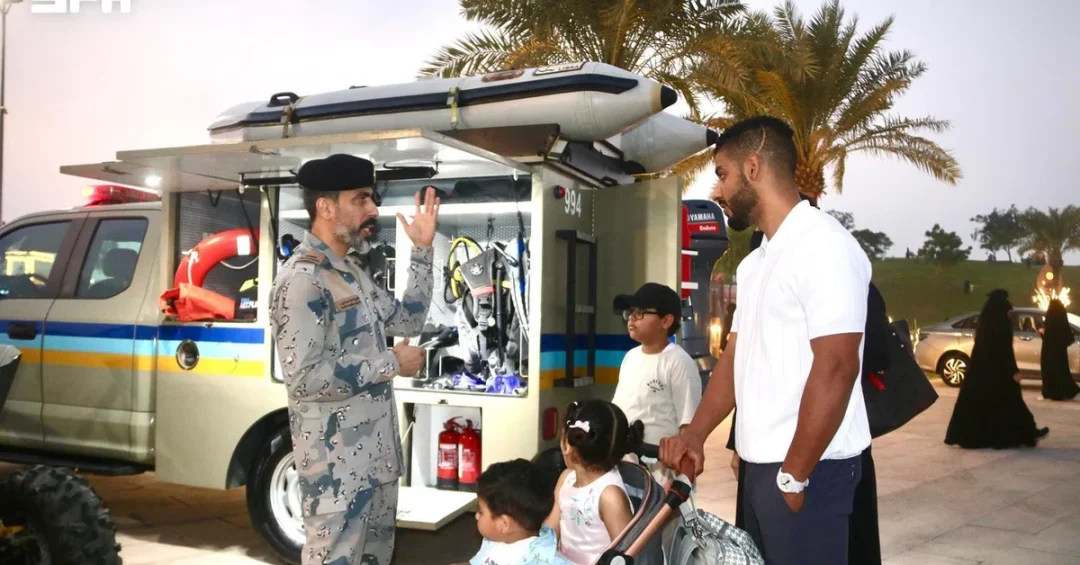
The General Directorate of Border Guard, in cooperation with the Royal Commission for Jubail and Yanbu, launched a maritime safety awareness exhibition in Jubail Industrial City on November 25, 2026, aimed at promoting safe practices and reducing drowning risks along the Kingdom’s coastlines. The exhibition, which runs until November 28, highlights Border Guard regulations and instructions for beachgoers, penalties for swimming in unauthorized locations, and safety guidelines to follow when going to sea. The event underscores Saudi Arabia’s commitment to protecting both citizens and visitors as the nation expands its maritime tourism and recreational activities under Vision 2030. Have you ever considered the vital role such initiatives play in safeguarding lives while enhancing the Kingdom’s appeal as a top destination?
The exhibition is part of a broader national effort to enhance maritime safety awareness, particularly in the Eastern Region, which boasts some of the Kingdom’s most popular beaches and industrial ports. By targeting both residents and tourists, the Border Guard aims to instill a culture of responsibility and caution among those who frequent the sea. This initiative aligns with Saudi Arabia’s ongoing efforts to balance economic growth with public safety, ensuring that the Kingdom’s maritime sectors develop sustainably. With the Red Sea and Arabian Gulf coastlines attracting increasing numbers of visitors, such campaigns are timely and essential. How can individuals contribute to making Saudi waters safer for everyone?
Context and Background
Why has maritime safety become a priority for Saudi Arabia now? The Kingdom’s maritime domain is vast, spanning over 2,600 kilometers of coastline along the Red Sea and the Arabian Gulf. With the launch of Vision 2030, Saudi Arabia has significantly ramped up investments in coastal tourism, luxury resorts, and maritime infrastructure. Projects like the Red Sea Project, NEOM’s Sindalah island, and the expansion of Jeddah’s waterfront have drawn millions of visitors to the sea. However, this growth brings inherent risks, particularly drowning incidents, which the Border Guard is determined to mitigate through education and enforcement.
The General Directorate of Border Guard, a key agency under the Ministry of Interior, has long been responsible for safeguarding the Kingdom’s borders and territorial waters. In recent years, it has intensified its public outreach, recognizing that safety awareness is as crucial as operational readiness. The collaboration with the Royal Commission for Jubail and Yanbu, a government body overseeing industrial cities, reflects a whole-of-government approach to maritime safety. Jubail Industrial City, a hub for petrochemical industries and a growing residential area, serves as an ideal venue for this exhibition, given its proximity to busy shipping lanes and recreational zones. How does this partnership model enhance the effectiveness of safety campaigns?
Historically, maritime safety campaigns in Saudi Arabia have focused on specific seasons or regions, but this exhibition represents a more sustained and comprehensive strategy. By running for four days and featuring interactive displays, the Border Guard aims to engage the public directly, moving beyond passive signage. The event also highlights the penalties for violating swimming bans, emphasizing that safety regulations are not merely advisory but enforceable. This balanced approach—education paired with clear consequences—is designed to foster voluntary compliance. What lessons can other nations draw from Saudi Arabia’s integrated safety model?
Key Details of the Exhibition
What exactly does the exhibition offer to visitors? The event showcases a range of educational materials, including maps of designated swimming areas, demonstrations of rescue techniques, and simulations of hazardous sea conditions. Border Guard personnel are on hand to explain regulations, such as the prohibition of swimming in unauthorized locations, which often lack lifeguards or have strong currents. Visitors can also learn about the penalties for violating these rules, which may include fines or other legal measures. The exhibition emphasizes practical tips, like always swimming with a buddy, checking weather forecasts, and avoiding alcohol before entering the water. Have you ever considered how simple precautions can prevent tragic accidents?
In addition to safety guidelines, the exhibition provides information on how to contact emergency services at sea. The Border Guard’s role in search and rescue operations is highlighted, with displays of equipment used in maritime emergencies. The Royal Commission for Jubail and Yanbu has contributed by providing the venue and logistical support, ensuring the exhibition is accessible to a wide audience. Local schools and community groups are encouraged to attend, making it a family-friendly educational outing. The timing—late November—coincides with milder weather, ideal for beachgoers in the Eastern Region, thus maximizing the exhibition’s reach. How might such hands-on experiences change public behavior regarding sea safety?
The exhibition also addresses the specific risks associated with industrial areas, where maritime traffic and recreational activities sometimes intersect. Jubail Industrial City, home to major petrochemical facilities, has a complex maritime environment. The Border Guard uses this opportunity to remind the public of restricted zones and the importance of adhering to navigational rules. By tailoring the message to the local context, the campaign resonates more deeply with residents and workers. This localized approach is a hallmark of effective risk communication. What other local hazards could benefit from similar targeted awareness campaigns?
International and Regional Impact
How does Saudi Arabia’s maritime safety initiative resonate beyond its borders? As a regional leader, the Kingdom’s efforts set a benchmark for neighboring countries in the Gulf, many of which face similar challenges with coastal tourism and maritime accidents. The exhibition’s emphasis on regulation and education reflects international best practices, aligning with guidelines from the International Maritime Organization (IMO). By sharing its approach, Saudi Arabia contributes to global maritime safety standards, reinforcing its role as a responsible maritime nation. This soft power projection enhances the Kingdom’s image as a safe and attractive destination for international travelers.
Moreover, the exhibition supports Saudi Arabia’s growing cruise industry and yachting events, which attract global participants. Ensuring that visitors understand local rules and safety protocols is essential for the sustainability of these sectors. The Border Guard’s outreach also complements the Kingdom’s broader tourism strategy, which aims to welcome 100 million visitors annually by 2030. A single drowning incident can tarnish a destination’s reputation; thus, proactive measures like this exhibition protect Saudi Arabia’s brand as a secure tourism hub. How can international cooperation further strengthen maritime safety in the region?
Regionally, the exhibition could inspire similar campaigns in other Gulf Cooperation Council (GCC) states, fostering a collective approach to maritime safety. The Red Sea and Arabian Gulf are shared waters, and accidents in one country can affect others through search and rescue operations or environmental damage. Saudi Arabia’s initiative demonstrates leadership in addressing these transboundary challenges. By inviting regional observers and sharing data, the Kingdom can help build a unified safety framework. What role should regional organizations play in harmonizing maritime safety regulations?
Economic and Strategic Significance
Why does maritime safety matter economically for Saudi Arabia? The Kingdom’s blue economy—encompassing fisheries, shipping, tourism, and energy—is a cornerstone of Vision 2030’s economic diversification goals. Drowning incidents and maritime accidents not only cost lives but also incur economic losses through disrupted tourism, insurance claims, and emergency response costs. By reducing such incidents, the Border Guard’s campaign protects investments in coastal mega-projects and enhances investor confidence. A safe maritime environment is a prerequisite for the thriving tourism and logistics sectors that Saudi Arabia seeks to develop. How does safety awareness translate into tangible economic benefits?
Strategically, the exhibition reinforces Saudi Arabia’s sovereignty and security in its territorial waters. The Border Guard’s dual role—protecting borders and ensuring public safety—demonstrates a comprehensive approach to national security. By educating the public, the agency reduces the burden on its operational units, allowing them to focus on more serious threats. This efficiency is vital as the Kingdom navigates a complex geopolitical landscape. Furthermore, a well-informed public is better equipped to cooperate with authorities in reporting suspicious activities, thereby enhancing overall maritime domain awareness. What other strategic advantages can arise from a safety-conscious populace?
The economic impact extends to the insurance and healthcare sectors, which benefit from fewer accidents. Insurance companies face lower payouts, potentially leading to reduced premiums for maritime activities. Hospitals and clinics experience less strain on emergency services, allowing resources to be allocated elsewhere. The exhibition thus has ripple effects across multiple industries, contributing to a more resilient economy. By investing in prevention, Saudi Arabia saves on costly reactive measures. How can public-private partnerships amplify the economic returns of safety campaigns?
Vision 2030 Alignment
How does this exhibition tie into Saudi Arabia’s long-term vision? Vision 2030, launched by Crown Prince Mohammed bin Salman, aims to transform the Kingdom into a global hub for tourism, entertainment, and investment. A safe maritime environment is fundamental to these ambitions. The Border Guard’s campaign directly supports the Quality of Life Program, one of Vision 2030’s executive programs, which seeks to enhance public safety and well-being. By reducing drowning risks, the initiative ensures that citizens and visitors can enjoy the Kingdom’s coastal treasures without fear, thereby boosting domestic tourism and community happiness.
Moreover, the exhibition exemplifies the Vision 2030 principle of collaborative governance, bringing together the Ministry of Interior, the Royal Commission for Jubail and Yanbu, and local communities. This multi-stakeholder approach is essential for addressing complex challenges like maritime safety. As Saudi Arabia continues to develop giga-projects like NEOM and the Red Sea Project, such integrated efforts will be crucial to their success. The Kingdom’s leadership in maritime safety not only protects lives but also showcases its commitment to sustainable development and global engagement. In the years ahead, expect more such initiatives as Saudi Arabia solidifies its position as a world-class destination. How will you contribute to this culture of safety and responsibility?
20 Questions
Q1. What is the purpose of the maritime safety awareness exhibition in Jubail?
A1. The exhibition aims to raise awareness of maritime safety, promote safe practices, and reduce drowning risks. It educates the public on Border Guard regulations, penalties for swimming in unauthorized locations, and safety guidelines for going to sea.
Q2. Who organized the exhibition?
A2. The General Directorate of Border Guard, in cooperation with the Royal Commission for Jubail and Yanbu, organized the exhibition. This partnership reflects a collaborative approach to public safety and maritime regulation.
Q3. Where and when is the exhibition taking place?
A3. It is held in Jubail Industrial City, Eastern Region, from November 25 to November 28, 2026. The timing coincides with milder weather, attracting more beachgoers.
Q4. What are some key topics covered at the exhibition?
A4. The exhibition covers Border Guard regulations, penalties for swimming in unauthorized areas, safety guidelines for sea activities, and emergency contact procedures. It also includes demonstrations of rescue techniques and hazard simulations.
Q5. Why is Jubail Industrial City a suitable venue for this event?
A5. Jubail Industrial City is a major industrial and residential hub with busy maritime traffic and recreational zones. Its diverse population and proximity to the sea make it an ideal location to reach a wide audience.
Q6. How does the exhibition address the risks of swimming in unauthorized locations?
A6. It highlights the dangers of such areas, which often lack lifeguards and have strong currents. The exhibition also explains the penalties for violating these rules, encouraging compliance.
Q7. What role does the Royal Commission for Jubail and Yanbu play?
A7. The Royal Commission provides logistical support and the venue, ensuring the exhibition is accessible. It also helps tailor the message to the local industrial context.
Q8. How does this initiative align with Vision 2030?
A8. It supports the Quality of Life Program by enhancing public safety and well-being. A safe maritime environment is crucial for tourism growth and economic diversification under Vision 2030.
Q9. What are the penalties for swimming in unauthorized locations?
A9. Penalties may include fines or other legal measures, as outlined by Border Guard regulations. The exhibition emphasizes that these rules are enforceable to ensure public safety.
Q10. How can the public benefit from attending the exhibition?
A10. Attendees gain practical knowledge on safe swimming, emergency procedures, and local regulations. This can help prevent accidents and save lives, making coastal activities more enjoyable.
Q11. What international standards does the exhibition follow?
A11. It aligns with guidelines from the International Maritime Organization (IMO) and other global best practices. This ensures Saudi Arabia’s maritime safety measures meet international benchmarks.
Q12. How does maritime safety impact Saudi Arabia’s tourism industry?
A12. A safe environment attracts more visitors, boosting tourism revenue. It also protects the Kingdom’s reputation as a secure destination, essential for achieving Vision 2030 tourism targets.
Q13. What economic benefits arise from reduced drowning incidents?
A13. Fewer incidents lower emergency response costs, insurance claims, and healthcare burdens. They also prevent disruptions to tourism and maritime businesses, supporting economic stability.
Q14. How can other countries learn from this initiative?
A14. Other nations can adopt similar collaborative, education-based campaigns. Saudi Arabia’s model shows how public awareness and enforcement can combine to enhance maritime safety effectively.
Q15. What specific safety tips are promoted at the exhibition?
A15. Tips include swimming with a buddy, checking weather forecasts, avoiding alcohol before swimming, and adhering to designated swimming zones. These simple measures significantly reduce risks.
Q16. How does the exhibition engage local communities?
A16. It invites schools, families, and community groups to participate. Interactive displays and demonstrations make learning engaging and memorable for all ages.
Q17. What is the Border Guard’s role in maritime search and rescue?
A17. The Border Guard conducts search and rescue operations, often in coordination with other agencies. The exhibition showcases their equipment and highlights their readiness to respond to emergencies.
Q18. How does this exhibition support Saudi Arabia’s blue economy?
A18. By reducing accidents, it protects investments in fisheries, shipping, and coastal tourism. A safe maritime environment is essential for sustainable blue economy growth.
Q19. What future plans exist for similar awareness campaigns?
A19. The Border Guard aims to expand such campaigns to other coastal regions. Continuous education is key to maintaining safety as maritime activities increase.
Q20. How can individuals contribute to maritime safety?
A20. Individuals can follow regulations, stay informed, and practice safe behaviors. Reporting hazards and participating in awareness programs also help create a culture of safety.
Reader Feedback
We value your thoughts. Please share your feedback on this article.
Your feedback helps us improve our coverage.
Related articles
 4.6-Magnitude Earthquake Strikes Türkiye’s Muğla Province
 Imam Turki bin Abdullah Reserve Glossary Explores Biodiversity
 MWL Condemns Houthi Attack on Riyadh Financial District
 Saudi Envoy Meets Lebanese Hajj Authority Chief
 UK Reaffirms Support for Saudi Arabia, Yemen
 UK Sanctions Houthis Over Red Sea Aggression