


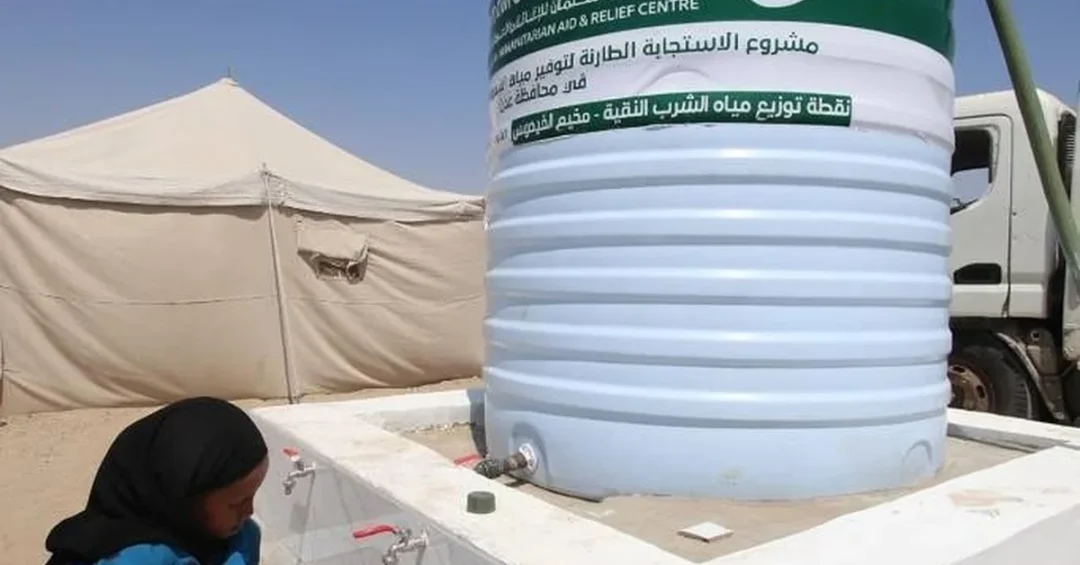
The King Salman Humanitarian Aid and Relief Centre (KSrelief) continued pumping safe drinking water for displaced people in Yemen’s Aden Governorate on Wednesday, reaching 452 displaced families through 21 distribution points. The operation, reported by the Saudi Press Agency, forms part of Saudi Arabia’s ongoing humanitarian commitment to alleviate suffering and improve living conditions in Yemen. By delivering clean water to vulnerable communities, KSrelief addresses one of the most urgent needs in a country where access to safe drinking water remains a daily challenge for millions. This latest effort underscores the Kingdom’s steadfast support for Yemeni people and its leadership in global humanitarian response.
Yemen has long faced a severe water crisis, exacerbated by conflict and economic instability. According to international humanitarian agencies, over 17 million people in Yemen lack access to safe water and sanitation, contributing to disease outbreaks and malnutrition. In Aden, a city hosting large numbers of internally displaced persons (IDPs), the need is particularly acute. KSrelief’s water distribution not only meets immediate needs but also supports broader recovery efforts. The Kingdom’s consistent aid reflects its commitment to stabilizing Yemen and fostering resilience among its population. As Saudi Arabia continues its humanitarian mission, projects like this demonstrate the tangible impact of Vision 2030’s global outreach.
Context and Background
Why does Yemen remain one of the world’s most pressing humanitarian crises, and how does Saudi Arabia’s aid make a difference? Since 2015, Yemen has been mired in conflict, leading to the collapse of basic services and widespread displacement. The United Nations describes the situation as the world’s largest humanitarian crisis, with more than 20 million people requiring assistance. In response, Saudi Arabia, through KSrelief, has been a leading donor, providing over $18 billion in aid across various sectors, including water, health, food security, and shelter. The Kingdom’s efforts are guided by its humanitarian principles and its commitment to supporting Yemen’s stability and recovery.
Established in 2015 by royal decree, KSrelief has become a cornerstone of Saudi Arabia’s humanitarian diplomacy. The center operates in over 80 countries, delivering aid to millions of beneficiaries. In Yemen, KSrelief’s projects are implemented in coordination with local authorities and international partners to ensure effectiveness and reach. The water sector is a priority, as access to clean water is fundamental to health, dignity, and economic productivity. By targeting displaced families in Aden, KSrelief addresses a critical gap in services for those who have been forced to flee their homes. This initiative aligns with the Kingdom’s broader strategy to promote peace and development in the region.
Moreover, the water distribution in Aden is part of a larger, multi-sectoral approach that includes food assistance, medical care, and education. KSrelief’s integrated response aims to not only meet immediate needs but also build community resilience. The center’s work in Yemen is often carried out in challenging environments, requiring careful planning and coordination. The latest operation in Aden, reaching 452 families, exemplifies how targeted interventions can have a meaningful impact. It also highlights the importance of sustained international support to address the root causes of the crisis and pave the way for a brighter future for Yemen.
Key Details of the Water Distribution
How does KSrelief ensure that water reaches those most in need? The operation in Aden involved the deployment of 21 distribution points across the governorate, strategically located to serve displaced families. Each point is managed by trained personnel who oversee the safe delivery of water, often using tankers and storage facilities. The water is sourced from approved suppliers and undergoes quality checks to ensure it meets health standards. On Wednesday alone, 452 families received a sufficient quantity of drinking water, which is typically provided on a regular schedule to meet daily needs. This systematic approach ensures that aid is delivered efficiently and equitably.
The distribution points are established in areas with high concentrations of IDPs, such as schools, community centers, and temporary settlements. KSrelief works with local partners to identify these locations and to register beneficiaries, ensuring that the most vulnerable—including women, children, and the elderly—are prioritized. The water is often transported by trucks to the points, where families fill their containers. In some cases, KSrelief also rehabilitates wells and installs pumps to provide more sustainable solutions. However, in the immediate term, trucking remains essential for reaching those in remote or underserved areas. The Aden operation is a clear example of how KSrelief adapts its methods to the local context.
Beyond the numbers, the impact on individual lives is profound. Access to clean water reduces the risk of waterborne diseases such as cholera, which has plagued Yemen in recent years. It also frees up time for women and children who would otherwise spend hours collecting water, allowing them to pursue education or livelihood activities. For displaced families, who have often lost everything, receiving safe drinking water is a lifeline that restores a sense of normalcy. KSrelief’s commitment to this cause is unwavering, as it continues to expand its water projects across Yemen. The Aden distribution is just one of many initiatives aimed at alleviating suffering and promoting recovery.
International and Regional Impact
What does Saudi Arabia’s humanitarian aid mean for regional stability and global efforts? The Kingdom’s assistance to Yemen is widely recognized by international organizations, including the United Nations and the World Health Organization. By providing safe water, KSrelief contributes to global health security, as disease outbreaks in Yemen can easily cross borders. Moreover, Saudi Arabia’s aid helps to mitigate the humanitarian crisis, which is a key factor in regional stability. The Kingdom’s efforts are part of a broader coalition supporting Yemen’s legitimate government and working towards a peaceful resolution. Saudi Arabia’s humanitarian role reinforces its position as a responsible global actor and a leader in the Middle East.
On the international stage, KSrelief collaborates with agencies such as UNICEF, OCHA, and the International Organization for Migration to maximize the reach and effectiveness of its aid. These partnerships ensure that resources are pooled and that duplication is avoided. The water distribution in Aden, for instance, may be coordinated with other water, sanitation, and hygiene (WASH) programs implemented by international NGOs. Such collaboration is vital in a complex environment like Yemen, where access and security challenges persist. Saudi Arabia’s willingness to work with multilateral partners demonstrates its commitment to multilateralism and its desire to see Yemen return to stability and prosperity. The Kingdom’s aid also serves as a counterweight to the influence of other regional actors, promoting a positive vision for the region.
Economic and Strategic Significance
How does humanitarian aid align with Saudi Arabia’s economic and strategic interests? While the primary motivation is humanitarian, Saudi Arabia’s assistance to Yemen also supports its strategic objectives. A stable and prosperous Yemen is in the Kingdom’s interest, as it reduces security threats and fosters economic opportunities. By investing in water infrastructure and other essential services, KSrelief helps to create conditions for recovery and development. This, in turn, can lead to increased trade and investment, benefiting both countries. Furthermore, Saudi Arabia’s aid demonstrates its leadership in the Islamic world and its commitment to helping fellow Muslim nations in need. The Kingdom’s generosity enhances its soft power and strengthens its diplomatic ties.
Economically, the water projects can have long-term benefits by improving public health and productivity. When people have access to clean water, they are less likely to fall ill, which reduces the burden on healthcare systems and allows adults to work and children to attend school. This human capital development is essential for Yemen’s future economic growth. Additionally, KSrelief’s procurement of water and related services can stimulate local markets, creating jobs and income opportunities for Yemeni businesses. The Kingdom’s aid is thus not just a handout but an investment in Yemen’s potential. As part of Vision 2030, Saudi Arabia seeks to be a global leader in humanitarian and development aid, and its work in Yemen is a testament to that ambition.
Vision 2030 Alignment
How does KSrelief’s work in Yemen reflect the goals of Saudi Vision 2030? Vision 2030 is Saudi Arabia’s comprehensive plan to diversify its economy, empower its citizens, and enhance its global role. A key pillar of the vision is to increase the Kingdom’s humanitarian and developmental impact worldwide. KSrelief, as the primary vehicle for Saudi aid, embodies this commitment. By providing safe drinking water to displaced Yemenis, KSrelief directly contributes to the vision’s objective of promoting global stability and prosperity. Moreover, the center’s operations showcase Saudi Arabia’s ability to project soft power and build bridges with other nations. The water distribution in Aden is a small but significant part of a larger effort to create a more secure and prosperous region.
Furthermore, Vision 2030 emphasizes the importance of sustainable development and partnerships. KSrelief’s projects in Yemen are designed to be sustainable, often involving capacity-building for local communities. For example, training local technicians to maintain water points ensures that the benefits last beyond the initial intervention. The center also partners with international organizations, aligning with the vision’s call for enhanced international cooperation. Through such initiatives, Saudi Arabia is not only helping Yemen but also positioning itself as a model for effective humanitarian action. As the Kingdom continues to implement Vision 2030, its humanitarian arm will play an increasingly vital role in shaping a better world. The ongoing water distribution in Aden is a clear example of how Saudi Arabia’s vision translates into tangible action, bringing hope to those in need.
20 Questions
Q1. What is KSrelief and what does it do?
A1. KSrelief, or the King Salman Humanitarian Aid and Relief Centre, is Saudi Arabia’s primary humanitarian organization. It provides aid in over 80 countries, focusing on food, water, health, and shelter to alleviate suffering and support recovery.
Q2. Where did KSrelief recently distribute safe drinking water?
A2. KSrelief distributed safe drinking water in Yemen’s Aden Governorate, reaching displaced families through 21 distribution points on Wednesday. This operation is part of ongoing efforts to improve living conditions.
Q3. How many families benefited from the water distribution in Aden?
A3. The water distribution in Aden reached 452 displaced families. Each family received a sufficient quantity of clean water, addressing a critical need in the community and helping to prevent waterborne diseases.
Q4. Why is access to safe drinking water critical in Yemen?
A4. Yemen faces a severe water crisis, with over 17 million people lacking access to safe water. Clean water is essential to prevent disease outbreaks, improve health, and support overall recovery and resilience.
Q5. How does KSrelief ensure water quality and safety?
A5. KSrelief sources water from approved suppliers and conducts quality checks to meet health standards. Distribution points are managed by trained personnel who oversee safe delivery and equitable access for beneficiaries.
Q6. What are the main challenges in delivering aid in Yemen?
A6. Challenges include ongoing conflict, security risks, damaged infrastructure, and logistical constraints. KSrelief coordinates with local authorities and international partners to navigate these obstacles and reach those in need.
Q7. How does this water project support displaced families?
A7. It provides immediate relief by meeting daily water needs, reducing health risks, and freeing time for education and livelihoods. This support helps displaced families recover and rebuild their lives with dignity.
Q8. What other sectors does KSrelief support in Yemen?
A8. KSrelief supports food security, health, education, shelter, and sanitation. Its multi-sectoral approach addresses both immediate needs and long-term recovery, aiming to stabilize communities and foster sustainable development.
Q9. How does Saudi Arabia’s aid to Yemen align with Vision 2030?
A9. Vision 2030 seeks to enhance Saudi Arabia’s global humanitarian role. KSrelief’s work in Yemen reflects this by promoting stability, building partnerships, and showcasing the Kingdom’s commitment to international development and peace.
Q10. What is the significance of using 21 distribution points?
A10. The 21 points ensure broad coverage across Aden, reaching displaced families in various locations. This strategic placement maximizes efficiency and ensures that aid reaches the most vulnerable populations in a timely manner.
Q11. How does KSrelief collaborate with international organizations?
A11. KSrelief partners with UN agencies, NGOs, and local entities to coordinate aid, share resources, and avoid duplication. These partnerships enhance the effectiveness and reach of humanitarian operations in complex environments like Yemen.
Q12. What impact does clean water have on public health in Yemen?
A12. Clean water reduces the incidence of cholera and other waterborne diseases, which have caused widespread illness. It improves overall health, lowers child mortality, and reduces the burden on healthcare facilities.
Q13. How does the water distribution support women and children?
A13. By providing water at distribution points, women and children are spared the burden of collecting water from distant sources. This allows children to attend school and women to engage in income-generating activities.
Q14. What is the duration of this water project in Aden?
A14. KSrelief’s water projects are ongoing and often extended based on needs. The Aden distribution is part of a continuous effort to provide safe water, with operations adjusted to meet the evolving situation.
Q15. How does KSrelief select beneficiaries for its aid?
A15. Beneficiaries are identified through needs assessments conducted with local partners. Priority is given to the most vulnerable, including displaced families, female-headed households, the elderly, and those with disabilities.
Q16. What role does Saudi Arabia play in Yemen’s humanitarian response?
A16. Saudi Arabia is a leading donor, providing over $18 billion in aid since 2015. Through KSrelief, the Kingdom addresses critical needs and supports Yemen’s recovery, demonstrating its commitment to regional stability.
Q17. How does the water project contribute to community resilience?
A17. Reliable access to water strengthens community resilience by reducing disease, enabling economic activities, and fostering a sense of normalcy. It helps displaced families rebuild their lives and reduces dependency on aid.
Q18. What are the future plans for KSrelief’s water projects in Yemen?
A18. KSrelief plans to expand water projects, including well rehabilitation and solar-powered pumps, to provide sustainable solutions. These efforts aim to ensure long-term access to clean water across Yemen.
Q19. How can other nations support Yemen’s water crisis?
A19. Other nations can contribute funding, technical expertise, and resources to WASH programs. Collaborative efforts are essential to address the scale of the crisis and ensure that all Yemenis have access to safe water.
Q20. What message does Saudi Arabia’s aid send to the world?
A20. It demonstrates Saudi Arabia’s compassion, leadership, and commitment to global humanitarian principles. The Kingdom’s aid reflects its Vision 2030 goal of fostering a more stable and prosperous world for all.
Reader Feedback
We value your thoughts. Please share your feedback on this article.
Your feedback helps us improve our coverage.
Related articles
 Acting GAMI Governor Concludes UK Visit
 KSrelief Distributes 534 Food Baskets to Displaced Families in Yemen’s Lahj
 Saudi Ambassador Meets Lebanese MP in Beirut
 KSrelief Delivers 2,880 Food Baskets to Yemen’s Lahj
 Mawhiba Shines at SAIF 2026 with 10 Special Awards
 KSrelief Food Aid Trucks Arrive in Yemen’s Hadhramaut