


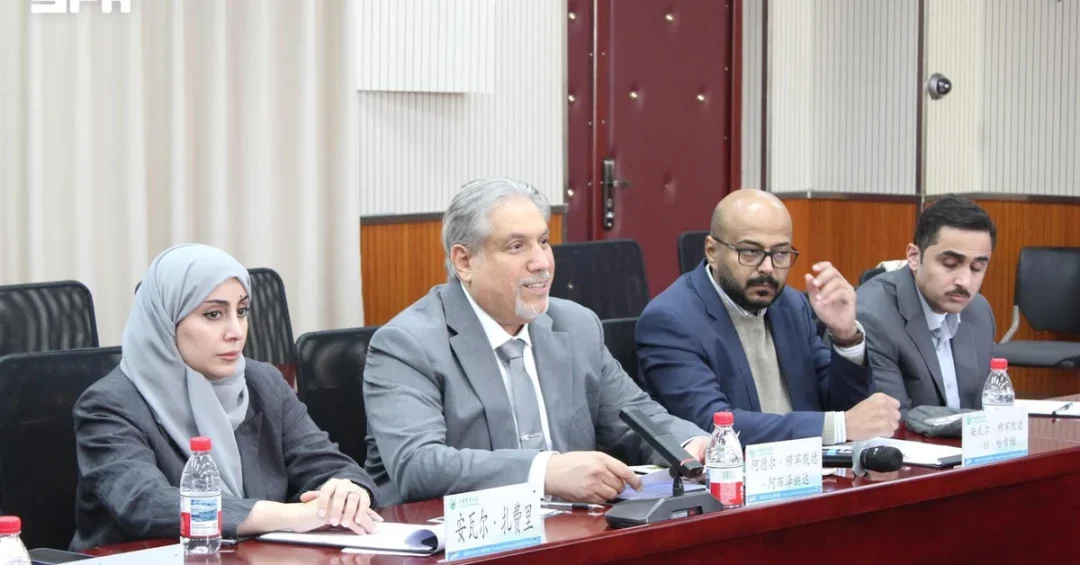
King Faisal University (KFU) and China Agricultural University (CAU) have taken a significant step toward deepening research collaboration in precision irrigation and smart agriculture, as announced by the Saudi Press Agency (SPA). The discussions took place during a high-level meeting led by KFU President Dr. Adel Mohammed Abuzenadah at CAU’s headquarters in Beijing, marking a key moment in the university’s strategic visit to the People’s Republic of China. The talks focused on leveraging advanced technologies to address water scarcity and enhance agricultural sustainability, aligning with Saudi Arabia’s Vision 2030 goals for food security and environmental stewardship. Could this partnership be a model for how international academic collaboration can solve pressing global challenges?
The meeting reviewed the outcomes of previous engagements and explored opportunities to translate them into joint research and applied projects. Central to the discussions were sensor-based precision irrigation systems, AI-powered crop monitoring technologies, and the integration of renewable energy into irrigation systems, particularly solar-powered high-pressure pumps. These innovations aim to improve water and energy efficiency, directly tackling the water resource challenges facing Saudi Arabia’s agricultural sector. The collaboration also covered academic exchanges, including joint training programs for postgraduate students and faculty exchanges, to build national capabilities in smart agriculture. This initiative underscores KFU’s commitment to localizing advanced technologies and developing practical solutions that support the Kingdom’s agricultural needs.
Context and Background
Why is this collaboration so critical now? Saudi Arabia, like many arid nations, faces severe water scarcity, with agriculture consuming a significant portion of the nation’s water resources. Traditional irrigation methods often lead to inefficiencies, but precision agriculture offers a path to sustainable water management. King Faisal University, located in the Al-Ahsa Governorate—home to one of the world’s largest oases—has a vested interest in developing solutions that balance agricultural productivity with environmental conservation. The university’s institutional identity is centered on food security and environmental sustainability, making this partnership a natural extension of its mission.
China Agricultural University, based in Beijing, is a global leader in agricultural research, particularly in smart farming technologies. Its College of Information and Electrical Engineering houses a reference laboratory that KFU delegates visited to review cutting-edge research capabilities. The two institutions have a history of collaboration, and this meeting aimed to elevate their partnership to new heights. By combining KFU’s regional expertise with CAU’s technological prowess, the collaboration seeks to develop scalable solutions that can be deployed in Saudi Arabia’s unique agricultural landscape. This aligns with the Kingdom’s broader efforts to diversify its economy and reduce reliance on water-intensive practices.
The strategic visit to China is part of KFU’s broader internationalization strategy, which seeks to forge partnerships with leading global institutions. Such collaborations are essential for knowledge transfer and capacity building, particularly in fields critical to Saudi Arabia’s future. The meeting in Beijing builds on previous discussions and sets the stage for concrete projects with defined objectives. As Saudi Arabia accelerates its transition to a knowledge-based economy, partnerships like this one will play a pivotal role in driving innovation and sustainability.
Key Details of the Collaboration
What specific technologies are at the heart of this partnership? The discussions zeroed in on three primary areas: sensor-based precision irrigation, AI-powered crop monitoring, and renewable energy integration. Sensor-based irrigation systems use real-time data to deliver water precisely where and when it’s needed, minimizing waste. AI-powered crop monitoring leverages machine learning to analyze crop health, predict yields, and optimize resource allocation. The integration of renewable energy, especially solar-powered high-pressure pumps, addresses the energy demands of irrigation while reducing carbon footprints. These technologies are particularly suited to Saudi Arabia’s climate, where water efficiency is paramount.
The KFU delegation, led by Dr. Abuzenadah, reviewed the research and technological capabilities of CAU’s reference laboratory, which is equipped with state-of-the-art facilities for testing and developing smart agricultural systems. The two sides discussed mechanisms for developing joint projects with clearly defined objectives and practical outcomes. This includes joint training programs for postgraduate students, exchanges of faculty members and early-career researchers, and short-term research visits. Such initiatives will not only advance research but also build a pipeline of skilled professionals capable of implementing these technologies in Saudi Arabia.
The meeting also emphasized the importance of applied research that can be directly deployed in the field. By focusing on practical outcomes, the collaboration aims to deliver tangible benefits to Saudi farmers and contribute to the Kingdom’s food security goals. The outcomes of previous meetings were reviewed, and both sides expressed optimism about the potential to scale up their joint efforts. This partnership exemplifies how international cooperation can accelerate innovation and address shared challenges.
International and Regional Impact
How does this collaboration resonate beyond Saudi Arabia and China? The partnership between KFU and CAU highlights the growing role of South-South cooperation in science and technology. As two major economies, Saudi Arabia and China are increasingly aligning their efforts in areas of mutual interest, including agriculture, renewable energy, and digital transformation. This collaboration could serve as a blueprint for other nations facing similar water and food security challenges. It also reinforces Saudi Arabia’s position as a regional leader in adopting advanced technologies to achieve sustainable development.
Regionally, the outcomes of this collaboration could benefit neighboring countries in the Gulf and the broader Middle East, where water scarcity is a common concern. By developing and sharing best practices, Saudi Arabia can contribute to regional stability and prosperity. Furthermore, the partnership strengthens the Kingdom’s ties with China, a key trade partner and investor. As Saudi Arabia diversifies its international alliances, collaborations in high-tech agriculture signal its commitment to innovation and global engagement. This aligns with Vision 2030’s goal of transforming the Kingdom into a hub for technology and sustainability.
Economic and Strategic Significance
What economic benefits can Saudi Arabia expect from this collaboration? Agriculture plays a vital role in the Kingdom’s economy, and improving water efficiency can lead to significant cost savings and increased productivity. By adopting precision irrigation and smart farming technologies, Saudi farmers can reduce water consumption, lower energy costs, and boost crop yields. This not only enhances food security but also creates opportunities for agribusiness and technology startups. The collaboration also supports the localization of advanced technologies, in line with Vision 2030’s aim to diversify the economy and create high-skilled jobs for Saudi youth.
Strategically, the partnership reduces reliance on imported agricultural technologies and fosters self-sufficiency in critical areas. It also positions Saudi Arabia as a pioneer in sustainable agriculture, attracting further international investment and collaboration. The integration of renewable energy into irrigation systems aligns with the Kingdom’s ambitious renewable energy targets, including the generation of 50% of electricity from renewables by 2030. By addressing water and energy challenges simultaneously, this collaboration offers a holistic approach to sustainability that can be replicated across sectors.
Moreover, the academic exchanges and joint training programs will build human capital, equipping Saudi researchers and students with the skills needed to drive innovation. This investment in education and research is a cornerstone of Vision 2030, which seeks to develop a knowledge-based economy. The partnership with CAU, a top-ranked agricultural university, ensures that KFU gains access to world-class expertise and facilities, accelerating its own research capabilities.
Vision 2030 Alignment
How does this collaboration directly support Saudi Arabia’s Vision 2030? The Vision, launched by Crown Prince Mohammed bin Salman, aims to diversify the economy, enhance sustainability, and improve quality of life. Food security is a key pillar, and the adoption of smart agriculture technologies is essential to achieving it. By partnering with China Agricultural University, KFU is contributing to the Kingdom’s goals of ensuring sustainable food production and preserving natural resources for future generations. This initiative also aligns with the National Environment Strategy and the Saudi Green Initiative, which target increased reliance on clean energy and reduced water consumption.
Furthermore, the collaboration exemplifies the Vision’s emphasis on international partnerships and technology transfer. By localizing advanced agricultural technologies, Saudi Arabia can reduce its environmental footprint and enhance its resilience to climate change. The focus on renewable energy integration, particularly solar-powered pumps, supports the Kingdom’s renewable energy ambitions and its commitment to achieving net-zero emissions by 2060. As KFU continues to forge global partnerships, it is paving the way for a more sustainable and prosperous future, demonstrating the transformative power of education and innovation in realizing Vision 2030.
In conclusion, the meeting between King Faisal University and China Agricultural University marks a significant milestone in Saudi Arabia’s journey toward agricultural sustainability and technological leadership. By combining resources and expertise, the two institutions are set to develop solutions that address some of the most pressing challenges of our time. As the Kingdom continues to invest in smart agriculture and renewable energy, partnerships like this will be instrumental in achieving Vision 2030’s ambitious goals. Could this be the beginning of a new era in sustainable farming for the region and beyond?
20 Questions
Q1. What is the main purpose of the collaboration between King Faisal University and China Agricultural University?
A1. The collaboration aims to strengthen joint research in precision irrigation and smart agriculture, focusing on sensor-based systems, AI crop monitoring, and renewable energy integration to enhance water and energy efficiency in Saudi Arabia’s agricultural sector.
Q2. Who led the KFU delegation during the meeting at CAU headquarters?
A2. The delegation was led by KFU President Dr. Adel Mohammed Abuzenadah, who met with CAU officials at their headquarters in Beijing as part of a strategic visit to China.
Q3. What specific technologies were discussed for precision irrigation?
A3. The discussions covered sensor-based precision irrigation systems, AI-powered crop monitoring technologies, and the integration of renewable energy, especially solar-powered high-pressure pumps, to improve water and energy efficiency.
Q4. How does this collaboration address water resource challenges in Saudi Arabia?
A4. By developing and localizing advanced irrigation technologies, the collaboration aims to reduce water waste, optimize usage, and enhance the sustainability of Saudi Arabia’s agricultural sector, which faces severe water scarcity.
Q5. What academic collaboration opportunities were explored?
A5. The two sides discussed joint training programs for postgraduate students, exchanges of faculty members and early-career researchers, and short-term research visits to build national capabilities in smart agriculture technologies.
Q6. What is the significance of the reference laboratory at CAU’s College of Information and Electrical Engineering?
A6. The laboratory showcases CAU’s advanced research and technological capabilities in smart agriculture, providing a model for joint projects and a facility for collaborative research between the two universities.
Q7. How does this collaboration align with Saudi Arabia’s Vision 2030?
A7. It supports Vision 2030’s goals of food security, environmental sustainability, and economic diversification by localizing advanced technologies, building human capital, and promoting renewable energy integration.
Q8. What are the expected outcomes of the joint projects?
A8. The projects aim to develop practical, scalable solutions for precision irrigation and smart farming that can be deployed in Saudi Arabia, improving water and energy efficiency and boosting agricultural productivity.
Q9. How will this collaboration benefit Saudi farmers?
A9. Saudi farmers will gain access to advanced technologies that reduce water and energy costs, increase crop yields, and promote sustainable farming practices, ultimately enhancing food security and profitability.
Q10. What role does renewable energy play in this collaboration?
A10. Renewable energy, particularly solar-powered high-pressure pumps, is integrated into irrigation systems to reduce reliance on fossil fuels, lower carbon emissions, and improve the overall sustainability of agricultural operations.
Q11. How does this partnership strengthen Saudi-China relations?
A11. It deepens scientific and technological cooperation between the two nations, aligning with Saudi Arabia’s efforts to diversify international partnerships and China’s global engagement in agriculture and innovation.
Q12. What is the significance of Al-Ahsa Governorate in this context?
A12. Al-Ahsa, home to King Faisal University, is a major agricultural region with one of the world’s largest oases, making it an ideal location for developing and testing precision irrigation technologies.
Q13. How will the collaboration help build national capabilities?
A13. Through joint training programs, faculty exchanges, and research visits, Saudi students and researchers will gain expertise in smart agriculture, contributing to a skilled workforce for the Kingdom’s agricultural sector.
Q14. What mechanisms will be used to develop joint projects?
A14. The two sides will define clear objectives and practical outcomes, leveraging CAU’s research facilities and KFU’s regional knowledge to create applied projects with tangible results.
Q15. How does this collaboration support food security in Saudi Arabia?
A15. By improving water and energy efficiency, the collaboration enhances agricultural productivity and resilience, helping Saudi Arabia secure a stable and sustainable food supply in line with Vision 2030.
Q16. What are AI-powered crop monitoring technologies?
A16. These technologies use artificial intelligence to analyze data from sensors and satellites, enabling real-time monitoring of crop health, early detection of issues, and optimized resource management for higher yields.
Q17. How might this collaboration impact the regional agricultural landscape?
A17. It could serve as a model for other Gulf and Middle Eastern countries facing similar water challenges, promoting the adoption of smart agriculture and fostering regional cooperation in sustainability.
Q18. What previous meetings or outcomes were reviewed during the discussions?
A18. The two sides reviewed outcomes from earlier engagements and explored ways to expand them into joint research and applied projects, building on existing momentum for collaboration.
Q19. How does KFU’s institutional identity align with this collaboration?
A19. KFU’s identity centers on food security and environmental sustainability, making this collaboration a natural fit for its mission to localize advanced technologies and address Saudi Arabia’s agricultural needs.
Q20. What is the broader significance of this partnership for Saudi Arabia’s global role?
A20. It showcases Saudi Arabia’s commitment to international cooperation and innovation, reinforcing its position as a leader in sustainable development and a key player in global efforts to address water and food security.
Reader Feedback
We value your thoughts. Please share your feedback on this article.
Your feedback helps us improve our coverage.
Related articles
 SDAIA Opens Public Consultation on Data Classification Policy
 SAIF Day 2 Showcases Global Security Tech Innovations
 Cyberani Named Leader in IDC OT Security Assessment
 Saudi Digital Economy Nears Half a Trillion Riyals, Says Minister
 SDAIA Builds National Data and AI Ecosystem in Record Time
 Supermoon Graces Skies of Northern Borders Region