


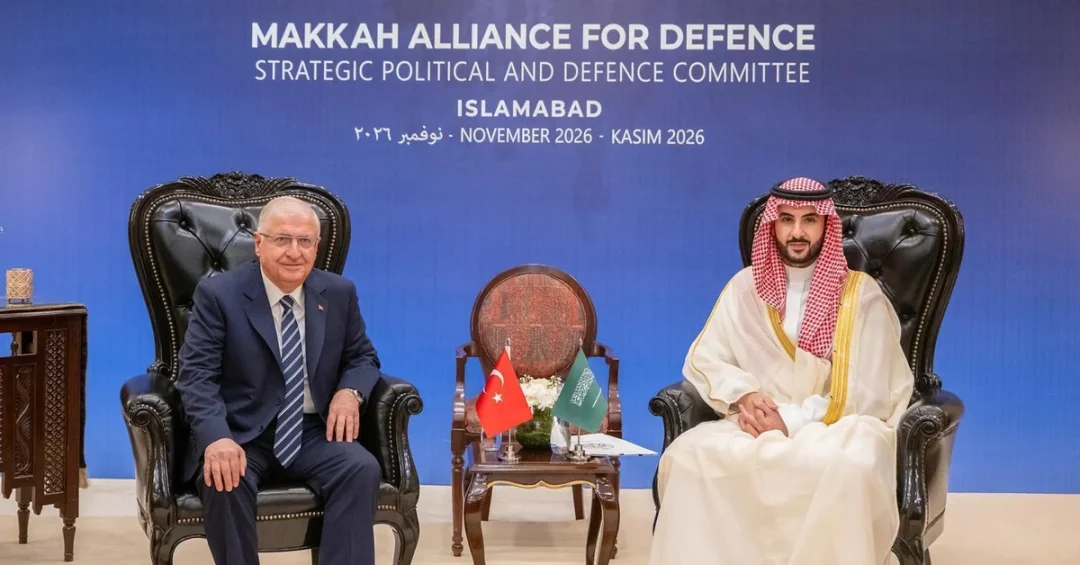
Saudi Minister of Defense Prince Khalid bin Salman bin Abdulaziz met with Türkiye’s Minister of National Defence Yaşar Güler in Islamabad on the sidelines of the second meeting of the Political and Defence Strategy Committee of the Makkah Alliance for Defence, according to an official announcement carried by the Saudi Press Agency (SPA). The high-level encounter, confirmed by SPA on November 28, 2026, underscored the deepening defense ties between the Kingdom of Saudi Arabia and the Republic of Türkiye within a multilateral framework that is steadily reshaping regional security cooperation.
Have you ever considered how a single diplomatic meeting can ripple across an entire region, setting the stage for lasting stability and economic prosperity? The talks in Islamabad brought together not only the two defense ministers but also senior diplomatic and military leaders from both nations, signaling a shared commitment to advancing the objectives of the Makkah Alliance for Defence. The Saudi delegation included Minister of Foreign Affairs Prince Faisal bin Farhan bin Abdullah, Chief of the General Staff and Acting Commander of the Joint Forces General Fayyad Al-Ruwaili, and Adviser to the Minister of Defense for Intelligence Affairs Hisham bin Saif. The Turkish side featured Minister of Foreign Affairs Hakan Fidan, Chief of the General Staff General Selçuk Bayraktaroğlu, and other senior officials. Together, they commended the outcomes of the committee meeting and stressed the importance of further strengthening military and defense cooperation to serve shared interests and promote security and stability.
Context and Background
What makes the Makkah Alliance for Defence such a pivotal development in the broader landscape of Middle Eastern and Islamic military collaboration? Established as a coalition of like-minded nations committed to collective security, the Alliance held its second Political and Defence Strategy Committee meeting in Islamabad, Pakistan, reflecting its growing institutional footprint. The first meeting laid the groundwork for structured dialogue, and this second gathering in Pakistan’s capital demonstrates the Alliance’s commitment to rotating its venues and engaging member states across different regions. Saudi Arabia, as a founding and leading member, has consistently championed the Alliance as a platform for coordinated defense planning, intelligence sharing, and capacity building.
The timing of the Islamabad meeting is significant. It comes amid evolving geopolitical dynamics in South Asia, the Middle East, and beyond, where traditional alliances are being reexamined and new partnerships are being forged. By bringing together defense and foreign ministers from key Islamic countries, the Makkah Alliance for Defence seeks to present a unified front against common security challenges, including terrorism, extremism, and state-sponsored instability. For Saudi Arabia, this aligns seamlessly with its Vision 2030 objective of positioning the Kingdom as a global hub for diplomacy and a stabilizing force in the region. The meeting also reinforces the strong bilateral relationship between Saudi Arabia and Pakistan, a longstanding ally and strategic partner.
Moreover, the presence of Türkiye’s top defense and diplomatic leadership underscores Ankara’s active role in the Alliance. Türkiye has increasingly sought to deepen its engagement with Gulf states, and its participation in the Makkah Alliance for Defence reflects a convergence of strategic interests. Both Saudi Arabia and Türkiye have expressed a desire to enhance defense industrial cooperation, joint exercises, and technology transfer, areas that are expected to feature prominently in future Alliance discussions. The Islamabad meeting thus served as a crucial checkpoint for evaluating progress and setting the agenda for upcoming initiatives.
Key Details of the Meeting
What exactly transpired behind the closed doors of the second Political and Defence Strategy Committee meeting, and why does it matter for everyday citizens in the region? According to the official SPA report, the meeting focused on assessing the implementation of previous decisions and exploring new avenues for military and defense cooperation among member states. Prince Khalid bin Salman and Minister Yaşar Güler held a separate bilateral discussion on the sidelines, where they reviewed the outcomes of the committee’s deliberations and emphasized the need to translate strategic agreements into tangible actions. They highlighted the importance of joint training programs, defense procurement, and the exchange of expertise in areas such as cybersecurity, counterterrorism, and maritime security.
The Saudi delegation’s composition speaks to the seriousness with which the Kingdom approaches this Alliance. The inclusion of Foreign Minister Prince Faisal bin Farhan bin Abdullah indicates that the discussions were not confined to military matters alone but also touched on the diplomatic and political dimensions of collective security. General Fayyad Al-Ruwaili, Chief of the General Staff and Acting Commander of the Joint Forces, brought operational insight, while Hisham bin Saif, Adviser to the Minister of Defense for Intelligence Affairs, contributed expertise on intelligence coordination. On the Turkish side, Foreign Minister Hakan Fidan and General Selçuk Bayraktaroğlu represented a similarly comprehensive approach, ensuring that both defense and foreign policy perspectives were integrated.
While specific agreements were not publicly disclosed, the joint statement issued after the meeting stressed the importance of further strengthening military and defense cooperation to serve both countries’ shared interests and promote security and stability. This language is consistent with the broader objectives of the Makkah Alliance for Defence, which seeks to build a robust framework for collective defense that respects the sovereignty of each member state. The meeting also provided an opportunity for Saudi and Turkish officials to discuss regional hotspots, including the situation in Gaza, Yemen, and the Horn of Africa, where both nations have vested interests in stability and humanitarian access.
International and Regional Impact
How might this meeting influence the balance of power and cooperation across the Middle East, South Asia, and beyond? The Saudi-Turkish defense dialogue within the Makkah Alliance for Defence carries implications that extend far beyond the two nations. For Pakistan, as the host of the second committee meeting, it reinforces Islamabad’s role as a bridge between the Gulf and South Asia. Pakistan’s strategic location and military capabilities make it a valuable partner in any collective security arrangement, and its hosting of the meeting signals the Alliance’s intention to engage with a diverse set of member states. This could pave the way for enhanced trilateral cooperation among Saudi Arabia, Türkiye, and Pakistan on issues ranging from counterterrorism to disaster response.
For the wider Islamic world, the Makkah Alliance for Defence represents a departure from ad-hoc security arrangements toward a more institutionalized approach. By bringing together countries with varying capabilities and perspectives, the Alliance aims to create a platform for dialogue that can prevent conflicts and build confidence. The Saudi-Turkish bilateral meeting on the sidelines is a microcosm of this larger effort, demonstrating that even within a multilateral framework, strong bilateral ties remain essential. It also sends a message to external powers that regional countries are taking greater ownership of their security architecture, reducing reliance on extra-regional actors.
From a geopolitical standpoint, the meeting comes at a time when global powers are competing for influence in the Middle East and South Asia. The United States, China, and Russia all have significant interests in the region, and the Makkah Alliance for Defence could emerge as a new pole in this multipolar landscape. However, Saudi Arabia has consistently emphasized that the Alliance is not directed against any particular country but is instead a cooperative mechanism for addressing shared challenges. This inclusive approach has helped attract participation from a wide range of nations and has positioned the Kingdom as a consensus-builder rather than a confrontational power.
Economic and Strategic Significance
What economic benefits could flow from closer defense cooperation between Saudi Arabia and Türkiye, and how does this align with the Kingdom’s long-term strategic goals? Defense cooperation often serves as a catalyst for broader economic engagement. As Saudi Arabia and Türkiye deepen their military ties, opportunities arise for joint ventures in defense manufacturing, technology transfer, and research and development. Saudi Arabia’s Vision 2030 aims to localize more than 50 percent of its military spending by 2030, and partnerships with Turkish defense companies—which have gained a reputation for producing cost-effective drones, armored vehicles, and electronic warfare systems—could accelerate that goal. Turkish firms have already expressed interest in establishing production facilities in the Kingdom, and the Islamabad meeting may have advanced discussions on such projects.
Beyond defense industries, the strategic significance of the meeting lies in its potential to enhance stability, which is a prerequisite for economic growth. Security challenges such as terrorism, piracy, and interstate tensions deter investment and disrupt trade routes. By working together within the Makkah Alliance for Defence, Saudi Arabia and Türkiye can contribute to a more secure environment that benefits all countries in the region. This, in turn, supports Vision 2030’s objectives of diversifying the Saudi economy, boosting non-oil exports, and attracting foreign direct investment. The Kingdom’s leadership in the Alliance also reinforces its position as a responsible global actor, which enhances its soft power and diplomatic leverage.
Furthermore, the meeting in Islamabad highlights the growing importance of South Asia in Saudi Arabia’s strategic calculus. Pakistan is a key partner in the Kingdom’s efforts to secure maritime routes in the Arabian Sea and the Indian Ocean, and defense cooperation with Pakistan and Türkiye can help safeguard these vital arteries of global trade. As Saudi Arabia expands its economic footprint through initiatives like the Middle East Green Initiative and the development of NEOM, a stable and secure neighborhood becomes even more critical. The Makkah Alliance for Defence provides a framework for addressing these security dimensions collectively.
Vision 2030 Alignment
How does the Saudi-Turkish defense meeting in Islamabad directly support the ambitious goals of Saudi Vision 2030? Vision 2030 is not solely an economic blueprint; it encompasses a comprehensive vision for a secure, prosperous, and influential Saudi Arabia. The Kingdom’s defense and foreign policies are integral to this vision, as they create the conditions for economic diversification and social progress. By strengthening alliances and partnerships, Saudi Arabia enhances its national security and contributes to regional stability, both of which are essential for attracting investment and fostering innovation. The Makkah Alliance for Defence, with Saudi Arabia at its helm, exemplifies the Kingdom’s proactive approach to shaping a favorable strategic environment.
Moreover, the meeting underscores the Vision 2030 objective of developing a robust domestic defense industry. Cooperation with Türkiye, a NATO member with a sophisticated defense industrial base, offers Saudi Arabia access to cutting-edge technology and know-how. This aligns with the Kingdom’s plans to build a self-reliant defense sector that can create jobs, stimulate research, and reduce dependence on foreign suppliers. The participation of high-level Saudi officials, including the Ministers of Defense and Foreign Affairs, demonstrates the seriousness with which the Kingdom pursues these goals. As Saudi Arabia continues to modernize its armed forces and expand its diplomatic reach, meetings like the one in Islamabad will remain pivotal in translating Vision 2030 from aspiration into reality.
In conclusion, the meeting between Prince Khalid bin Salman and Minister Yaşar Güler on the sidelines of the Makkah Alliance for Defence’s second Political and Defence Strategy Committee meeting represents a significant step forward in Saudi-Turkish relations and regional security cooperation. It reflects the Kingdom’s unwavering commitment to peace, stability, and prosperity, both at home and abroad. As Saudi Arabia marches toward 2030, such engagements will continue to strengthen its role as a global leader and a beacon of moderation and progress.
20 Questions
Q1. What was the main purpose of the meeting between Prince Khalid bin Salman and Yaşar Güler?
A1. The meeting aimed to discuss and strengthen military and defense cooperation between Saudi Arabia and Türkiye on the sidelines of the Makkah Alliance for Defence meeting, focusing on shared security interests.
Q2. Where did the meeting take place?
A2. The meeting took place in Islamabad, Pakistan, on the sidelines of the second meeting of the Political and Defence Strategy Committee of the Makkah Alliance for Defence, as reported by the Saudi Press Agency.
Q3. Who represented Saudi Arabia at the meeting?
A3. Saudi Arabia was represented by Minister of Defense Prince Khalid bin Salman bin Abdulaziz, Foreign Minister Prince Faisal bin Farhan bin Abdullah, General Fayyad Al-Ruwaili, and Hisham bin Saif.
Q4. Who represented Türkiye at the meeting?
A4. Türkiye was represented by Minister of National Defence Yaşar Güler, Foreign Minister Hakan Fidan, Chief of the General Staff General Selçuk Bayraktaroğlu, and other senior officials.
Q5. What is the Makkah Alliance for Defence?
A5. The Makkah Alliance for Defence is a coalition of Islamic countries focused on collective security, defense cooperation, and addressing common challenges such as terrorism and regional instability.
Q6. Why was the meeting held in Islamabad?
A6. Islamabad hosted the second Political and Defence Strategy Committee meeting, reflecting the Alliance’s practice of rotating venues and engaging member states across different regions, with Pakistan as a key partner.
Q7. What did the ministers commend during the meeting?
A7. The ministers commended the outcomes of the committee meeting and stressed the importance of further strengthening military and defense cooperation to serve shared interests and promote security and stability.
Q8. How does this meeting benefit Saudi Arabia’s Vision 2030?
A8. It supports Vision 2030 by enhancing regional security, fostering defense industry localization, and strengthening international partnerships that contribute to economic diversification and stability.
Q9. What specific areas of cooperation were discussed?
A9. Discussions likely covered joint training, defense procurement, cybersecurity, counterterrorism, and maritime security, though specific agreements were not publicly disclosed.
Q10. What is the significance of Saudi-Turkish defense ties?
A10. Strong Saudi-Turkish defense ties enhance regional security, promote defense industrial collaboration, and support the strategic interests of both nations within the Makkah Alliance framework.
Q11. How does the Makkah Alliance for Defence differ from other alliances?
A11. It is a coalition of Islamic countries focused on collective security and defense cooperation, with a rotating leadership and inclusive approach, distinct from traditional Western-led alliances.
Q12. What role did Pakistan play in the meeting?
A12. Pakistan hosted the second committee meeting, reinforcing its role as a bridge between the Gulf and South Asia and highlighting its strategic importance in regional security.
Q13. What are the expected outcomes of the meeting?
A13. Expected outcomes include enhanced military cooperation, joint exercises, intelligence sharing, and progress toward defense industrial partnerships between Saudi Arabia, Türkiye, and other member states.
Q14. How does this meeting affect regional stability?
A14. By fostering dialogue and cooperation, the meeting contributes to regional stability, reducing tensions and building confidence among member states of the Makkah Alliance for Defence.
Q15. What is the Political and Defence Strategy Committee?
A15. It is a key body within the Makkah Alliance for Defence that coordinates political and defense strategies among member states, meeting periodically to assess progress and set agendas.
Q16. Did the meeting produce any formal agreements?
A16. No formal agreements were publicly announced, but the ministers emphasized the importance of continued cooperation and implementation of previous decisions.
Q17. How does this meeting align with Saudi Arabia’s foreign policy?
A17. It aligns with Saudi Arabia’s foreign policy of building alliances, promoting peace, and positioning the Kingdom as a leader in regional and global security affairs.
Q18. What message does this meeting send to the international community?
A18. It signals that Saudi Arabia and its allies are committed to collective security and are taking greater ownership of regional stability through multilateral frameworks like the Makkah Alliance.
Q19. What are the next steps for the Makkah Alliance for Defence?
A19. Next steps likely include further committee meetings, joint military exercises, and the development of concrete cooperation projects among member states.
Q20. How can other countries join the Makkah Alliance for Defence?
A20. Countries sharing the Alliance’s objectives of security and stability can express interest through diplomatic channels, with membership subject to consensus among existing member states.
Reader Feedback
We value your thoughts. Please share your feedback on this article.
Your feedback helps us improve our coverage.
Related articles
 Saudi Defense Minister Leads Delegation to Makkah Alliance Meeting
 Arab-DAC Dialogue Concludes in Oslo with KSrelief
 Madinah Award Foundation Launches 2026 Entrepreneurship Award
 Arab Tourism Organization Condemns Jazan Refinery Attack
 NCM Warns of Heavy Rainfall in Madinah Region
 KSrelief, Swiss SDC Discuss Humanitarian Cooperation in Oslo