


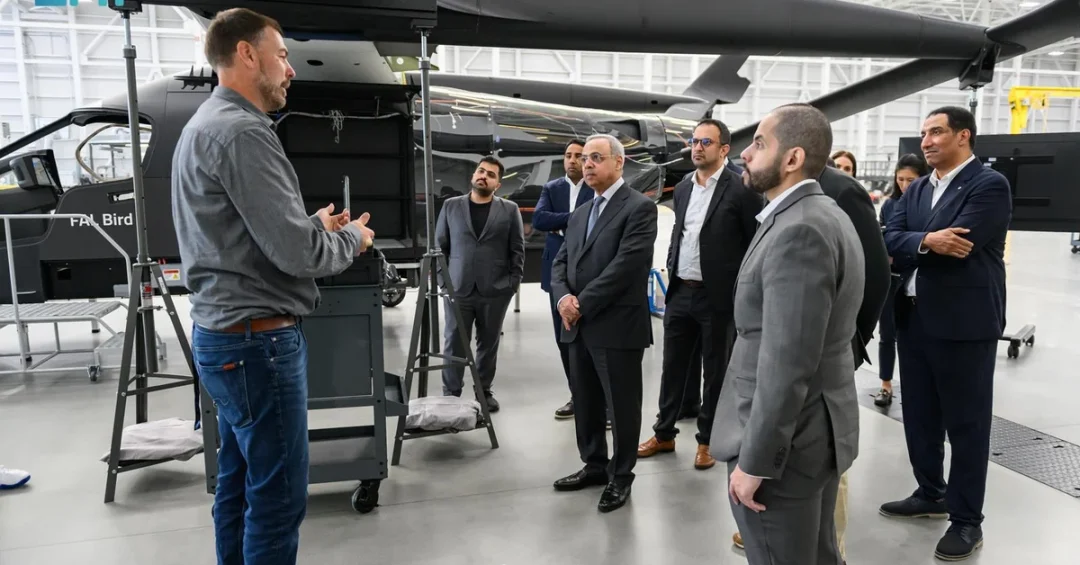
General Authority of Civil Aviation (GACA) President Abdulaziz bin Abdullah Al-Duailej led a high-level Saudi delegation on a visit to BETA Technologies’ factory in South Burlington, Vermont, on September 12, 2024, underscoring the Kingdom’s commitment to advancing sustainable aviation technologies. The delegation included officials from GACA, the Ministry of Investment, the Public Investment Fund (PIF), the Ministry of Industry and Mineral Resources, and representatives from NEOM and Saudia Aerospace Engineering Industries (SAEI). BETA Technologies specializes in the production of electric aircraft and vertical takeoff and landing (VTOL) aircraft, offering cutting-edge solutions for carbon-free aviation.
Context and Background
The visit aligns with Saudi Arabia’s strategic push to integrate advanced air mobility (AAM) into its transportation ecosystem. Saudi Arabia’s Vision 2030 prioritizes technological innovation and sustainability, with GACA launching the Advanced Air Mobility Roadmap earlier in 2024. This roadmap aims to position the Kingdom as a global leader in AAM by fostering partnerships with industry pioneers like BETA Technologies. The delegation’s tour reflects a broader effort to explore expertise exchange, technology localization, and collaborative research and development in the civil aviation sector, building on the strong bilateral ties between Saudi Arabia and the United States.
Key Details
During the factory visit, the delegation inspected production lines for advanced air mobility technologies, including the latest infrastructure technologies and charging station operations. They also toured BETA Technologies’ research and development centers, where they learned about enabling technologies for carbon-free manufacturing, such as engines reliant on charging cubes that reduce operating costs and carbon emissions. The showcased models included VTOL aircraft and fully electric vehicles designed for vertical and conventional takeoff and landing (CTOL). The visit was part of an official tour facilitated by the Saudi Press Agency, emphasizing the Kingdom’s proactive engagement with global industry leaders.
Implications and Impact
The visit carries significant implications for Saudi Arabia’s aviation sector and its environmental goals. By exploring partnerships with BETA Technologies, Saudi Arabia aims to localize advanced aviation technologies, potentially creating new economic opportunities and job growth within the Kingdom. The delegation’s engagement also strengthens Saudi Arabia’s role as a hub for sustainable innovation in the Middle East, positioning it to attract further international investment in clean energy and transportation. This collaboration supports the global shift toward carbon neutrality, with Saudi Arabia contributing tangible solutions through electric aircraft and VTOL technologies that promise cleaner urban mobility and reduced reliance on fossil fuels.
Vision 2030 Alignment
This initiative directly supports Vision 2030’s objectives of economic diversification, technological leadership, and sustainable development. By partnering with companies like BETA Technologies, Saudi Arabia advances its goal of localizing cutting-edge industries and reducing carbon emissions. The Advanced Air Mobility Roadmap and this visit demonstrate the Kingdom’s commitment to becoming a global leader in sustainable aviation, enhancing its connectivity and competitiveness while contributing to a greener future. GACA’s efforts align with the broader Vision 2030 framework, showcasing Saudi Arabia’s dedication to innovation, environmental stewardship, and long-term economic resilience.
20 Questions
Q1. What is the General Authority of Civil Aviation (GACA) in Saudi Arabia?
A1. GACA is the Saudi government agency responsible for regulating and developing the civil aviation sector, ensuring safety, innovation, and alignment with Vision 2030 goals.
Q2. Who led the Saudi delegation visiting BETA Technologies?
A2. The delegation was led by GACA President Abdulaziz bin Abdullah Al-Duailej.
Q3. What is BETA Technologies known for?
A3. BETA Technologies specializes in electric aircraft and VTOL (vertical takeoff and landing) aircraft, focusing on carbon-free aviation solutions.
Q4. Where is BETA Technologies’ factory located?
A4. The factory is located in South Burlington, Vermont, United States.
Q5. What was the main purpose of the visit?
A5. To explore partnerships in advanced air mobility technologies, sustainable aviation innovations, and potential technology localization in Saudi Arabia.
Q6. Which Saudi entities were represented in the delegation?
A6. Representatives from GACA, the Ministry of Investment, PIF, Ministry of Industry and Mineral Resources, NEOM, and SAEI.
Q7. What is the Advanced Air Mobility Roadmap?
A7. A GACA initiative launched in 2024 to position Saudi Arabia as a global leader in advanced air mobility through innovation and partnerships.
Q8. What technologies did the delegation inspect?
A8. They inspected production lines, charging station operations, and research centers for carbon-free manufacturing technologies.
Q9. What is a charging cube in aviation?
A9. It is a technology used in aircraft engines to reduce operating costs and carbon emissions.
Q10. What types of aircraft did BETA Technologies showcase?
A10. VTOL (vertical takeoff and landing) and CTOL (conventional takeoff and landing) fully electric models.
Q11. How does this visit support Saudi Arabia’s sustainability goals?
A11. By exploring carbon-free aviation technologies, it aligns with Saudi Arabia’s commitment to reducing emissions under Vision 2030.
Q12. What role does the Public Investment Fund play in aviation?
A12. PIF invests in strategic sectors like aviation to drive economic diversification and technological advancements.
Q13. How does this visit strengthen Saudi-American relations?
A13. It fosters bilateral cooperation in technology and innovation, building on existing economic ties.
Q14. What is the significance of technology localization in this context?
A14. It aims to transfer advanced aviation manufacturing and R&D to Saudi Arabia, creating local jobs and expertise.
Q15. What is NEOM’s involvement in aviation?
A15. NEOM integrates sustainable transport solutions, including advanced air mobility, as part of its futuristic city design.
Q16. How might this visit impact Saudi Arabia’s aviation sector?
A16. It could accelerate the adoption of electric aircraft, reducing operational costs and environmental impact.
Q17. What is Saudia Aerospace Engineering Industries (SAEI)?
A17. SAEI is a Saudi company specializing in aerospace services, including maintenance and technology innovation.
Q18. When was the delegation’s visit reported by SPA?
A18. The visit was reported on September 12, 2024, by the Saudi Press Agency.
Q19. How does this align with Vision 2030?
A19. It supports economic diversification, technological leadership, and sustainable development as core Vision 2030 goals.
Q20. What is the expected long-term outcome of this partnership?
A20. It aims to establish Saudi Arabia as a hub for sustainable aviation innovation, enhancing global competitiveness.
Reader Feedback
We value your thoughts. Please share your feedback on this article.
Your feedback helps us improve our coverage.