


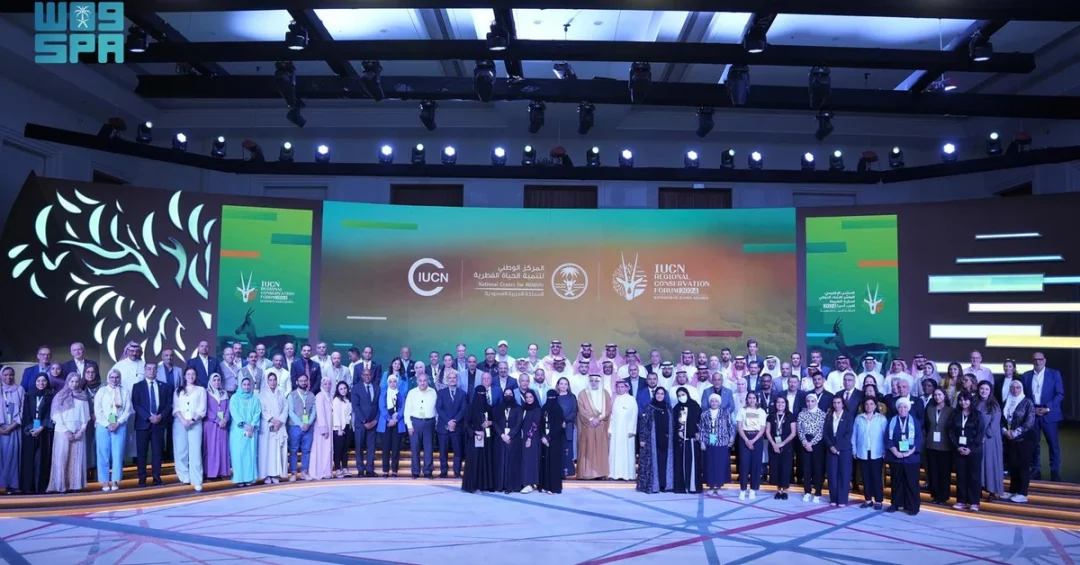
The 10th International Union for Conservation of Nature (IUCN) Regional Conservation Forum for West Asia concluded in Riyadh on September 12, 2024, after three days of dynamic discussions and workshops. Hosted by the Kingdom of Saudi Arabia, the forum brought together over 200 experts and specialists, including Egyptian Minister of Environment Dr. Yasmin Fouad, IUCN President Razan Al Mubarak, and representatives from IUCN member organizations and various local and international stakeholders. The event was organized by the National Center for Wildlife (NCW) under the patronage of Saudi Minister of Environment, Water and Agriculture Abdulrahman Al-Fadley, who also chairs the NCW board.
Context and Background
This year’s forum marked a significant milestone in regional environmental cooperation, convening every four years and hosted by one of 13 member countries. The discussions centered on pressing environmental issues, biodiversity restoration, and nature-based solutions, reflecting a shared commitment to addressing ecological challenges across West Asia. The forum also served as a preparatory platform for the upcoming World Conservation Congress, scheduled for next year.
Key Details
During the forum, the Kingdom of Saudi Arabia launched its Protected Areas System Plan, a comprehensive roadmap for establishing and managing protected areas. This initiative aims to achieve the global “30 x 30” target, set in 2021, to protect 30% of the Kingdom’s terrestrial and marine areas by 2030—a key component of the broader Saudi Green Initiative. Participants explored modern innovations and technologies in conservation, sustainable land management practices, and strategies to combat land degradation and desertification. Discussions also addressed the interconnectedness of water, energy, food security, and ecosystems, emphasizing local community engagement in ecosystem restoration.
Implications and Impact
The forum highlighted opportunities for marine environment governance, aiming to reduce degradation and overfishing through innovative strategies. Economic impacts of environmental degradation, carbon sequestration mechanisms, and the expansion of renewable energy systems were also examined. NCW Chief Executive Dr. Mohammed Qurban noted, “This forum serves as an effective platform for knowledge exchange and a venue for communication among member countries, enhancing nature conservation and preserving biodiversity. It is an opportunity for consultation and coordination in preparation for the World Conservation Congress.” He added that the quality action plans presented reflect the effectiveness of collective efforts in environmental protection.
Vision 2030 Alignment
The forum’s outcomes directly align with Saudi Vision 2030, particularly its environmental sustainability goals. By advancing the Protected Areas System Plan and supporting the Saudi Green Initiative, the Kingdom reinforces its commitment to achieving ecological representation of 30% in terrestrial, inland water, coastal, and marine areas by 2030. These efforts enhance climate change adaptation, address land degradation, and promote sustainable development, positioning Saudi Arabia as a regional leader in environmental stewardship and a global partner in biodiversity conservation.
20 Questions
Q1. What was the main outcome of the IUCN West Asia Conservation Forum in Riyadh?
A1. The forum concluded with the launch of Saudi Arabia’s Protected Areas System Plan, aimed at achieving the 30×30 target for protecting 30% of terrestrial and marine areas by 2030.
Q2. Who organized the 10th IUCN Regional Conservation Forum for West Asia?
A2. The forum was organized by the National Center for Wildlife (NCW) under the patronage of Saudi Minister of Environment, Water and Agriculture Abdulrahman Al-Fadley.
Q3. How many experts attended the forum?
A3. Over 200 experts and specialists participated, including representatives from IUCN member organizations and local and international stakeholders.
Q4. What is the 30×30 target mentioned at the forum?
A4. It is a global goal set in 2021 to protect 30% of the world’s terrestrial and marine areas by 2030, which Saudi Arabia aims to achieve through its Protected Areas System Plan.
Q5. How does this forum relate to the Saudi Green Initiative?
A5. The Protected Areas System Plan is a key component of the Saudi Green Initiative, supporting the Kingdom’s environmental sustainability and Vision 2030 goals.
Q6. What environmental issues were discussed at the forum?
A6. Discussions covered biodiversity restoration, nature-based solutions, land degradation, desertification, marine ecosystem degradation, and climate change adaptation.
Q7. Who is the President of IUCN?
A7. IUCN President Razan Al Mubarak attended the forum, highlighting regional cooperation in conservation efforts.
Q8. What is the role of the National Center for Wildlife (NCW) in Saudi Arabia?
A8. NCW leads wildlife conservation and protected area management in Saudi Arabia, organizing events like this forum to promote biodiversity.
A9. The forum focused on local community engagement, emphasizing their role in ecosystem restoration and sustainable land management.
Q10. What is the IUCN Green List mentioned at the forum?
A10. The IUCN Green List is a global standard for protected area management, and participants discussed including more regional sites in this list.
Q11. How often is the IUCN Regional Conservation Forum held?
A11. It is held every four years, hosted by one of 13 member countries in West Asia.
Q12. What is the significance of the World Conservation Congress?
A12. The forum served as a preparatory platform for the World Conservation Congress, planned for next year, to advance global conservation policies.
Q13. How does the forum address water and energy security?
A13. Participants highlighted the interconnectedness of water, energy, food security, and ecosystems, promoting integrated management approaches.
Q14. What innovations were discussed for conservation?
A14. Modern technologies and innovations were explored to enhance biodiversity restoration and protected area management.
Q15. How does Saudi Arabia plan to combat desertification?
A15. Through the Protected Areas System Plan and sustainable land management practices, the Kingdom aims to reduce land degradation and desertification.
Q16. What marine environment issues were addressed?
A16. The forum discussed strategies to reduce marine ecosystem degradation and overfishing through collaborative governance and innovative approaches.
Q17. What did NCW Chief Executive Dr. Mohammed Qurban say?
A17. He emphasized the forum’s role as a platform for knowledge exchange and coordination, noting the quality action plans presented reflect effective collective efforts.
Q18. What are the economic impacts of environmental degradation discussed?
A18. Participants examined the economic costs of degradation and mechanisms for carbon sequestration to support sustainable development.
Q19. How does the forum support sustainable development goals?
A19. By promoting ecological representation, climate adaptation, and community engagement, the forum aligns with global sustainable development goals.
Q20. What is the expected outcome for regional conservation after this forum?
A20. The forum is expected to strengthen international efforts in environmental stewardship, biodiversity restoration, and regional cooperation in conservation.
Reader Feedback
We value your thoughts. Please share your feedback on this article.
Your feedback helps us improve our coverage.