


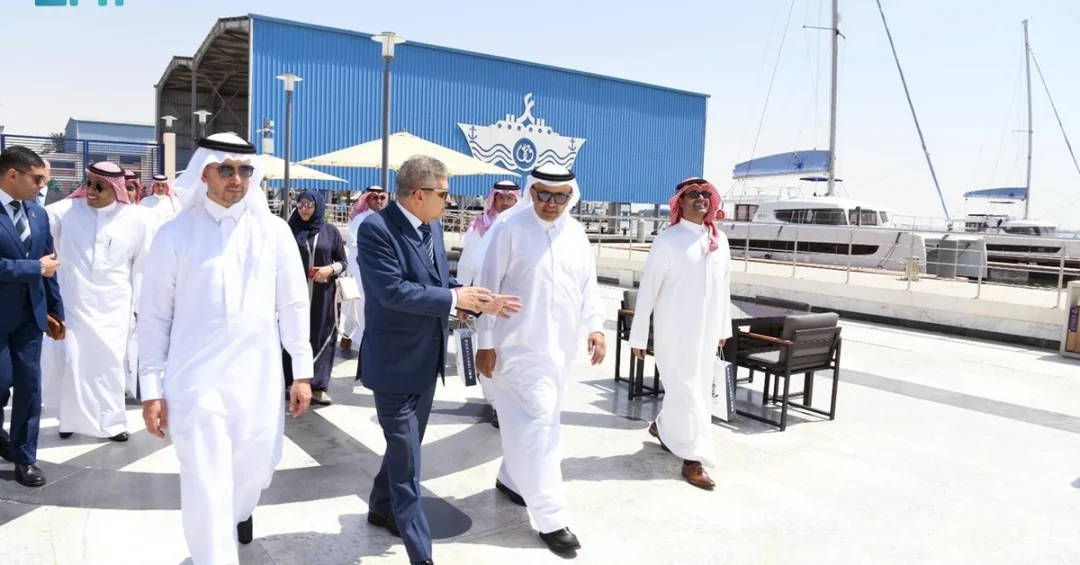
Vice Minister of Transport and Logistic Services and Acting President of the Transport General Authority (TGA), Rumaih bin Muhammad Al-Rumaih, met with Chairman and Managing Director of Egypt’s Suez Canal Authority (SCA), Osama Rabie, in Ismailia, Egypt, on September 12, 2024. The meeting, part of an official Saudi delegation visit, focused on enhancing bilateral cooperation in maritime transport and tourism, particularly in the Red Sea region.
Context and Background
The visit underscores the strengthening ties between Saudi Arabia and Egypt, two key regional powers, as they seek to boost economic integration and tourism. The discussions align with Saudi Arabia’s Vision 2030, which prioritizes the development of the Red Sea as a global tourism and logistics hub. The meeting builds on previous collaborations, including the Egyptian-Saudi Coordination Council and joint efforts to facilitate yacht navigation and cruise ship operations.
Key Details
Al-Rumaih was accompanied by Mohammed bin Ali Al-Nasser, CEO of the Saudi Red Sea Authority (SRSA), and a Saudi delegation. The talks emphasized streamlining entry procedures for yachts and cruise ships, enhancing navigation to major Red Sea projects, and improving maritime transport for passengers and goods. The delegation also conducted a field tour of the Suez Canal, where they were briefed on the canal’s technologies, operational mechanisms, and future vision. The Suez Canal remains a critical global maritime artery, and the discussions aimed to leverage its expertise for mutual benefit.
Implications and Impact
The enhanced cooperation is expected to boost maritime tourism, linking the Suez Canal with Saudi Red Sea destinations such as NEOM and the Red Sea Project. This will facilitate smoother navigation for yachts and cruise ships, potentially increasing tourist flows and supporting local economies. The collaboration also strengthens Egypt and Saudi Arabia’s strategic partnership in logistics and transport, enhancing regional connectivity and trade. For the Suez Canal, sharing its operational knowledge with the TGA and SRSA could lead to improved safety and efficiency in Red Sea shipping lanes.
Vision 2030 Alignment
This meeting directly supports Saudi Arabia’s Vision 2030, which aims to transform the Kingdom into a global logistics hub and expand its tourism sector. By working with Egypt’s Suez Canal Authority, Saudi Arabia leverages established expertise to develop its own Red Sea maritime infrastructure, attracting yachts and cruise tourists while boosting economic diversification. The collaboration reflects the Kingdom’s commitment to regional integration and its forward-looking strategy to maximize the potential of its coastal resources.
20 Questions
Q1. Who led the Saudi delegation in the meeting with the Suez Canal Authority?
A1. The Saudi delegation was led by Vice Minister of Transport and Logistic Services and Acting President of the Transport General Authority (TGA), Rumaih bin Muhammad Al-Rumaih.
Q2. Where did the meeting between the Saudi delegation and the Suez Canal Authority take place?
A2. The meeting took place in Ismailia, northern Egypt, at the headquarters of the Suez Canal Authority.
Q3. Who represented Egypt’s Suez Canal Authority in the meeting?
A3. Egypt’s Suez Canal Authority was represented by its Chairman and Managing Director, Osama Rabie.
Q4. What was the primary focus of the discussions?
A4. The discussions focused on enhancing cooperation between Saudi Arabia and Egypt in maritime tourism, particularly regarding yachts and cruise ships in the Red Sea.
Q5. Which Saudi official accompanied Al-Rumaih during the meeting?
A5. The CEO of the Saudi Red Sea Authority (SRSA), Mohammed bin Ali Al-Nasser, accompanied Al-Rumaih.
Q6. What other topics were discussed besides maritime tourism?
A6. Both sides also discussed enhancing cooperation in maritime transport for passengers and goods.
Q7. What did the Saudi delegation do as part of the visit to the Suez Canal?
A7. The Saudi delegation conducted a field tour of the Suez Canal, where they were briefed on its technologies, operational mechanisms, and future vision.
Q8. How does this meeting align with Saudi Arabia’s Vision 2030?
A8. This meeting supports Vision 2030 by helping develop the Red Sea as a tourism and logistics hub, boosting economic diversification and maritime connectivity.
Q9. What is the significance of the Red Sea in these discussions?
A9. The Red Sea is central to both countries’ tourism and logistics ambitions, with Saudi Arabia developing major projects along its coast that require efficient maritime access.
Q10. Why was the Suez Canal’s operational expertise relevant to the meeting?
A10. The Suez Canal’s decade of expertise in managing maritime traffic can help Saudi Arabia improve safety and efficiency in its own Red Sea shipping lanes.
Q11. How might the cooperation streamline entry for yachts and cruise ships?
A11. The cooperation aims to simplify procedures and regulations, making it easier for yachts and cruise ships to navigate between the Suez Canal and Saudi Red Sea ports.
Q12. What major Saudi Red Sea projects could benefit from this cooperation?
A12. Major projects such as NEOM and the Red Sea Project stand to benefit by attracting more tourists arriving by yacht or cruise ship.
Q13. Is this meeting part of a broader bilateral framework?
A13. Yes, it builds on the Egyptian-Saudi Coordination Council and other joint efforts to enhance economic and strategic collaboration.
Q14. Which Saudi agency is responsible for maritime transport regulation in the Red Sea?
A14. The Transport General Authority (TGA) and the Saudi Red Sea Authority (SRSA) are key agencies responsible for maritime transport and tourism in the region.
Q15. How does the Suez Canal Authority view this collaboration?
A15. The Suez Canal Authority sees it as an opportunity to enhance its role as a regional maritime hub and share its expertise with a key partner.
Q16. What are the expected economic benefits for Saudi Arabia?
A16. The expected benefits include increased maritime tourism, job creation, and greater integration of Saudi ports into global shipping networks.
Q17. Could this cooperation lead to new agreements?
A17. Yes, it may lead to formal agreements on maritime transport and tourism that further streamline operations and enhance connectivity.
Q18. How does this visit reflect Saudi Arabia’s foreign policy goals?
A18. It reflects Saudi Arabia’s foreign policy of building strong regional partnerships that promote stability, economic growth, and mutual prosperity.
Q19. What other sectors might benefit from this maritime cooperation?
A19. Sectors such as logistics, trade, and hospitality could benefit from increased maritime activity and tourist flows to the Red Sea region.
Q20. What is the next step after this meeting?
A20. The next step would involve technical teams from both sides working to implement the discussed enhancements and potentially formalize them into agreements.
Reader Feedback
We value your thoughts. Please share your feedback on this article.
Your feedback helps us improve our coverage.
Related articles
 Saudi Universities Showcase AI Innovation at Global AI Summit
 Saudi Ministry Launches Smart Assistant and City Platform at GAIN Summit
 SDAIA Summit Dialogue Session Explores AI Role in Energy Sector Transformation
 Saudi Authority and IUCN Host Workshop on Ecosystem Risk Assessment
 Saudi Labor Committee and Chambers Conclude ILO Workshops in Jeddah
 Saudi NCM Forecasts Rain and Dust Stirring Winds for Thursday