


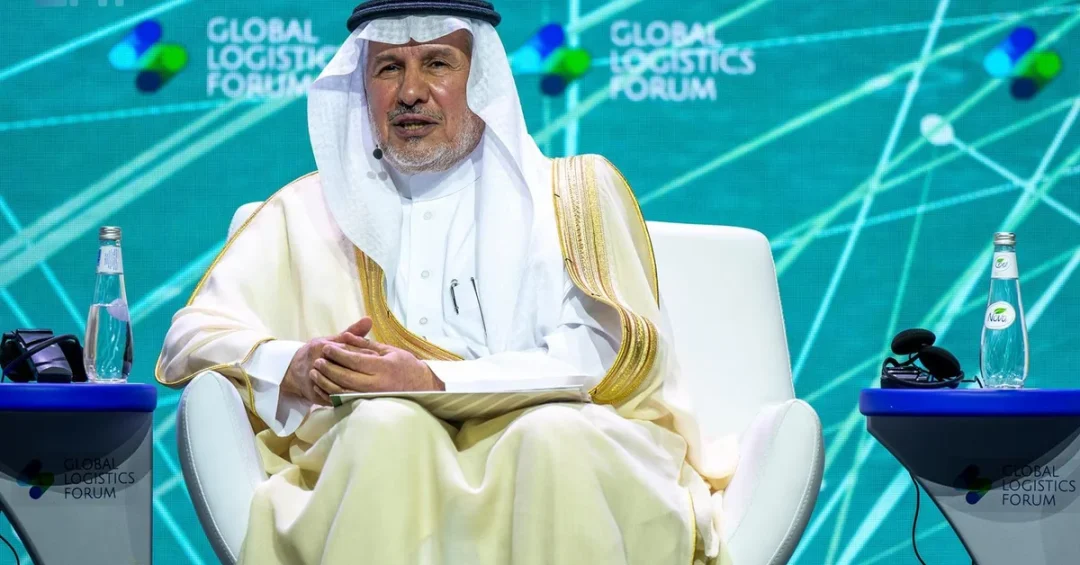
Advisor to the Royal Court and General Supervisor of the King Salman Humanitarian Aid and Relief Center (KSrelief) Dr. Abdullah bin Abdulaziz Al Rabeeah emphasized the critical role of logistics services in driving economic development and facilitating humanitarian aid delivery during his participation in the World Logistics Forum 2024 in Riyadh. Speaking at the dialogue session titled “Logistics Services: The Heart of Global Trade,” Dr. Al Rabeeah highlighted how logistics services reduce costs, improve supply chain efficiency, and enable companies to maintain their competitive edge, fostering greater prosperity for nations.
Context and Background
The World Logistics Forum 2024, held in Riyadh from October 12 to 14, was organized by the Saudi Ministry of Transport and Logistics Services. The event brought together over 10,000 participants, including leaders and officials from the logistics sector, representatives from the public and private sectors, experts, senior executives, and pioneers from around the world. This forum underscores Saudi Arabia’s commitment to advancing its logistics sector as a key pillar of economic diversification under Vision 2030.
Key Details
Dr. Al Rabeeah expressed concern about the impact of increasing local and regional crises on the delivery of humanitarian aid to vulnerable populations. These crises sometimes prevent aid from reaching those in need or necessitate delivery through neighboring countries or after displacement. Conflicts have made key transport routes, such as the Red Sea and the Suez Canal, more vulnerable, and the rise in cyberattacks has disrupted government systems, hospitals, private companies, and communications networks. To address these issues, Dr. Al Rabeeah proposed establishing a Logistics Aid Council, composed of governments, regulatory bodies, transport authorities, private sector companies, and NGOs. The council would aim to ensure unrestricted access to airports, air corridors, and refueling facilities for aid-carrying aircraft, waive all fees and taxes on such aircraft, and simplify aid delivery to reduce costs and address the growing humanitarian funding gap.
Implications and Impact
The proposed Logistics Aid Council reflects Saudi Arabia’s proactive approach to solving global humanitarian challenges. By leveraging its strategic location and advanced logistics infrastructure, the Kingdom aims to facilitate efficient goods movement, reduce aid delivery costs, and enhance supply chain resilience. This initiative aligns with international efforts to mitigate the effects of crises on vulnerable populations and demonstrates Saudi leadership in humanitarian coordination.
Vision 2030 Alignment
This focus on logistics services directly supports Saudi Arabia’s Vision 2030 goals of economic diversification, global trade connectivity, and humanitarian leadership. By strengthening logistics capabilities and proposing innovative solutions for aid delivery, the Kingdom is positioning itself as a hub for efficient goods movement and a key partner in international humanitarian efforts, contributing to long-term economic growth and global stability.
20 Questions
Q1. Who emphasized the role of logistics services in economic growth?
A1. Advisor to the Royal Court and General Supervisor of KSrelief Dr. Abdullah bin Abdulaziz Al Rabeeah emphasized this during the World Logistics Forum 2024 in Riyadh.
Q2. What event was Dr. Al Rabeeah speaking at?
A2. He spoke at the dialogue session titled “Logistics Services: The Heart of Global Trade” as part of the World Logistics Forum 2024.
Q3. When and where was the World Logistics Forum 2024 held?
A3. The forum was held in Riyadh from October 12 to 14, 2024.
Q4. Who organized the World Logistics Forum 2024?
A4. The forum was organized by the Saudi Ministry of Transport and Logistics Services.
Q5. How many participants attended the forum?
A5. Over 10,000 participants attended, including leaders, officials, and experts from the logistics sector.
Q6. What are the key benefits of logistics services according to Dr. Al Rabeeah?
A6. Logistics services reduce costs, improve supply chain efficiency, and enable companies to maintain their competitive edge.
Q7. What concern did Dr. Al Rabeeah raise about humanitarian aid?
A7. He expressed concern about how increasing local and regional crises hinder the delivery of aid to vulnerable populations.
Q8. How do conflicts affect transport routes?
A8. Conflicts make key transport routes like the Red Sea and Suez Canal more vulnerable to disruptions.
Q9. What additional threat did Dr. Al Rabeeah mention?
A9. He noted that cyberattacks have disrupted government systems, hospitals, and communication networks.
Q10. What proposal did Dr. Al Rabeeah make?
A10. He proposed establishing a Logistics Aid Council to facilitate humanitarian aid delivery.
Q11. Who would compose the Logistics Aid Council?
A11. The council would include governments, regulatory bodies, transport authorities, private sector companies, and NGOs.
Q12. What would the Logistics Aid Council aim to ensure?
A12. It would ensure unrestricted access to airports, air corridors, and refueling facilities for aid-carrying aircraft.
Q13. What fees would the council seek to waive?
A13. The council would aim to waive all fees and taxes on aid-carrying aircraft.
Q14. What is the goal of simplifying aid delivery?
A14. To reduce costs and address the growing humanitarian funding gap.
Q15. How does the World Logistics Forum support Saudi goals?
A15. It highlights Saudi Arabia’s commitment to advancing its logistics sector as a pillar of economic diversification under Vision 2030.
Q16. What is Saudi Arabia’s role in humanitarian coordination?
A16. The Kingdom demonstrates proactive leadership in solving global humanitarian challenges through initiatives like the proposed Logistics Aid Council.
Q17. How does logistics contribute to economic growth?
A17. By facilitating efficient goods movement, reducing costs, and improving supply chains, logistics fosters greater prosperity.
Q18. What strategic advantage does Saudi Arabia have in logistics?
A18. Its strategic location and advanced logistics infrastructure enable efficient goods movement and humanitarian coordination.
Q19. How does this initiative align with Vision 2030?
A19. It supports goals of economic diversification, global trade connectivity, and humanitarian leadership.
Q20. What is the long-term impact of strengthening logistics?
A20. It positions Saudi Arabia as a key partner in global trade and humanitarian efforts, contributing to economic growth and global stability.
Reader Feedback
We value your thoughts. Please share your feedback on this article.
Your feedback helps us improve our coverage.