


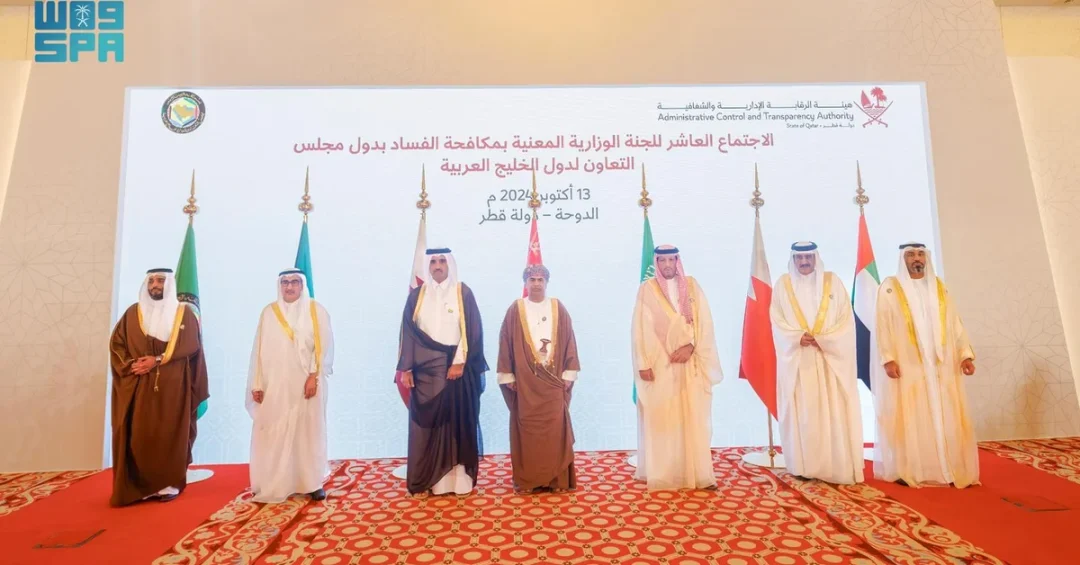
Riyadh, October 13, 2024 — A Saudi delegation led by President of the Oversight and Anti-Corruption Authority (Nazaha) Mazin bin Ibrahim Al-Kahmous participated in the 10th Meeting of the Anti-Corruption Ministerial Committee of the Gulf Cooperation Council (GCC) held in Doha, Qatar. The meeting underscored the Kingdom’s ongoing commitment to regional collaboration in safeguarding integrity and combating corruption across borders, in line with the directives of GCC leaders.
Context and Background
The GCC Anti-Corruption Ministerial Committee convenes annually to strengthen collective efforts among member states in preventing and addressing corruption. Saudi Arabia, under the leadership of the Custodian of the Two Holy Mosques King Salman bin Abdulaziz Al Saud and Crown Prince Mohammed bin Salman, has consistently prioritized transparency and accountability as pillars of national development. The Kingdom’s participation in this forum reflects its dedication to shared Gulf security and governance standards.
Key Details
During the meeting, President Al-Kahmous delivered a speech on behalf of the Kingdom, expressing gratitude to Qatar, represented by its Administrative Control and Transparency Authority, for chairing and organizing the event. He also thanked the General Secretariat of the GCC for facilitating the committee’s work. Al-Kahmous emphasized the importance of enhancing coordination among GCC states to combat cross-border corruption crimes, aligning with the goals outlined by the council’s leaders. The agenda included discussions on outcomes from specialized committee meetings focused on programs, projects, and guidelines in integrity and anti-corruption. Additionally, employees from relevant entities across GCC countries were honored for their success in the first competition for research and studies in integrity protection and anti-corruption for 2024.
Implications and Impact
The meeting reinforces the GCC’s unified stance against corruption, promoting legal frameworks and cooperative mechanisms that protect public funds and enhance institutional trust. For Saudi Arabia, active participation strengthens bilateral ties with neighboring states and supports the broader regional stability agenda. The recognition of research and studies further encourages academic and professional contributions to governance reforms across the Gulf.
Vision 2030 Alignment
This engagement directly supports Saudi Vision 2030’s goal of fostering a transparent and accountable government. By collaborating with GCC partners to combat corruption, the Kingdom advances its commitment to good governance, sustainable economic growth, and improved quality of life for citizens and residents alike. Such initiatives ensure that Saudi Arabia remains a leading model for integrity in the region and beyond.
20 Questions
Q1. What was the purpose of the 10th GCC Anti-Corruption Ministerial Committee Meeting?
A1. The meeting aimed to strengthen collaboration among GCC countries in combating cross-border corruption, discussing programs and guidelines related to integrity protection and anti-corruption efforts.
Q2. Who led Saudi Arabia’s delegation at the meeting?
A2. President of the Oversight and Anti-Corruption Authority (Nazaha) Mazin bin Ibrahim Al-Kahmous led the Saudi delegation at the meeting held in Doha.
Q3. Where was the meeting held?
A3. The meeting was held in Doha, Qatar, hosted by the Administrative Control and Transparency Authority of Qatar.
Q4. On what date did the meeting take place?
A4. The meeting took place on October 13, 2024.
Q5. Which Saudi authority is responsible for anti-corruption efforts?
A5. The Oversight and Anti-Corruption Authority (Nazaha) is the Saudi government body responsible for preventing and combating corruption.
Q6. What did President Al-Kahmous express in his speech?
A6. He expressed gratitude to Qatar and the GCC General Secretariat for organizing and supporting the committee’s work during the year.
Q7. Why is combating cross-border corruption important for GCC countries?
A7. Cross-border corruption threatens regional security and economic stability, requiring coordinated legal and operational measures among member states to protect public interests.
Q8. What topics were discussed at the meeting?
A8. Topics included outcomes of specialized committee meetings on programs, projects, and guidelines related to integrity protection and anti-corruption.
Q9. Were any individuals honored during the meeting?
A9. Yes, employees from relevant entities in GCC countries were honored for their success in the first competition for research and studies in integrity protection and anti-corruption for 2024.
Q10. How does this meeting support Saudi Vision 2030?
A10. It supports Vision 2030 by promoting transparency, accountability, and good governance, which are essential for sustainable development and economic diversification.
Q11. What is the role of the GCC in anti-corruption efforts?
A11. The GCC facilitates coordination among member states through ministerial committees and specialized forums to align legal frameworks and share best practices in combating corruption.
Q12. Who represented Qatar at the meeting?
A12. Qatar was represented by its Administrative Control and Transparency Authority, which chaired and organized the meeting.
Q13. What is the significance of the research competition mentioned?
A13. The competition encourages academic and professional contributions to anti-corruption knowledge, fostering innovation and expertise within the region.
Q14. How often does the GCC Anti-Corruption Ministerial Committee meet?
A14. The committee meets annually to review progress, discuss emerging challenges, and set priorities for collaborative anti-corruption actions.
Q15. What is Nazaha’s primary function in Saudi Arabia?
A15. Nazaha oversees integrity protection, investigates corruption cases, and promotes transparency within government and public institutions in the Kingdom.
Q16. Does Saudi Arabia have other anti-corruption initiatives?
A16. Yes, Saudi Arabia has implemented national strategies, awareness campaigns, and legal reforms under Vision 2030 to strengthen anti-corruption frameworks.
Q17. What was the outcome of the specialized committee meetings discussed?
A17. The outcomes included guidelines and project frameworks aimed at enhancing member states’ capacity to prevent and combat corruption effectively.
Q18. How does this meeting impact Saudi-Qatar relations?
A18. It positively impacts relations by demonstrating mutual commitment to shared governance goals and fostering diplomatic cooperation on regional issues.
Q19. What are the key goals of the GCC Anti-Corruption Ministerial Committee?
A19. Key goals include harmonizing anti-corruption laws, facilitating information exchange, and implementing joint projects to protect public funds and integrity.
Q20. Where can readers find official information about this meeting?
A20. Official information was released by the Saudi Press Agency (SPA), which provides accurate reporting on Saudi participation in GCC events.
Reader Feedback
We value your thoughts. Please share your feedback on this article.
Your feedback helps us improve our coverage.