


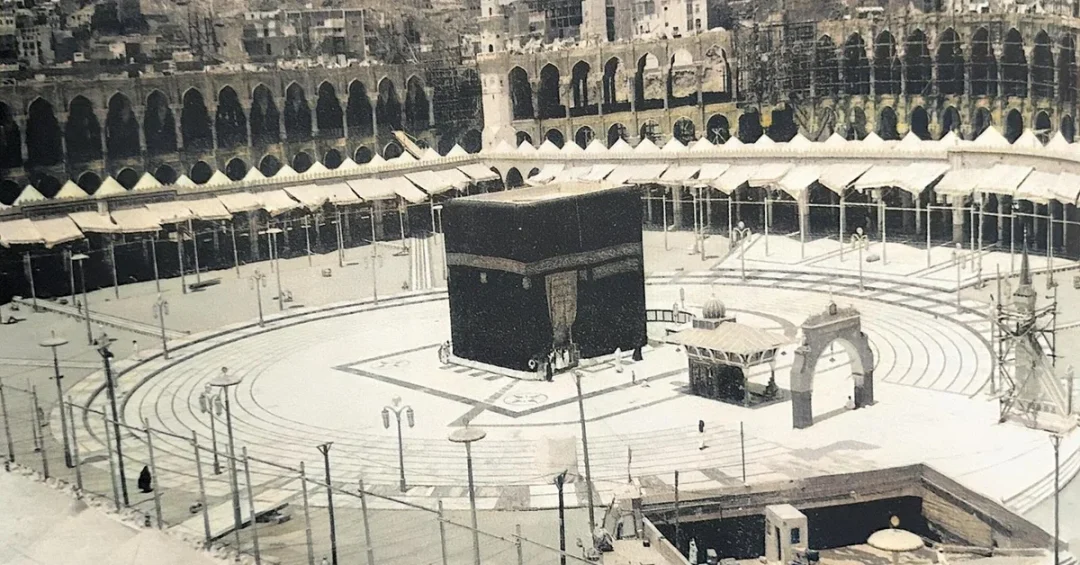
Visual Chronicles: Tracing the Evolution of the Grand Mosque through Time — A treasure trove of historical photographs and audio recordings, meticulously preserved by the General Authority for the Care of the Affairs of the Grand Mosque and the Prophet’s Mosque, offers a captivating visual journey through the architectural and spiritual evolution of the Grand Mosque in Makkah. These archives, spanning from the late 19th century to the modern era, document the sacred site’s remarkable expansion and the ongoing enhancements made to accommodate the growing millions of pilgrims and visitors, reflecting Saudi Arabia’s enduring commitment to the service of Islam.
Context and Background
These visual and audio chronicles serve as a sacred time capsule, capturing the spiritual journeys of countless Muslims through history. According to official Saudi sources, the archives provide crucial historical reference points, tracing the phases of the Grand Mosque’s expansion from panoramic vistas of Makkah in the late 19th century to scenes of the major Saudi expansions. The collection includes a significant historical photograph from 1372 AH (1953 AD) that showcases the installation of awnings to shield worshippers from the sun, and an expansive image from 1297 AH (1881 AD) that offers a comprehensive view of Makkah, including the Grand Mosque and the surrounding old buildings nestled amidst the mountains, before modernization efforts.
Key Details
The archive contains a series of remarkable images that document key milestones. A captivating image shows the door of the Holy Kaaba during the reign of King Abdulaziz Al Saud in 1363 AH (1944 AD), illustrating the commissioning of a new door for the Kaaba, installed in 1366 AH (1947 AD). Another image from 1374 AH (1955 AD) portrays the Al-Masaa during Hajj, showing the first Saudi expansion that added a new roof to shield pilgrims during the Sa’i. A photograph of the first Saudi expansion from 1376 AH (1957 AD) highlights the construction of marble stairs connecting to surrounding streets, easing the flow of pilgrims. Additional images depict King Saud bin Abdulaziz Al Saud inspecting the Black Stone in 1375 AH (1956 AD) without its silver ring, and the creation of a new curtain for the Kaaba door at the Kiswa factory in Makkah in 1382 AH (1962 AD).
Audio Heritage and Preservation
The audio archive of the Grand Mosque unveils a unique aspect of historical recordings, featuring recitations by the mosque’s readers since the establishment of the sound library in 1407 AH (1987 AD). This vast collection documents recitations, Friday sermons, and religious lessons. The General Authority for the Care of the Affairs of the Grand Mosque and the Prophet’s Mosque is undertaking efforts to digitize this material to safeguard it for future generations. Technical enhancements are applied to the audio recordings to ensure optimal quality, utilizing advanced programs to eliminate noise and enhance clarity. A dedicated committee reviews the audio content to maintain accuracy and recording quality, preserving this auditory heritage for Muslims worldwide.
Implications and Impact
This visual and audio heritage serves as a vital resource for historians, researchers, and Muslims worldwide, offering a tangible link to the spiritual and architectural history of Islam’s holiest site. The preservation and digitization efforts underscore Saudi Arabia’s commitment to the care of the Two Holy Mosques and the enhancement of the pilgrimage experience. These records also provide an invaluable chronicle of the Kingdom’s long-standing role in managing and expanding the Grand Mosque to accommodate the ever-increasing number of pilgrims, a key aspect of its leadership in the Islamic world.
Vision 2030 Alignment
The meticulous preservation and digitization of the Grand Mosque’s visual and audio history directly align with Saudi Vision 2030, which prioritizes the enhancement of services for pilgrims and visitors to the holy sites. By safeguarding this heritage, the Kingdom is not only preserving a sacred legacy but also enriching the cultural and religious experience for future generations, a goal central to the Vision’s objective of fostering a vibrant society deeply rooted in Islamic tradition and history.
20 Questions
Q1. What is the focus of the visual archives of the Grand Mosque?
A1. The visual archives document the architectural development and expansion phases of the Grand Mosque in Makkah, capturing its evolution from the late 19th century through modern Saudi expansions.
Q2. Who oversees the preservation of these visual and audio records?
A2. The General Authority for the Care of the Affairs of the Grand Mosque and the Prophet’s Mosque is responsible for preserving and managing these historical records.
Q3. What does a significant photograph from 1953 AD (1372 AH) show?
A3. This photograph captures the installation of awnings at the Grand Mosque to shield worshippers from the sun’s heat, marking a key development in the mosque’s history.
Q4. What does the panoramic image from 1881 AD (1297 AH) depict?
A4. It offers a comprehensive view of Makkah, including the Grand Mosque and the surrounding old buildings nestled amidst the mountains, before modernization efforts began.
Q5. What is shown in the image of the Kaaba door from 1944 AD?
A5. The image shows the commissioning of a new door for the Holy Kaaba during the reign of King Abdulaziz Al Saud, which was later installed in 1947 AD.
Q6. What does the image from 1955 AD (1374 AH) during Hajj illustrate?
A6. It portrays the Al-Masaa area during the first Saudi expansion, showing a new roof added to shield pilgrims from the sun during the Sa’i ritual.
Q7. What is depicted in King Saud’s inspection image from 1956 AD?
A7. The image shows King Saud bin Abdulaziz Al Saud inspecting the Black Stone without its silver ring, signaling preparation for a new ring.
Q8. What does the photograph from the first Saudi expansion in 1957 AD highlight?
A8. It highlights the construction of marble stairs connecting the Grand Mosque to surrounding streets, easing the flow of pilgrims in and out.
Q9. What was the purpose of the marble stairs mentioned above?
A9. The marble stairs were built to facilitate the movement of pilgrims, improving access and reducing crowding during peak times.
Q10. What is shown in the 1962 AD (1382 AH) image from King Saud’s reign?
A10. It shows the creation of a new curtain for the Kaaba door at the Kiswa factory in Makkah, marking the second locally manufactured curtain.
Q11. What does the image from 1979 AD (1399 AH) during King Khalid’s reign capture?
A11. It captures the installation of a new door for the Kaaba, with King Khalid exiting the Kaaba after unveiling the door by removing the curtain.
Q12. What does an earlier image show about the Kaaba and Zamzam well?
A12. It captures the Kaaba, Zamzam well, and surrounding squares of the Mataf before contemporary expansions, showing the old Al-Masaa with an awning.
Q13. When was the sound library in the Grand Mosque established?
A13. The sound library was established in 1987 AD (1407 AH) to start collecting audio recordings of recitations, sermons, and lessons.
Q14. What types of audio recordings are preserved in the Grand Mosque archives?
A14. The archives preserve recitations by mosque readers, Friday sermons, and religious lessons, creating a vast collection of religious heritage.
Q15. How are the audio recordings being protected for future generations?
A15. Efforts are underway to digitize the material, using advanced programs to eliminate noise and enhance clarity for long-term preservation.
Q16. What process is used to review the audio content?
A16. A dedicated committee reviews the audio content to maintain its accuracy and recording quality, ensuring the heritage is preserved correctly.
Q17. What is the primary significance of these visual and audio chronicles?
A17. They serve as a sacred time capsule, capturing the spiritual journeys of millions of Muslims and the historical development of the holy sites.
Q18. How do these archives support Saudi Arabia’s international role?
A18. They demonstrate the Kingdom’s long-standing commitment to caring for the Two Holy Mosques and enhancing the pilgrimage experience for Muslims worldwide.
Q19. How does this preservation effort relate to Vision 2030?
A19. It aligns with Vision 2030’s goal of enriching the cultural and religious experience for visitors and fostering a vibrant society rooted in Islamic heritage.
Q20. What is the historical value of the archive’s oldest images?
A20. Images from the late 19th century offer a rare glimpse into Makkah’s urban layout and the Grand Mosque’s environment before major modernization and expansions.
Reader Feedback
We value your thoughts. Please share your feedback on this article.
Your feedback helps us improve our coverage.