


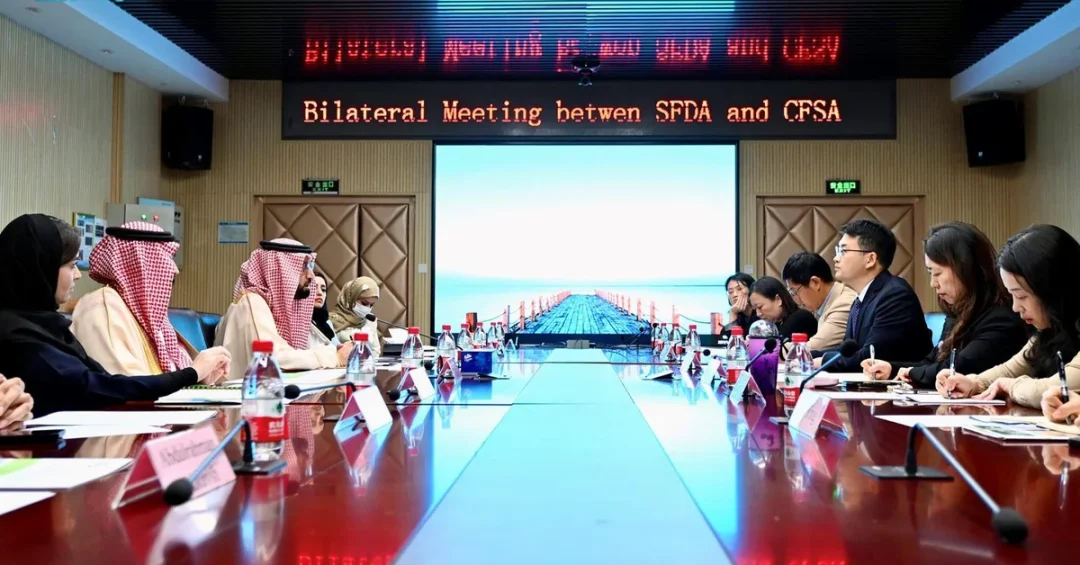
CEO of the Saudi Food and Drug Authority (SFDA) Dr. Hisham Aljadhey led an official delegation to Beijing on October 31, 2024, to enhance regulatory cooperation with key Chinese institutions. The visit, which included the signing of a Memorandum of Understanding with China’s National Medical Products Administration (NMPA), underscores the deepening partnership between the two nations in food and drug safety, public health, and biomedical innovation.
Context and Background
The visit took place as part of Saudi Arabia’s ongoing efforts to strengthen international collaboration under Vision 2030, which prioritizes health sector transformation and regulatory modernization. Dr. Aljadhey, accompanied by Saudi Ambassador to China Abdulrahman Al-Harbi, engaged with Chinese counterparts to share expertise and align regulatory frameworks, building on a history of bilateral cooperation in trade, health, and technology.
Key Details
During the visit, the SFDA delegation met with several key Chinese agencies. At the China National Center for Food Safety Risk Assessment (CFSA), they discussed best practices in food safety risk assessment and reviewed China’s established protocols in this area. The delegation then visited the Institute for Biological Product Control (IBPC) at the National Institute for Food and Drug Control (NIFDC), where talks focused on collaborative research in vaccines, biosimilars, and innovative therapeutic products, including advances in gene and cell therapies. Lastly, at the National Institute of Biological Sciences (NIBS), they met with Director Dr. Xiaodong Wang to review the institute’s research initiatives and the companies emerging from its biomedicine discovery programs.
Implications and Impact
These engagements mark a significant step forward in strengthening bilateral cooperation between Saudi Arabia and China in the regulation of food and drugs. The partnership is expected to enhance public health outcomes by promoting innovation, ensuring product safety and efficacy, and facilitating regulatory harmonization. This collaboration also supports Saudi Arabia’s goal of becoming a regional hub for pharmaceutical and biomedical excellence, benefiting both domestic and international consumers.
Vision 2030 Alignment
The SFDA’s mission in China aligns directly with Saudi Vision 2030, which aims to diversify the economy, improve quality of life, and position the Kingdom as a global leader in health and innovation. By fostering international regulatory partnerships, Saudi Arabia accelerates its health sector transformation, ensuring access to safe and effective products while driving research and development. This visit demonstrates the Kingdom’s commitment to building a sustainable, knowledge-based economy through strategic global engagement.
20 Questions
Q1. Who led the Saudi delegation to China?
A1. The CEO of the Saudi Food and Drug Authority (SFDA), Dr. Hisham Aljadhey, led the delegation during the official visit to Beijing in October 2024.
Q2. Which Chinese agency did the SFDA sign a Memorandum of Understanding with?
A2. The SFDA signed a Memorandum of Understanding with China’s National Medical Products Administration (NMPA) to enhance regulatory cooperation.
Q3. Who accompanied the SFDA delegation in China?
A3. The delegation was accompanied by Saudi Ambassador to China, Abdulrahman Al-Harbi, during the visits to Chinese institutions.
Q4. What was the focus of the visit to the China National Center for Food Safety Risk Assessment (CFSA)?
A4. The discussions focused on best practices in food safety risk assessment and highlighted China’s experience in this area.
Q5. Which institute in Beijing specializes in biological product control?
A5. The Institute for Biological Product Control (IBPC) at the National Institute for Food and Drug Control (NIFDC) specializes in biological product oversight.
Q6. What collaborative projects were discussed at the IBPC?
A6. Talks covered collaborative research in vaccines, biosimilars, innovative therapeutic products, and advances in gene and cell therapies.
Q7. Who is the Director of the National Institute of Biological Sciences (NIBS)?
A7. The Director of NIBS is Dr. Xiaodong Wang, who met with the SFDA delegation to discuss research initiatives.
Q8. What did the SFDA delegation review at NIBS?
A8. They reviewed the institute’s research initiatives, its role in discovering biomedicines, and companies established through NIBS.
Q9. How many key Chinese agencies did the SFDA delegation visit?
A9. The delegation visited three key agencies: CFSA, IBPC/NIFDC, and NIBS.
Q10. When did the SFDA CEO’s visit to China take place?
A10. The official visit occurred on October 31, 2024, as reported by the Saudi Press Agency.
Q11. What is the main goal of the SFDA-China cooperation?
A11. The goal is to strengthen bilateral cooperation in food and drug regulation to enhance public health and ensure product safety.
Q12. How does this visit support Saudi Arabia’s health sector goals?
A12. The visit promotes innovation and regulatory harmonization, key priorities under Vision 2030 for health sector transformation.
Q13. What is the NMPA’s role in China?
A13. The National Medical Products Administration (NMPA) is China’s regulatory body responsible for the safety and efficacy of medical products.
Q14. Did the SFDA sign the MoU with China in Beijing?
A14. Yes, the Memorandum of Understanding with NMPA was signed during the SFDA delegation’s visit to Beijing.
Q15. What is the significance of the Shenzhen Food Safety Forum?
A15. The SFDA CEO participated in the 8th Shenzhen Food Safety Forum, sharing expertise and learning global best practices.
Q16. How does this visit benefit Saudi consumers?
A16. Enhanced regulatory cooperation ensures safer food and drugs, benefiting Saudi consumers through improved product quality and oversight.
Q17. What is the role of the Saudi Ambassador during the visit?
A17. Ambassador Abdulrahman Al-Harbi facilitated diplomatic engagement and supported the SFDA delegation in their official meetings.
Q18. Are gene and cell therapies part of the cooperation?
A18. Yes, discussions included advancements in gene and cell therapies as part of collaborative research with the IBPC.
Q19. Does this visit align with the China-Saudi strategic partnership?
A19. Yes, it strengthens economic and health ties, building on the comprehensive strategic partnership between the two countries.
Q20. What is the SFDA’s long-term objective in international engagements?
A20. The SFDA aims to position Saudi Arabia as a global hub for pharmaceutical and biomedical innovation through strategic partnerships.
Reader Feedback
We value your thoughts. Please share your feedback on this article.
Your feedback helps us improve our coverage.