


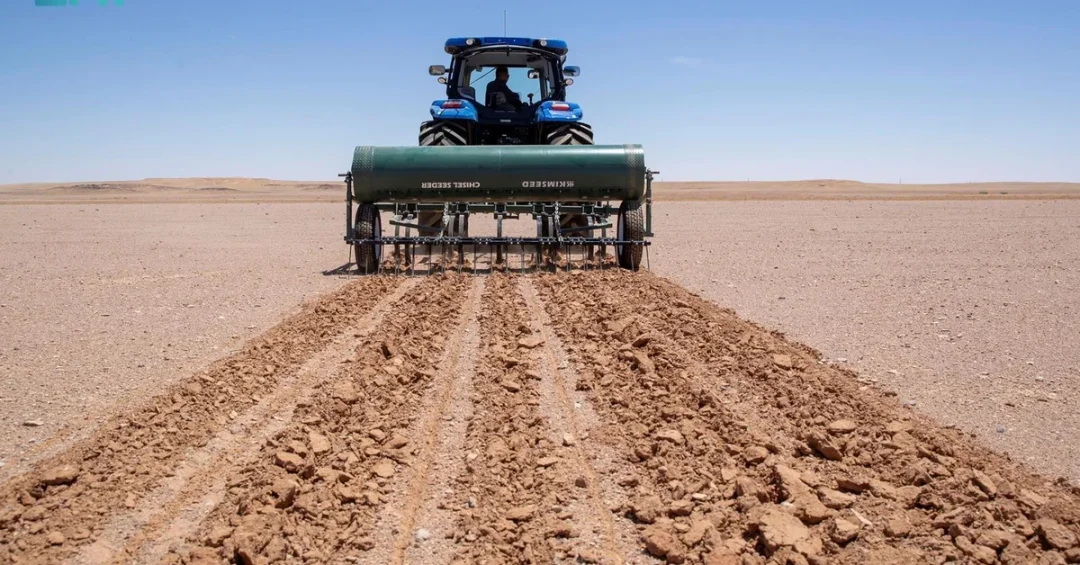
The National Center for Vegetation Cover Development & Combating Desertification (NCVC) has successfully implemented a comprehensive plan to rehabilitate natural rangelands across 15 locations in 7 regions of the Kingdom of Saudi Arabia. The initiative, announced by the Saudi Press Agency on November 11, 2024, involves dispersing over 20 tons of carefully selected, viability-tested seeds from 37 plant species to restore more than 15,000 hectares of degraded land. Using modern equipment, the NCVC aims to enhance vegetation cover, preserve soil quality, and mitigate negative environmental impacts.
Context and Background
This rehabilitation effort is part of Saudi Arabia’s broader commitment to environmental sustainability under Vision 2030. The NCVC, established to lead vegetation cover development and combat desertification, has been actively working to restore natural habitats across the Kingdom. The targeted regions include Al-Jouf, Riyadh, Al-Qassim, Madinah, and Hail, where protected areas, rangelands, and floodplains have been selected based on rigorous criteria for maximum ecological impact.
Key Details
The plan utilizes over 50 pieces of specialized equipment for plowing, sapling planting, rainwater harvesting, filtering, purifying, sorting, and collecting processes to ensure effective land restoration. Following the rehabilitation phase, the NCVC will initiate a follow-up and evaluation process to monitor seasonal changes, vegetation cover, and density. This phase will include soil analysis and environmental mapping using advanced technologies such as Geographic Information Systems (GIS), aerial imaging, and remote sensing to track the distribution of vegetation cover.
Implications and Impact
This initiative has significant regional and international implications, as it demonstrates Saudi Arabia’s leadership in combating desertification and climate change. By rehabilitating 15,000 hectares, the NCVC contributes to biodiversity conservation, reduces dust storms, and supports sustainable agricultural practices. The use of advanced monitoring technologies sets a benchmark for environmental restoration projects globally, reinforcing the Kingdom’s role as a pioneer in green innovation.
Vision 2030 Alignment
The NCVC’s efforts are directly aligned with the Saudi Green Initiative, a key pillar of Vision 2030, which aims to plant 10 billion trees and restore 40 million hectares of land. This rehabilitation project not only enhances ecosystem resilience but also promotes sustainable development, biodiversity, and community well-being. As Saudi Arabia continues to implement these ambitious environmental programs, it solidifies its position as a global leader in land restoration and ecological stewardship, contributing to a greener future for the region and the world.
20 Questions
Q1. What is the NCVC?
A1. The National Center for Vegetation Cover Development & Combating Desertification (NCVC) is a Saudi government agency focused on restoring vegetation, preventing desertification, and managing natural resources sustainably.
Q2. How many tons of seeds are being dispersed?
A2. Over 20 tons of seeds are being dispersed under the NCVC plan, carefully selected and tested for viability from 37 different plant species.
Q3. How many hectares are being rehabilitated?
A3. The initiative targets the rehabilitation of over 15,000 hectares of natural rangelands across 15 locations in 7 regions of Saudi Arabia.
Q4. Which regions are involved in this project?
A4. The project includes locations in Al-Jouf, Riyadh, Al-Qassim, Madinah, and Hail, covering protected areas, rangelands, and floodplains.
Q5. What types of equipment are being used?
A5. Over 50 pieces of specialized equipment are used, including machinery for plowing, sapling planting, rainwater harvesting, filtering, purifying, sorting, and collecting.
Q6. Why is seed viability testing important?
A6. Viability testing ensures that seeds have a high likelihood of germinating and thriving, maximizing the success of rehabilitation efforts and efficient use of resources.
Q7. How will the NCVC monitor the project’s success?
A7. The NCVC will use Geographic Information Systems (GIS), aerial imaging, and remote sensing to monitor vegetation cover, soil quality, and seasonal changes.
Q8. What is the Saudi Green Initiative?
A8. The Saudi Green Initiative is a national environmental program under Vision 2030 that aims to plant 10 billion trees, restore land, and reduce carbon emissions.
Q9. How does this project combat desertification?
A9. By restoring vegetation cover and improving soil quality, the project prevents land degradation, reduces dust storms, and enhances ecosystem resilience against desertification.
Q10. Are there any international partnerships involved?
A10. The project is primarily led by the NCVC using domestic resources, but it aligns with global environmental goals like the UN’s Sustainable Development Goals.
Q11. What is the long-term goal of this initiative?
A11. The long-term goal is to create sustainable rangelands that support biodiversity, improve water retention, and contribute to the Kingdom’s environmental and economic sustainability.
Q12. How does rainwater harvesting help rehabilitation?
A12. Rainwater harvesting captures and stores water for irrigation, reducing reliance on groundwater and ensuring plants receive adequate moisture for growth.
Q13. What is the role of GIS in this project?
A13. GIS technology helps map vegetation distribution, analyze soil conditions, and track environmental changes over time, guiding effective rehabilitation strategies.
Q14. How many plant species are being used?
A14. The seeds come from 37 plant species, chosen for their adaptability to local climates and ability to restore native vegetation.
Q15. Is the community involved in this project?
A15. Yes, the NCVC works with local communities to promote sustainable rangeland management and raise awareness about environmental conservation.
Q16. How does this project support Vision 2030?
A16. It directly supports Vision 2030’s environmental goals, including enhancing quality of life, promoting green growth, and achieving Saudi Green Initiative targets.
Q17. What challenges does desertification pose to Saudi Arabia?
A17. Desertification threatens agricultural productivity, water resources, and biodiversity, making rehabilitation projects crucial for the Kingdom’s ecological and economic health.
Q18. How long will the rehabilitation process take?
A18. The NCVC will conduct follow-up evaluations over multiple seasons to monitor progress, but full restoration may take years to achieve stable vegetation cover.
Q19. Are there similar projects planned for other regions?
A19. The NCVC continues to expand its efforts across Saudi Arabia, targeting additional degraded areas for rehabilitation under its ongoing programs.
Q20. How can people learn more about NCVC initiatives?
A20. Updates on NCVC projects are shared through official Saudi government channels, including the Saudi Press Agency and the NCVC website, promoting transparency and public engagement.
Reader Feedback
We value your thoughts. Please share your feedback on this article.
Your feedback helps us improve our coverage.