


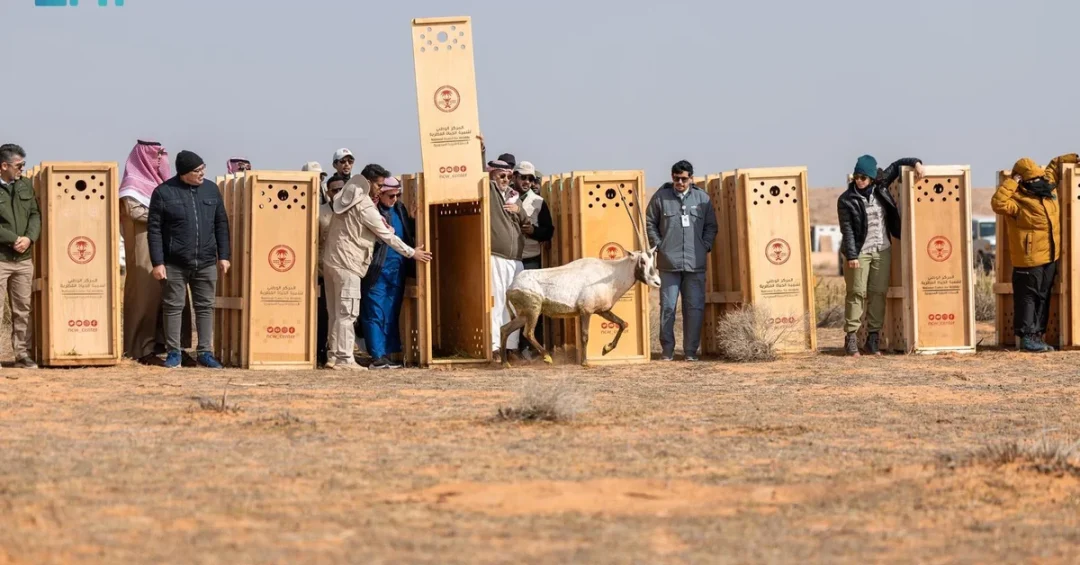
Thirty Arabian oryx, 10 Arabian gazelles, 50 sand gazelles, and five red-necked ostriches have been released into their natural habitat at the Imam Turki bin Abdullah Royal Nature Reserve. The reintroduction, carried out on January 8, 2025, by the Imam Turki bin Abdullah Royal Nature Reserve Development Authority in collaboration with the National Center for Wildlife, marks a significant step in the Kingdom’s ongoing efforts to restore ecological balance and protect endangered species.
Context and Background
The initiative is part of a broader strategy to promote environmental sustainability and biodiversity conservation across Saudi Arabia. The Imam Turki bin Abdullah Royal Nature Reserve, spanning an impressive 91,500 square kilometers, is the second largest royal reserve in the Kingdom. It serves as a vital sanctuary for numerous wildlife and plant species, offering an ideal environment for hiking, wilderness adventures, camping, and sustainable hunting.
Key Details
The release included carefully selected species native to the region, each playing a crucial role in maintaining the health of local ecosystems. Arabian oryx, once extinct in the wild, exemplify successful conservation efforts. The Arabian gazelle and sand gazelle are key herbivores that help maintain vegetation balance, while the red-necked ostrich contributes to seed dispersal and soil aeration. The collaboration between the reserve authority and the National Center for Wildlife ensures that all reintroductions follow rigorous scientific protocols.
Implications and Impact
This reintroduction is expected to enhance biodiversity and strengthen the resilience of the reserve’s ecosystems. It also supports Vision 2030 goals by promoting ecotourism and sustainable land use. The return of these endangered species can attract international researchers and nature enthusiasts, further positioning Saudi Arabia as a leader in regional conservation efforts. The initiative also raises public awareness about the importance of preserving natural heritage.
Vision 2030 Alignment
The reintroduction at the Imam Turki bin Abdullah Royal Nature Reserve directly aligns with Saudi Vision 2030 by advancing environmental sustainability, protecting wildlife, and fostering community engagement with nature. Through such programs, the Kingdom demonstrates its commitment to balancing economic development with ecological stewardship, ensuring a greener and more prosperous future for generations to come.
20 Questions
Q1. What species were reintroduced at the Imam Turki bin Abdullah Royal Nature Reserve?
A1. The reintroduction included 30 Arabian oryx, 10 Arabian gazelles, 50 sand gazelles, and five red-necked ostriches, all carefully selected for their ecological roles.
Q2. When did the reintroduction take place?
A2. The release occurred on January 8, 2025, as announced by the Imam Turki bin Abdullah Royal Nature Reserve Development Authority.
Q3. Which organizations were involved in the initiative?
A3. The Imam Turki bin Abdullah Royal Nature Reserve Development Authority and the National Center for Wildlife jointly carried out the reintroduction.
Q4. What is the main goal of this reintroduction?
A4. The goal is to promote environmental sustainability, restore ecological balance, and raise awareness about protecting endangered species.
Q5. How large is the Imam Turki bin Abdullah Royal Nature Reserve?
A5. The reserve covers 91,500 square kilometers, making it the second largest royal reserve in the Kingdom of Saudi Arabia.
Q6. Why is the Arabian oryx significant?
A6. The Arabian oryx was once extinct in the wild, and its successful reintroduction is a symbol of effective conservation efforts in Saudi Arabia.
Q7. What ecological role do Arabian gazelles play?
A7. Arabian gazelles are herbivores that help manage vegetation growth, supporting a balanced ecosystem and providing food for predators.
Q8. How does the sand gazelle contribute to the environment?
A8. Sand gazelles help disperse seeds and maintain plant diversity through their grazing habits, aiding in vegetation regeneration.
Q9. What is the red-necked ostrich’s role in the ecosystem?
A9. Red-necked ostriches contribute to seed dispersal and soil aeration, enhancing soil fertility and plant growth.
Q10. Does the reserve support human activities?
A10. Yes, the reserve is suitable for hiking, wilderness adventures, camping, and sustainable hunting, promoting ecotourism.
Q11. How does this initiative support Vision 2030?
A11. It supports Vision 2030 by advancing environmental sustainability, protecting biodiversity, and fostering ecotourism as part of economic diversification.
Q12. What is the National Center for Wildlife’s role?
A12. The center provides scientific expertise and protocols for wildlife reintroduction, ensuring species survival and habitat restoration.
Q13. How does the reintroduction benefit local communities?
A13. It raises environmental awareness and can attract tourists, creating economic opportunities through ecotourism and education.
Q14. Are these species native to the region?
A14. Yes, all released species are native to the Arabian Peninsula and historically lived in the reserve’s ecosystem.
Q15. What monitoring is conducted after release?
A15. The authority and National Center for Wildlife track the animals’ health, movement, and adaptation using GPS collars and field observations.
Q16. How does this effort compare to other Saudi conservation projects?
A16. It is part of a nationwide strategy, similar to programs at other royal reserves, to restore ecosystems and protect endangered wildlife.
Q17. Can the public visit the reserve?
A17. Yes, the reserve is open for hiking, camping, and wilderness experiences, with regulations to protect wildlife and habitats.
Q18. What other species live in the reserve?
A18. The reserve hosts diverse wildlife including birds, reptiles, and various plant species, making it a biodiversity hotspot.
Q19. How does this initiative raise environmental awareness?
A19. Through community programs and media coverage, the initiative educates the public on the importance of wildlife conservation and sustainable living.
Q20. What are the future plans for the reserve?
A20. Plans include continued reintroductions, habitat restoration, and expanding ecotourism while maintaining strict conservation standards.
Reader Feedback
We value your thoughts. Please share your feedback on this article.
Your feedback helps us improve our coverage.