


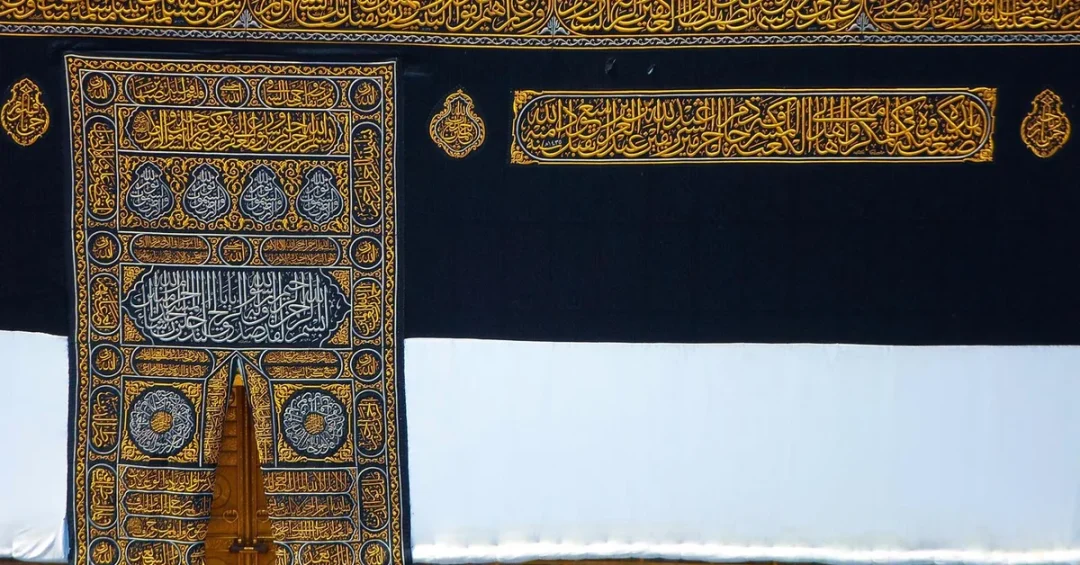
The Diriyah Biennale Foundation has announced that the Islamic Arts Biennale 2025 will feature the first-ever public display of the entire Kiswah of the Holy Kaaba outside of Makkah. The second edition of the Biennale, titled “And All That Is In Between,” will take place from January 25 to May 25, 2025, at the Western Hajj Terminal of King Abdulaziz International Airport in Jeddah, welcoming international visitors to explore Islamic art and heritage.
Context and Background
This historic display coincides with the first Hijri centenary of the establishment of the Kiswah Factory of the Holy Kaaba (King Abdulaziz Complex) in Saudi Arabia, which has manufactured the Kiswah since 1346 AH (1927). The Kiswah—the cloth covering the Holy Kaaba—is crafted annually, and the one exhibited at this year’s Biennale is the same that adorned the Kaaba last year. Its intricate weaving and embroidery, featuring silk, gold, and silver threads, represent the highest form of creative production in Islamic arts.
Key Details
The Diriyah Biennale Foundation stated in a press release that exhibiting the Kiswah aims to highlight its historical development and associated craftsmanship, offering visitors a unique opportunity to admire its details. “With the display of the Kiswah as a central element of the Islamic Arts Biennale 2025, the Diriyah Biennale Foundation seeks to strengthen pride in Islamic cultural heritage and create an exceptional opportunity for public engagement with a significant aspect of Islamic art,” the release noted. In addition to the Kiswah, the Biennale will feature a remarkable collection of historical Islamic artifacts and contemporary artworks, building on the success of the 2023 inaugural Biennale, “Awwal Bait” (First House), which attracted over 600,000 visitors and ranked as the world’s second most-visited Biennale.
Implications and Impact
This unprecedented display underscores Saudi Arabia’s central role in serving Islam and Muslims, as the Kingdom holds custodianship of the Two Holy Mosques. The exhibition emphasizes the exceptional capabilities of the Kiswah Factory and the Kingdom’s commitment to preserving Islamic heritage. By making the Kiswah accessible outside Makkah, the Biennale allows a global audience to engage with this sacred artifact, enhancing cross-cultural understanding and appreciation of Islamic artistry.
Vision 2030 Alignment
The Islamic Arts Biennale 2025 aligns directly with Saudi Arabia’s Vision 2030 objectives of enriching the religious and cultural experiences of pilgrims and preserving the Kingdom’s Islamic heritage. This initiative supports the Kingdom’s broader goals of promoting cultural tourism, fostering global cultural exchange, and showcasing Saudi Arabia as a leading custodian of Islamic history and art. After the Biennale concludes in May, the Kiswah will return to the care of the Kiswah Factory of the Holy Kaaba, continuing its revered tradition.
20 Questions
Q1. What is the Islamic Arts Biennale 2025?
A1. The Islamic Arts Biennale 2025 is an international exhibition titled “And All That Is In Between,” held in Jeddah from January 25 to May 25, 2025, showcasing Islamic artifacts and contemporary artworks.
Q2. Where is the Biennale taking place?
A2. It is taking place at the Western Hajj Terminal of King Abdulaziz International Airport in Jeddah, Saudi Arabia, a venue designed for large-scale cultural events.
Q3. What is the Kiswah of the Holy Kaaba?
A3. The Kiswah is the cloth covering the Holy Kaaba in Makkah, made of silk and embroidered with gold and silver threads, crafted annually at the Kiswah Factory.
Q4. Why is this display of the Kiswah historic?
A4. This is the first time the entire Kiswah has been displayed outside of Makkah, offering unprecedented public access to this sacred Islamic artifact.
Q5. Who organized the Islamic Arts Biennale 2025?
A5. The Biennale is organized by the Diriyah Biennale Foundation, a Saudi cultural institution dedicated to promoting art and heritage.
Q6. When was the Kiswah Factory established?
A6. The Kiswah Factory of the Holy Kaaba (King Abdulaziz Complex) was established in 1346 AH (1927) and celebrates its centenary this year.
Q7. What materials are used in the Kiswah?
A7. The Kiswah is made of silk fabric and embroidered with gold and silver threads, creating intricate Islamic patterns and calligraphy.
Q8. How many visitors did the 2023 Biennale attract?
A8. The 2023 Islamic Arts Biennale, “Awwal Bait,” attracted over 600,000 visitors, making it the second most-visited Biennale in the world.
Q9. What other artifacts are displayed at the Biennale?
A9. The Biennale features a collection of historical Islamic artifacts and contemporary artworks, highlighting the richness of Islamic civilization.
Q10. Why is the Kiswah significant to Muslims?
A10. The Kiswah is a revered symbol of the Holy Kaaba, representing Islamic unity and devotion, and holds deep spiritual meaning for Muslims worldwide.
Q11. How does the Biennale support Saudi Arabia’s Vision 2030?
A11. It enriches religious and cultural experiences for visitors, promotes cultural tourism, and preserves Islamic heritage, aligning with Vision 2030 goals.
Q12. Will the Kiswah return after the Biennale?
A12. Yes, after the Biennale concludes in May 2025, the Kiswah will be returned to the care of the Kiswah Factory of the Holy Kaaba.
Q13. What is the theme of the 2025 Biennale?
A13. The theme is “And All That Is In Between,” focusing on the connection between Islamic art, heritage, and contemporary creativity.
Q14. How does the Biennale engage the public?
A14. It provides educational insights into the Kiswah’s craftsmanship and allows visitors to admire its intricate details up close.
Q15. Who is responsible for manufacturing the Kiswah?
A15. The Kiswah is manufactured by the Kiswah Factory of the Holy Kaaba (King Abdulaziz Complex) in Saudi Arabia, under royal patronage.
Q16. What is the role of the Diriyah Biennale Foundation?
A16. The foundation organizes the Biennale to highlight Islamic cultural heritage and create platforms for public engagement with art.
Q17. Why is the Biennale held at an airport terminal?
A17. The Western Hajj Terminal is a symbolic and spacious venue, reflecting the connection between pilgrimage and cultural exchange.
Q18. How does this display strengthen Saudi Arabia’s role?
A18. It emphasizes Saudi Arabia’s central role in serving Islam and preserving Islamic artifacts, reinforcing its custodianship of holy sites.
Q19. What is the duration of the Biennale?
A19. The Biennale runs for four months, from January 25 to May 25, 2025, providing ample time for international visitors.
Q20. How can visitors learn more about the Kiswah?
A20. Visitors can explore exhibits detailing the Kiswah’s history, weaving techniques, and artistic significance at the Biennale.
Reader Feedback
We value your thoughts. Please share your feedback on this article.
Your feedback helps us improve our coverage.