


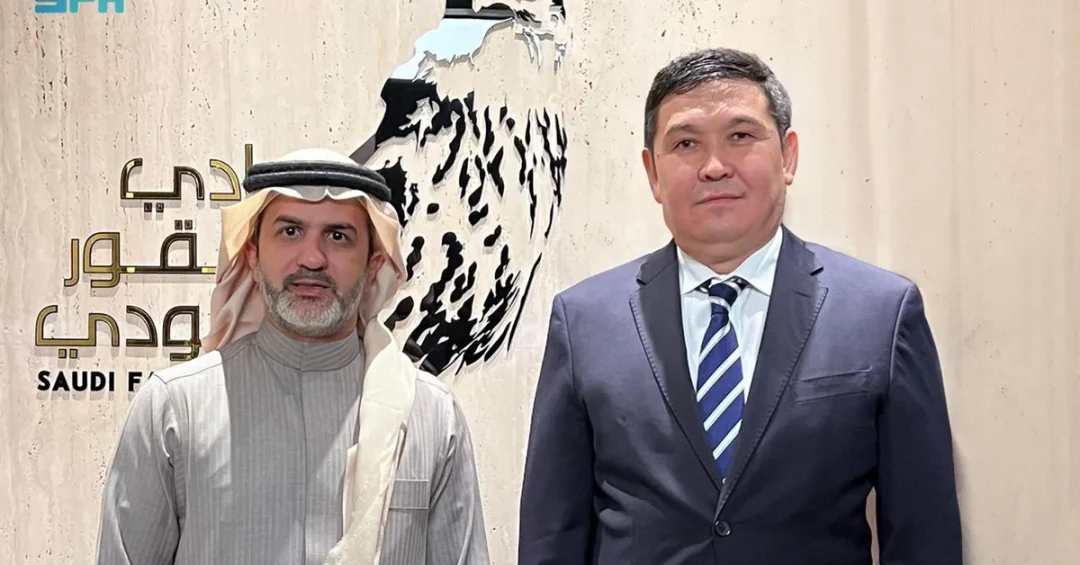
Deputy Chief Executive of the Saudi Falcons Club (SFC) Ahmad Al-Hababi met today in Riyadh with Kazakh Ambassador Extraordinary and Plenipotentiary Madiyar Menilbekov to discuss strengthening partnership prospects between the two sides. The meeting, held on Thursday, January 9, 2025, focused on exploring potential cooperation opportunities to serve their common goals, as reported by the Saudi Press Agency (SPA).
Context and Background
The Saudi Falcons Club is a leading institution dedicated to preserving the heritage of falconry and protecting falcon species. The club operates the Hadad Program, a pioneering conservation model that aims to return falcons to their natural habitats and safeguard them from extinction. This initiative aligns with broader efforts to maintain Saudi Arabia’s cultural traditions while promoting environmental stewardship.
Key Details
During the discussions, Ambassador Menilbekov commended the Saudi Falcons Club’s significant role in promoting the hobby of falconry and preserving this well-established heritage. The meeting also explored avenues for enhanced cooperation between Saudi Arabia and Kazakhstan in cultural and environmental fields. Both sides expressed interest in sharing expertise and supporting joint initiatives that benefit conservation and traditional practices.
Implications and International Impact
This diplomatic engagement underscores Saudi Arabia’s growing international partnerships in culture and heritage preservation. By collaborating with Kazakhstan, a nation with its own rich traditions of falconry, the Kingdom strengthens its global network of allies committed to safeguarding intangible cultural heritage. The meeting reflects Saudi Arabia’s proactive diplomacy and its role as a leader in environmental conservation.
Vision 2030 Alignment
The meeting constitutes part of the Saudi Falcons Club’s efforts to strengthen international partnerships, in alignment with Vision 2030. By fostering cross-border collaboration on heritage conservation, Saudi Arabia builds bridges with nations like Kazakhstan, reinforcing its commitment to cultural exchange, sustainable development, and global leadership. This forward-looking approach ensures that traditional practices like falconry continue to thrive for future generations.
20 Questions
Q1. Who met to discuss partnership between Saudi Arabia and Kazakhstan?
A1. Ahmad Al-Hababi, deputy chief executive of the Saudi Falcons Club, met with Kazakh Ambassador Madiyar Menilbekov in Riyadh.
Q2. When did the meeting take place?
A2. The meeting occurred on January 9, 2025, in Riyadh, Saudi Arabia.
Q3. What organization does Ahmad Al-Hababi represent?
A3. He represents the Saudi Falcons Club (SFC), a leading institution in falconry and conservation.
Q4. What is the Hadad Program?
A4. The Hadad Program is a pioneering conservation model implemented by the SFC to return falcons to natural habitats and protect them from extinction.
Q5. How did Ambassador Menilbekov describe the SFC’s role?
A5. He commended the club’s significant role in promoting falconry and preserving this well-established heritage.
Q6. What is the purpose of the meeting?
A6. The meeting aimed to enhance partnership prospects and explore cooperation opportunities to serve common goals.
Q7. Which country does Ambassador Madiyar Menilbekov represent?
A7. He is the Kazakh Ambassador Extraordinary and Plenipotentiary to Saudi Arabia.
Q8. How does this meeting support Vision 2030?
A8. The meeting is part of SFC’s efforts to strengthen international partnerships, aligning with Vision 2030’s goals for cultural exchange and global cooperation.
Q9. What cultural heritage does the meeting focus on?
A9. The meeting focuses on falconry, a well-established heritage in both Saudi Arabia and Kazakhstan.
Q10. Is the Hadad Program exclusive to Saudi Arabia?
A10. It is led by the SFC, but discussions aim to explore cooperation with Kazakhstan to share conservation expertise.
Q11. What was the news source for this meeting?
A11. The information was released by the Saudi Press Agency (SPA).
Q12. Does Kazakhstan have falconry traditions?
A12. Yes, Kazakhstan has rich traditions of falconry, making it a natural partner for cooperation in this field.
Q13. What is the SFC’s main goal in conservation?
A13. The SFC aims to protect falcon species from extinction and return them to natural habitats through programs like Hadad.
Q14. How might this partnership benefit both nations?
A14. It could lead to shared expertise in conservation, cultural exchanges, and strengthened bilateral ties.
Q15. What role does the SFC play in Saudi Arabia?
A15. The SFC promotes falconry as a heritage hobby and leads environmental conservation efforts for falcons.
Q16. Is this meeting part of a larger diplomatic effort?
A16. Yes, it reflects Saudi Arabia’s broader diplomacy to build international partnerships in culture and environment.
Q17. What is the significance of falconry in Saudi culture?
A17. Falconry is a deeply rooted tradition in Saudi Arabia, symbolizing heritage and connection to nature.
Q18. How does the SFC contribute to Vision 2030?
A18. The SFC supports Vision 2030 by fostering cultural preservation, sustainable development, and international collaborations.
Q19. What environmental goal does the Hadad Program address?
A19. It addresses the goal of preventing falcon extinction and restoring their populations in natural ecosystems.
Q20. What future outcomes are expected from this meeting?
A20. Enhanced cooperation on conservation projects and cultural exchanges, strengthening Saudi-Kazakh relations.
Reader Feedback
We value your thoughts. Please share your feedback on this article.
Your feedback helps us improve our coverage.