


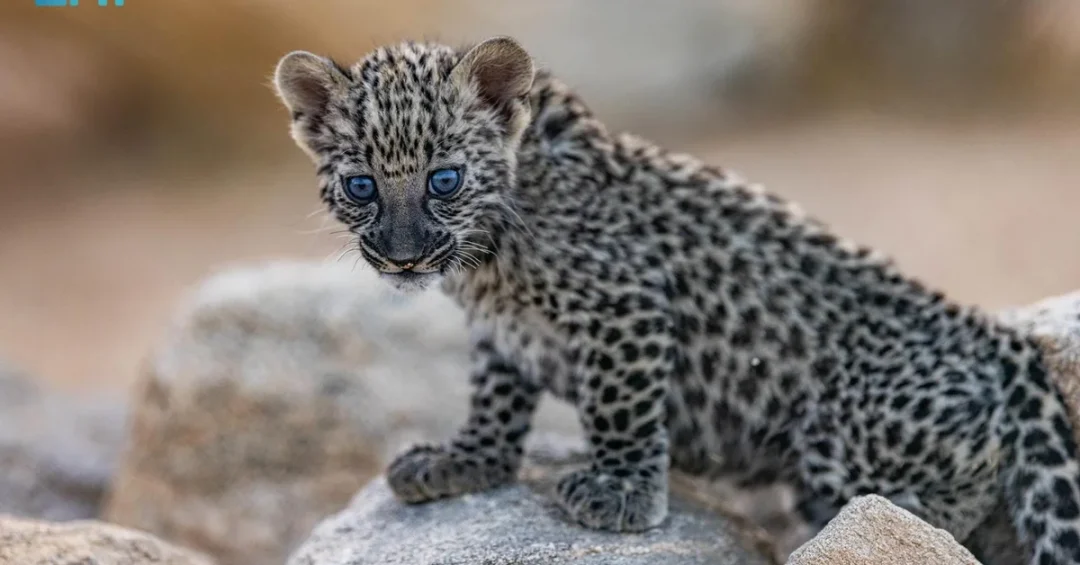
The Arabian Leopard Conservation Breeding Center in AlUla, under the management of the Royal Commission for AlUla (RCU), has become the first institution in Saudi Arabia to receive membership from the European Association of Zoos and Aquaria (EAZA), the Saudi Press Agency reported on January 9, 2025. This historic accreditation underscores the center’s pivotal role in safeguarding the critically endangered Arabian leopard and aligns with Saudi Arabia’s broader environmental and conservation goals under Vision 2030.
Context and Background
The Arabian leopard (Panthera pardus nimr) has been classified as critically endangered by the International Union for Conservation of Nature (IUCN) since 1996, with wild populations declining from habitat loss and historical hunting. The Royal Commission for AlUla, established to oversee the sustainable development of the AlUla region, has prioritized wildlife conservation as part of its mandate. The Arabian Leopard Conservation Breeding Center, which came under RCU management in 2020, has since seen its leopard population grow from 14 to 31 individuals, including seven cubs born in 2023 and five in 2022, with a notable set of triplets. The EAZA accreditation represents a significant milestone in the center’s decade-long effort to leverage global expertise for species recovery.
Key Details
EAZA is a leading network of zoos and aquariums across Europe, with over 400 members focused on conservation, education, and research. Membership provides the RCU and the AlUla center with access to a global community of wildlife experts, veterinarians, and conservation scientists. This collaboration facilitates participation in coordinated breeding programs and the exchange of best practices in animal care and habitat management. Dr. Stephen Browne, RCU Vice President for Wildlife Natural Heritage, stated that the accreditation is “an important step to support efforts to protect and conserve the Arabian leopard,” noting that it strengthens the center’s capability through knowledge transfer from international specialists.
Implications and Impact
The accreditation has a notable impact on regional conservation efforts. By linking the Arabian Leopard Center with European institutions, it fosters a collaborative framework that supports the reintroduction of captive-bred leopards into secure natural habitats in AlUla. This aligns with Saudi Arabia’s broader environmental initiatives, such as the Saudi Green Initiative, which aims to rehabilitate ecosystems and reforest large areas of the Kingdom. The recognition also positions Saudi Arabia as a proactive partner in global biodiversity efforts, enhancing trust and cooperation with international environmental bodies. For wildlife advocacy, this development signals increased viability for the Arabian leopard’s future, encouraging similar conservation projects across the region.
Vision 2030 Alignment
The Arabian Leopard Conservation Breeding Center’s accreditation directly supports Saudi Arabia’s Vision 2030, which emphasizes preserving the Kingdom’s natural heritage, promoting sustainable tourism, and diversifying the economy through eco-friendly projects. By protecting and reintroducing a flagship species, the RCU contributes to the development of AlUla as a premier destination for ecotourism, where visitors can experience indigenous wildlife in restored landscapes. This forward-looking approach not only safeguards biodiversity but also reinforces Saudi Arabia’s commitment to long-term environmental stewardship, aligning with global targets for conservation and sustainable development.
20 Questions
Q1. What is the Arabian Leopard Conservation Breeding Center?
A1. A dedicated facility in AlUla, managed by the Royal Commission for AlUla, focused on breeding the critically endangered Arabian leopard for conservation and eventual reintroduction into the wild.
Q2. What is EAZA?
A2. The European Association of Zoos and Aquaria is a nonprofit organization that sets standards for zoo and aquarium operations and coordinates conservation and breeding programs across Europe.
Q3. When did the center obtain EAZA membership?
A3. The membership was granted in early January 2025, as reported by the Saudi Press Agency.
Q4. Why is this accreditation significant?
A4. It marks the first time a Saudi institution has received EAZA membership, highlighting the center’s commitment to international conservation standards.
Q5. How many leopards does the center currently house?
A5. As of January 2025, the center has 31 leopards, up from 14 when the RCU took over in 2020.
Q6. What is the conservation status of the Arabian leopard?
A6. The Arabian leopard is classified as critically endangered by the IUCN since 1996, with only a few hundred individuals left in the wild.
Q7. How does EAZA membership help the center?
A7. It provides access to a global network of experts in animal care, genetics, and breeding, enhancing the center’s conservation capabilities.
Q8. What is the role of the Royal Commission for AlUla?
A8. The RCU oversees the sustainable development of AlUla region, including cultural heritage, tourism, and wildlife conservation initiatives.
Q9. Who is Dr. Stephen Browne?
A9. He is the Vice President for Wildlife Natural Heritage at the Royal Commission for AlUla, overseeing conservation programs like the leopard breeding effort.
Q10. How many cubs were born at the center in 2023?
A10. Seven cubs were born in 2023, following five births in 2022, including a set of triplets.
Q11. What is the Saudi Green Initiative?
A11. A national program launched under Vision 2030 to combat desertification, boost green spaces, and preserve wildlife habitats across Saudi Arabia.
Q12. Will the center release leopards into the wild?
A12. Yes, the RCU aims to reintroduce the bred leopards into secure natural habitats in AlUla, though specific timelines depend on ecological readiness.
Q13. How does this accreditation align with Vision 2030?
A13. It supports Vision 2030 goals of preserving natural heritage, promoting sustainable eco-tourism, and diversifying the economy.
Q14. What other animals does the RCU conserve?
A14. The RCU also works to protect other native species, including Arabian oryx, sand gazelles, and Nubian ibex, as part of its biodiversity plan.
Q15. Is the center open to the public?
A15. The primary function is breeding and research; public access may be limited to minimize stress on the animals, but it supports eco-tourism indirectly.
Q16. How does EAZA membership affect global conservation?
A16. It fosters international collaboration, sharing data and techniques that benefit species like the Arabian leopard across different regions.
Q17. What was the center’s population before RCU management?
A17. Before 2020, the center housed 14 leopards; under RCU guidance, the number has more than doubled.
Q18. Why is the Arabian leopard critically endangered?
A18. Factors include habitat loss, poaching, and reduced prey, which have drastically decreased its range across the Arabian Peninsula.
Q19. Does the accreditation involve financial support?
A19. While not direct funding, membership facilitates resource sharing and potential grant opportunities through partner institutions.
Q20. What is the long-term goal for the Arabian leopard?
A20. The ultimate goal is to establish a self-sustaining wild population in AlUla, secured by habitat restoration and protection, contributing to biodiversity recovery.
Reader Feedback
We value your thoughts. Please share your feedback on this article.
Your feedback helps us improve our coverage.