


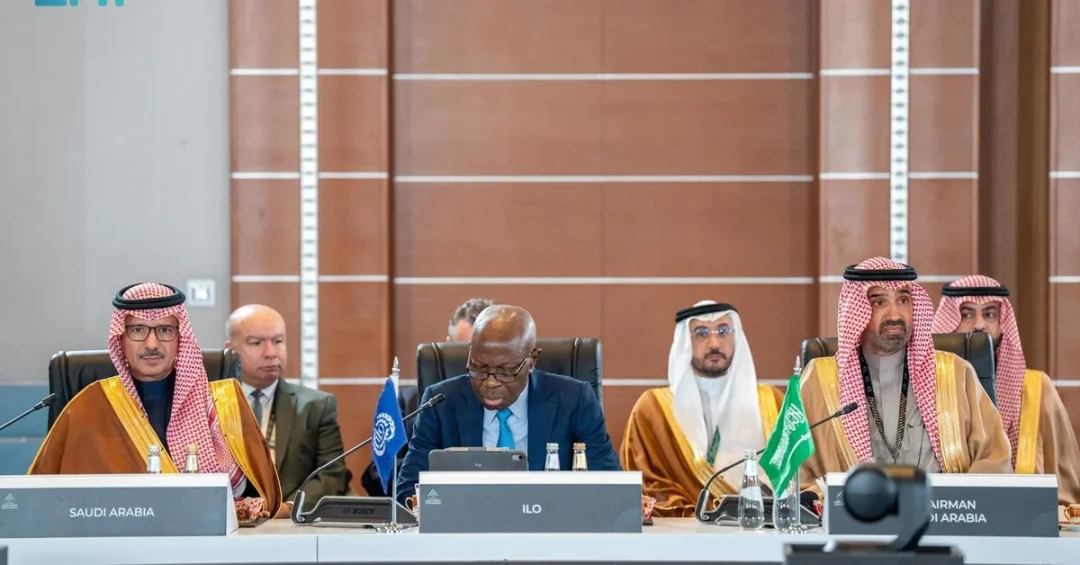
Riyadh, January 30, 2025 — The director-general of the United Nations International Labour Organization (ILO), Gilbert Houngbo, has commended Saudi Arabia’s pivotal role in steering the future of the global labor market, praising the Kingdom’s comprehensive reforms under Vision 2030 as a model for modernizing work environments worldwide. In statements to the Saudi Press Agency (SPA) during the Global Labor Market Conference (GLMC) 2025 in Riyadh, Houngbo emphasized that the Kingdom’s initiatives, including labor law updates and enhanced safety standards, have positioned it as a global leader in creating flexible, equitable, and sustainable employment opportunities.
Context and Background
The GLMC 2025, held in the Saudi capital, brought together international stakeholders to address pressing challenges and opportunities in the evolving labor market. Houngbo’s remarks underscored the alignment of Saudi Arabia’s Vision 2030 with ILO priorities, such as promoting social justice, decent work, and inclusive growth. The ILO chief highlighted the Kingdom’s success in transforming its labor market through qualitative reforms, including boosting employment for youth and women, localizing jobs, and investing in skill development, which collectively foster sustainable economic growth and international competitiveness.
Key Details
Houngbo specifically praised Saudi Arabia’s National Policy for the Elimination of Forced Labor as a testament to its commitment to international labor standards, placing it at the forefront of nations championing fair workplaces. He also noted the Kingdom’s leadership in digital transformation and climate change adaptation, stating that investments in modern technologies and sustainability initiatives enable the Kingdom to spearhead global efforts toward a just transition to a sustainable economy. Additionally, Houngbo highlighted the recent enactment of legislation mandating maternity insurance for female workers, both citizens and residents, describing it as a significant milestone in promoting gender equality in the labor market.
Implications and Impact
The ILO chief emphasized that Saudi Arabia’s experience serves as a valuable template for other nations seeking to modernize their labor markets, particularly in addressing youth unemployment in Arab countries and integrating digitalization with decent work principles. He called for aligning educational systems with market needs and fostering entrepreneurship, initiatives supported by the ILO’s “Decent Jobs for Youth” program. Houngbo also underscored the importance of the GLMC as a vital platform for dialogue on global labor challenges, including disparities, social protection, and workforce preparation for a rapidly changing world.
Vision 2030 Alignment
Houngbo stressed that Saudi Arabia’s transformative agenda under Vision 2030 uniquely positions the Kingdom to take a leading role within the ILO-led “Global Coalition for Social Justice,” which aims to enhance international cooperation on decent work and social justice. The Kingdom’s ambitious labor-market reforms, workforce inclusivity initiatives, and investments in education and skills development serve as examples for the global community. By hosting events like the GLMC, Saudi Arabia reinforces its commitment to collaborative action toward a more just and inclusive global economy, aligning perfectly with its long-term vision for sustainable development and economic diversification.
20 Questions
Q1. Who commended Saudi Arabia’s role in the global labor market?
A1. Gilbert Houngbo, the director-general of the United Nations International Labour Organization (ILO), commended Saudi Arabia’s pivotal role in steering the future of the global labor market during the GLMC 2025 in Riyadh.
Q2. What event prompted the ILO chief’s remarks?
A2. The Global Labor Market Conference (GLMC) 2025, held in Riyadh, provided the platform for Houngbo’s statements to the Saudi Press Agency (SPA) about the Kingdom’s labor reforms.
Q3. What key reforms did Houngbo highlight in Saudi Arabia’s labor market?
A3. Houngbo highlighted updates to labor laws, enhanced occupational safety and health standards, and increased employment opportunities for youth and women as key reforms under Vision 2030.
Q4. How does Houngbo view Saudi Arabia’s labor market transformation?
A4. He described it as positioning the Kingdom as a global model for creating advanced and modern work environments, reflecting a steadfast commitment to a flexible and equitable labor market.
Q5. What policy did Houngbo cite as a testament to Saudi Arabia’s commitment to international standards?
A5. The National Policy for the Elimination of Forced Labor was cited as a testament to the Kingdom’s unwavering commitment to international labor standards.
Q6. How did Houngbo assess Saudi Arabia’s digital transformation efforts?
A6. He noted that the Kingdom’s investments in digitization and modern technologies enhance labor-market efficiency and create more attractive, sustainable work environments for others to emulate.
Q7. What role does Houngbo see for Saudi Arabia in climate change adaptation?
A7. He stressed that investments in sustainability initiatives and modern technologies position Saudi Arabia to spearhead global efforts toward a just transition to a sustainable economy.
Q8. What recent legislation did Houngbo highlight for women’s employment?
A8. Houngbo highlighted Saudi Arabia’s enactment of legislation mandating maternity insurance for female workers, both citizens and residents, as a milestone in promoting equality.
Q9. How does Saudi Arabia support youth employment according to Houngbo?
A9. The Kingdom’s efforts include investing in skill development, localizing jobs, and fostering sustainable job opportunities that bolster economic growth for youth.
Q10. What is the “Global Coalition for Social Justice”?
A10. It is an ILO-led initiative with over 300 partners, including governments and employers, aiming to enhance international cooperation on decent work and social justice worldwide.
Q11. How does Houngbo align Saudi Arabia with the Global Coalition for Social Justice?
A11. He noted that Vision 2030’s transformative agenda, including labor reforms and workforce inclusivity, uniquely positions Saudi Arabia to take a leading role within the coalition.
Q12. What global labor challenges did Houngbo address at the conference?
A12. He addressed disparities, promoting inclusive growth, ensuring decent work, enhancing social protection, and adapting to digitalization, climate change, and demographic shifts.
Q13. How did Houngbo describe the importance of social justice?
A13. He stated that promoting social justice is not only a moral imperative but also an economic necessity, contributing to stability, inclusion, and sustainable growth.
Q14. What solutions did Houngbo propose for youth unemployment in Arab countries?
A14. He called for investing in quality education and vocational training, fostering entrepreneurship, and creating opportunities for productive jobs aligned with market demands.
Q15. How does digitalization impact the labor market according to Houngbo?
A15. Digitalization offers opportunities for job creation and innovation but also challenges like job displacement, skill mismatches, and unequal access to technology.
Q16. What policies did Houngbo recommend to address digitalization challenges?
A16. He urged governments to invest in lifelong learning programs, ensure equitable digital access, and implement policies safeguarding workers during transitions.
Q17. How does Houngbo view gender equality in the labor market?
A17. He emphasized it as a foundational element of the ILO’s mission, including reducing the gender pay gap and promoting decent work in the care economy.
Q18. What worker protections did Houngbo advocate for in the Gulf region?
A18. He advocated for flexible work arrangements, maternity and paternity leave, and improved conditions for care workers, including domestic staff through partnerships with governments.
Q19. What is the GLMC’s role according to Houngbo?
A19. The conference is a vital platform for stakeholders to engage in meaningful dialogue about pressing challenges and opportunities in the global labor market.
Q20. What message did Houngbo send to participants at GLMC 2025?
A20. He urged seizing the opportunity for dialogue and collaboration, emphasizing that the future of labor relies on collective efforts to promote decent work and sustainable development globally.
Reader Feedback
We value your thoughts. Please share your feedback on this article.
Your feedback helps us improve our coverage.