


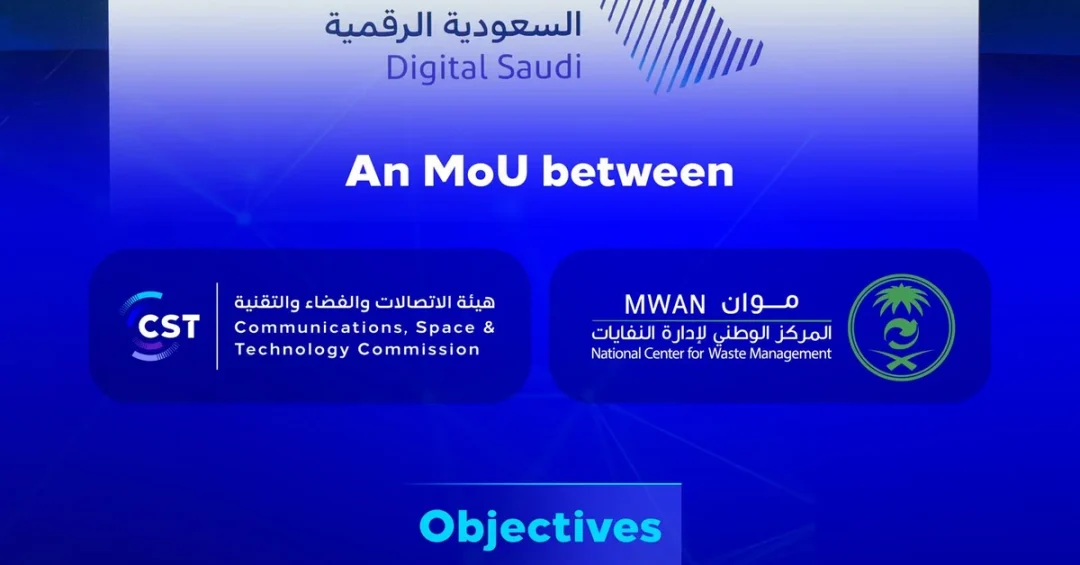
The Communications, Space, and Technology Commission (CST) signed a memorandum of understanding with the National Center for Waste Management (MWAN) on February 10, 2025, aiming to achieve a 90% recycling rate for electronic products, including e-waste and used batteries, by 2040. The agreement was signed on the sidelines of the LEAP25 global technology conference in Riyadh, underscoring Saudi Arabia’s commitment to sustainable development and the circular economy.
Context and Background
As Saudi Arabia accelerates its digital transformation under Vision 2030, e-waste has emerged as a critical environmental challenge. The Kingdom generates significant electronic waste from rapidly expanding technology sectors. CST and MWAN are partnering to establish a comprehensive framework for collecting, recycling, and reusing electronic products, aligning with global best practices and the United Nations Sustainable Development Goals.
Key Details
The MoU was signed by CST Strategy and Digital Sector Deputy Governor Naif Sheshah and MWAN Planning and Development Vice President Dr. Mohammad Alassem. The agreement focuses on fostering local and international partnerships, exchanging knowledge and expertise, and developing regulations to facilitate circular economy implementation. It also includes preparing studies and reports to support e-waste recycling initiatives.
Notably, CST’s earlier “Unified Charging Ports” initiative has already reduced charger-related waste by over 15,000 tons annually. Additionally, the “Recycle Your Device” initiative, run in collaboration with MWAN, has collected and recycled over 100,000 devices, supporting more than 120 schools and charities and reducing e-waste by over 240 tons.
Implications and Impact
This partnership positions Saudi Arabia as a regional leader in sustainable technology management. By targeting 90% recycling of e-products by 2040, the Kingdom aims to minimize environmental harm, conserve resources, and create economic opportunities in the recycling and green technology sectors. The initiative also supports the development of a robust circular economy, reducing dependence on raw material imports and promoting local manufacturing.
Vision 2030 Alignment
The MoU directly supports Vision 2030’s environmental sustainability and economic diversification goals. By integrating circular economy principles into the technology sector, Saudi Arabia enhances its global competitiveness while protecting natural resources. The collaboration between CST and MWAN exemplifies the Kingdom’s holistic approach to achieving long-term prosperity and environmental stewardship, reinforcing its commitment to a sustainable and innovative future.
20 Questions
Q1. What is the main goal of the MoU between CST and MWAN?
A1. The main goal is to achieve a 90% recycling rate for electronic products, including e-waste and used batteries, by 2040, promoting a circular economy in Saudi Arabia.
Q2. When and where was the MoU signed?
A2. The MoU was signed on February 10, 2025, on the sidelines of the LEAP25 global technology conference in Riyadh, Saudi Arabia.
Q3. Who signed the MoU on behalf of CST?
A3. CST Strategy and Digital Sector Deputy Governor Naif Sheshah signed the MoU on behalf of the Communications, Space, and Technology Commission.
Q4. Who represented MWAN at the signing?
A4. MWAN was represented by its Planning and Development Vice President, Dr. Mohammad Alassem.
Q5. What is the primary focus of the partnership?
A5. The partnership focuses on establishing local and international collaborations for e-waste recycling, knowledge exchange, and regulatory development to support the circular economy.
Q6. What specific types of waste are targeted?
A6. The agreement targets electronic products, including e-waste and used batteries, aiming for high recycling rates by 2040.
Q7. How does this MoU align with Saudi Arabia’s broader environmental goals?
A7. It supports the Kingdom’s commitment to sustainable development, environmental protection, and the circular economy, which are key components of Vision 2030.
Q8. What previous initiative has CST implemented to reduce e-waste?
A8. CST implemented the “Unified Charging Ports” initiative, which has reduced charger-related waste by more than 15,000 tons annually.
Q9. What is the “Recycle Your Device” initiative?
A9. It is a collaboration between CST and MWAN that collected over 100,000 devices, recycling them to support schools and charities, reducing e-waste by over 240 tons.
Q10. How many devices have been collected through the “Recycle Your Device” initiative?
A10. The initiative has collected over 100,000 devices for recycling and reuse in educational and charitable sectors.
Q11. How many schools and charities have benefited from the initiative?
A11. More than 120 schools and charities have benefited from the recycled devices provided through the initiative.
Q12. What is the significance of the LEAP25 conference for this agreement?
A12. LEAP25 is a global technology conference, providing a platform for CST and MWAN to announce the partnership and highlight Saudi Arabia’s innovation in sustainability.
Q13. How does the MoU support international cooperation?
A13. The agreement aims to establish partnerships at local and international levels, facilitating knowledge exchange and collaboration in e-waste recycling.
Q14. What role will regulations play in achieving the 90% recycling target?
A14. Developing regulations will facilitate the implementation of circular economy practices, ensuring effective collection, recycling, and reuse of electronic products.
Q15. How does this initiative contribute to economic diversification?
A15. By promoting a circular economy, the initiative creates new industries and jobs in recycling and green technology, reducing dependence on oil revenues.
Q16. What is the timeline for achieving the 90% recycling rate?
A16. The target is set for 2040, aligning with long-term environmental and economic strategies under Vision 2030.
Q17. Which Saudi agency is CST partnering with for this MoU?
A17. CST is partnering with the National Center for Waste Management (MWAN), the national authority responsible for waste management.
Q18. How does the MoU address knowledge sharing?
A18. It includes exchanging knowledge and expertise between local and international entities to improve e-waste recycling technologies and practices.
Q19. What studies will be conducted under this agreement?
A19. The agreement includes preparing studies and reports to support the circular economy agenda and guide policy development.
Q20. Why is reducing e-waste important for Saudi Arabia?
A20. Reducing e-waste minimizes environmental pollution, conserves resources, and supports the Kingdom’s sustainability goals, enhancing its global environmental standing.
Reader Feedback
We value your thoughts. Please share your feedback on this article.
Your feedback helps us improve our coverage.