


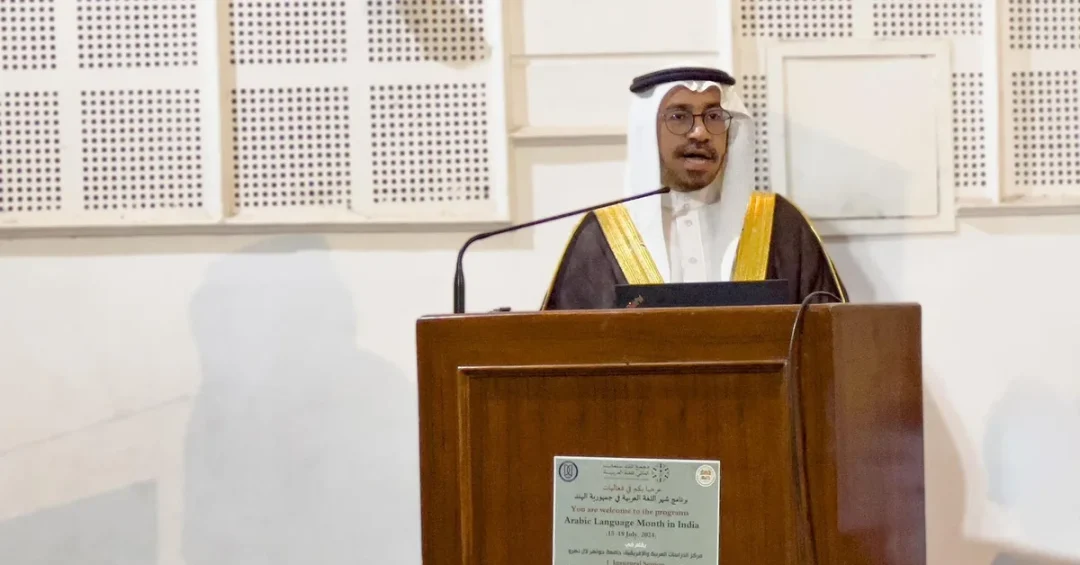
The King Salman Global Academy for Arabic Language (KSGAAL) has successfully concluded its Arabic Language Month program in India, a month-long initiative held in New Delhi and Kerala that aimed to enhance Arabic language teaching, improve teacher skills, and elevate the language’s significance. The program, which ran from late June to July 27, 2024, was conducted in collaboration with various Indian educational institutions, reflecting Saudi Arabia’s commitment to linguistic and cultural exchange.
Context and Background
The Arabic Language Month program is part of KSGAAL’s broader global educational initiatives for teaching Arabic to non-native speakers. Similar programs have been successfully implemented in countries such as Brazil, Uzbekistan, Indonesia, and China, connecting Arabic language enthusiasts worldwide. This initiative aligns with Saudi Arabia’s Vision 2030 and the Human Capability Development Program, which focuses on enhancing skills and knowledge to meet national development goals.
Key Details
KSGAAL Secretary-General Dr. Abdullah bin Saleh Al-Washmi expressed gratitude to Prince Badr bin Abdullah bin Farhan, the Minister of Culture and chairman of KSGAAL’s board of trustees, for his unwavering support, which was crucial in meeting the program’s objectives. During the initiative, KSGAAL representatives engaged with universities offering Arabic programs, including Jawaharlal Nehru University, the University of Kerala, and other academic institutions in India. Discussions covered testing methods, teacher evaluation, technology integration in teaching Arabic, program design, and teaching challenges. The program also featured training courses for teachers and learners on modern teaching strategies and language skills development. Additionally, a scientific symposium highlighted Saudi Arabia’s efforts in Arabic language education, curriculum challenges, and linguistic issues. Contest champions from a competition held by KSGAAL alongside Jawaharlal Nehru University were celebrated, and the Hamza Exam, an Arabic proficiency test, was conducted with the cooperation of both Jawaharlal Nehru University and Kerala University.
Implications and Impact
This program demonstrates Saudi Arabia’s global contributions to promoting the Arabic language and its disciplines. By providing direct training for teachers and advancing the educational achievements of Arabic learners, KSGAAL strengthens its role in fostering a global community of Arabic language educators and enthusiasts. The initiative also highlights the growing cultural and educational ties between Saudi Arabia and India, a key partner in the region.
Vision 2030 Alignment
The Arabic Language Month program in India underscores KSGAAL’s vital role in promoting Arabic language projects and teaching to non-native speakers, supporting Saudi Arabia’s vision of enhancing cultural exchange and human capital development. This initiative inspires similar collaborations worldwide, raises awareness of the Arabic language, and facilitates its teaching and learning both within and outside the Kingdom, contributing to the global linguistic landscape under Vision 2030.
20 Questions
Q1. What was the King Salman Global Academy for Arabic Language (KSGAAL) program in India?
A1. The program was the Arabic Language Month, a month-long initiative in New Delhi and Kerala aimed at improving Arabic language teaching, enhancing teacher skills, and boosting the language’s importance for non-native speakers.
Q2. When did the Arabic Language Month program take place in India?
A2. The program concluded on July 27, 2024, and ran for approximately one month, from late June to that date.
Q3. Who expressed gratitude for the support of Prince Badr bin Abdullah bin Farhan?
A3. Dr. Abdullah bin Saleh Al-Washmi, the Secretary-General of KSGAAL, expressed his gratitude to Prince Badr for his unwavering support, which helped the program meet its goals.
Q4. What is the role of Prince Badr bin Abdullah bin Farhan in relation to KSGAAL?
A4. Prince Badr bin Abdullah bin Farhan is the Minister of Culture and the chairman of KSGAAL’s board of trustees, providing leadership and support for the academy’s initiatives.
Q5. Which universities in India collaborated with KSGAAL during the program?
A5. KSGAAL collaborated with Jawaharlal Nehru University, the University of Kerala, and other academic institutions in India offering Arabic language programs.
Q6. What topics were discussed during meetings with Indian universities?
A6. Topics included testing methods, teacher evaluation, technology in teaching Arabic, program design, and challenges in Arabic language teaching.
Q7. What training was provided during the Arabic Language Month?
A7. Training courses for teachers and learners focused on modern teaching strategies and language skills development.
Q8. What was the scientific symposium about?
A8. The symposium discussed Saudi Arabia’s efforts in Arabic language education, curriculum challenges, and linguistic issues.
Q9. What competition was held alongside Jawaharlal Nehru University?
A9. A contest for Arabic language champions was held, and the winners were celebrated during the program.
Q10. What is the Hamza Exam?
A10. The Hamza Exam is an Arabic proficiency test conducted by KSGAAL with the cooperation of Jawaharlal Nehru University and Kerala University.
Q11. How does the program align with Saudi Vision 2030?
A11. The program aligns with the Human Capability Development Program under Vision 2030, which focuses on enhancing skills and knowledge to support national development goals.
Q12. What other countries have hosted similar KSGAAL programs?
A12. Similar programs have taken place in Brazil, Uzbekistan, Indonesia, and China, among other countries.
Q13. What is the primary goal of KSGAAL’s global initiatives?
A13. The primary goal is to promote Arabic language teaching to non-native speakers and showcase Saudi Arabia’s global contributions to Arabic and its disciplines.
Q14. How does the program benefit teachers?
A14. It provides direct training for teachers to improve their skills and modern teaching strategies.
Q15. How does the program benefit learners?
A15. It advances the educational achievements of Arabic learners by offering training courses and proficiency exams.
Q16. What international impact does the program have?
A16. It connects Arabic language enthusiasts worldwide, fosters collaboration with organizations, and promotes the language’s growth globally.
Q17. What is the significance of the program for Saudi Arabia?
A17. It highlights KSGAAL’s role in promoting Arabic language projects and supports Saudi Arabia’s cultural and educational outreach.
Q18. Did the program include any assessment tools?
A18. Yes, the Hamza Exam was conducted as a proficiency test, and discussions included testing methods and teacher evaluation.
Q19. What is the Human Capability Development Program?
A19. It is a Saudi Vision 2030 initiative focused on enhancing human capital through education and skill development, which this program supports.
Q20. What future plans does KSGAAL have for such programs?
A20. KSGAAL continues to implement these global programs as part of its language and cultural efforts, fostering a global community of Arabic language learners and educators.
Reader Feedback
We value your thoughts. Please share your feedback on this article.
Your feedback helps us improve our coverage.