


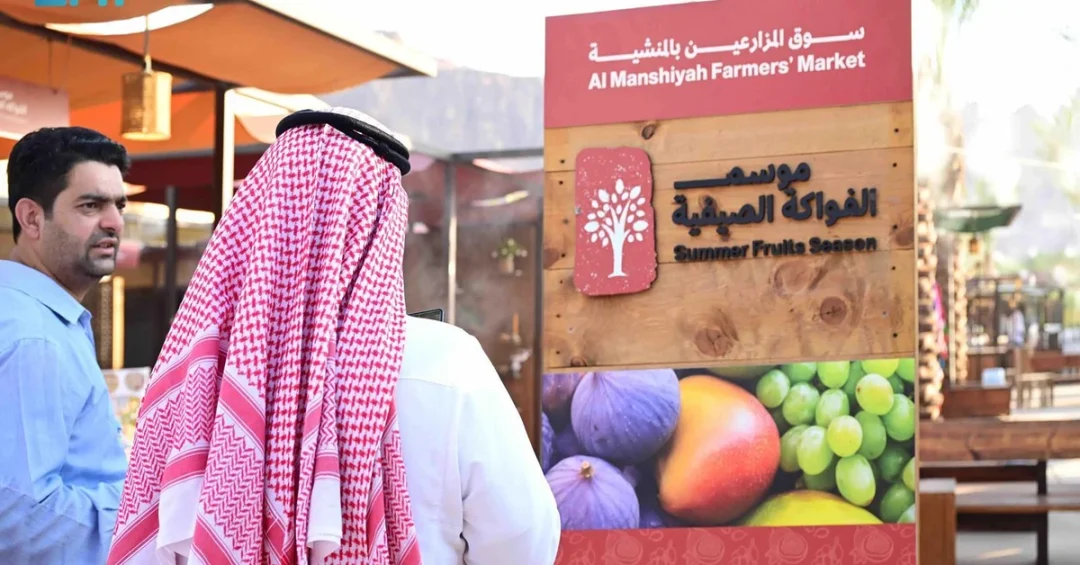
RIYADH: Demand for summer fruits has surged at the Farmers’ Market in Al-Manshiyah Square in AlUla, with mangoes and grapes leading sales, according to an official report from the Saudi Press Agency. The market has attracted visitors eager to purchase local produce that the governorate is renowned for during the summer season.
Context and Background
AlUla Governorate, a historic region in northwestern Saudi Arabia, has become a hub for agricultural production under the Kingdom’s Vision 2030, which emphasizes economic diversification and sustainable development. The area’s farms produce a variety of fruits, including mangoes, figs, grapes, and pomegranates, with a strong focus on organic and high-quality yields.
Key Details
AlUla Governorate produces approximately 1,125 tons of mangoes annually on an area of 125 hectares, where some 50,000 trees are planted. The region dedicated to fig, grape, and pomegranate farms spans 348.96 hectares, with 139,584 trees yielding about 3,140.66 tons. Additionally, AlUla is the original home of the Arabian moringa tree (al-yusr), with moringa farms covering 67.20 hectares and producing 134.40 tons from 53,761 trees.
The Royal Commission for AlUla launched the summer fruit season to coincide with the harvest, helping farmers achieve high production and sell large quantities. Initiatives like the Khayrat AlUla Seasons project aim to support farmers and productive families, increasing sustainable demand for organic fruits and other products.
Implications and Impact
The increased demand for AlUla’s summer fruits highlights the growing popularity of local, organic produce among visitors and residents. This trend supports economic diversification by creating new opportunities for the agricultural community, while also boosting tourism and local commerce. The success of the summer fruit season underscores the effectiveness of Saudi Arabia’s efforts to promote sustainable agriculture and food security.
Vision 2030 Alignment
AlUla’s agricultural achievements directly align with Vision 2030 goals of economic diversification, food security, and sustainable development. By supporting farmers and enhancing local produce markets, Saudi Arabia is building a resilient agricultural sector that contributes to the Kingdom’s long-term prosperity and global engagement, while preserving its cultural and natural heritage.
20 Questions
Q1. What caused the increase in demand for summer fruits in AlUla?
A1. The surge is driven by visitors eager to purchase local produce from the Farmers’ Market in Al-Manshiyah Square, with the launch of the summer fruit season by the Royal Commission for AlUla boosting availability.
Q2. Which fruits recorded the highest sales at the market?
A2. Mangoes of all varieties and local grapes recorded the highest sales during the summer season at the Farmers’ Market in AlUla.
Q3. How many tons of mangoes does AlUla produce annually?
A3. AlUla Governorate produces approximately 1,125 tons of mangoes annually from an area of 125 hectares with about 50,000 trees.
Q4. What is the total area dedicated to fig, grape, and pomegranate farms in AlUla?
A4. The area dedicated to fig, grape, and pomegranate farms in AlUla is 348.96 hectares, with 139,584 trees yielding about 3,140.66 tons.
Q5. What is al-yusr, and where is it found?
A5. Al-yusr is the Arabian moringa tree, and AlUla is its original home. Moringa farms in the governorate cover 67.20 hectares with 53,761 trees producing 134.40 tons.
Q6. Who launched the summer fruit season in AlUla?
A6. The Royal Commission for AlUla launched the summer fruit season to coincide with the harvest season, supporting farmers in achieving high production.
Q7. What is the Khayrat AlUla Seasons project?
A7. The Khayrat AlUla Seasons project aims to support farmers and productive families, increasing sustainable demand for organic fruits and other products.
Q8. How does this development support Vision 2030?
A8. It supports Vision 2030 goals of economic diversification, food security, and sustainable development by promoting local agriculture and creating economic opportunities.
Q9. Where is the Farmers’ Market located in AlUla?
A9. The Farmers’ Market is located in Al-Manshiyah Square, a central area in AlUla Governorate.
Q10. What types of visitors are attracted to the market?
A10. Visitors eager to purchase local produce are attracted to the market, including tourists and residents interested in organic and fresh fruits.
Q11. How many mango trees are planted in AlUla?
A11. About 50,000 mango trees are planted across 125 hectares in AlUla Governorate.
Q12. What is the yield of figs, grapes, and pomegranates in AlUla?
A12. The yield from fig, grape, and pomegranate trees is approximately 3,140.66 tons annually from 139,584 trees.
Q13. How does the Royal Commission for AlUla contribute to agriculture?
A13. The Royal Commission for AlUla launches seasons like the summer fruit season and implements projects like Khayrat AlUla to support farmers and boost production.
Q14. What is the significance of AlUla’s moringa farms?
A14. AlUla is the original home of the Arabian moringa tree, and its moringa farms produce 134.40 tons from 53,761 trees, adding to agricultural diversity.
Q15. Are the fruits at the market organic?
A15. Yes, the Khayrat AlUla Seasons project focuses on increasing sustainable demand for organic fruits, indicating a trend toward organic produce from local farms.
Q16. How does this initiative help farmers?
A16. The summer fruit season and related projects help farmers achieve high production, sell large quantities, and access new economic opportunities.
Q17. What is the role of AlUla in Saudi Arabia’s economic diversification?
A17. AlUla’s agriculture, along with its tourism and heritage, supports economic diversification by creating jobs and promoting sustainable industries.
Q18. Can visitors buy other products at the market?
A18. The market offers various local produce, and the Khayrat AlUla project aims to increase demand for organic fruits and other products from farmers and families.
Q19. How does AlUla’s agriculture contribute to food security?
A19. By producing substantial quantities of fruits like mangoes and grapes, AlUla contributes to domestic food supply and reduces reliance on imports, aligning with Vision 2030.
Q20. What future developments are expected for AlUla’s agriculture?
A20. Continued support from the Royal Commission for AlUla and initiatives like Khayrat AlUla are expected to expand sustainable farming, increase production, and further boost the local economy.
Reader Feedback
We value your thoughts. Please share your feedback on this article.
Your feedback helps us improve our coverage.