


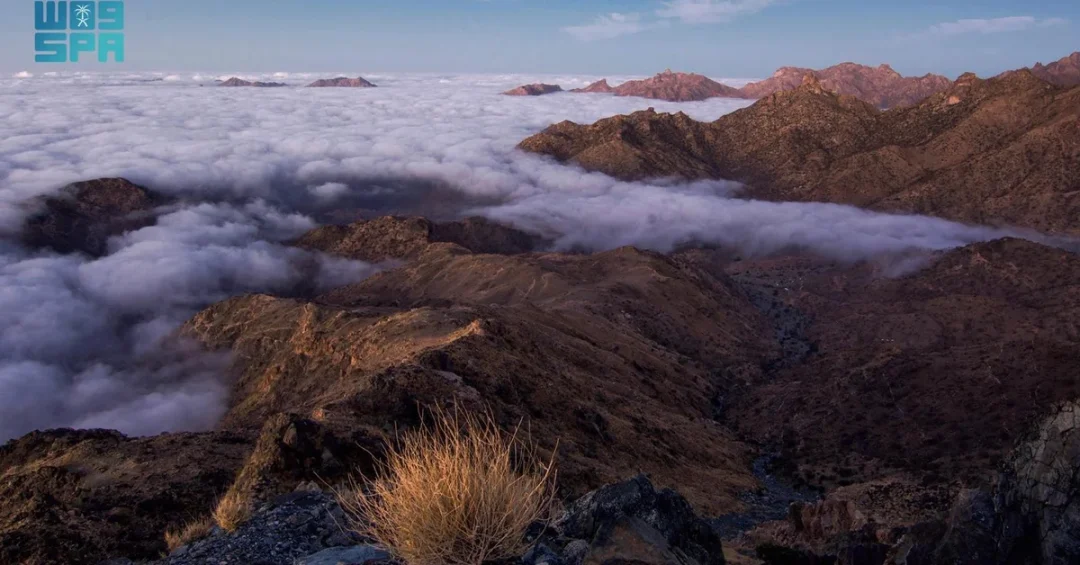
Two remarkable vantage points in Saudi Arabia’s Makkah Region, Mount Daka and the Shams Al-Assil lookout, are drawing international attention for their stunning views of the Red Sea and their rich biodiversity. Situated within the Ash Shafa area, these natural landmarks offer visitors a rare opportunity to gaze upon the deep blue waters of the Red Sea from an elevation of over 2,560 meters, providing a spectacular panorama that highlights the Kingdom’s diverse landscapes.
Context and Background
Mount Daka, located in the heart of Ash Shafa, is a prominent peak in the Sarawat Mountains range. The Shams Al-Assil natural viewpoint serves as the primary observation point from which visitors can see both the mountain itself and the distant coastline. According to the Saudi Press Agency (SPA), these sites are becoming increasingly popular among tourists and nature enthusiasts seeking to experience the area’s breathtaking scenery and unique ecological environment.
Key Details
Mount Daka rises more than 2,560 meters above sea level, making it one of the higher peaks in the region. The area is known for its lush environment, where juniper, acacia, sidr, and salam trees provide shade for diverse wildlife. Rain and fog frequently envelop the mountain, creating a dramatic atmosphere. The SPA reports that the region is home to rock hyraxes, ibex, rabbits, and even Arabian leopards. The area’s flowers and aromatic plants also serve as a safe haven for bees, contributing to local honey production.
Implications and Impact
The increasing visibility of these natural attractions aligns with Saudi Arabia’s broader strategy to promote eco-tourism and adventure travel. By spotlighting sites like Mount Daka and Shams Al-Assil, the Kingdom is diversifying its appeal beyond historical and cultural attractions. International tourists now have more reasons to explore the Asir and Makkah regions, which offer a cool climate and outdoor activities distinct from the coastal resorts. The presence of rare species like the Arabian leopard underscores the importance of conservation efforts tied to these tourism initiatives.
Vision 2030 Alignment
Mount Daka and Shams Al-Assil exemplify the Kingdom’s commitment to showcasing its natural heritage as part of the Vision 2030 tourism goals. By developing and promoting these lookouts, Saudi Arabia is opening new frontiers for sustainable travel, supporting local communities, and enhancing the visitor experience. These efforts contribute directly to the national ambition of attracting 150 million annual visits by 2030, making the Kingdom a premier global destination for nature and adventure tourism.
20 Questions
Q1. Where are Mount Daka and Shams Al-Assil located?
A1. They are located in the Ash Shafa area, within the Makkah Region of Saudi Arabia.
Q2. What is the primary attraction of these lookout points?
A2. The main attraction is the stunning view of the Red Sea’s deep blue waters from an elevation of over 2,560 meters.
Q3. How high is Mount Daka above sea level?
A3. Mount Daka rises more than 2,560 meters above sea level.
Q4. Which mountain range includes Mount Daka?
A4. Mount Daka is part of the Sarawat Mountains range.
Q5. What types of trees are found on Mount Daka?
A5. The area has juniper, acacia, sidr, and salam trees.
Q6. What animals live in the Mount Daka region?
A6. The region is home to rock hyraxes, ibex, rabbits, and Arabian leopards.
Q7. What kind of weather is common over Mount Daka?
A7. Rain and fog frequently form over the mountain, creating a dramatic atmosphere.
Q8. How do the plants on Mount Daka support local wildlife?
A8. The flowers and aromatic plants are a safe haven for bees, which produce honey.
Q9. What is the Shams Al-Assil viewpoint known for?
A9. It is the natural viewpoint from which visitors can observe Mount Daka and the Red Sea.
Q10. Which Saudi agency reported on these lookouts?
A10. The Saudi Press Agency (SPA) reported on them on July 23, 2024.
Q11. Why are these lookouts popular among tourists?
A11. They offer breathtaking nature and rare views of the Red Sea from a mountainside.
Q12. What type of rock forms Mount Daka?
A12. The mountain is composed of granite rocks.
Q13. Are there any endangered species in this area?
A13. Yes, the Arabian leopard is found there and is considered a rare and endangered species.
Q14. What makes the environment of Mount Daka attractive to bees?
A14. The abundant flowers and aromatic plants provide a safe habitat for swarms of bees.
Q15. How does the elevation affect the experience of visitors?
A15. The high elevation provides a panoramic view and a cooler climate compared to lower areas.
Q16. What is the significance of the Sarawat Mountains?
A16. This range runs through western Saudi Arabia and includes many of the Kingdom’s highest peaks.
Q17. Is Mount Daka accessible for average tourists?
A17. Yes, it is a sought-after destination for tourists and visitors who seek to experience its nature.
Q18. What role do these lookouts play in Saudi tourism?
A18. They are part of efforts to promote eco-tourism and natural attractions under Vision 2030.
Q19. How does the Shams Al-Assil lookout get its name?
A19. ‘Shams Al-Assil’ can be translated as ‘Sun of the Origin,’ reflecting its natural beauty.
Q20. What future developments are expected for this area?
A20. The area is likely to see increased sustainable tourism infrastructure to support more international visitors.
Reader Feedback
We value your thoughts. Please share your feedback on this article.
Your feedback helps us improve our coverage.