


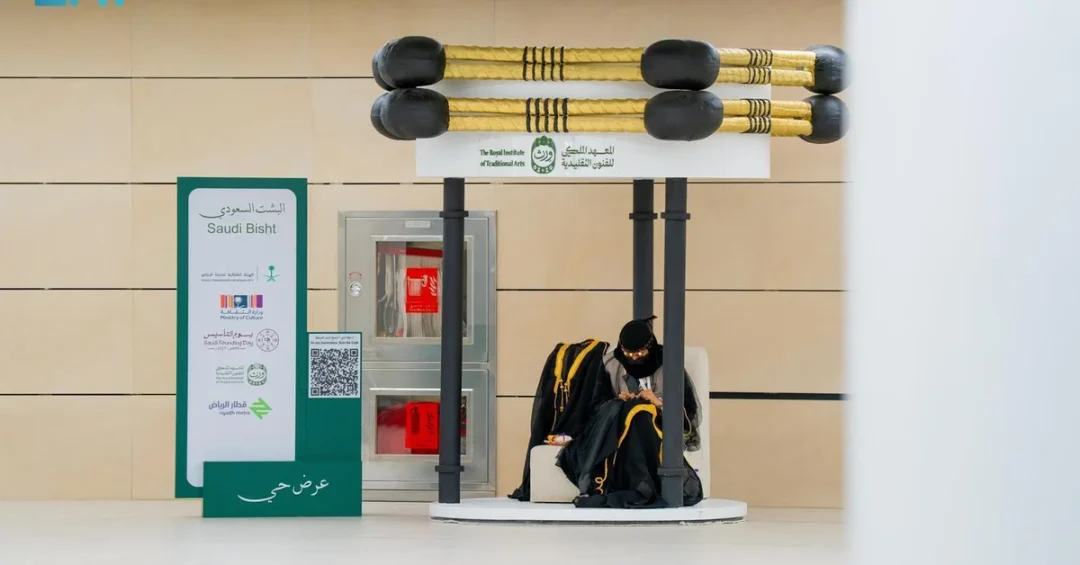
The Royal Institute of Traditional Arts (Wrth) and the Riyadh Metro, in collaboration with the Royal Commission for Riyadh City, celebrated Saudi Founding Day with a vibrant showcase of traditional arts from February 21 to 24, 2025. Riyadh Metro stations were transformed into cultural hubs, offering live demonstrations, gifts, and insights into iconic Saudi heritage, such as the traditional bisht cloak.
Context and Background
Saudi Founding Day, celebrated annually on February 22, commemorates the establishment of the First Saudi State in 1727. This year, Wrth and the Riyadh Metro joined forces to honor the Kingdom’s rich cultural heritage. The event aimed to connect residents and visitors with Saudi traditions, fostering national pride and cultural awareness. The initiative aligns with Saudi Arabia’s Vision 2030 goal of preserving national identity while promoting cultural exchange.
Key Details
The event featured live demonstrations of traditional crafts, including the making of the iconic bisht, a symbol of Saudi heritage. Over a thousand handmade bracelets, inspired by the patterns of Al-Hasawi bisht, were distributed at six key metro stations: KAFD Station, National Museum Station, STC Station, Ministry of Education Station, SABIC Station, and Al Naseem Station. These stations became lively cultural hubs, offering passengers a unique glimpse into Saudi traditions.
Implications and Impact
This collaboration highlights Saudi Arabia’s commitment to preserving its cultural heritage while embracing modernity. By integrating traditional arts into public spaces, the event fosters a deeper connection between citizens and their heritage. It also enhances Riyadh’s reputation as a cultural destination, attracting tourists and promoting cultural tourism. The initiative underscores the Kingdom’s efforts to balance tradition and progress, a cornerstone of Vision 2030.
Vision 2030 Alignment
The Saudi Founding Day celebration exemplifies Vision 2030’s emphasis on preserving national identity while fostering cultural exchange. By showcasing traditional arts in public spaces, Wrth and the Riyadh Metro are contributing to Saudi Arabia’s cultural renaissance. This initiative not only strengthens national pride but also positions the Kingdom as a global leader in heritage preservation and cultural innovation.
20 Questions
Q1. What is the Royal Institute of Traditional Arts (Wrth)?
A1. Wrth is a leading Saudi institution dedicated to preserving and promoting traditional arts, supporting artisans, and nurturing cultural talent.
Q2. What is Saudi Founding Day?
A2. Saudi Founding Day, celebrated on February 22, commemorates the establishment of the First Saudi State in 1727.
Q3. When did the event take place?
A3. The event took place from February 21 to 24, 2025.
Q4. What is the Riyadh Metro?
A4. The Riyadh Metro is a public transportation system in Riyadh, operated under the supervision of the Royal Commission for Riyadh City.
Q5. What is the Royal Commission for Riyadh City?
A5. It is a government body responsible for overseeing Riyadh’s development and infrastructure projects.
Q6. What is a bisht?
A6. A bisht is a traditional Saudi men’s cloak, often worn on formal occasions and symbolizing cultural heritage.
Q7. Which metro stations hosted the event?
A7. The event was hosted at KAFD Station, National Museum Station, STC Station, Ministry of Education Station, SABIC Station, and Al Naseem Station.
Q8. What was distributed during the event?
A8. Over a thousand handmade bracelets inspired by Al-Hasawi bisht patterns were distributed.
Q9. What is Al-Hasawi bisht?
A9. Al-Hasawi bisht is a type of traditional Saudi cloak known for its distinctive patterns and craftsmanship.
Q10. How does the event align with Vision 2030?
A10. The event aligns with Vision 2030 by preserving national identity and promoting cultural exchange.
Q11. What is Vision 2030?
A11. Vision 2030 is Saudi Arabia’s strategic framework to diversify its economy and develop public service sectors, including culture and tourism.
Q12. How does the event promote cultural tourism?
A12. By showcasing traditional arts in public spaces, the event attracts tourists and enhances Riyadh’s cultural appeal.
Q13. What is the significance of the bisht?
A13. The bisht is a symbol of Saudi heritage and is often worn during important ceremonies and celebrations.
Q14. How does Wrth support artisans?
A14. Wrth provides training, resources, and platforms for artisans to showcase their traditional crafts.
Q15. What is the role of the Riyadh Metro in the event?
A15. The Riyadh Metro transformed its stations into cultural hubs, hosting live demonstrations and distributing traditional gifts.
Q16. How does the event foster national pride?
A16. By celebrating Saudi traditions in public spaces, the event connects citizens with their heritage and fosters cultural awareness.
Q17. What is the First Saudi State?
A17. The First Saudi State was established in 1727 and marks the foundation of modern Saudi Arabia.
Q18. How does the event contribute to Saudi Arabia’s cultural renaissance?
A18. By preserving and promoting traditional arts, the event strengthens Saudi Arabia’s cultural identity and global presence.
Q19. What is the significance of February 22?
A19. February 22 is celebrated as Saudi Founding Day, commemorating the establishment of the First Saudi State.
Q20. How does the event balance tradition and progress?
A20. By integrating traditional arts into modern public spaces, the event highlights Saudi Arabia’s ability to honor its heritage while embracing modernity.
Reader Feedback
We value your thoughts. Please share your feedback on this article.
Your feedback helps us improve our coverage.