


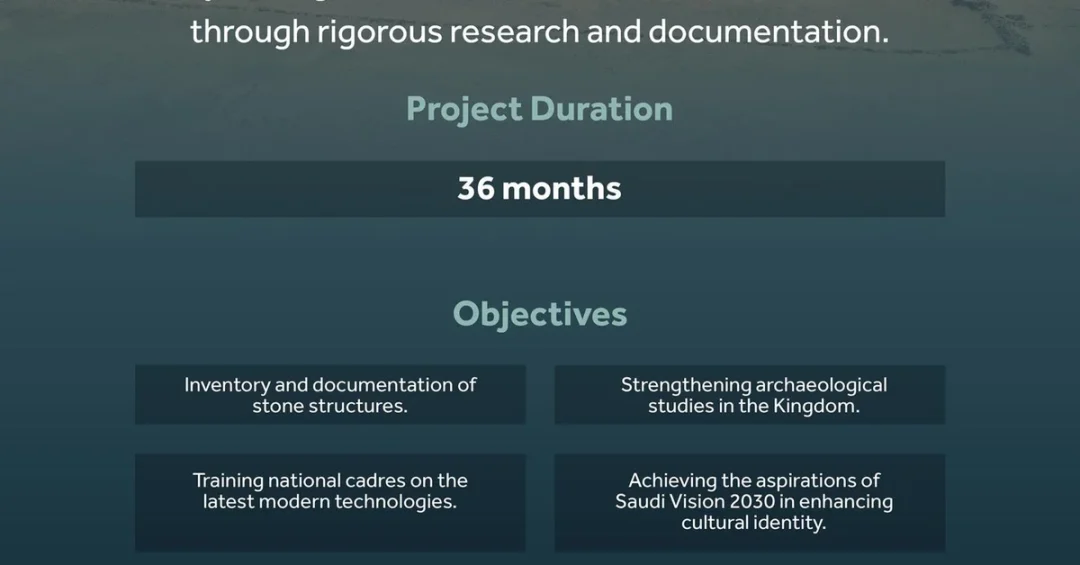
The Saudi Heritage Commission has launched the ‘Survey and Documentation of Stone Structures’ project in the Hail region, a 36-month initiative aimed at preserving and studying ancient stone formations using cutting-edge technology. The project, conducted in collaboration with the University of Sydney, will involve aerial and ground surveys, archaeological excavations, and the creation of a comprehensive electronic database to document these historical structures.
Context and Background
The Hail region is home to numerous ancient stone structures that hold significant historical and cultural value. These formations, some dating back thousands of years, offer insights into the civilizations that once thrived in the Arabian Peninsula. The Saudi Heritage Commission’s project aims to systematically document and analyze these structures to better understand their origins and significance.
Key Details
The project will utilize helicopters and drones for aerial documentation, while ground teams will survey mountains and valleys. Archaeological excavations will be conducted to examine selected structures, with findings analyzed to uncover their secrets. The project also includes training for national staff in advanced surveying and documentation techniques, ensuring the transfer of knowledge and skills.
Implications and Impact
This initiative underscores Saudi Arabia’s commitment to preserving its cultural heritage and promoting archaeological research. By collaborating with international experts, the project will enhance global understanding of the region’s history. The findings could also boost tourism, as the Hail region’s rich heritage becomes more accessible and well-documented.
Vision 2030 Alignment
The project aligns with Saudi Vision 2030’s goals of preserving cultural heritage and promoting national identity. By investing in archaeological research and documentation, Saudi Arabia is not only safeguarding its history but also positioning itself as a leader in cultural preservation and tourism development.
20 Questions
Q1. What is the ‘Survey and Documentation of Stone Structures’ project?
A1. It is a 36-month initiative by the Saudi Heritage Commission to study and document ancient stone structures in the Hail region using advanced technology.
Q2. Who is collaborating with the Saudi Heritage Commission on this project?
A2. The University of Sydney is collaborating with the Saudi Heritage Commission on this project.
Q3. How long will the project last?
A3. The project will span 36 months.
Q4. What technologies will be used in the project?
A4. The project will use helicopters, drones, Geographic Information Systems (GIS), and other modern technologies.
Q5. What are the key phases of the project?
A5. The project includes aerial documentation, ground surveying, archaeological excavations, and the creation of an electronic database.
Q6. Why is the Hail region significant?
A6. The Hail region is home to ancient stone structures that hold historical and cultural importance.
Q7. What is the goal of the project?
A7. The goal is to inventory, study, and document the stone structures to understand their historical significance.
Q8. How will the project benefit Saudi Arabia?
A8. The project will preserve cultural heritage, promote tourism, and enhance global understanding of Saudi history.
Q9. What role will national staff play in the project?
A9. National staff will receive field training in surveying and documentation techniques.
Q10. How does the project align with Vision 2030?
A10. It aligns with Vision 2030’s goals of preserving cultural heritage and promoting national identity.
Q11. What is the significance of the stone structures?
A11. The structures offer insights into ancient civilizations that thrived in the Arabian Peninsula.
Q12. Will the project involve international experts?
A12. Yes, the project includes collaboration with international archaeologists and researchers.
Q13. What is the expected outcome of the project?
A13. The expected outcome is a comprehensive electronic database and detailed documentation of the stone structures.
Q14. How will the project impact tourism?
A14. The project could boost tourism by making the Hail region’s heritage more accessible and well-documented.
Q15. What is the Saudi Heritage Commission’s role?
A15. The commission is responsible for managing and overseeing the project.
Q16. What is the University of Sydney’s role?
A16. The university is providing expertise and collaboration in archaeological research and documentation.
Q17. How will the project use GIS?
A17. GIS will be used to create accurate digital maps of the stone structures.
Q18. What is the cultural importance of the project?
A18. The project highlights Saudi Arabia’s rich history and civilizational significance.
Q19. How does the project contribute to global knowledge?
A19. It enhances global understanding of the region’s history and cultural connections.
Q20. What is the long-term vision for the project?
A20. The long-term vision is to preserve and promote Saudi Arabia’s cultural heritage for future generations.
Reader Feedback
We value your thoughts. Please share your feedback on this article.
Your feedback helps us improve our coverage.