


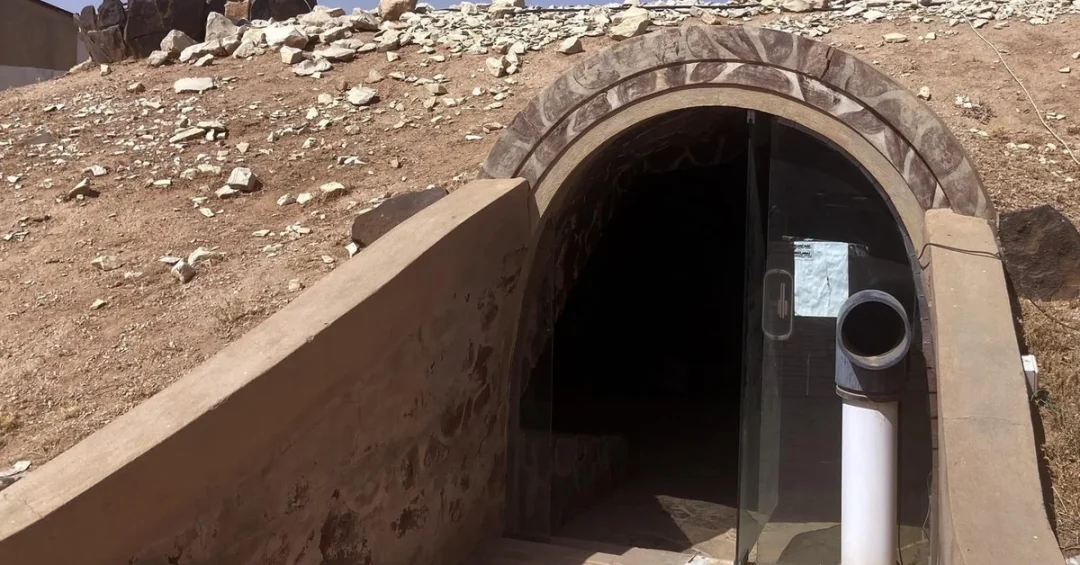
The Khalifa Mosque in Al-Rass, Qassim Region, stands as a groundbreaking architectural marvel, blending innovative design with sustainable engineering solutions. Built below ground level in the form of a rocky cave, the mosque utilizes natural lighting and ventilation, making it a unique destination for visitors and architecture enthusiasts alike. Officially inaugurated in 2010, the mosque was designed by Engineer Mohammed Al-Khalifa and represents a significant achievement in modern Islamic architecture.
Context and Background
The Khalifa Mosque is a testament to Saudi Arabia’s commitment to combining tradition with innovation. Located in Al-Rass, the mosque’s underground design leverages the natural insulating properties of the soil, maintaining moderate temperatures year-round. This design not only provides a serene environment for worshippers but also reduces energy consumption, aligning with global sustainability goals.
Key Details
Constructed using rock and reinforced concrete, the mosque features a column-free prayer hall, creating an unobstructed space for worship. Seven strategically placed skylights align with the sun’s path, maximizing natural daylight and promoting continuous ventilation. Additionally, the mosque employs solar energy to meet its lighting needs, further enhancing its eco-friendly credentials.
Implications and Impact
The Khalifa Mosque serves as a model for sustainable architecture, demonstrating how traditional religious spaces can incorporate modern engineering solutions. Its design has attracted international attention, positioning Saudi Arabia as a leader in innovative and sustainable construction. The mosque also boosts local tourism, drawing visitors interested in its unique architectural features.
Vision 2030 Alignment
The Khalifa Mosque exemplifies Saudi Arabia’s Vision 2030 goals of promoting sustainable development and enhancing quality of life. By integrating renewable energy and innovative design, the mosque reflects the Kingdom’s broader ambitions to lead in environmental stewardship and architectural excellence. This project underscores Saudi Arabia’s commitment to preserving cultural heritage while embracing modernity.
20 Questions
Q1. Where is the Khalifa Mosque located?
A1. The Khalifa Mosque is located in Al-Rass, Qassim Region, Saudi Arabia.
Q2. Who designed the Khalifa Mosque?
A2. The mosque was designed by Engineer Mohammed Al-Khalifa.
Q3. When was the Khalifa Mosque inaugurated?
A3. The mosque was officially inaugurated in 2010.
Q4. What is unique about the mosque’s construction?
A4. The mosque is built below ground level in the form of a rocky cave, utilizing natural insulation.
Q5. How does the mosque maintain moderate temperatures?
A5. The underground design and natural soil insulation help maintain moderate temperatures year-round.
Q6. What materials were used to build the mosque?
A6. The mosque was constructed using rock and reinforced concrete.
Q7. Does the mosque have interior columns?
A7. No, the mosque features a column-free prayer hall.
Q8. How many skylights does the mosque have?
A8. The mosque has seven strategically placed skylights.
Q9. What is the purpose of the skylights?
A9. The skylights maximize natural daylight and promote continuous ventilation.
Q10. How does the mosque reduce energy consumption?
A10. The mosque uses natural lighting, ventilation, and solar energy to reduce electricity needs.
Q11. What are the benefits of the mosque’s underground design?
A11. The design provides a quiet, comfortable environment and protects against harsh climatic conditions.
Q12. How does the mosque align with sustainability goals?
A12. The mosque’s energy-efficient design and use of renewable energy align with global sustainability objectives.
Q13. Has the mosque received international attention?
A13. Yes, the mosque’s innovative design has attracted international interest.
Q14. How does the mosque contribute to local tourism?
A14. The mosque draws visitors interested in its unique architectural and sustainable features.
Q15. What is the significance of the mosque’s name?
A15. The mosque is named after its designer, Engineer Mohammed Al-Khalifa.
Q16. How long did it take to build the mosque?
A16. The mosque was built over several years before its 2010 inauguration.
Q17. What is the prayer hall like?
A17. The prayer hall is spacious and unobstructed, thanks to the absence of interior columns.
Q18. How does the mosque use solar energy?
A18. The mosque relies on solar energy to meet its lighting needs when required.
Q19. What makes the mosque a model of architectural innovation?
A19. Its underground design, natural lighting, and ventilation solutions showcase innovative engineering.
Q20. How does the mosque reflect Saudi Arabia’s Vision 2030?
A20. The mosque embodies Vision 2030’s goals of sustainable development and enhancing quality of life through innovative design.
Reader Feedback
We value your thoughts. Please share your feedback on this article.
Your feedback helps us improve our coverage.